
For a young scholar in the Joseon Dynasty heading to Hanyang, ’tourism’ (觀光) was not a leisure trip.
At the end of his journey lay the face of the King—the ’light of the nation.’ Centuries later, we now use that same word to describe the excitement of heading out with a backpack.
When we dig into five words we use so casually today, we repeatedly encounter moments where their original meanings and current usages have completely diverged.
Tourism, ap-gwon, chwija, chulsin, and even nakbang—these are the linguistic traces left behind where the institutions of the Joseon era once stood.
1. ‘Tourism’ was originally a desperate attempt to see the King’s face
The word ’tourism’ (觀光) originates from the Chinese classic I Ching (Book of Changes), specifically the phrase ‘Gwan-guk-ji-gwang’ (觀國之光), meaning ’to see the light of the country.’ Here, ’light’ (光) referred to the nation’s culture and the King’s virtue. For a Joseon scholar, seeing that light meant passing the state exam and having an audience with the King.

The problem was that the door was incredibly narrow.
Records show that the quota for passing the civil service exam in the regular triennial exam (Siknyeonsi) was only 33 people, and 28 for the military exam.
Over the 502 years of the Joseon Dynasty, 848 exams were held in total. While exams became more frequent—the irregular ‘byeolsi’ exams were held 581 times, making them more common than the regular ones—the number of applicants grew even faster.
It was common for scholars to fail multiple times throughout their lives, and most eventually returned home without ever seeing the King’s face.
All that remained for them were the journey to and from Hanyang, the mountains, streams, and customs they encountered along the way.
When they returned and said, “I went for tourism,” with a tone of resignation, the arrival of Western-style ’tourism’ during the enlightenment period and the Japanese colonial era allowed the semantic foundation of ‘seeing the scenery of a country’ to put on new clothes.
The frustration of trying to see the King’s light was flipped into the excitement of travel, and that is how the meaning of travel we know today took root.
2. ‘Ap-gwon’ literally came from pressing down on paper
After state exams were graded, examiners would stack the scrolls written by candidates, known as sikwon(試券), in order of performance.
The answer sheet of the 1st place winner, the Jangwon (壯元), was placed on top of all the others. This is where the word ‘ap-gwon’ (壓卷) came from—literally meaning ’to press down on the scrolls.’ Originally, it referred to the top answer sheet itself.
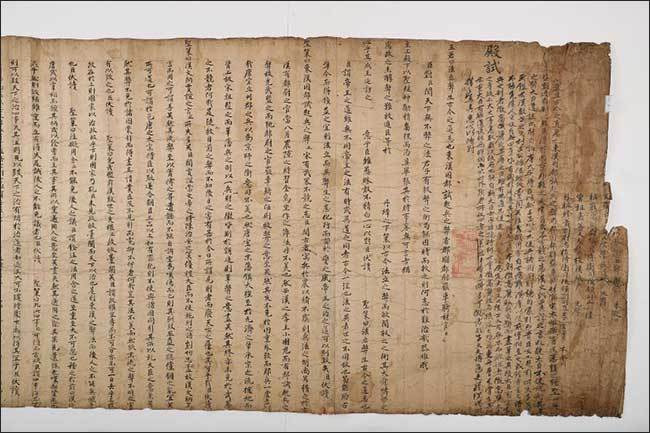
Over time, this term evolved into a metaphor.
It moved beyond referring to a single top-tier answer sheet to describing the most outstanding piece among various events or works.
Like saying, “The final chase scene in that movie was definitely the highlight (ap-gwon).” Interestingly, other abstract words like ‘best’ or ‘masterpiece’ have no relation to the state exam system.
Only ‘ap-gwon’ carries the physical image of pressing something down. Since the scene of literally sitting on top of other scrolls is visualized in the mind, it is bound to feel more vivid than abstract descriptors. This is likely why the word remains so widely used even long after the state exam system has disappeared.
3. Chwija(取才) and Chwija(取材): Same pronunciation, different Hanja
A word that immediately comes to mind when thinking of journalists is ‘chwija’ (取材).
However, few people know that the word ‘chwija’ also existed in the Joseon Dynasty. The Hanja and the meaning were completely different from today.
In Joseon, ‘chwija’ (取才) meant ‘selecting (取) talented (才) individuals’ and was a special exam held separately from the civil and military service exams to hire lower-level administrators or technical officials.
Table: Comparison of Joseon-era Chwija(取才) and Modern Journalistic Chwija(取材)
| Classification | Chwija(取才) — Joseon Dynasty | Chwija(取材) — Modern |
| — | — | — |
| Hanja | Take (取), Talent (才) | Take (取), Material (材) |
| Meaning | Exam for selecting talented people | Act of gathering news material |
| Origin | Joseon talent recruitment system | Modern Japanese media terminology |
The ‘chwija’ (取材) we use today was borrowed directly from modern Japan, where it referred to the ‘act of obtaining (取) article materials (材).’ When newspapers were introduced during the enlightenment period, a technical term was needed, and this word, sharing the same pronunciation, took its place.
There are many other Japanese remnants in the media industry besides ‘chwija.’ Terms like ‘satsumawari’ (covering police stations) and ‘yama’ (the core of an article) are still used as common practice in newsrooms.
In a sense, two ‘chwija’ words with different Hanja coexist in the Korean language, but the media term has overwhelmingly won out.
4. ‘Chulsin’ was a source of pride engraved on a certificate of success
When a candidate passed the state exam, they received a red certificate called a Hongpae (紅牌). On it, the word ‘chulsin’ (出身) was clearly written, indicating that the successful candidate had officially become an official. Looking at Seoul Museum of History archives, the phrase “person who passed (及第) the military exam (武科) and became a chulsin (出身)” remains on Admiral Yi Sun-sin’s military exam certificate.
‘Chulsin’ did not mean ‘where one came from,’ but was an honorable declaration that one had ‘stepped out into the world’ as a state-sanctioned elite.
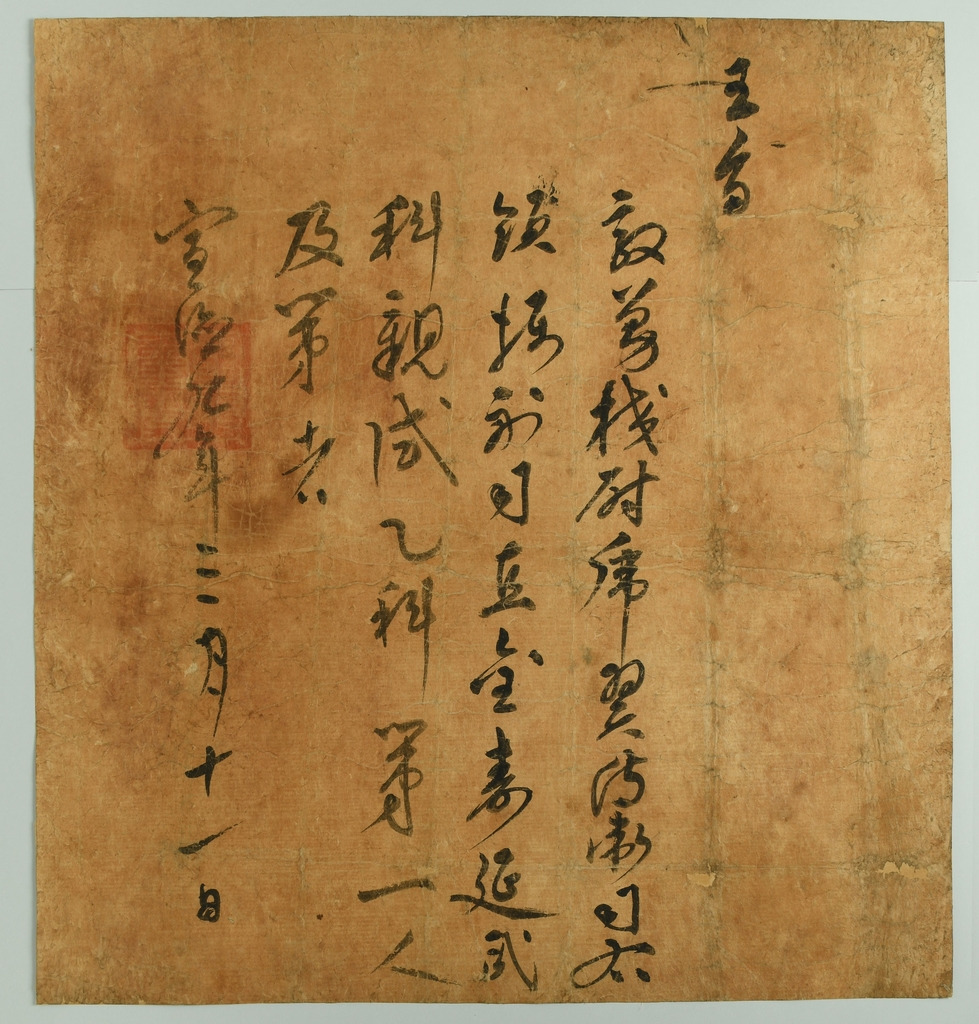
The state exam system is gone, but the university system has inherited its place, and the desire that served as a channel for social mobility continues under the name of academic elitism.
As the institution for proving individual ability shifted from exam halls to universities, the meaning of ‘chulsin’ naturally expanded to mean ‘which university one graduated from.’
Today, it is most commonly used to indicate a school, like ‘Seoul National University chulsin,’ but it is also used broadly to indicate background or affiliation, such as ‘Samsung chulsin’ or ’engineer chulsin.’
When you think about it, the single word ‘chulsin’ encapsulates the sensibilities of an era where one had to pass through a narrow door to be recognized.
The exam hall changed to a university, and the Hongpae changed to a diploma, but the habit of describing people by ‘what they passed through’ has not changed much.
5. ‘Takbang’ disappeared, and only ‘Nakbang’ remains
I would like to introduce one unfamiliar old term in closing.
‘Takbang-naeda.’ It is a combination of ’tak’ (擢), meaning ’to select,’ and ‘bang’ (榜), meaning ‘a list of successful candidates,’ referring to the honor of having one’s name listed on the state exam results.
However, this word is rarely used now. The place of ’takbang,’ which signified success, has been taken by the plain word ‘hapgyeok’ (passing).
Conversely, ‘falling from the list,’ or ’nakbang’ (落榜), is still widely used.
This asymmetry is likely due to the power of the metaphor of ‘falling.’
The frustration of failure is felt much more vividly through ’nakbang’ than the neutral ‘bulhapgyeok’ (non-passing). On the other hand, there was no particular reason for ’takbang’ to be pushed out by the dry term for passing, yet it ceded its place.
It is an interesting paradox of language that words tied to intense negative experiences survive longer than words for procedural success.
From tourism to nakbang, if you follow these five words, only one thing remains.
Even if institutions disappear, the emotions and desires of the people who experienced them remain in language like fossils.
I would love to hear in the comments which of these words’ original meanings you found most unfamiliar.