
A 500-Year Stigma Encapsulated in a Single Word: Its Origin Was Resistance.
Today, the word ‘Ddaengchu’ is used to refer to “a derogatory term for an unworthy monk.” However, the origin of this word was not simply an insult. It originally derived from a secret organization called ‘Dangchwi (黨聚)’, formed to fight against the oppressive Buddhist policies of the Joseon Dynasty.
This article traces the two faces of the hidden history behind the word Ddaengchu. By following the process of how a symbol of noble resistance became synonymous with degradation and contempt, you will gain a new perspective on language and history.
1. The Origin of Ddaengchu: The Secret Society ‘Dangchwi (黨聚)’ Born from an Era of Persecution
To understand the emergence of ‘Dangchwi’, the etymon of ‘Ddaengchu’, one must first know about the religious policies of the Joseon Dynasty. Joseon, which adopted Confucianism as its state ideology, implemented a policy of ‘Sungyu Eokbul (崇儒抑佛)’, meaning to exalt Confucianism while suppressing Buddhism.
The Sungyu Eokbul Policy: Shaking the Foundations of Buddhism
The Joseon court enacted powerful policies that uprooted the foundations of Buddhism.
- Forced Consolidation of Temples: The thousands of temples that existed during the Goryeo Dynasty were reduced to only 36 by the time of King Sejong.
- Deprivation of Economic Foundations: The confiscation of land and slaves owned by temples and the abolition of tax exemptions prevented economic independence.
- Degradation of Social Status: Monks were prohibited from entering the capital, and the official monk qualification system, Docheopje (度牒制), and the monk examination, Seunggwa (僧科), were abolished, blocking social mobility.
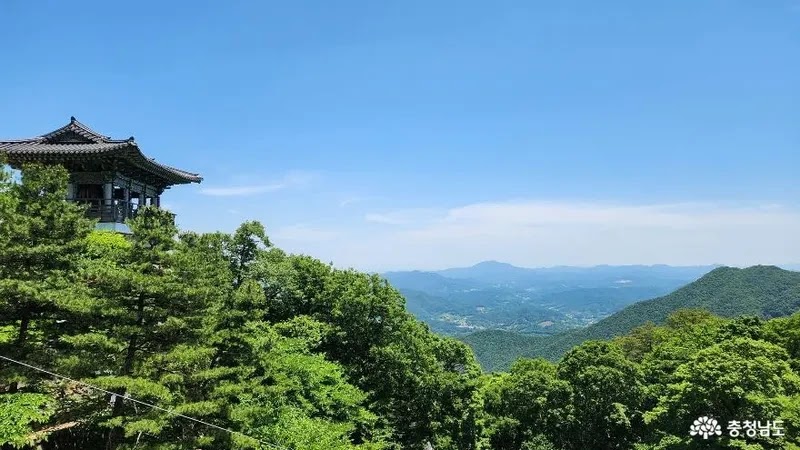
Struggling for Survival: The Emergence of ‘Dangchwi (黨聚)’
In the midst of such severe persecution, monks formed a secret underground organization called ‘Dangchwi (黨聚)’ to protect themselves. ‘Dangchwi’ means to gather as a group (黨) to resist oppression and protect Buddhism.
As the state destroyed the official order of the monk community, ‘Dangchwi’ played a role akin to a ‘shadow state’ to fill that void. They established a nationwide network and operated under the unwritten rule that “we help each other in difficult times, and if a member is harmed, we will take revenge.” This shows that they were a powerful organization with their own discipline and protective capabilities, beyond just a social club.
The Idealistic Face of ‘Dangchwi’
‘Dangchwi’ was not merely a self-interest group. It embodied the spirit of resistance inherited from the Uiseunggung (義兵僧), who rose to save the nation during the Imjin War and the Manchu invasions.
Furthermore, their activities are sometimes linked to the belief in Maitreya. Just as Maitreya is believed to descend and save suffering beings, ‘Dangchwi’ is interpreted as a group with revolutionary ideals aiming to overthrow a corrupt world and open a new one.
2. From Resistance to Plunder: The Process of Transformation into Ddaengchu
Initially advocating for the protection of Buddhism, ‘Dangchwi’ gradually lost its essence and walked the path of corruption over time.
The Beginning of Transformation: Influx of ‘Unqualified Monks’
A decisive turning point was the abolition of the monk qualification system, Docheopje. With the path to becoming an official monk blocked, many individuals seeking to avoid military service or labor, as well as orphans and widows facing dire economic situations, flocked to the temples.
These ‘fake monks’ acted as monks without any will to adhere to Buddhist teachings or practices, merely using the monk’s guise as a means of survival. Consequently, the temples became filled with those loyal to secular desires.
The Dark Side of ‘Dangchwi’
With the influx of new members, the goals of ‘Dangchwi’ transformed from noble resistance to mundane power struggles. During this period, ‘Dangchwi’ morphed into a group akin to organized criminals, engaging in violence and plunder while roaming the temples.
They harassed monks who were diligently practicing and seized the wealth of the temples, openly violating the precepts by drinking and eating meat (ju-seok-eo-yuk, 酒色魚肉).
At this point, ‘Dangchwi’ was branded as a fallen monk group in the public perception. This was also a result of the Joseon court first destroying the self-purifying ability of the monk community through the abolition of the Docheopje. The state later condemned and suppressed the ‘problematic monk’ group it had created under the name ‘Dangchwi’.
3. Traces of ‘Ddaengchu’ in History
‘Dangchwi’ was not merely a figment of rumor. Its activities are clearly recorded in various historical documents, including the Annals of the Joseon Dynasty.
‘Dangchwi’ in Legends and Records
- Shin Don’s Secret Reform Group (Late Goryeo): There is a legend that Shin Don organized ‘Dangchwi’ with monks for reform and deliberately committed acts of breaking precepts to evade surveillance by pro-Yuan factions.
- Alliance with Jang Gil-san (Late Joseon): Records in the Annals of the Joseon Dynasty mention an alliance with the bandit force of Jang Gil-san, one of the three great bandits of Joseon. This shows that ‘Dangchwi’ formed a network of social discontent by connecting with other marginalized groups.
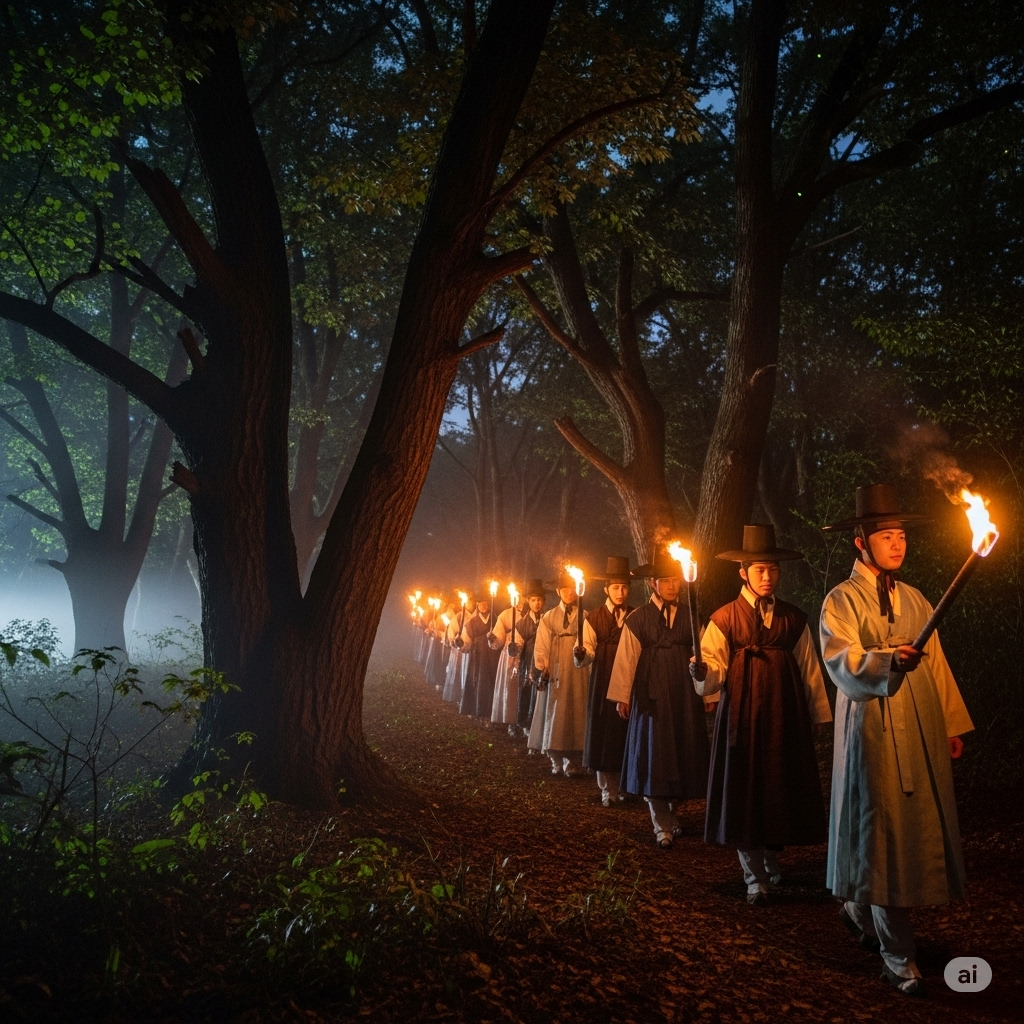
A Failed Revolution: The Unbu Rebellion of 1697
The climax of the ‘Dangchwi’ story is the conspiracy incident that occurred during the reign of King Sukjong. The leader of ‘Dangchwi’ in Geumgangsan, the monk Unbu (雲浮), was caught attempting to overthrow the Yi dynasty by collaborating with the Jang Gil-san forces.
Although it failed, this incident is the most definitive evidence that ‘Dangchwi’ was a political force capable of threatening the state system, beyond mere delinquents. Thus, depending on the perspective, ‘Dangchwi’ was evaluated as either a rebel or a criminal, or as a righteous figure against corrupt power. However, the fact that only the negative connotation of ‘Ddaengchu’ remains today shows that the Confucian state’s perspective ultimately triumphed in the competition of historical narratives.
4. From ‘Dangchwi’ to ‘Ddaengchu’: The Stigma Inscribed in Language
How did ‘Dangchwi’ become today’s ‘Ddaengchu’? This involves not only a change in the meaning of the word but also a phonetic transformation, specifically the evolution of sounds.
The Path of Phonetic Change: Dangchwi [dang-chwi] → Ddaengchu [ttaeng-chu]
The most widely accepted path is the three stages of ‘Dangchwi (黨聚)’ → ‘Dangchu’ → ‘Ddaengchu’.
- Stage 1 (‘Chwi’ → ‘Chu’): The diphthong ‘ㅟ’ in ‘Chwi [tɕʰwi]’ was simplified to the monophthong ‘ㅜ’, resulting in ‘Dangchu’.
- Stage 2 (‘Dang’ → ‘Ddaeng’): The initial sound ‘ㄷ [d]’ changed to the tense sound ‘ㄸ [tt]’ through the phenomenon of tense sound formation (경음화), resulting in ‘Ddaengchu’.
The Role of Tense Sound Formation: Embedding Contempt in Sound
The change from the soft plain sound ‘ㄷ’ to the strong explosive tense sound ‘ㄸ’ is not coincidental. As the behavior of the ‘Dangchwi’ group became violent, the feelings of contempt and hatred that the public developed towards them were reflected in the sound.
The sound ‘ㄸ [tt]’ sounds much harsher and more aggressive than ‘ㄷ [d]’. By pronouncing ‘Ddaengchu’ instead of ‘Dangchu’, people expressed their negative feelings towards that group through the very pronunciation. This is a powerful example of sound symbolism, where the sounds of language evolve alongside the meanings of words, making language itself a tool for expressing social stigma.
‘Ddaengcho’ is a Misspelling
Sometimes it is written as ‘Ddaengcho’, but this is an incorrect spelling of ‘Ddaengchu’. It seems to be influenced by the similarly pronounced spicy pepper ‘Ddaengcho’, and etymologically, it has no basis.
| Historical Period | Dominant Term | Core Identity / Meaning |
|---|---|---|
| Late Goryeo (Legend) | Dangchwi (黨聚) | Secret Political Reform Group (led by Shin Don) |
| Early to Mid Joseon | Dangchwi (黨聚) | Secret Buddhist Resistance Organization / Uiseunggung |
| Mid to Late Joseon | Dangchwi (黨聚) / Ddaengchu | Fallen ‘Unqualified’ Monk Group |
| Modern Korean | Ddaengchu / Ddaengjung | Slang term for corrupt monks |
Conclusion: The Shadows of History Living Within Words
The word ‘Ddaengchu’ is not just a simple insult; it is a linguistic artifact that encapsulates 500 years of religious conflict, social alienation, and the power of authority in Joseon. Before knowing the origin of ‘Ddaengchu’, I too thought of it merely as a negative term, but understanding the history of resistance and corruption embedded within it has given me a different sense of its weight.
Key Summary of the ‘Ddaengchu’ Story:
- The Beginning of Resistance: The etymon of ‘Ddaengchu’, ‘Dangchwi’, was a secret resistance organization of monks aiming to protect Buddhism against the Sungyu Eokbul policy of Joseon.
- The Process of Corruption: With the influx of unqualified monks due to the abolition of the Docheopje, ‘Dangchwi’ lost its ideals and transformed into a group engaging in violence and plunder.
- Linguistic Stigma: The public’s feelings of contempt transformed the pronunciation of ‘Dangchwi’ into the harsh ‘Ddaengchu’, and this negative meaning has persisted to this day.
Within the words we use carelessly, echoes of forgotten history are hidden. How about taking an interest in the etymology of other words around you in the future?