
The name CoreWeave appears frequently in AI stock news.
CoreWeave is a company that purchases NVIDIA GPUs and leases them to AI firms, financing these purchases through debt. With Q2 2026 revenue of $2.575 billion (roughly 2.1x year-over-year) and a net loss of $626 million, the company sits at the heart of the AI bubble debate.
What is CoreWeave and How Does It Make Money?
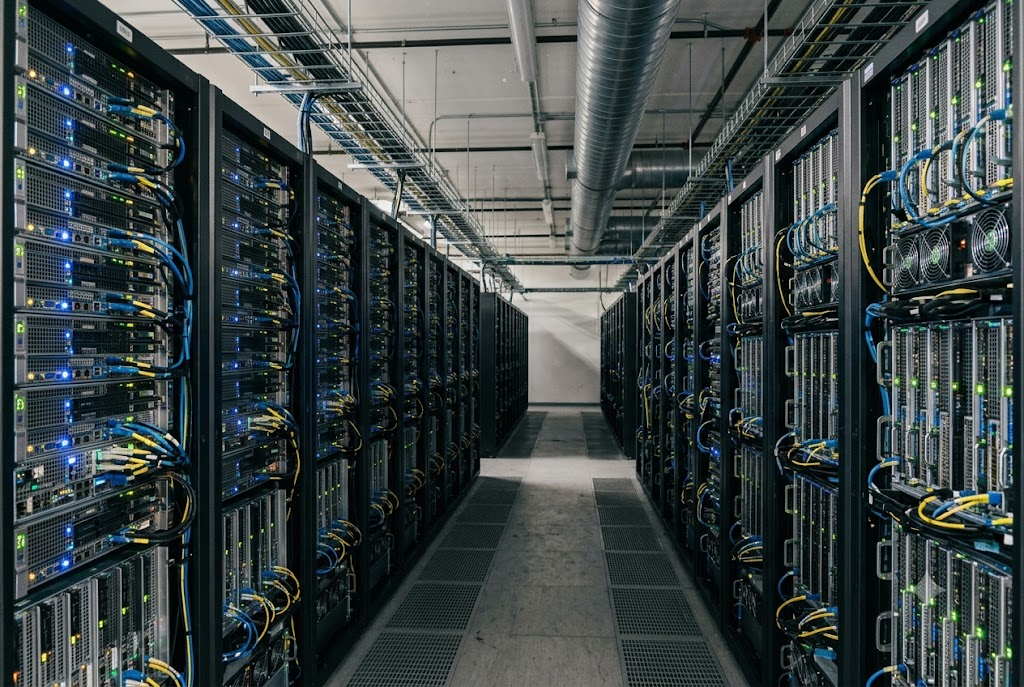
CoreWeave is a cloud company that houses GPU servers used for AI computation in data centers and rents them to companies on an hourly or contract basis. In short, it is an NVIDIA GPU rental business. Originally designed for graphics processing, GPUs have become the primary components for AI training and inference due to their ability to process vast amounts of calculations in parallel.
CoreWeave does not design these chips itself. Its business model involves purchasing chips made by NVIDIA, securing the buildings, power, cooling, and network infrastructure required to run them, and then selling that compute power to clients.
It is easy to understand if you compare it to a restaurant. The following is a hypothetical scenario to illustrate the structure, not actual figures.
Imagine someone takes out a loan to install several expensive ovens and signs multi-year supply contracts with large bakeries. If the contracts are fulfilled, the monthly revenue is used to pay interest and principal on the loan. The problem lies in the sequence: the cost of the ovens must be paid upfront while the revenue trickles in later, and revenue is concentrated among one or two clients. CoreWeave’s business is essentially this model scaled up to a much larger size.
*So, when looking at CoreWeave, viewing only revenue gives you half the picture.
This company’s capital flows in three stages.
First, a massive amount of money is spent to purchase NVIDIA chips and data center equipment.
Second, large clients like Microsoft, OpenAI, and Meta pay for usage of that compute power through long-term contracts.
Finally, banks and bond investors lend money based on those contracts.
It is a cycle where debt enables chip purchases, chips enable contract fulfillment, and contracts provide the basis for further debt.
In this flow, NVIDIA’s position is also worth noting.
NVIDIA is not only the chip supplier but, according to an SEC filing from September 2025, it is also the party that agreed to purchase unused data center capacity from CoreWeave until the end of the contract term. The initial value was reported as $6.3 billion, although the specific volume of the purchase was not disclosed.
Because the chip supplier supports the structure even when demand falls short, whether this relationship is viewed as a healthy collaboration or a circular structure is a central point of debate.
Who Are CoreWeave’s Major Clients and How Concentrated Is the Revenue?
The composition of clients explains both the risks and the stability of CoreWeave.
According to reports, Microsoft accounted for approximately 67% of 2025 revenue. Please note that this is secondary reporting and could not be cross-referenced with the original disclosure. Regardless, if one client accounts for about two-thirds of revenue, the entire company becomes vulnerable if that client reduces their contract size or shifts to their own data centers.
CoreWeave is aware of this weakness and is working to expand its client base.
In an April 2026 report, the contract with Meta was expanded to $21 billion, [Anthropic signed a multi-year capacity contract](/en/posts/samsung-skhynix-anthropic-investment-ai-semiconductor-strategy/), and Jane Street signed a $6 billion compute contract alongside a $1 billion equity investment at $109 per share. Combined with a multi-year contract with OpenAI, the total is reportedly up to approximately $22.4 billion. The Q2 press release also introduced new clients like Caterpillar, Grammarly, and Bentley Systems.
There is one thing to note here.
Even as the number of clients increases, the fact that most top-tier clients are AI companies remains unchanged.
Microsoft, Meta, OpenAI, and Anthropic all operate under the same assumption that AI demand will continue to grow.
Even if the number of clients increases, the diversification effect is limited if the risks are directed in the same way.
How Much Debt Does CoreWeave Have and What Is Its Structure?
Total debt at the end of Q2 was reported at approximately $35 billion](https://longyield.substack.com/p/coreweave-books-104-billion-it-also), of which about $31.4 billion is recourse debt that the company must repay directly, and about $3.7 billion is non-recourse debt limited to specific assets or projects. Some reports calculate [total obligations including leases at approximately $51.6 billion. Cash at the same time was approximately $5.52 billion. Because the figures vary depending on how debt is calculated, the debt size differs from article to article.
More interesting is the type of debt.
According to the Q2 press release, there was a $3.1 billion secured delayed-draw term loan, which the company introduced as the first public syndicated method secured by HPC infrastructure. A delayed-draw loan is a method where funds are not received all at once but are drawn down in stages according to the speed of equipment installation. This was added to over $10 billion in unsecured bonds and convertible notes, and net proceeds from debt issuance in Q2 were $13.457 billion. Secured debt has lower interest rates but is tied to equipment and contracts, while unsecured debt is more flexible but carries higher interest rates.
Let’s look at how this interest burden appears on the income statement.
Operating loss in Q2 was $49 million, which is not significant. However, net interest expense was $640 million (compared to $267 million the previous year), resulting in a net loss of $626 million. Comparing the net interest expense to the $2.575 billion revenue, it accounts for about 25%, meaning one-fourth of revenue is going toward interest (estimated). Meanwhile, Adjusted EBITDA, a metric before depreciation and amortization, was $1.51 billion, with a 59% margin. The company has the power to operate equipment on a cash basis, but the cost of the equipment itself and the debt are eroding profits. I could not confirm the depreciation and amortization costs or the useful life of the GPUs in this study, but it is worth noting that how quickly chips become obsolete is the real make-or-break factor for this business.
Now, the risk becomes clear when looking at cash flow.
Q2 equipment purchases were $6.422 billion, about 2.5 times the revenue (estimated), and the reported free cash flow was approximately -$5.74 billion. Capital expenditures for the first half of the year were $14.117 billion, and the [2026 annual guidance is known to be $35 billion to $39 billion](https://longyield.substack.com/p/coreweave-books-104-billion-it-also). This means they are spending much more than they are earning and are continuing to fill the gap by borrowing.
How Reliable Is CoreWeave’s $104 Billion Backlog?
Backlog is the amount of money contracted but not yet recognized as revenue.
CoreWeave’s [backlog at the end of Q2 was approximately $104 billion](https://investors.coreweave.com/news/news-details/2026/CoreWeave-Reports-Strong-Second-Quarter-2026-Results/), and the company stated that this figure does not include over $25 billion in net new commitments added in the three months after June 30. Given that revenue for the same quarter was $2.575 billion, a simple division suggests dozens of quarters’ worth of revenue are in the contracts. However, this division is just to get a sense of scale; actual revenue recognition speed differs depending on the contract duration and delivery timing.
There is a reason why those who read this figure as a basis for optimism and those who see it as a basis for caution are divided.
Optimists believe that contracts represent future revenue and that large clients have already signed on.
Skeptics point out that the backlog is a promise, not cash.
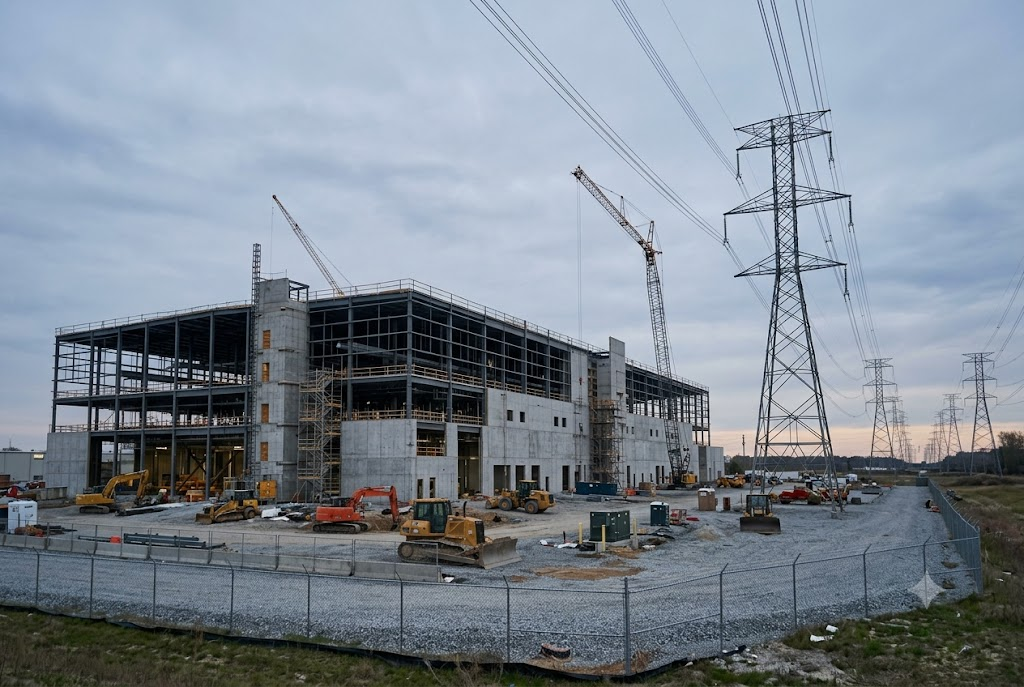
Contracts are only meaningful if the client can continue to pay, and revenue only materializes if CoreWeave provides the power and data centers on time. The company stated its operational power is about 1.5GW, while contracted power is about 3.7GW. Since more than half of the contracted power is not yet operational, if construction or power procurement is delayed, a situation where the backlog grows while revenue is delayed is possible.
How Do AI Bubble Theorists and Demand Sustainability Theorists Read CoreWeave Differently?
In the bubble debate, CoreWeave serves as a microcosm.
The logic of the demand sustainability theory is simple. As more people and companies use AI services, more data centers are needed to handle the computation.
They cite the scale of big tech investment as evidence. Meta raised its 2026 capital expenditure guidance from $115-$135 billion to $125-$145 billion, and the same report cited broadcast comments that big tech’s AI-related spending in 2026 exceeded $700 billion. Q1 2026 capital expenditures were approximately $30.88 billion for Microsoft (an 84% increase year-over-year), $35.67 billion for Alphabet, and $44.2 billion for Amazon. The interpretation is that the money spent by these heavy hitters eventually flows into demand for chips and compute capacity, and rental businesses like CoreWeave are positioned to capture that demand.
Those who are concerned read the same numbers differently.
Big tech invests with its own cash, but CoreWeave does so with debt. If demand falters, big tech can simply cut investment, but CoreWeave is left with purchased chips and borrowed money. The fact that most clients are betting on the same AI demand, and the circular structure where NVIDIA guarantees unused capacity, are also ingredients for the bubble theory. Amidst these concerns, how the market prices CoreWeave’s bonds is the most direct signal.
Optimism and concern actually ask different questions about the same facts.
Optimists ask if demand will continue to grow, while skeptics ask if they can repay their debt if demand pauses for a while.
Both questions can be true at the same time.
This is because even if demand grows in the long term, companies could fail to pay interest during a mid-term slump. I see this as the core of the CoreWeave debate. It is not a question of predicting the outlook but a question of stamina, which is why people reach different conclusions even when looking at the same data.
Why Did CoreWeave’s Stock Drop Sharply on October 14, 2026?
On October 14, CoreWeave’s stock fell by as much as 16% during intraday trading. On the same day, Oracle fell about 7%, Nebius 10%, and Dell 10%, indicating a broader correction in AI infrastructure stocks rather than an event specific to CoreWeave. The ROIC.ai article cited concerns over whether the debt-fueled expansion model can be supported by cash flow and an environment where lenders are demanding higher risk premiums as the background for the decline.
Signals from the bond market are more specific.
According to the same article, the market yield for longer-term unsecured bonds was about 14.8%, a significant difference from the 9.625% coupon rate. Shorter-term bonds were at about 14.9% (9.75% coupon rate), and citing a Bloomberg report, it was stated that the former bonds were trading below 80 cents on the dollar.
There is a point to be cautious about here. The rise in market yield does not mean the interest CoreWeave pays has increased. It is a phenomenon where the price of already issued bonds has fallen, making the yield for current buyers look higher. It is a signal that bond investors perceive higher risk, not that CoreWeave’s interest burden has immediately increased. However, it is significant in that this market rate could become the benchmark when borrowing new money.

CEO comments should also be noted. Some media reported that CEO Mike Intrator said the “market is acting irrationally,” but the Crypto Briefing article also presented it as an internal memo without a direct quote, and the original memo could not be verified. The intent of the memo reported was a claim that the backlog and AI infrastructure investment are not a bubble but a driver of economic expansion. Therefore, it is safer to read this statement as the company’s position. I could not find reliable confirmation figures regarding the rebound on October 15.
What Checkpoints Should You Look For When Reading CoreWeave Reports?
This article is not a recommendation to buy or sell, nor does it predict the stock price.
However, I can summarize the points that can serve as a standard when looking at CoreWeave news.
First is the relationship between interest and profit.
You can compare quarterly whether operating profit covers interest expenses and if the proportion of net interest expense to revenue is decreasing. In Q2, net interest expense was about one-fourth of revenue.
Second is client concentration.
There were reports that Microsoft accounted for about 67% in 2025, so the target for verification is how much this percentage has dropped in new disclosures.
Third is the speed at which the backlog converts to actual revenue.
No matter how large the $104 billion is, revenue will be delayed if power and equipment do not follow in time. You can check if the gap between 1.5GW of operational power and 3.7GW of contracted power is narrowing.
Fourth is the terms of new borrowing.
Whether secured loans continue to be available and how high the market rate for unsecured bonds is tells you if the company’s funding lifeline is open. Fifth is the lifespan of the equipment. Depending on how many years GPUs are used and whether they retain value as used hardware, the outcome of the same investment will differ. Since this information is not confirmed, you must read the disclosures directly.
Lastly, develop a habit of distinguishing the source of reports.
In this article, I have distinguished between primary disclosures (company press releases) and secondary reports, and noted when figures could not be verified.