
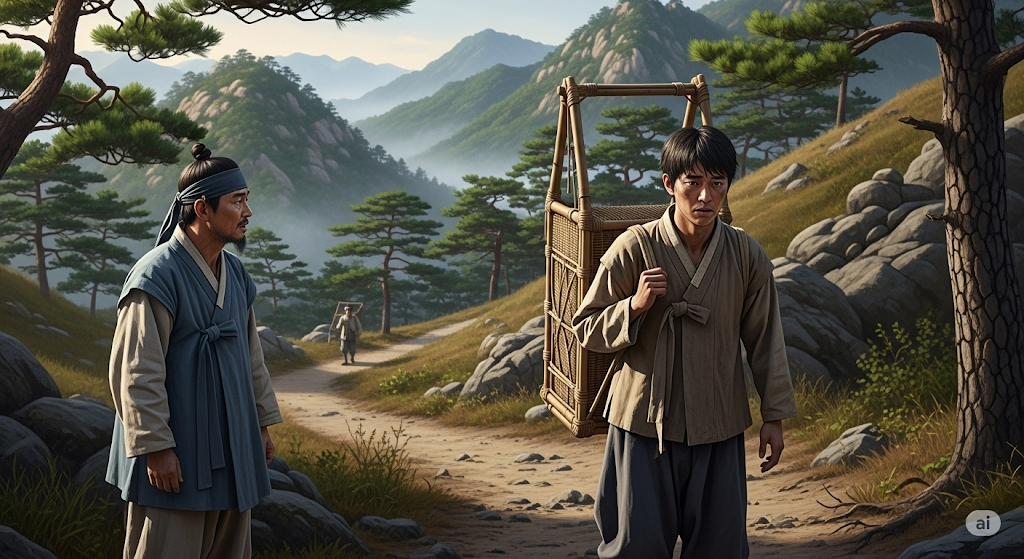
A son carrying his elderly mother up a mountain on an A-frame carrier, followed by his young son who gathers the carrier afterward. It is a scene most of us have heard of at least once in our childhood.
However, Goryeojang is not an actual custom from the Goryeo dynasty. It is closer to a senilicide folktale that arrived from Buddhist scriptures and Chinese stories about filial piety, which was later rebranded as a ‘custom of the Goryeo era’ during the modern period.
I had two questions.
Was Goryeo truly a nation that abandoned its elderly parents? If not, when and through whose hands did this story enter our history?
Following the records, the answers pointed in almost the exact opposite direction.
Why Goryeojang Could Not Be a Custom: Goryeo Punished Unfilial Behavior by Law
If Goryeojang had been a custom, there would have to be traces of it in laws and institutions. The actual evidence points in the opposite direction.
The Penal Code of the Goryeosa (History of Goryeo) adopted the Tang Code, designating unfilial behavior as one of the ‘Ten Abominations’ (십악), which were grave crimes excluded from royal pardons. Failing to properly support parents or holding celebrations during the mourning period were punishable offenses. Crimes intending harm to parents were met with capital punishment.
One thing caught my attention here.
Just because the laws were rigorous doesn’t mean unfilial acts never occurred. However, if abandoning parents were a ‘custom,’ the state would have no reason to place it on a list of grave crimes. Customs and penal codes cannot point in opposite directions in the same society.
In the biographies section of the Goryeosa, there are stories of filial children like Choe Nu-baek, who sought out the tiger that killed his father to avenge him, and the state honored such examples as role models.
Elderly Welfare in Goryeo: Records Opposite to Goryeojang
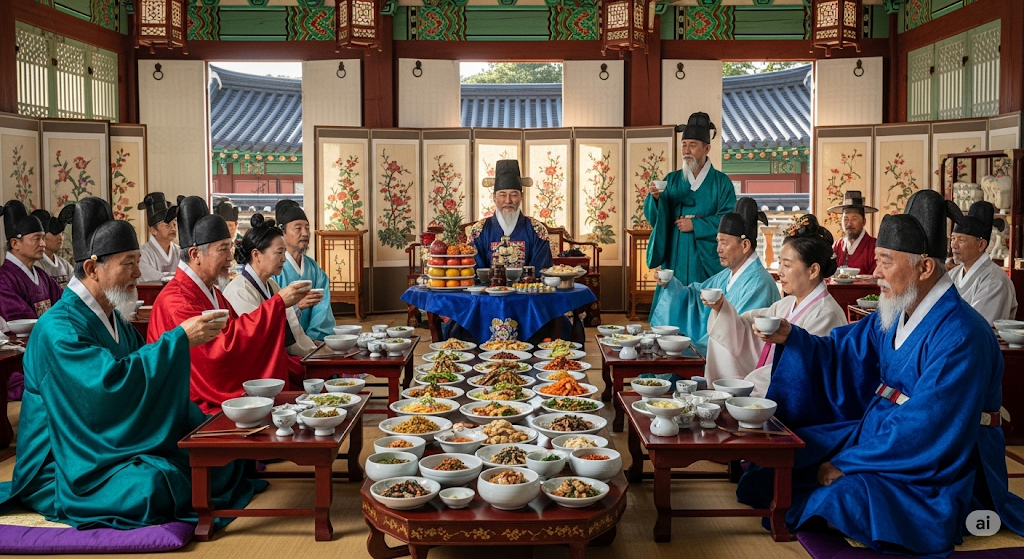
It wasn’t just about laws. According to the Encyclopedia of Korean Culture’s entry on elderly welfare, the Goryeo court had several systems in place to care for the elderly.
- Yangnoyeon (Feast for the Elderly): A banquet hosted by the king for those over 80, providing food and gifts.
- Dongseo Daebiwon & Hyeminguk: Institutions that provided treatment and medicine to the poor and sick.
- Support for Caregiving: Exemptions from forced labor or military service for children caring for aged parents, or granting leave to officials to care for sick parents.
The strongest evidence refuting Goryeojang is not that ’there are no records of abandonment.’ It is that there are abundant records explicitly telling people not to abandon, but rather to care for their parents.
The Roots of the Goryeojang Folktale: Indian and Chinese Senilicide Legends
Then where did the story of the A-frame carrier come from?
Its roots lie in ‘senilicide folktales’—a collection of fables about abandoning the elderly.
Similar stories are spread throughout Asia, including India, China, and Japan, and none of them represent records of actual customs. It is the same as how Japan’s legend of ‘Ubasute-yama’ (the mountain where old women are abandoned) is not evidence that such a custom existed in Japan.
There are two main branches of the story we know.
First, the story of the grandson’s realization.
The archetype is the story of Yuan Gu from the Chinese Xiaozi Zhuan (Biographies of Filial Sons). When a father, who has abandoned his grandfather, tries to throw away the carrying basket as well, the grandson says, “I will use this when I abandon you later.” The father repents and brings the grandfather back. This story was also included in the Samgang Haengsilto, a textbook on ethics in Joseon. Joseon people read this as a lesson on filial piety from China.
Second, the story of the elder’s wisdom saving the nation.
The ‘Senilicide Country’ story from the Buddhist scripture Zabaozangjing (Sutra of Miscellaneous Treasures). In a country where there is a law to abandon the elderly, the wisdom of a father hidden in secret solves a neighboring country’s difficult problem, eventually leading to the repeal of the law. The Senilicide Country in the background is a fictional place.
Both stories have the same ending. The elderly person meant to be abandoned returns, and filial piety triumphs. In other words, it was originally a story not to abandon them.
The Process of ‘Senilicide Country’ Becoming ‘Goryeojang’ Is Still a Hypothesis
It has not been clearly established how the story of the fictional Senilicide Country came to be attached specifically to Goryeo.
Explanations often suggest that the words ‘Giro’ (abandoning the elderly) and ‘Goryeo’ became conflated during oral transmission, but this is a conjecture by researchers, not a confirmed fact from records.
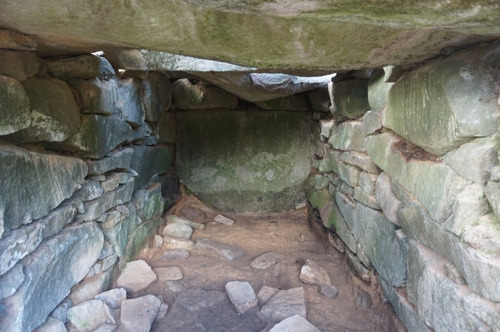
What is more certain is the original meaning of the word. There is an explanation that ‘Goryeojang’ (高麗葬) was used literally to refer to ‘Goryeo-style funerals’ or ’tombs from the Goryeo period.’ It is suggested that the term, once used to describe old stone chamber tombs, later took on the meaning of a custom of abandoning parents.
Goryeojang Was Solidified Under Colonial Historiography During the Japanese Occupation
The period when the story became ‘history’ is the modern era. However, the timeline is worth noting.
In 1882, the American William Griffis wrote in Corea, the Hermit Nation that there was a custom of burying the elderly alive during the Goryeo period. Griffis had never visited Korea and relied mostly on Japanese sources. Since this was nearly 30 years before the forced annexation, the image of Goryeojang was not created solely after colonial rule began.
However, it was the colonial period that spread and solidified that image.
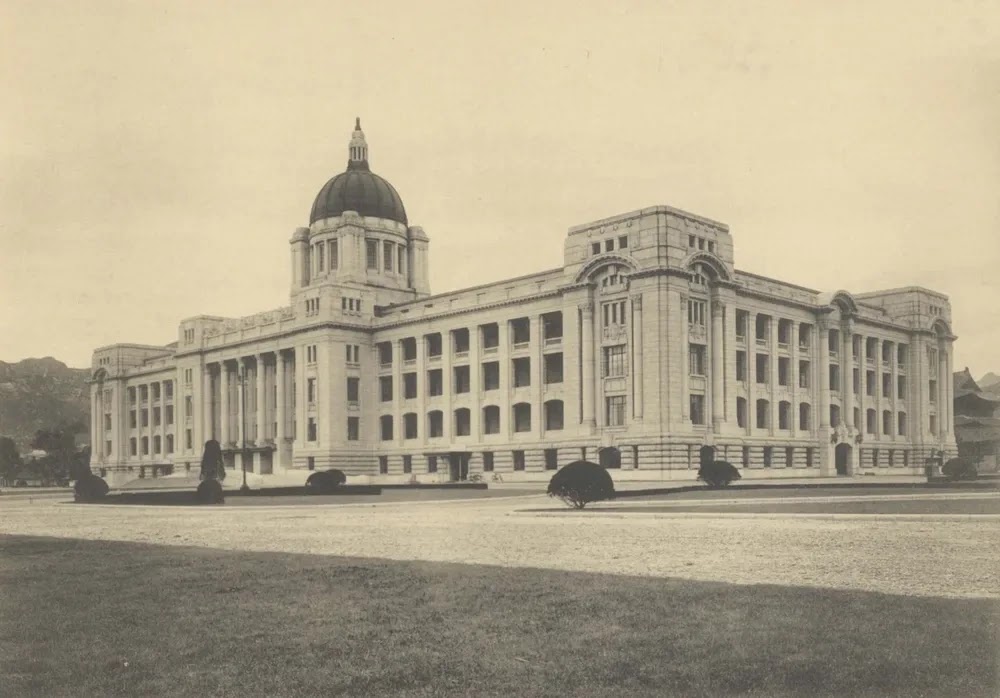
In 1924, the Joseon Fairy Tale Collection published by the Japanese Government-General of Korea included the story of abandoning parents, and through education and publication, it took root as an ‘old custom of Joseon.’ Colonial historiography portrayed Korean history as stagnant and uncivilized, and the story of a people who would even abandon their parents was a perfect fit for that narrative.
Stories of grave robbing also follow this.
After the opening of ports, grave robbing of Goryeo tombs for Goryeo celadon became rampant. It is argued that the claim, “This isn’t an ancestral grave, but the site of a Goryeojang for abandoned elderly,” was used to rationalize the looting. While the grave robbing itself is well-documented, whether the term ‘Goryeojang’ was intentionally mobilized is largely based on testimonies and interpretations. Therefore, I will leave it as ’there is such a claim.’
What Was Different Between the Original Fables and the Goryeojang Myth
Here is a table showing where the same plot was twisted.
Comparison of the original Goryeojang-related fables and the modern ‘Goryeojang custom’ narrative
| Category | Original Fables (Xiaozi Zhuan, Zabaozangjing) | Modern ‘Goryeojang’ Narrative |
|---|---|---|
| Background | Ancient China / Fictional Senilicide Country | The historical Goryeo dynasty |
| Conflict | A son’s unfilial act / King’s foolish law | Presented as a society-wide custom |
| Protagonist | Grandson / Wise elderly person | None. The custom itself is the subject |
| Ending | Recovery of family / Repeal of bad law | No ending, left as a ‘barbaric past’ |
| Message | Filial piety is precious, respect the elderly | Koreans abandoned their parents |
While filling out the table, one strange thing stood out.
In the original stories, the most important part—the ending where the elderly person returns and the law of abandonment disappears—is entirely missing from the ‘Goryeojang’ narrative.
Once the story lost its ending, only the scene of abandonment remained.
When You Hear the Word Goryeojang
Goryeo was not a nation that abandoned its elderly parents.
It punished unfilial behavior as one of the Ten Abominations, and the king personally hosted banquets for the elderly.
the A-frame carrier story was a fable brought from China and India to teach filial piety, and that fable solidified into a ‘Goryeo custom’ through modern books and colonial education.
Some parts, like how the Senilicide Country and Goryeo were conflated, remain unsolved.
Still, one thing is clear.
Next time someone says, “They say there was something called Goryeojang in the old days,” you can add that the original ending of that story was about the abandoned elder returning home.
If you are curious about similar stories, it is worth reading about incidents where fake news shook the Joseon dynasty, the technological disconnection of Goryeo celadon and movable type, or records of overseas troop deployments during the Goryeo and Joseon dynasties.