
Everyone likely remembers opening their classroom attendance book during their school days and seeing half the pages filled with Kim, Lee, and Park.
In fact, according to the 2015 Population and Housing Census released by Statistics Korea, one in five Koreans (21.5%) was a Kim.
It is rare to find a country anywhere in the world where the population is so heavily concentrated in just a few names.
However, if you trace this concentration back, you will find traces of a matrilineal society, the political calculations of dynasties, the collapse of the class system, and a history of resistance to protect one’s name.
Let’s follow this flow in chronological order.
Seong(姓) and Si(氏): Why did Korean surnames consist of two characters in the first place?
The single term ‘Seong-si’ (surname/clan name) actually overlaps two completely different concepts.
‘Seong (姓)’ was a marker of matrilineal lineage, while ‘Si (氏)’ was a marker of status obtained in a patrilineal society.
The Chinese character ‘姓’ is a combination of ‘woman’ (女) and ‘born’ (生), literally meaning ‘born of a woman.’
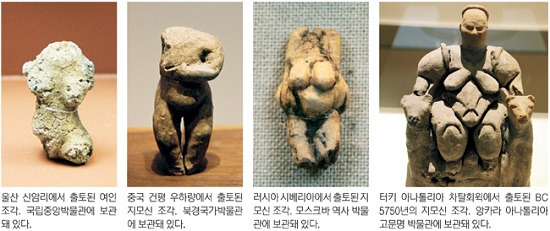
This is evidence that humanity’s oldest concept of kinship began with memories of a matrilineal society.
It is said that the surname of the Yellow Emperor (Huangdi) in ancient Chinese mythology was Ji (姬) because his mother gave birth to him by the Ji River.
The most important function of the ‘Seong’ was to define the scope of kin to prevent incestuous marriage.
Around the 11th century BC, as the Zhou Dynasty in China entered a patrilineal feudal society, the story changed.
The ‘Si (氏)’ that appeared at this time was different in that it was based on a man’s social status, such as territory and official rank, rather than blood.
While the surname of the Zhou royal family was Ji (姬), descendants who were enfeoffed in the state of Qi (齊) used the name Qi (齊). Even looking at the original name of Qin Shi Huang, ‘Ying-xing Zhao-shi Zheng (嬴姓 趙氏 政),’ we can see that ‘Seong’ and ‘Si’ were clearly different concepts originally.
[Table 1] Differences between Chinese ‘Seong’ and ‘Si’ which became the roots of Korean surnames
| Classification | Seong (姓) | Si (氏) |
|---|---|---|
| Origin | Mythological, matrilineal kin community | Political, branch of a patrilineal society |
| Succession | Matrilineal | Patrilineal |
| Function | Preventing incest, lineage marker | Social status and family marker |
| Marriage Rules | Marriage between same ‘Seong’ prohibited | Marriage between same ‘Si’ possible if ‘Seong’ differs |
As the aristocratic order collapsed, the boundary between the two concepts blurred, and the patrilineal ‘Si’ absorbed the functions of the ‘Seong,’ solidifying into today’s singular concept of ‘Seong-si.’
The introduction of Korean surnames was royal politics
The arrival of surnames on the Korean Peninsula was closer to a meticulous strategy by the ruling classes of Goguryeo, Baekje, and Silla than a natural cultural diffusion.
For diplomacy with China and internal governance, the royal families adopted Chinese-style surnames first and added founding myths to sanctify their authority.
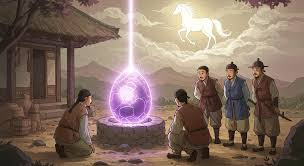
The foundation myth of the Silla Park clan is a prime example. It is said that the surname ‘Park (朴)’ was chosen because he was born from an egg that looked like a gourd (park). Symbols like the white horse, the egg, and the well were all devices to sacredly support Park Hyeokgeose’s royal authority.
The founder of the Kim clan, Kim Alji, was also said to have emerged from a golden chest, which is why his surname was ‘Kim (金).’ The use of a golden chest and a white chicken was clearly intended to emphasize the origins of the Kim dynasty. In the Three Kingdoms period, surnames were essentially political branding to strengthen royal power.
[Table 2] Introduction period of Korean surnames — Organized by Three Kingdoms royal families
| Kingdom | Royal Surname | Mythological Founder | Estimated Usage Period |
|---|---|---|---|
| Goguryeo | Go (高) | Go Jumong | 5th Century, King Jangsu era |
| Baekje | Buyeo (夫餘)·Yeo (餘) | Onjo | Mid-4th Century, King Geunchogo era |
| Silla | Park·Seok·Kim | Park Hyeokgeose·Seok Talhae·Kim Alji | Mid-6th Century, King Jinheung era (Kim) |
If you are curious about who Goguryeo was fighting at the time, it is worth reading about the story of Goguryeo defending against Emperor Taizong of Tang’s massive army.
Bon-gwan, an invention unique to Korean surnames
King Taejo Wang Geon of Goryeo used surnames as a tool for national integration.
He solidified the centralized system by promoting the ‘Sa-seong’ (granting of surnames) policy to loyal local lords and the ‘Bon-gwan’ (ancestral seat) system to formalize the regional base of families.
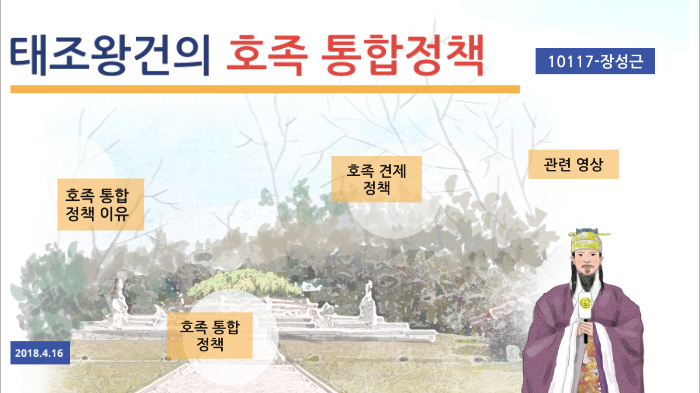
A representative anecdote is when Kim Haeng, a local lord in Andong, rendered distinguished service, and Wang Geon bestowed the surname ‘Gwon (權)’ upon him, making him the founder of the Andong Gwon clan.
Thanks to this Bon-gwan system, a system unprecedented in the world was completed, where even if people had the same surname, they were classified as different families if their ancestral seats were different, like ‘Gyeongju Kim’ and ‘Gimhae Kim.’
China also had regional distinctions called ‘Gunmang (郡望),’ but they did not have the powerful legal and social binding force of the Korean Bon-gwan.
In Japan, the ‘Uji’ and ‘Kabane’ were unified into ‘Myoji’ after the Meiji Restoration, but most of these originated from place names or occupations, differing from the blood-centered surnames of Korea.
In other words, the true originality of Korean surnames lies not in the surname itself, but in the Bon-gwan system that binds blood ties and regional ties together.
The real reason why Kim, Lee, and Park became so common in the late Joseon Dynasty
Until the mid-Joseon period, surnames were the exclusive property of the Yangban (aristocrats).
However, as the class system shook during the Imjin War and the Manchu invasions, commoners and slaves began to acquire surnames. Surnames quickly became popularized through ‘Gongmyeong-cheop’ (official titles sold to replenish state finances) and the ‘genealogy trade’ secretly conducted by the rising wealthy class.
In this process, many people chose to use the Kim, Lee, or Park surnames, which were associated with royalty or influential figures. This is the direct cause of the current population concentration in specific surnames. Why these three? For those seeking social advancement, it was advantageous to borrow an authoritative name, so it was a natural choice to flock to the most prestigious royal surnames.
Looking at a case introduced by The Hankyoreh, we can see the process of a slave named ‘Subong’ being registered in the census decades later as a Yangban named ‘Kim Subong.’
This is evidence of a quiet but certain social revolution where a surname was no longer something one was born with, but something that could be acquired.
Soshi-kaimei: The attempt to erase Korean surnames and the resistance that preserved them
Although all citizens legally acquired surnames and Bon-gwan with the implementation of the ‘Civil Registration Act’ in 1909,
In 1940, the Japanese colonial government forced the ‘Soshi-kaimei’ (changing of surnames) to erase national consciousness.
It was cultural violence intended to destroy the blood and Bon-gwan-centered family system and incorporate Koreans into the Japanese ‘Ie’ (family) system.
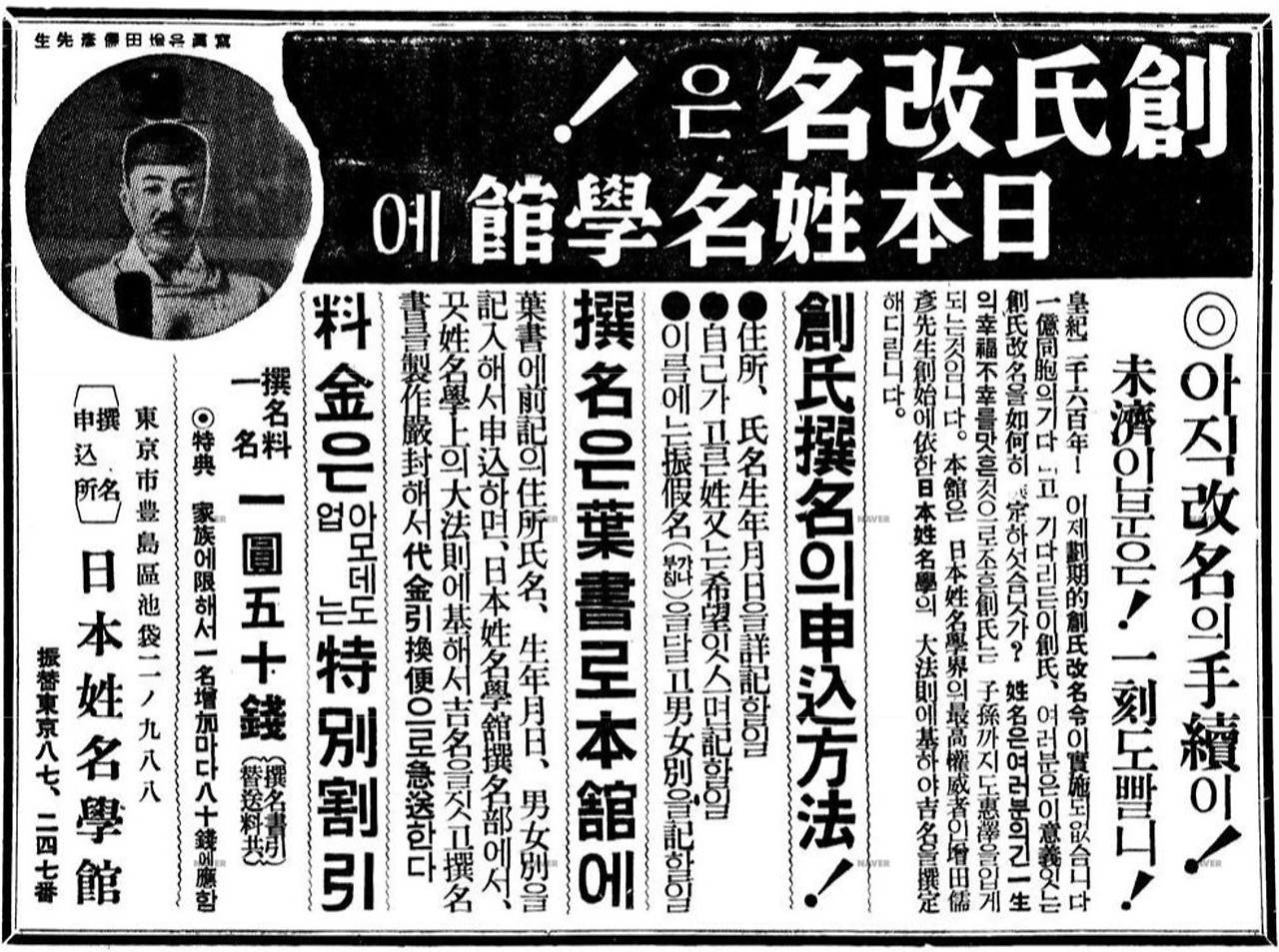
Even amidst such coercion, traces of resistance remained everywhere.
Some used their original Bon-gwan as their new clan name (e.g., Gimhae Kim → Kaneumi), or took names from the place names in their founding myths (e.g., Najeong well where Park Hyeokgeose was born → Arai). The moment people reclaimed their names after liberation through the ‘Joseon Name Restoration Order’ was an event that confirmed once again that surnames were the last bastion of national identity for Koreans.
Ultimately, the three characters of Kim, Lee, and Park contain memories of a matrilineal society, the political calculations of dynasties, the desperation for social advancement, and the struggle to protect one’s name.
What stories are hidden in your surname and Bon-gwan? Just searching for your ancestral seat in a search bar will start a historical journey more interesting than you might think.
References
- Busan Ilbo — One in five Koreans is a Kim, Kim-Lee-Park account for half the population (2015 Census) — https://www.busan.com/view/busan/view.php?code=20160908000338
- Jeungsando Monthly Gaebyeok — Surnames of Korea — https://www.greatopen.net/gb/article/view?id=5480
- Encyclopedia of Korean Culture — Surname (Seong-si) — https://encykorea.aks.ac.kr/Article/E0029415
- Archive News — What, how, and why are Seong and Si different? — https://archivesnews.com/client/article/viw.asp?cate=C01&nNewsNumb=20151018550
- National Institute of Korean History, Our History Net — Park Hyeokgeose Myth
- Encyclopedia of Korean Folk Culture — Kim Alji Myth — https://folkency.nfm.go.kr/topic/detail/5332
- Wikipedia — Bon-gwan — https://ko.wikipedia.org/wiki/%EB%B3%B8%EA%B4%80
- YouTube, Human Path Gahyogukchung — Origin and History of Chinese Surnames — https://www.youtube.com/watch?v=UMHDNXo_gP0
- YouTube — Korean Surnames/Genealogies and why Kim, Lee, and Park are common — https://www.youtube.com/watch?v=V19acTthOLU
- The Hankyoreh — Commoners becoming Yangban, Surnames and Genealogies in my hands — https://www.hani.co.kr/arti/culture/book/655110.html
- Our History Net — Soshi-kaimei [創氏改名] The peak of 'Imperial Subject-ization'
- Wikipedia — Soshi-kaimei — https://ko.wikipedia.org/wiki/%EC%B0%BD%EC%94%A8%EA%B0%9C%EB%AA%85