
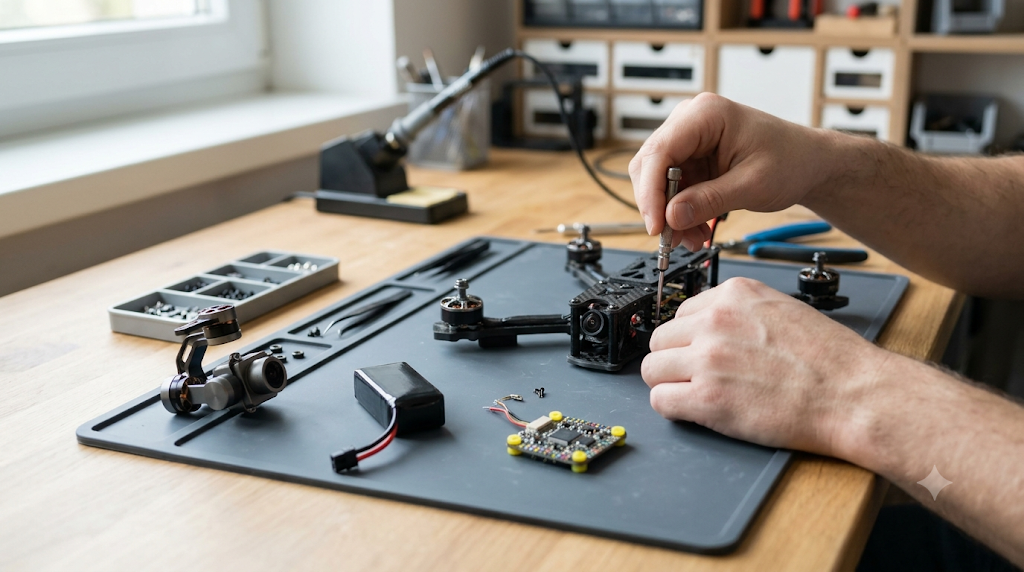
The parts used in a drone for filming a wedding and those used in a drone on the battlefield often overlap significantly.
Technology used for both civilian and military/intelligence purposes is called dual-use technology. As it expands into AI, surveillance equipment, and semiconductors, it is putting democratic checks and balances to the test.
As of November 2026, the EU, the US, and South Korea are crafting regulations at different speeds.
What is dual-use technology and why has it become a challenge for democracy now?
The term “dual-use” originated in export control terminology.
It means the same object or software can be used in hospitals, factories, and schools, as well as by military and intelligence agencies.
A representative body is the Wassenaar Arrangement. It is a multilateral framework established in 1996, currently involving 42 countries, aimed at increasing transparency and responsibility in the transfer of conventional arms and dual-use goods and technologies. Rather than a binding treaty, it works by countries implementing lists agreed upon through consensus into their own national laws and policies. Each country ultimately decides whether to grant export licenses. The dual-use list under this arrangement includes categories like special materials, electronics, computers, telecommunications, information security, sensors and lasers, and navigation and avionics.
However, the context has shifted for a reason.
In the past, dual-use items were primarily physical goods manufactured in factories and shipped, such as chemicals or precision machining equipment.
Today, a smartphone app, a cloud contract, or a model weight file can play the same role. Because they don’t travel through ports in shipping containers, they are difficult to block or count.
Moreover, these technologies are now developed by private companies, not state research institutes.
As technology gains military value, new questions arise regarding the transparency and accountability that democracy has relied upon.
Let’s look at seven dual-use technologies we encounter in daily life.
Facial recognition in phone cameras is used for unlocking screens, but also for identifying individuals in public squares.
Logistics drones deliver medicine to remote areas, but the same flight control technology is used for reconnaissance and attack.
Large AI models that translate and summarize text can also be used for target analysis.
Semiconductors are used identically in smartphones and missile guidance systems.
Cloud services serve as both hospital record repositories and storage for military operational data.
Satellite internet provides communication for schools in remote areas while also serving as a communication line on the battlefield.
Finally, spyware is a surveillance tool by name, but the attack techniques themselves are also used as defensive tools in security research.
What these seven have in common is that the ‘user’s intent’ is not embedded in the technology itself.
It looks similar to a knife, but there is one difference.
With a knife, the maker generally knows the intended use, but once software is distributed, it is used in places the creator never imagined. This is why regulation is difficult.
Think of a navigation app.
A map app that shows your commute becomes accurate by collecting the movement data of hundreds of millions of people. If the same location data is analyzed around military facilities, patterns of troop movement can be revealed.
The company that built the app only intended to provide traffic information, but the data already contains a secondary purpose.
When discussing dual-use technology, looking only at hardware causes us to miss these aspects of data and software.
The Era of Dual-Use Technology: How is the relationship between the state and Big Tech changing?
The book The Technological Republic, written by Palantir CEO Alex Karp and Nicholas Zamiska, addresses this shift most directly.
The book’s argument is this:
As governments have stepped back from major innovation, the weight of core technological development has shifted to the private sector, and Silicon Valley companies have begun to prioritize private interests over the state.
The prescription is firm.
It argues that for a free democratic society to win, moral appeals are not enough; it needs strong power, and that power is now built on software.
The book cites the example of Palantir being used to predict the locations of improvised explosive devices (IEDs) in Afghanistan. It follows the logic that tech companies must help the military and intelligence agencies, while also criticizing the atmosphere where some engineers have refused to work on weapons development.
There is a realistic basis for this claim.
A prime example is the backlash from internal engineers over a contract Microsoft signed with the US Army in 2019.
The core of the opposition was, “We didn’t join this company to build weapons.” In an era where a significant portion of defense technology is effectively in private hands, the concern that private refusal could lead to a void in state capability is not unfounded.
It argues that democratic nations shouldn’t waste time on ethical debates while authoritarian regimes accelerate their AI and surveillance technologies.
Those who value civil liberties ask a different question in the same scenario.
The core of democracy is the ability of citizens to see how much power is concentrated and in whose hands; the concern is that if military/intelligence data and private software are merged, that structure becomes invisible.
Contracts are private, algorithms are trade secrets, and unelected corporations effectively design part of national security policy. This logic has its own weakness, however: the counterargument that stricter regulation slows down democratic nations, potentially leaving a vacuum to be filled by countries with looser rules.
The “Digital Republic” mentioned here ultimately points to this question:
A republic is a system where common affairs are discussed and decided publicly, yet an increasing number of those common affairs are being determined within code and servers.
When military technology was created within the state, parliamentary and audit bodies could oversee it.
Now, private corporate design documents and contracts take their place, and who can access them and how becomes the question of democracy.
Where do dual-use technologies exert pressure on democracy?
Democracy stands on a few premises.
These include the premises that citizens can meet without being surveilled, that they can know who holds power, and that they can vote based on the same set of facts.
Dual-use technology exerts pressure on these three premises: surveillance and privacy, the concentration of private power, and information and elections.
First, let’s look at surveillance.
In a report titled ‘Targeting Democracy’ released on October 19, 2026, Citizen Lab stated with high confidence that the rector of the University of Belgrade in Serbia was infected with NSO Group’s Pegasus spyware. The investigation was conducted with the SHARE Foundation, and it is notable that the report title places ‘mercenary spyware attacks’ alongside ‘pro-democracy figures’. A report regarding the infection of a Serbian student activist was also uploaded to the same site on September 2, 2026. As I have only verified the titles and summaries of these reports, you should check the original sources for details on the infection methods.
Spyware enters phones to read messages and locations. When this is combined with records of citizens attending public rallies, it can map out who met whom. Facial recognition follows the same structure. Facial recognition at an apartment entrance is a tool for convenience, but if the same algorithm is attached to cameras in a town square, it becomes a list of rally participants. The technology is the same, but where it is mounted determines the outcome.
The EU drew a line in its AI Act. According to Gibson Dunn’s summary, Article 5, which prohibits AI applications classified as having an unacceptable risk, has been applicable since February 2, 2025. It is a way of pre-defining areas where surveillance technology cannot be used.
What happens to democratic checks when power is concentrated in a few companies?
The second pressure point is where power accumulates.
If Karp’s argument is correct, the state will rely more on software companies. In this process, companies take on two faces.
On one side, they are partners protecting the security of a democratic nation; on the other, they are a power that cannot be changed by voting.
Take cloud computing as an example.
When public sector data and military operational data are hosted on the same provider’s servers, that provider acts as a cost-saving tool in peacetime and a party with leverage during a crisis.
Satellite internet is the same. It fills communication dead zones in normal times, but if one company effectively decides who can access what during wartime, diplomacy and military affairs enter the fine print of a private company’s terms of service. This is not about a specific company, but a structural issue. As dependency on a sole supplier grows, the means to check them diminish.
Export controls also intersect with this structure.
The state decides who can buy advanced chips and AI models, but it is the companies that design the chips and train the models. Therefore, every time export control rules change, corporate investment plans and national security strategies are shaken simultaneously, opening channels for lobbying where both sides influence each other.
It is difficult to avoid having those who make the rules and those who are subject to them sit at the same table. The problem is whether there is a seat for citizens at that table.
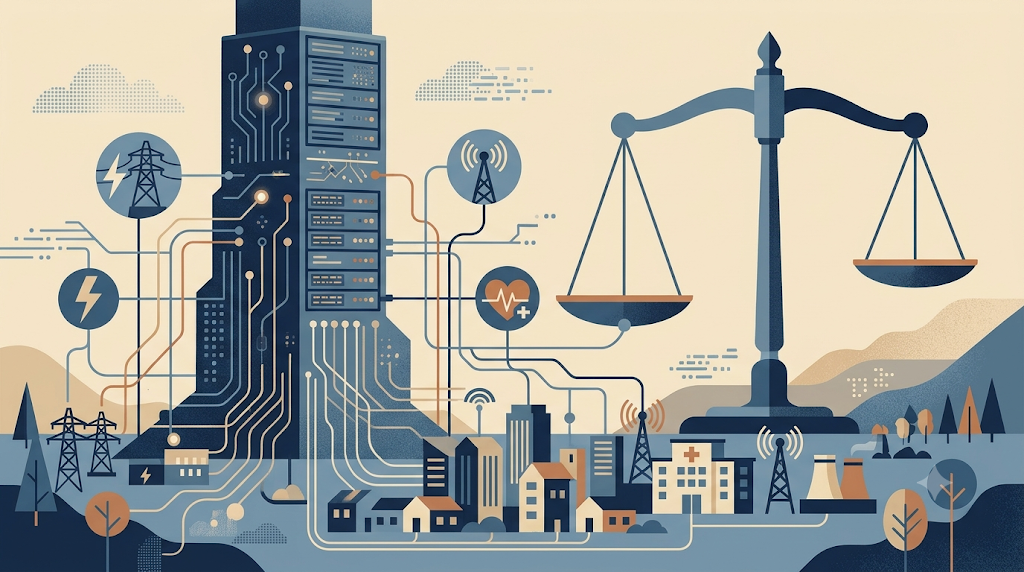
States are also conscious of this structure.
The way the US handles semiconductors and AI models is a case in point.
According to Akin’s tracker, the US Department of Commerce’s Bureau of Industry and Security (BIS) announced the ‘AI Diffusion Rule’ on January 13, 2025.
It created new control items for model weights and expanded the scope of export licenses for high-performance chips. However, on May 13, 2025, it announced the repeal of this rule and issued three documents: a policy statement, industry guidance, and GP10 guidance, instead of a single replacement rule. The guidance includes information that the use of Chinese high-performance chips could trigger GP10 restrictions and that GP10 limitations are presumed to apply to Huawei’s Ascend 910B, 910C, and 910D.
What is noteworthy in this case is not the fact that a rule was repealed, but the way the rules are changed.
Export controls move through executive rules and guidance rather than long legislative processes in Congress. Therefore, they change quickly, and there is little room for citizens to intervene.
If speed is chosen for the sake of security, democratic deliberation decreases; if deliberation is chosen, speed slows down. This is why it is difficult to conclude which side is right.
Are democracy and elections safe in an information environment created by AI?
The third pressure point is information.
Generative AI, a branch of dual-use technology, can create fake videos similar to news footage in just a few minutes.
The problem is not that the fakes are perfect, but that the suspicion that “it might be real” spreads, making people unable to trust even real videos.
It is easy to imagine a situation where a fake audio clip circulates just before an election. By the time a correction is issued, the voting might already be over. This specific scenario is a hypothesis for the sake of explanation.
Regulatory responses are closer to “labeling” than “blocking.”
South Korea’s Basic AI Act took effect on January 22, 2026. According to a Law Times article from April 2026, the obligation to ensure transparency lies with AI business operators, not users. Labeling methods are applied differently depending on whether the generated content is visible only within the service screen or if it leaves the service via download or sharing. This law also imposes separate obligations for high-impact AI in 10 sectors, including energy, transportation, and finance.
Labeling systems are not a complete solution.
Only honest businesses will follow labeling rules, while those intending to deceive will not. Thus, labeling obligations are only one line of defense; media habits of verifying sources and platform reporting systems must work in tandem. The most realistic action for citizens is to check the source one more time whenever a video stirs strong emotions.
There is an inverse danger to this problem as well.
As fakes become common, it becomes easier for politicians to deny disadvantageous real evidence by calling it fake.
When an embarrassing recording of a politician is released, if they claim it was made with AI, the burden of fact-checking suddenly shifts. The reason labeling and source verification are needed is not just to catch fakes, but to protect the credibility of the truth. The biggest change dual-use technology brings to the information environment is not the increase in falsehoods, but the rise in the cost of truth.
How are democratic nations regulating dual-use technology?
If you connect the timelines we’ve seen so far, the difference in regulatory speed becomes clear.
The EU made the law first and is now coordinating implementation. The US created export control rules, withdrew them, and then pivoted to guidance. South Korea implemented the law and then provided a grace period.
Let’s start with the EU.
According to Gibson Dunn’s analysis from May 27, 2026, obligations for General Purpose AI (GPAI) have been in effect since August 2, 2025. On May 6, 2026, there was a provisional agreement on an omnibus amendment to delay the implementation of high-risk AI obligations, which the Council confirmed on May 13. The new deadlines are December 2, 2027, for standalone high-risk systems (Annex III) and August 2, 2028, for AI embedded in regulated products (Annex I). However, these deadlines only take effect after official adoption and publication in the Official Journal. At the time of analysis, publication was expected before August 2, 2026, but I have not verified the actual publication status. This part is [unverified], so you must check the official gazette before publication.
South Korea has both implementation and a grace period.
As seen earlier, the Basic AI Act was implemented on January 22, 2026, and the Ministry of Science and ICT announced that it would defer regulation for at least one year. According to the same article, investigations and fines during this period will only occur in highly exceptional cases, such as loss of life or human rights violations. This is welcome news for industry, but civil society groups may worry that standards will become lax during the preparation period.
Export controls overlap between multilateral frameworks and national rules.
The aforementioned Wassenaar Arrangement updates its lists by consensus among 42 countries, but implementation is national. If a country like the US goes further with its own rules, another layer of regulation is created. Even if democratic nations are looking in the same direction, their speeds and means differ, so companies must navigate different rules for every country.
There is one commonality in this comparison.
All three regions are moving toward imposing obligations based on the context of use rather than banning the technology itself.
There are prohibition lines for surveillance, labeling for generated content, and export licenses for chips and models. However, this approach has limitations. To assign obligations by use, someone must verify the use, but it is difficult to detect if the use of software changes after the fact. Therefore, reporting systems, independent oversight bodies, and sanctions for violations are as important as the text of the rules. Because dual-use technology is inherently difficult to categorize by use, using use and risk as the benchmark—rather than the object itself—is the closest we have to a consensus so far.
What are the four things citizens should watch for in the era of dual-use technology?
We have looked at the arguments of both camps, the three pressure points, and the rules in the three regions.
In conclusion, whether democracy survives depends not on the technology itself, but on how quickly systems are designed, and whether citizens can participate in that design. If the tech-nationalist side is right, democratic nations must build capability faster; if the civil liberty side is right, they must establish checks and balances first, even if it slows things down. These two arguments are not mutually exclusive. A design that accepts both is possible, and in reality, regulatory regimes are moving somewhere between the two.
Questions citizens should ask when reading the news can be summarized in four points.
First, is the intended use of this technology defined by law?
Second, is the body overseeing the use independent?
Third, can it be replaced if one provider drops out?
Fourth, are contracts and usage records disclosed, even after the fact?
Whenever you encounter news about the introduction of surveillance equipment, defense contracts, or public cloud migrations, applying these four questions will reveal information missing from the articles. For example, if an article about a local government introducing a new CCTV analysis system does not state the storage period or who has access, it means there are no answers to the second and fourth questions. In such cases, what a citizen can do is not grand. It can be as simple as asking for contract details through an information disclosure request or submitting even a single line of opinion during the public comment phase of rule-making.

Future schedules are specific.
In South Korea, a grace period of at least one year for the Basic AI Act has been announced.
In the EU, the publication of the omnibus amendment in the Official Journal and the December 2, 2027, deadline are the benchmarks.
In the US, the variable is what kind of rules the guidance from May 13, 2025, will harden into.
Following these three flows and asking the four questions above is the most concrete form of surveillance an ordinary citizen can engage in right now.
References
- Wassenaar Arrangement, About us (42 participating countries, dual-use list)
- Gibson Dunn, EU AI Act Omnibus Agreement (2026-05-27)
- Akin, BIS Rescinds AI Diffusion Rule and Issues New Guidance (2025-05-13)
- Korea Economic Daily, Report on implementation of Basic AI Act (2026-01-21)
- Asia Business Daily, Introduction to Alex Karp's The Technological Republic
- Citizen Lab, Research (Serbia-related reports from Sept-Oct 2026)