
Tracing the Desire for Education Across Eras, from the Past Examination to Today’s Entrance Competition.
- How the Joseon Dynasty’s examination system became the prototype of modern private education.
- The historical educational philosophy contained in the stories of Han Seok-bong and Mencius’s mother.
- Why modern entrance exam competition is a direct legacy of the past examination system.
The Past Examination System: The Beginning of Modern Education Fever
Korea’s intense education fever did not emerge suddenly in modern times. Its roots trace back to the Joseon Dynasty, where an individual’s fate and a family’s honor were determined by a single examination. The Gwa-geo (科擧) system of Joseon superficially presented a fair path based on ability, but paradoxically laid the foundation for the fierce private education market that continues to this day.
The Only Path to Power: The Examination
In Joseon society, the examination system was not just a simple test. It was the almost sole avenue for social mobility and the most important mechanism for acquiring power and honor.
The examination system was divided into three main categories: the literary examination (문과), the military examination (무과), and the technical examination (잡과). Among these, the literary examination held the highest authority, primarily attended by the offspring of the yangban class. The process of passing the literary examination was a long and arduous journey involving both the small examination (소과) and the large examination (대과).
This multi-stage examination process required candidates to dedicate long periods of preparation, which naturally exploded the demand for specialized education. In theory, anyone above the status of a commoner could take the exam, but a deep understanding of the Four Books and Five Classics was nearly impossible for commoners who had to engage in their livelihoods. Ultimately, the examination system functioned to reproduce and solidify the existing social hierarchy under the guise of meritocracy.
Table 1: The Ladder of Social Mobility in Joseon, the Examination System
| Examination Type | Main Goals and Stages | Main Subjects and Candidates |
|---|---|---|
| Literary Examination (문과) | Selection of literary officials (small and large exams) | Confucian classics, policy essays, etc. (mainly yangban) |
| Military Examination (무과) | Selection of military officials (preliminary, main, final exams) | Martial arts, military strategy, etc. (yangban, commoners) |
| Technical Examination (잡과) | Selection of technical officials (preliminary, main exams) | Medical, legal, and other specialized texts (mainly chungin) |
The Collapse of Public Education and the Rise of Private Education
As the fervor for preparing for the examination grew, ironically, public educational institutions established by the state, such as Sungkyunkwan and Hyanggyo, were neglected. According to the Annals of the Joseon Dynasty, the number of students enrolled in Sungkyunkwan often accounted for only 10-20% of its capacity.
This was because the broad liberal education provided by public education no longer met the demands of examinees. As the examination increasingly emphasized ‘flashy rhetoric and mechanical memorization’ over ethical understanding, students turned to private education that taught the skills necessary to pass the exams.
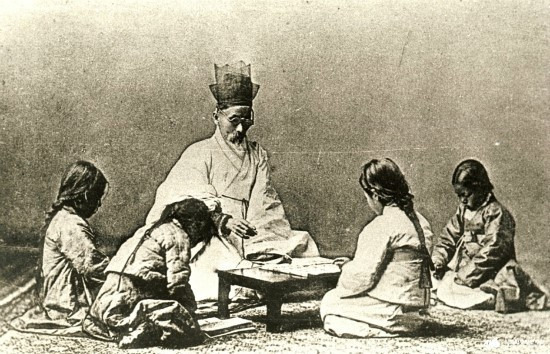
In this void, various forms of private education flourished. From village seodangs (private academies) to prestigious private tutors, the most influential institution was undoubtedly the seowon (서원). Originally established under the pretext of academic research, seowon transformed into an elite entrance institution for passing the examination. Like today’s prestigious entrance academies, seowon focused on teaching specific interpretations of certain schools of thought, which became linked to political factions and contributed to the societal malaise of late Joseon.
The Betrayal of Meritocracy: The Examination as a Tool for Inheritance
The private education boom centered around the examination system overturned the original intent of meritocracy. Through the expensive filter of private education, the examination system became an effective tool for the existing ruling class to inherit power.
According to Professor James Palley’s research, among the 14,600 successful candidates in the literary examination during the Joseon Dynasty, a staggering 53% came from just 36 prestigious families. Success was essentially inherited through the economic power to purchase superior preparatory education. Ultimately, the examination system, which once espoused the ideals of meritocracy, paradoxically established the most solid hereditary system when it met the private education market.
The Philosophy of Dedication: Parents Who Created the Education Fever
The education fever of the Joseon era was not driven solely by the system. There was a strong cultural foundation that regarded educating children as a moral obligation and the highest value of parents.
Rise in Status and Fame: Education as the Completion of Filial Piety
In traditional society, the ultimate goal of education was 입신양명 (立身揚名), to go out into the world and bring glory to one’s parents and ancestors. This was seen as the most perfect practice of filial piety (孝), the highest virtue in Confucianism.
From this perspective, education was not merely a choice for success but a moral obligation that must be fulfilled as a human being. Failing an examination was viewed not just as personal failure but as a moral and ethical failure, providing a powerful justification for parents to invest everything in their children’s education.
The Mother of Han Seok-bong: Discipline Towards Perfection
The mother of Han Seok-bong, a symbol of Korea’s education fever, exemplifies the essence of education as inner maturity and self-cultivation beyond mere sacrifice.
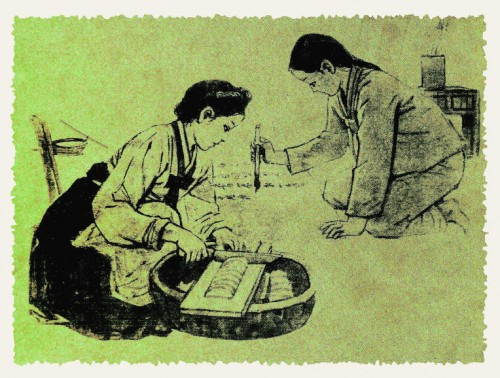
Before her son returned from studying, she suggested a writing competition while slicing rice cakes in the dark. Her rice cakes were consistently even and beautiful, while Han Seok-bong’s writing was a mess. This anecdote illustrates, without words, the standard of excellence that no one could deny, leading her son to a higher level through practical education. It presents a strong cultural script that parents must become the ultimate ‘quality managers’ of their children’s character and skills.
Mencius’s Mother: The Strategist Designing the Environment
Mencius’s mother focused on controlling the external environment and drawing out her child’s dedication. The story of ‘Mencius’s mother moving three times for education (孟母三遷之敎)’ established the importance of the surrounding environment by moving three times to find the ideal educational setting for her son.
Additionally, upon seeing her son return from studying, she cut the thread she was weaving with a knife in the story of ‘cutting the loom to teach her son (斷杼教子)’, imparting the shocking lesson that once effort is wasted, it cannot be reclaimed. These two stories become the historical prototypes of modern educational practices, where immense resources are invested to move to prestigious school districts and meticulously manage children’s schedules while eliminating distractions.
Table 2: Comparison of Traditional Parental Education Models
| Parental Archetype | Core Principles and Methods | Modern Similarities |
|---|---|---|
| Han Seok-bong’s Mother | Inner mastery and training (practical proof, demand for perfection) | ‘Tiger moms’ emphasizing character formation and skill completion through hardship |
| Mencius’s Mother | Environmental control and dedication (moving to optimal locations, shock therapy) | Moving to prestigious school districts, intensive management of children’s schedules, and eliminating distractions |
| Shin Saimdang | Inspiration through example (parents’ own academic pursuits, ‘reading mother’) | Lifelong learning, creativity, and intellectual curiosity emphasized by parents at home |
The Echo of the Present: How the Past Continues
Today’s educational competition in Korea is a direct legacy of the structures and philosophies of the past.
A New Examination, University Entrance
The social function of the Joseon Dynasty’s examination system is vividly alive in today’s College Scholastic Ability Test (수능). The fact that a single day of testing has a tremendous impact on one’s life makes the 수능 akin to a modern literary examination. The essence of fierce competition to pass through the narrow door to elite status remains unchanged. Academic achievement is still considered the most important factor directly linked to socio-economic status.
Modern Seowon: The Academy Industry
The role of seowon in the Joseon era is remarkably mirrored in today’s academy industry in South Korea. As of 2023, the average monthly expenditure on private education per high school student reaches 491,000 won, focusing on ‘supplementing school lessons’ and ‘preparing for entrance exams’.
When I was in school, attending an academy was optional, but now it has become essential. Observing many newlywed couples hesitating to have children due to the astronomical costs of private education for one child, I realize that this issue is not just about education but is directly linked to the future of the nation.
Ultimately, the historical system that relied on private education to secure elite status has evolved into a modern system that perpetuates inequality and exacerbates South Korea’s record low birth rate.

Table 3: The Past and Present of Private Education in Korea
| Aspect | Joseon Era (15th-19th Century) | Modern Era (21st Century) and Continuity |
|---|---|---|
| Main Institutions | Seodang (書堂), private tutors, seowon (書院) | Academies (學院), private tutoring, online lectures. The central role of the private education system remains unchanged. |
| Main Goals | Passing the Gwa-geo (科擧) examination | Passing the College Scholastic Ability Test (수능) and university entrance exams. The goal of succeeding in a single national examination remains the same. |
| Socioeconomic Impact | Strengthening hereditary power of elite yangban families, deepening factionalism | Deepening social inequality, contributing to low birth rates. Private education operates as a key mechanism that reinforces class structures. |
Conclusion: The Unbroken Thread of Education Fever
Modern Korea’s education fever is a complex result of structural and philosophical legacies that have persisted from the past.
-
Key Summary
- Structural Roots: The modern entrance exam competition inherits the structure of the Joseon Dynasty’s examination system, where rewards are concentrated among a few winners.
- Cultural Drive: The Confucian values that viewed children’s success as the family’s glory and the practice of filial piety continue to serve as a powerful force driving parental dedication today.
- Modern Consequences: The past system has deepened social inequality and has become a cause of the national crisis of low birth rates.
How should we view this unbroken chain of education fever? And what alternative paths can we propose for future generations? I hope this article provides deep insights into understanding the past and present of Korean education.