
Can a single poster cost dozens of people their lives? In the Joseon Dynasty, that was reality.
Joseon-era fake news went by names like rumors, gwaeseo (anonymous placards), yoeon (ominous speech), and mugon (false accusations). The state strictly regulated these through the Panjwaryul (Law of Counter-punishment) in the Great Ming Code and investigations by the Uigeumbu. However, the law was most often wielded not against mere liars, but against political rivals.
What were the names for fake news in the Joseon Dynasty?
While we group them under the single term ‘fake news’ today, Joseon categorized them by form and level of threat.
- Rumors (流言蜚語) — Groundless gossip. Rumors challenging the King’s legitimacy were seen as threats to the state.
- Gwaeseo (掛書) & Byeokseo (壁書) — Anonymous writings secretly posted in public spaces. Used for political criticism or personal defamation, these often sparked major political purges.
- Yoeon (妖言) & Yoseo (妖書) — Ominous prophecies or writings meant to unsettle the public. If they denied the mandate of heaven, they were punished as treason.
- Chamso (讒訴) & Mugon (誣告) — Slandering or falsely accusing others. These were core weapons for removing rivals during eras of factional strife.
Why were they so sensitive? The root lies in the Confucian principle of Jeongmyeongron (正名論)—the belief that names and realities must align for order to exist. In such a society, false information wasn’t just a lie; it was an act that disrupted the very hierarchy. Thus, controlling speech was always accompanied by moral justification. I find this aspect the most terrifying: when there is a ‘moral cause,’ state control easily becomes excessive.
How did the Great Ming Code and the Law of Counter-punishment punish fake news?
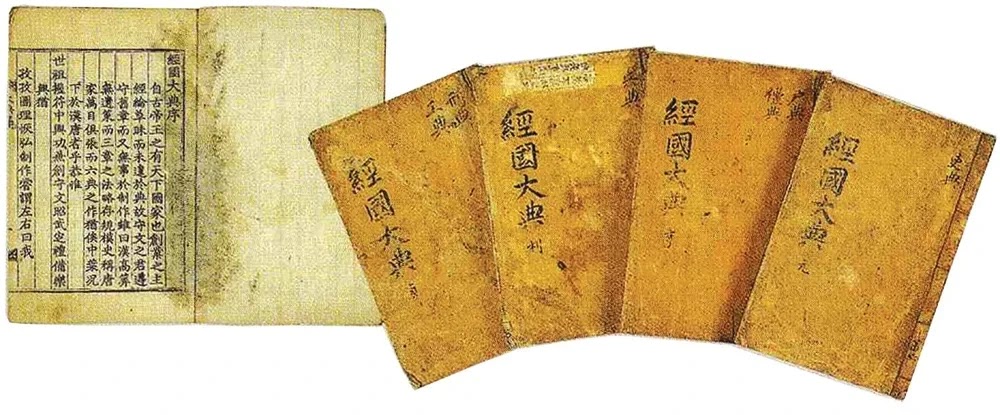
Legal grounds for punishing information-related crimes were found in the Ming Dynasty’s criminal code, the Great Ming Code. The Gyeongguk Daejeon (National Code) mandated that this code be applied to general criminal cases.
The crime of misleading the public with ominous speech (妖言惑衆) was treated as a grave offense, punishable by beheading or strangulation, and sometimes even involved the perpetrator’s family.
There was also a mechanism to prevent false accusations:
Panjwaryul (反坐律), or the Law of Counter-punishment. If someone was caught making a false accusation, the accuser would receive the same punishment that the accused would have faced. If you falsely accused someone of treason, you would be punished for treason yourself. In theory, it was a clever deterrent.
Overview of Fake Information Types in the Joseon Dynasty
| Crime Type | Joseon Term | Description |
|---|---|---|
| Treasonous Speech/Text | Yoeon/Yoseo | Words or writings predicting disasters or misleading the public to disrupt order |
| Anonymous Posting | Gwaeseo/Byeokseo | Anonymously posting writings in public spaces to slander the state or individuals |
| False Accusation | Mugon/Chamso | Falsely accusing someone to the authorities to cause their punishment |
| Groundless Rumor | Rumors | Spreading gossip that causes social instability |
Why did Uigeumbu investigations rely on confessions?
Because gwaeseo and yoeon cases had massive ramifications, they were usually handled by the Uigeumbu, the King’s direct judicial agency. The goal of the investigation was to find the ‘mastermind’ rather than just the author. Since confessions were considered the strongest evidence, gosin (legal torture) was a standard investigative procedure.
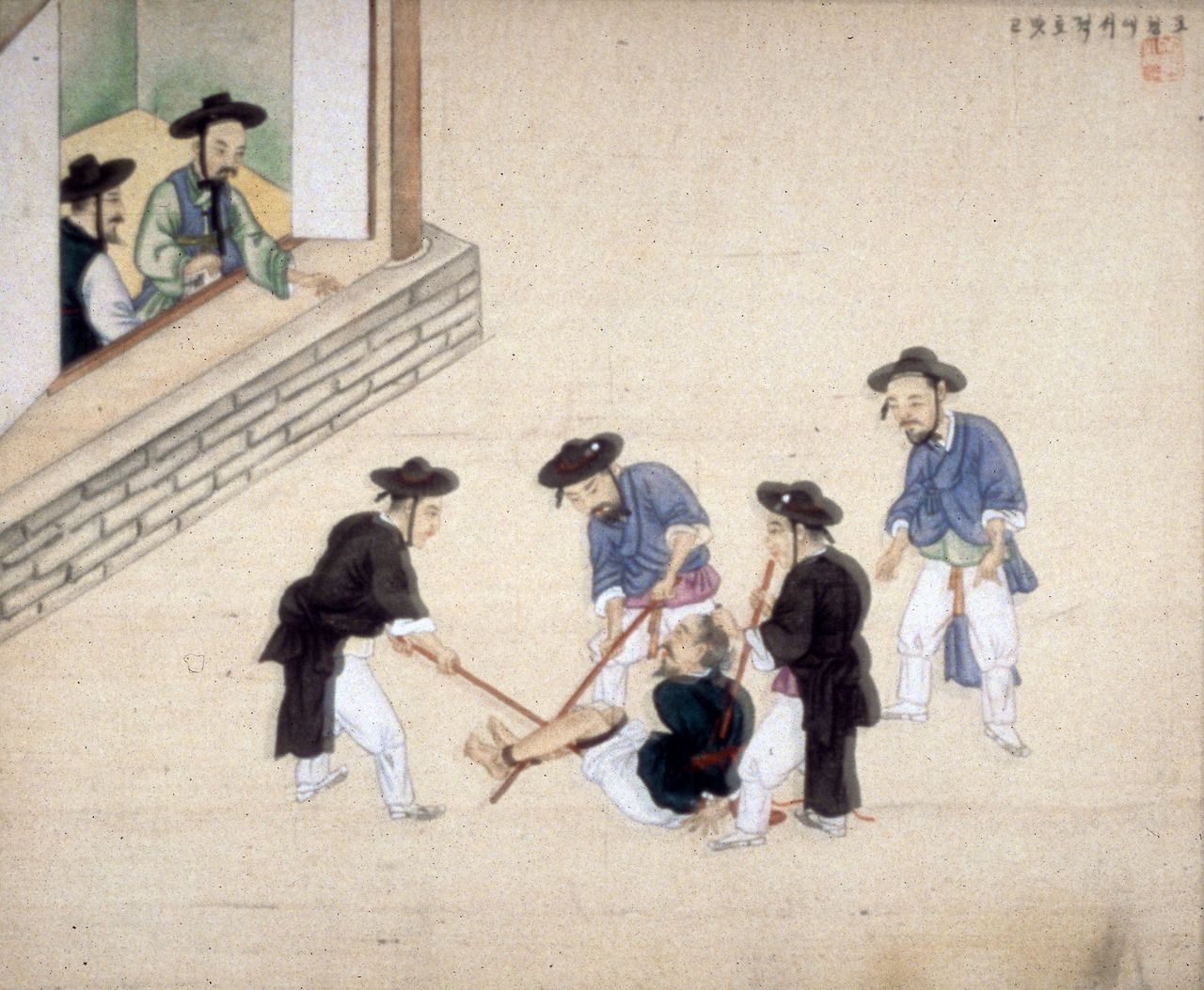
This is where the weakness of the Panjwaryul is revealed.
Once a confession extracted through torture becomes ‘fact,’ the accusation is no longer considered false. The mechanism intended to prevent false accusations had no room to operate in the face of torture.
The Yangjae Station Incident: A single placard sparks the 1547 Purge
In 1547 (the 2nd year of King Myeongjong’s reign), this was posted on a wall at Yangjae Station: “The female ruler holds power above, and treacherous officials like Lee Gi hold power below, so the country will fall.” The ‘female ruler’ referred to Queen Munjeong, who was ruling as regent.
The author was never found. Yet, the ruling ‘Small Yun’ faction used this placard as evidence of treason by the remaining ‘Large Yun’ faction. Song In-su was executed, and scholars like Yi Eon-jeok were sent into exile.
An anonymous writing by an unknown person became a blank check that could be used to frame anyone.
The Gichuk Purge: False accusations swallow over 1,000 lives (1589)
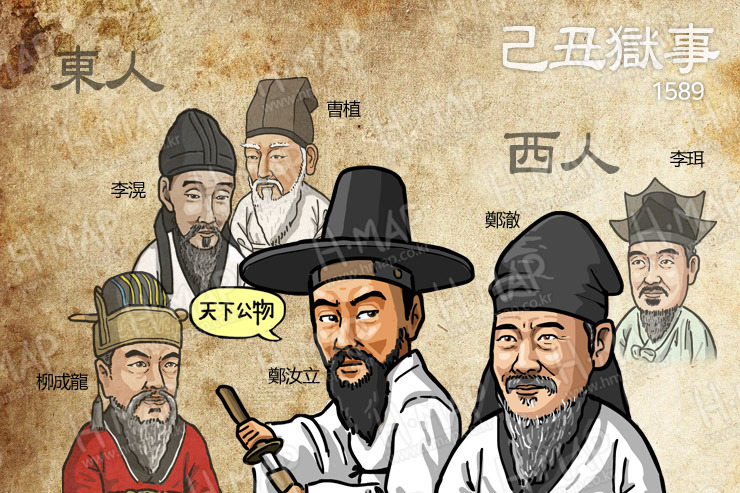
When a report surfaced that Jeong Yeo-rip of the Eastern faction was organizing the ‘Daedonggye’ to plan a rebellion, Jeong Cheol of the Western faction led the purge. Jeong Yeo-rip committed suicide while fleeing, and the investigation expanded to Eastern faction members associated with him. The purge lasted nearly three years, and it is said that over 1,000 people were sacrificed.
Rather than concrete physical evidence, testimony and confessions extracted under torture drove the verdicts, all just three years before the Imjin War.
Na Gyeong-eon’s accusation and the Imo Incident: An accusation leads to the Crown Prince’s death (1762)
In 1762, Na Gyeong-eon, a steward for the Minister of Punishments Yun Geup, submitted a treason accusation to the Ministry of Punishments and presented King Yeongjo with a list of the Crown Prince’s transgressions. Yeongjo’s distrust of the Crown Prince was already deep, and this accusation became the direct catalyst for the Imo Incident, where Crown Prince Sado was locked in a rice chest and died.
The irony lies in what happened next.
Na Gyeong-eon himself was executed for slandering the Crown Prince. The Panjwaryul did its job, but the accusation had already sent the heir to the throne to his death.
It is a rare case that so clearly shows that punishment cannot undo the damage.
Why did the Censors and comets become conduits for fake news?
Official media agencies like the Censorate (Saheonbu and Sagwon) were originally venues for public discourse to keep the King and officials in check. However, as factional strife intensified, they frequently used mere rumors (pungmun) to impeach, and the Censorate became a striker for political factions.
Even the sky became a weapon.
In an era dominated by the theory of heaven-human interaction, comets were signals of heaven evaluating politics. In 1468, Yu Ja-gwang accused General Nam-i of saying that the comet was “a sign to get rid of the old and usher in the new,” and Nam-i was executed for treason. The side that held the interpretation of natural phenomena held the narrative.
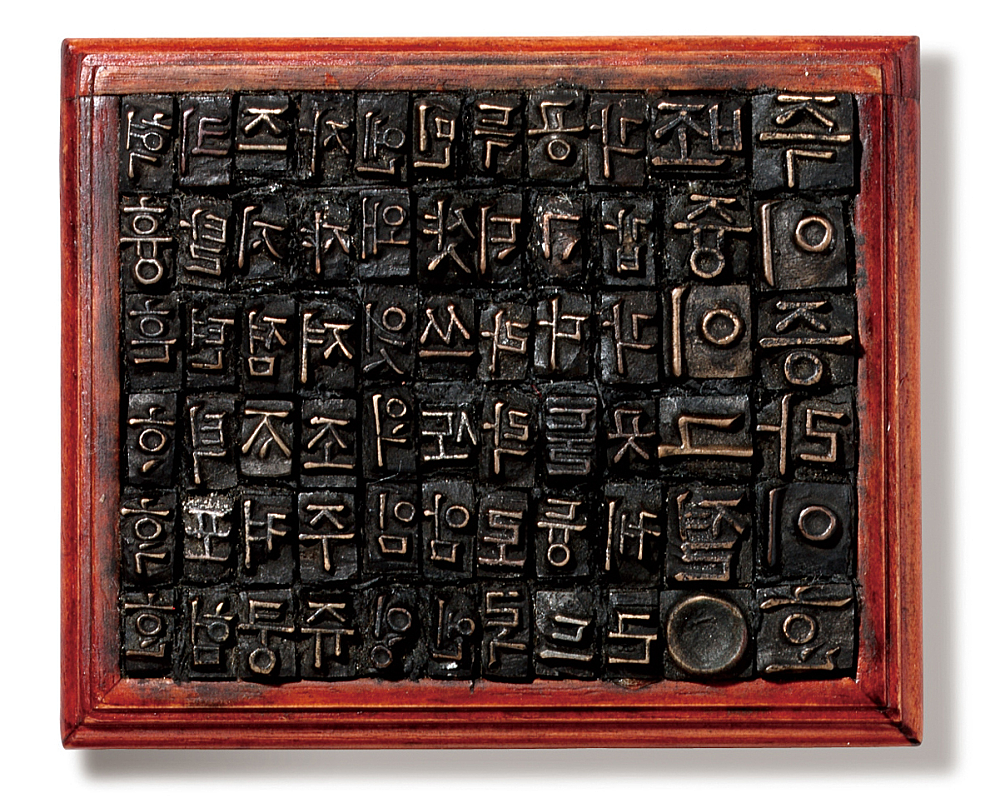
Printing technology also played a role.
Because one had to typeset tens of thousands of Chinese characters and the state controlled publishing, large-scale fake news via print was difficult to produce. Instead, the weight of word-of-mouth and a single anonymous placard grew that much larger.
This is the exact opposite direction of how printing technology became the spark for the Reformation in Europe.
The questions that Joseon-era fake news leaves us today
Looking at these three cases side-by-side, what surprised me most was that ’lack of evidence’ never once stopped a purge. In fact, because there was no evidence, the scale of the treason could be inflated at will.
Joseon’s problem was not that there was too much false information.
The problem was that false information provided a pretext for what the power already wanted to do, and the Uigeumbu and the Censorate, which should have verified the truth, were not independent of that power. Sophisticated laws like the Panjwaryul were powerless against it.
Joseon’s ‘official echo chamber,’ where the state monopolized interpretation, and today’s ‘personalized echo chamber’ created by algorithms, perform similar functions despite their different shapes. They are about telling you the stories you want to hear as if they were facts.
How fake news grows into conspiracy theories can be read in the cases of Rohingya, India, and QAnon, and the power of prophecies spread among the Joseon public can be read in the Jeonggamnok stories. If you are curious about the roots of anonymous writing, also check out the origin of comment culture.
References
- Fake News? It shook the country even in the Joseon Dynasty
- https://encykorea.aks.ac.kr/Article/E0005365
- https://dh.aks.ac.kr/sillokwiki/index.php/%EC%96%91%EC%9E%AC%EC%97%AD%EB%B2%BD%EC%84%9C%EC%A7%80%EB%B3%80(%E8%89%AF%E6%89%8D%E9%A9%9B%E5%A3%81%E6%9B%B8%E4%B9%8B%E8%AE%8A)
- The duality of shaman suppression and tax collection
- https://www.joongang.co.kr/article/21536690
- https://www.chosun.com/site/data/html_dir/2006/05/15/2006051570549.html
- https://ko.wikipedia.org/wiki/%EC%9D%98%EA%B8%88%EB%B6%80