
If you look closely at the Korean Peninsula on a map, its location is peculiar.
It is attached to the continent in the north, while the south, east, and west are wide open to the sea. You could interpret it as a land caught between great powers, or as a crossroads connecting the continent to the ocean.
Our history is essentially a record of these two interpretations alternating into reality.
Entrepôt trade—earning money by taking goods from one neighbor and passing them on to another—was the lifeline that brought wealth to this land. However, every time that lifeline thickened, someone would covet the passage, and trade routes frequently became battlefields.
From the Iron Age kingdoms of the 2nd century BC to the Gaeseong merchants of the late Joseon period, a pattern emerges across these five scenes: those who held the passage prospered, but those who tried to hoard it alone collapsed.
Why Wiman Joseon Collapsed After Monopolizing Entrepôt Trade
Wiman Joseon fell not because it was weak, but because it tried to take too much.
In the 2nd century BC, this Iron Age kingdom in the northern part of the Korean Peninsula built wealth by mediating trade between the southern states and the Han Dynasty of China.
King Ugeo, the third ruler, was not satisfied with just collecting tolls. He blocked the southern states from trading directly with Han, forcing all goods and envoys to pass through Wiman Joseon. He chose to become the gatekeeper itself.
While wealth grew, it was a gamble that turned all neighboring countries into enemies. Most importantly, the Han Dynasty, the strongest power of the era, would not tolerate a small king who defied its order.
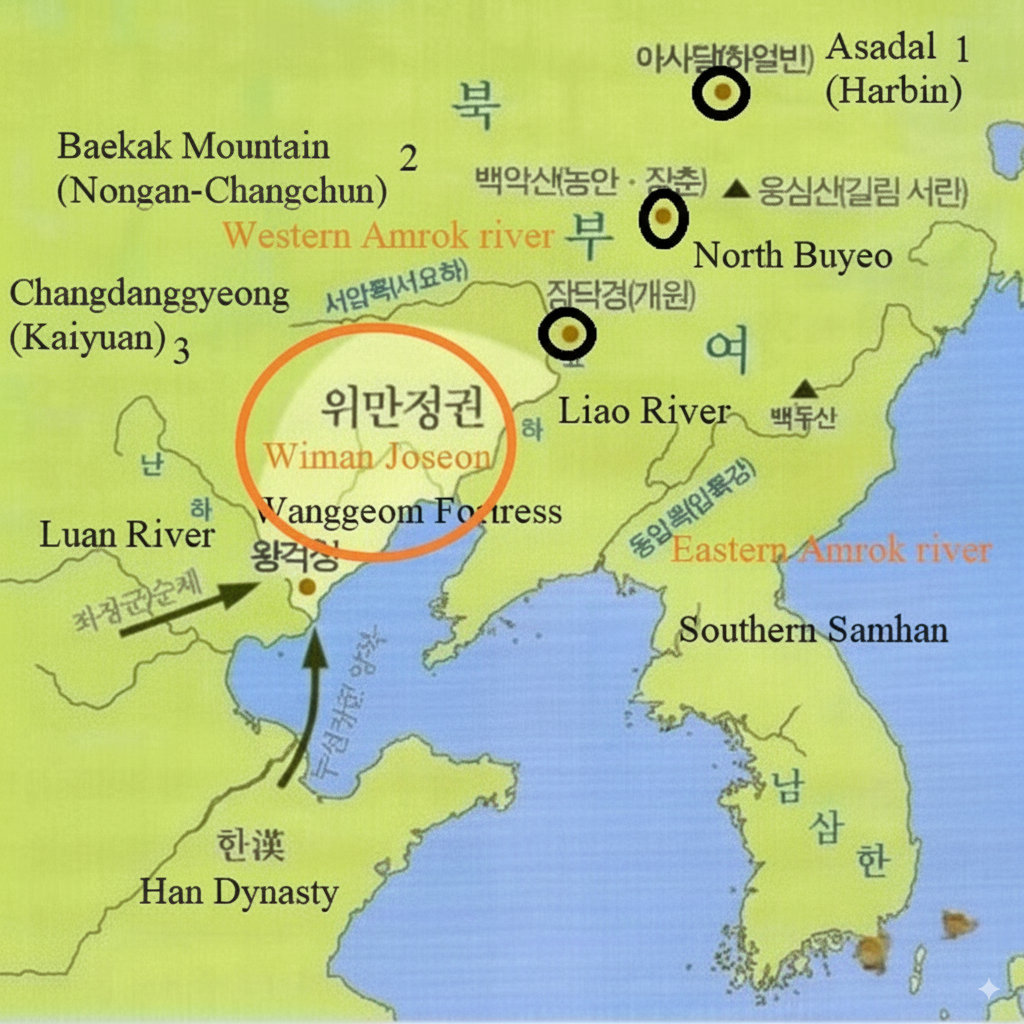
When the massive Han army invaded, Wiman Joseon held out for nearly a year.
The crack was not outside the walls, but within. As trade routes were blocked by the war, the ruling class, who relied on those profits, began to waver. King Ugeo, determined to fight to the end, was killed by his own ministers who wanted to surrender, and the kingdom fell in 108 BC.
Just as the wealth gained from the monopoly was immense, the weight of the isolation it invited was equally heavy.
Jang Bogo’s Cheonghaejin: Why Did His Maritime Trade Empire End in a Single Generation?
The maritime empire built by Jang Bogo was an economic success, but it could not overcome the barriers of politics.
In the 9th century, the Silla seas were a lawless zone where pirates captured people and sold them into slavery.
Jang Bogo, who had made a name for himself as a soldier in Tang China, returned home after witnessing this misery and requested troops from King Heungdeok. With 10,000 soldiers, he established Cheonghaejin on Wando Island. The sea, once cleared of pirates, became a sea of trade.
Jang Bogo’s fleet established a trade network connecting Silla, Tang, and Japan, and the wealth of the East Asian seas flowed into Cheonghaejin.
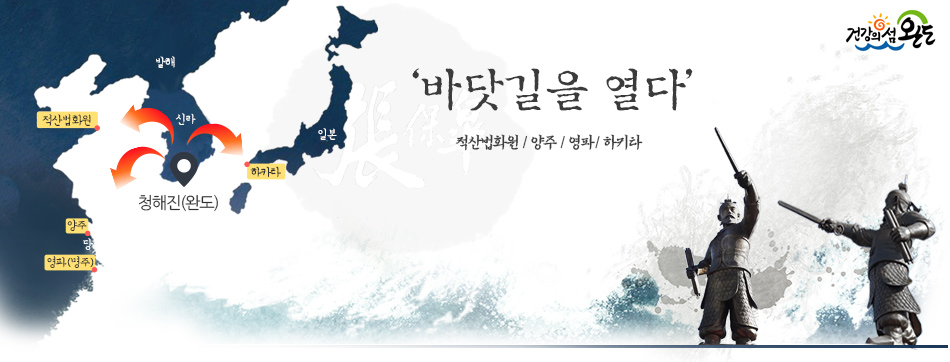
Possessing immense wealth and military power, Jang Bogo became a kingmaker in Silla’s succession struggles.
He helped a displaced royal take the throne, and in return, was promised that his daughter would become the queen. The aristocrats of Seorabeol opposed this, claiming a daughter from an island could not be the mother of the nation. While it was a matter of social hierarchy, the fear that this new power would dismantle their vested interests was even greater. The promise was broken, and Jang Bogo was killed by Yeom Jang, an assassin sent by the court. Cheonghaejin was dismantled shortly after.
Goryeo’s Byeokrando: From an Open International Port to a Shipyard for War
Goryeo was a more open trading nation than Silla, and the name of that gate was Byeokrando. This international port at the mouth of the Yesung River, the gateway to the capital Gaegyeong, welcomed merchants from Song China, Japan, and even as far as Arabia. It is widely claimed that the name ‘Korea’ reached the West through these merchants, though there is no definitive literature to prove this, so it is best accepted as a popular theory.
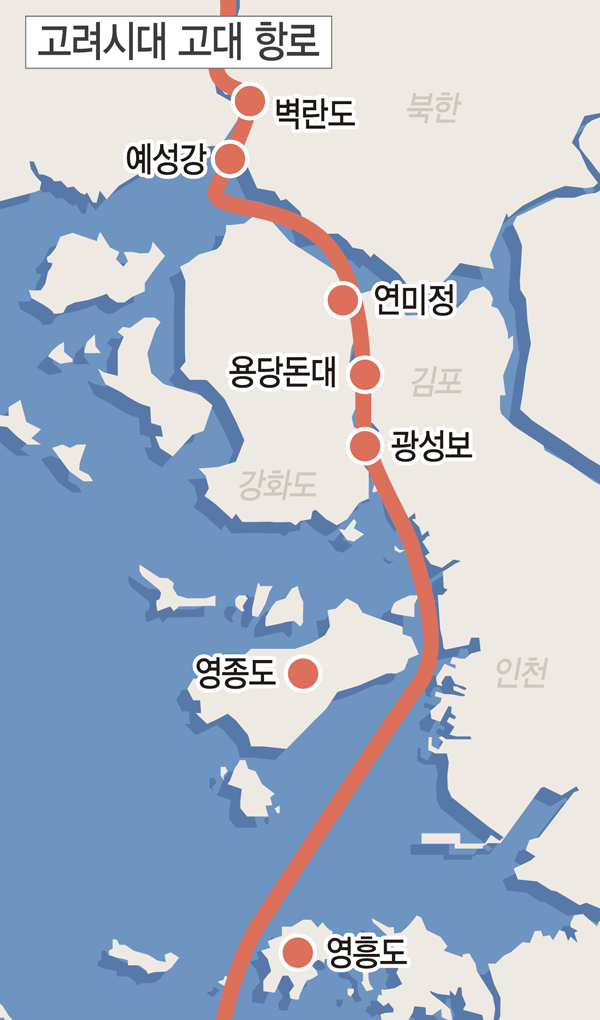
Peace ended with the Mongol invasions in the 13th century.
After decades of resistance, Goryeo surrendered to the Yuan Dynasty, and Yuan demanded that Goryeo build hundreds of ships in a short period for their invasions of Japan. The sea that once carried wealth was transformed into a sea carrying the labor and resentment of the people.
In that trade routes are the first tools of war to be requisitioned by great powers, the decline of Byeokrando repeated the same story as Wiman Joseon, just in a different way.
The Gyehae Treaty: How Joseon Turned Pirates into Trade Partners
Joseon resolved the chaos in the southern seas with a mix of swords and contracts.
To end the Wokou (Japanese pirate) raids that had continued since the late Goryeo period, they struck the pirates’ base, Tsushima Island, in 1419.
The real strategy came afterward. In 1443, Joseon signed the Gyehae Treaty with the lord of Tsushima.
The agreement limited the number of trade ships (segyeonseon) allowed to visit Joseon to 50 per year, and in return, granted the Tsushima lord a legal trade outlet and 200 bags of rice and beans (sesamidu) annually.
For the barren island of Tsushima, stable trade was far more profitable than plundering. The lord of Tsushima turned to policing other pirates. It was a design that ensured those who already received a share of the profits would be the most diligent in maintaining order.
This scene differs from the previous two in that it wasn’t about who held the passage, but about designing how to share the profits generated from the passage. The record of Joseon sending troops to battlefields across the sea is separately detailed in The History of Overseas Deployments in the Goryeo and Joseon Eras.
The Silver Road: The Song-sang, Man-sang, and Nae-sang Who Controlled Late Joseon Entrepôt Trade
In the late Joseon period, private merchants, not the state, became the protagonists of entrepôt trade.
They were private merchants (sasang) who built their own wealth instead of relying on government-sanctioned merchants.
Three merchant groups that shared entrepôt trade in late Joseon
| Merchant Group | Base | Trade Specialty | Role |
|---|---|---|---|
| Man-sang | Uiju (North) | Trade with Qing (China) | Brought in Chinese goods like silk in exchange for silver and ginseng |
| Nae-sang | Dongnae (South) | Trade with Japan | Traded Chinese goods and ginseng for Japanese silver |
| Song-sang | Gaeseong (Center) | Domestic Distribution | The center for capital and logistics connecting the two outlets |
The fuel that drove this structure was silver.
As the Ming Dynasty began collecting taxes in silver, it became the settlement currency for East Asian trade, and at the time, Japan was a world-leading silver producer. When Japanese silver entered through the Nae-sang in Dongnae, the Man-sang in Uiju would buy Chinese silk with that silver, and the silk would then be passed back to Japan to return as silver. Joseon ginseng, sold at high prices in both markets, thickened this cycle.
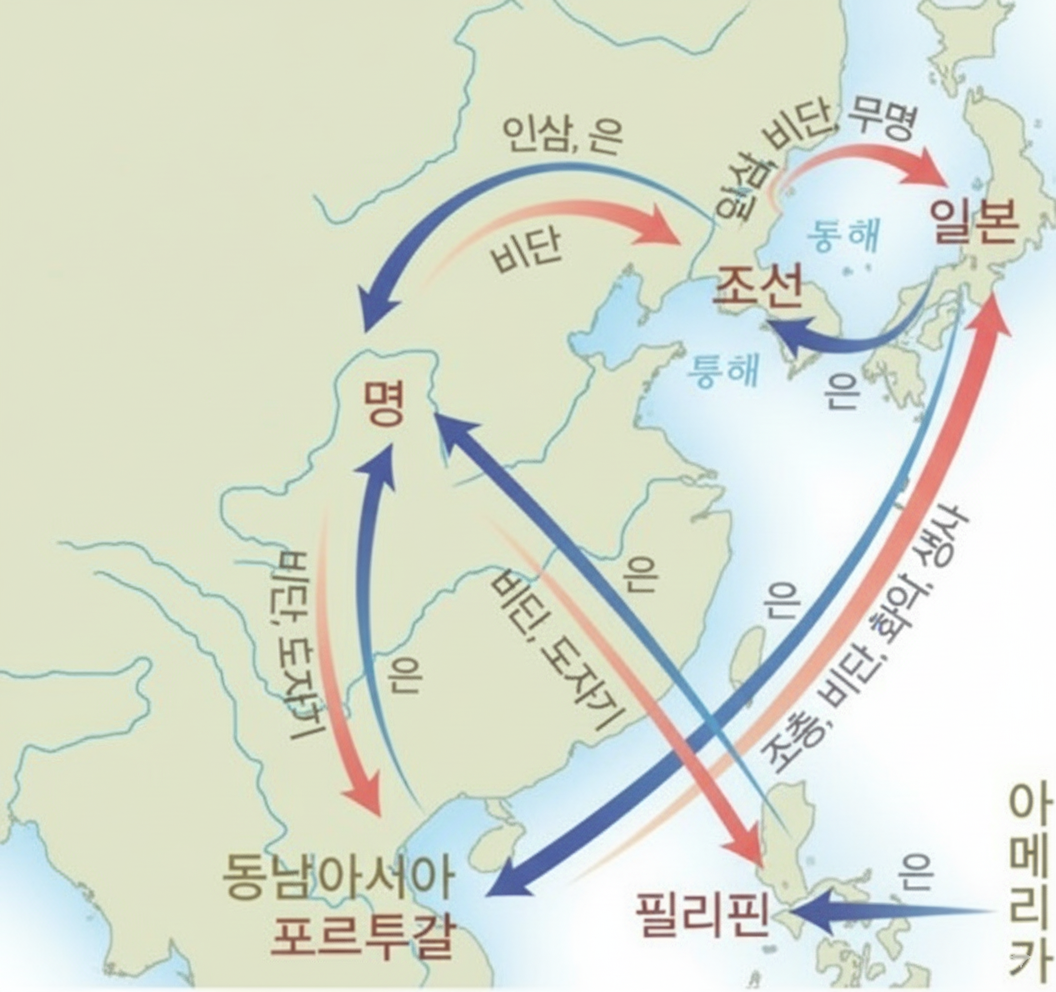
What made the Song-sang in the center unique was their systems rather than just their goods.
They established a network of branches called ‘Songbang’ across the country to sell goods and gather information, increased value by processing ginseng into red ginseng, and managed cash flow using the ‘Sagae-chibu-beop,’ a method similar to modern double-entry bookkeeping.
Instead of blocking and monopolizing the passage like Wiman Joseon, they created a system connecting one passage to another to generate profit.
Even this Silver Road was not eternal.
In the 18th century, as the Japanese shogunate reduced the outflow of silver and increased direct trade with Qing through Nagasaki, the profits from entrepôt trade passing through Joseon noticeably declined. It proved once again that the value of a passage is determined by the conditions at both ends, not by those standing in the middle.
Today’s Korea, which sells semiconductors and content, still stands between continental and maritime powers.
How this location shapes today’s landscape is discussed from a different angle in the Semiconductor Super Cycle post.
The Sagae-chibu account books left behind by the Song-sang are still passed down as accounting records of the Gaeseong merchants.
References
- A Glance at the History of Maritime Civilizational Exchange between Korea and China
- Let's look at the changes in agriculture and commerce in the late Joseon period.
- The War Between Wiman Joseon and Han
- Jang Bogo, the Global Businessman Who Changed the World Through Maritime Trade: Why a Second-Grade Organization is More Useful Than an Outstanding Leader
- 17th-Century Entrepôt Trade Stimulated Commercial Economy... Nationwide Circulation of Coins and 5-Day Markets Flourish
- Encyclopedia of Korean Culture, Sagae-chibu-beop (Double-Entry Bookkeeping)