
The Story of the Original Golden Spoons Who Roamed Hanyang in Silk Robes Before the Porsche
- Unique lifestyles of the privileged classes during the Goryeo and Joseon periods
- Luxuries and pleasures of the Orange Class across different eras, along with their cultural backgrounds
- Interesting facts through historical materials such as polo and genre paintings
Do you remember the Orange Class that symbolized Apgujeong-dong in Seoul during the 1990s? The image of young people flaunting themselves with flashy foreign cars and luxury goods vividly reflects the social landscape of that time. However, this scene has surprisingly repeated itself throughout our history. What if, long before the first sports car raced through Gangnam streets, young people in silk robes made the capital’s nights lively against a backdrop of immense power and long-standing wealth?
Every era has its own ‘Orange Class.’ These individuals lead the trends of their time, and their luxurious and leisurely lives define society while challenging the existing order. Now, we will travel back in time to meet two different worlds. The first is the aristocrats of Goryeo, who flaunted their raw and wild power, and the second is the urbanites of Joseon, who dominated the nightlife culture of the capital Hanyang with sophistication and style.
Part 1: The VVIPs of Goryeo — An Era of Polo, Power, and Debauchery
The elite class of Goryeo expressed their identity not just through wealth but through the consumption of overwhelming power and resources. Their ‘flex’ was grand and sometimes even brutal.
The Country Club of Goryeo: Life on the Polo Field
The sound of hooves shook the ground, and the sharp sound of a wooden mallet, known as ‘jangsi (杖匙),’ striking the ball pierced the air. Amid the cheers of young aristocrats dressed in splendid silk garments, an intense polo (격구) match unfolded. Similar to today’s polo, this game was not merely a sport; it was a league reserved for the top VVIPs, combining immense wealth and advanced horsemanship.
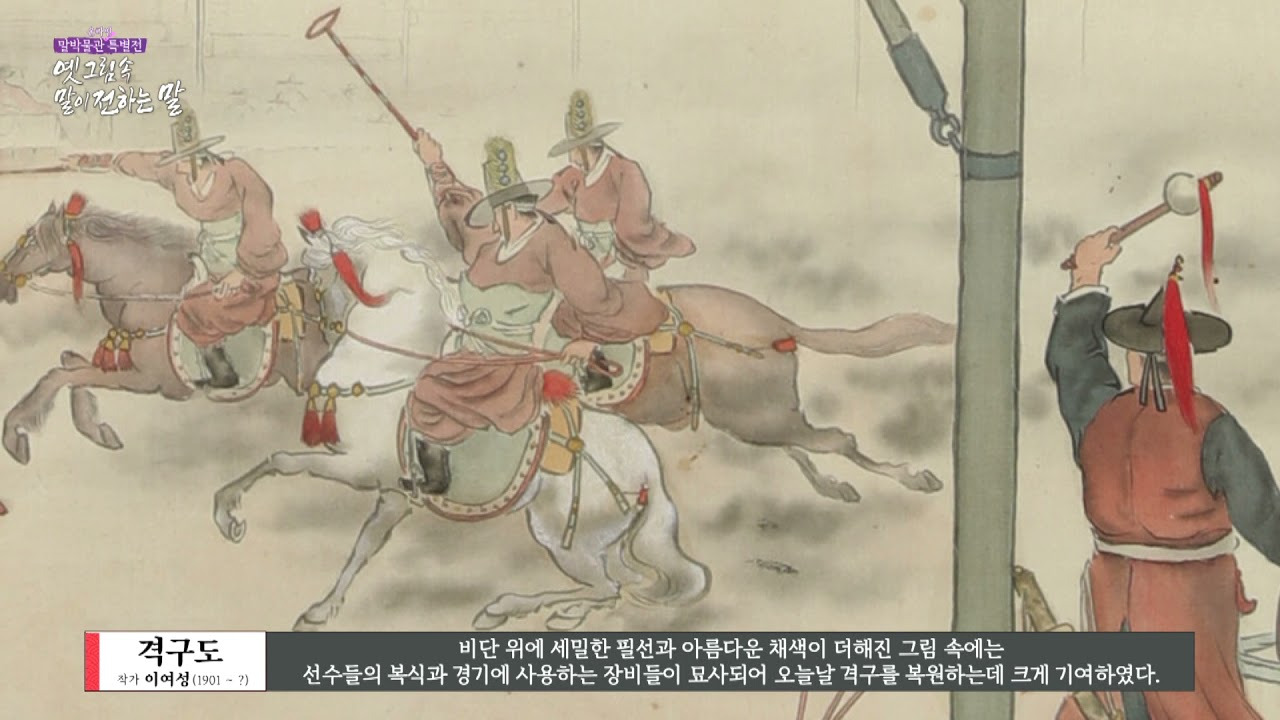
The costs of this game were beyond imagination. A lavishly decorated saddle could cost as much as ten commoners’ homes, and the horses were specially trained with extremely luxurious equipment. Polo was not just a game; it was a public declaration of wealth and power. Even the kings of Goryeo were captivated by polo, often neglecting state affairs to watch matches, blurring the lines between military training and aristocratic entertainment.
At the pinnacle of this display was Choi Woo (崔瑀), the de facto ruler of the military regime. In 1229, he forcibly demolished over 100 homes to build a personal polo field. This field was so vast that 30,000 monks could sit and dine while watching the match. This shocking anecdote illustrates how the ruling class of Goryeo disregarded the lives of the common people for their leisure.
The Scandal Maker: The Notorious King Chung-hye
If we were to name an icon of luxury and debauchery during the Goryeo period, it would undoubtedly be King Chung-hye (忠惠王). He inherited immense power but showed little interest in state affairs, focusing solely on personal pleasures as the ‘problematic child of the royal family.’
His eccentricities began with fashion. His father, King Chung-suk (忠肅王), rebuked him in front of others for his extravagant Mongolian-style clothing and exotic demeanor upon his return from the Yuan dynasty, saying, “Both your father and mother are Goryeo people, so how can you follow the customs of the barbarians? What is with that luxurious outfit?” This is remarkably similar to how the older generation criticizes the tastes of the westernized younger generation.
His hobbies were also far from royal dignity. He greatly enjoyed wrestling with his ministers, completely disregarding the hierarchy of the court while mingling with eunuchs. Additionally, the Goryeo History contains detailed records of his excessive hunting and unimaginable romantic escapades.
When Pleasure Turns into Cruelty: The Rulers of Goryeo
The leisure activities of the Goryeo elite often led to the violent abuse of power. The powerful aristocrats (권문세족), backed by the influence of the Yuan dynasty, enjoyed nearly absolute authority, and their privileges reigned above the law.
The story of Lee Gwang (李光), a servant in the household of high-ranking official Yeom Heung-bang (廉興邦), dramatically illustrates the social landscape of the time. Believing in his master’s power, Lee Gwang illegally seized land from a former official, Jo Ban (趙胖). When Jo protested, Lee Gwang mocked him instead. Unable to endure the humiliation, Jo ultimately killed Lee Gwang. Upon hearing this news, Yeom Heung-bang viewed it as a challenge to his authority and, in a fit of rage, arrested Jo, falsely accusing him of treason and torturing him severely. This incident clearly shows how the ‘pleasures’ and ‘power’ of the ruling class operated as a system of fear and injustice for others.
Such behavior reveals that the identity of the Goryeo elite was not merely about style but was a ‘performance of power’ showcasing their control over land, resources, and people. Whether it was Choi Woo demolishing homes to build a polo field, King Chung-hye disregarding hierarchy to wrestle, or Yeom Heung-bang’s household exercising violence while ignoring the law, all these acts were direct demonstrations of their social and political dominance. This was also an inevitable symptom of a political system that allowed a class to reign above the law, created by the hereditary privilege through the examination system and the interference of the Yuan dynasty, rather than individual moral decay.
Part 2: The Trendsetters of Joseon — The Birth of Hanyang Style
As time passed into the Joseon period, a new type of ‘Orange Class’ emerged. They sought urban and sophisticated elegance based in the capital Hanyang and wielded influence through cultural capital. Their stage was not the battlefield or polo field, but rather the lively taverns, gisaeng houses, and social gatherings overflowing with elegance.
The Influencers of the Time: Opening the Wardrobe of Byeolgam
The trendsetters of late Joseon in Hanyang were undoubtedly the byeolgams (별감). They could be called ’the Orange Class of the time.’ Although their official rank was not high, their position of being closest to the king granted them immense cultural influence and wealth.
”.”)
The portrayal of them in the 19th-century literature, “Hanyangga (漢陽歌),” resembles a modern fashion magazine. From head to toe, their style was meticulously calculated to showcase.
- Hairstyle and Hat: They wore a ‘pyeonwolsangtu’ hairstyle, meticulously styled, with expensive amber hairpins. The transparent top-grade Pyongyang cap was adorned with rare tortoiseshell ornaments. Inside their specially made straw hats, they supported them with purple silk strings and added decorations to hold peacock feathers.
- Signature Red Robe: The ‘hongui (紅衣),’ a bright crimson silk robe woven with life thread, was a privilege only they could wear.
- Accessories: They wore several imported silk pouches filled with expensive Chinese fragrances around their waist and carried a decorated dagger (장도) embellished with jade and tortoiseshell. The most audacious choice was wearing embroidered women’s leather shoes called ‘suunhye (繡雲鞋),’ which was a bold fashion that transcended gender boundaries at the time.
A Night of Enjoyment in 18th Century Style
The vibrant nightlife of late Joseon is captured in the genre paintings of Shin Yun-bok (申潤福). His paintings resemble paparazzi shots, capturing the secret amusements of Hanyang’s elite.
”.”)
The first scene takes place in a tavern. Shin Yun-bok’s “Jusageobae (酒肆擧盃)” depicts a lively atmosphere where men of various ranks gather to drink. At the center of the painting is undoubtedly the byeolgams in red clothing, leisurely picking snacks in front of the tavern owner while attracting the attention of those around him.
”.”)
The next scene unfolds in front of a gisaeng house. “Yugwangjaengung (遊廓爭雄)” depicts a noisy scene where two men are fighting over a gisaeng. The figure authoritatively mediating the fight is also the byeolgams in red clothing. This painting visually proves that byeolgams were not merely guests but the influential figures responsible for managing and maintaining order in the entertainment world.
The ‘victory celebration’ they hosted was not just a drinking party. It was a grand cultural event featuring the best musicians, dancers, and gisaengs of the time, showcasing that byeolgams were cultural producers and patrons.
The Freedom of Doing Nothing: The World of Hallyang
While byeolgams produced and managed the entertainment culture, the consumers were the hallyang (閑良). These were the sons of the military families who did not pursue official positions, literally forming a ‘professional leisure class.’ Although the term ‘hallyang’ later acquired a negative connotation of laziness, at that time in Hanyang, they were sophisticated consumers who appreciated art and elegance.
A day in the life of a hallyang began with archery practice, followed by composing poetry, visiting gisaeng houses, and enjoying the refined lifestyle known as pungnyu (風流) with the best artists of the time. They were the audience and critics supporting the entertainment ecosystem and sometimes romantic partners of the gisaengs. Of course, this lifestyle drew criticism from strict Confucian scholars, who accused them of “wasting time idly.”
While the power of the Goryeo elite stemmed from land and private soldiers, the status of the Joseon ‘Orange Class’ derived from ‘cultural capital’ within the specific space of the capital Hanyang. Their influence was based on a sense of creating trends and control over the entertainment industry. This was a new phenomenon created by the centralized political structure of Joseon, where the center of power shifted from local aristocrats to Hanyang, leading to an activated commercial economy in the capital. Just as taverns evolved from mere lodgings to centers of information and credit transactions, leisure and entertainment also became a massive industry, and byeolgams were in the perfect position to become the rulers of this new cultural economy.
Comparison Table: Goryeo VVIP vs. Joseon Trendsetters
Comparison of the Privileged Classes of Goryeo and Joseon
| Feature | Goryeo Period (“권문세족”) | Joseon Period (“별감” & “한량”) |
|---|---|---|
| Main Power Base | Hereditary land, private soldiers, monopoly of high official positions | Proximity to the king, control over capital entertainment networks |
| Core Leisure Activities | Polo (격구), falconry, large-scale banquets | Victory celebrations (party hosting), gisaeng house visits, archery, poetry gatherings |
| Display Methods | Display of resources (e.g., demolishing homes to build personal arenas) | Display of style and cultural knowledge (e.g., luxurious and trendsetting fashion) |
| Main Social Venues | Private estates, palaces, polo fields | Hanyang’s entertainment districts: taverns, gisaeng houses, social clubs |
| Causes of Social Criticism | Abuse of power, land exploitation, corruption | Luxury and debauchery, violation of Confucian frugality, incidents of violence |
| Main Historical Sources | “Goryeo History” | “Hanyangga”, genre paintings by Shin Yun-bok, “Annals of the Joseon Dynasty” |
Conclusion
The elite of Goryeo showcased rough and violent power based on territory and physical strength, while the trendsetters of Joseon exercised urban and sophisticated cultural influence. Although their modes of expression differed, both groups perfectly fit the archetype of the wealthy privileged class known as the ‘Orange Class.’
The emergence of such privileged classes has always led to social friction. During the Joseon period, there were numerous petitions criticizing their luxury, and kings like Yeongjo (英祖) even emphasized frugality to curb the trend of extravagance. The tension between the privileged few and the majority, as well as the debate over luxury and frugality, is a theme that transcends time.
While the Porsche and luxury brands of the 1990s may seem like modern symbols, they are merely new props in a very old play. The stories of byeolgams in red silk robes and Goryeo aristocrats on priceless steeds remind us of an important truth: the desire to show off and to be seen, the aspiration to create trends and enjoy extravagant leisure, is an age-old narrative deeply woven into the vast tapestry of Korean history.
So, who is the ‘Orange Class’ that dominates your era?
References
- Korean Field Hockey Polo - Regional N Culture Link
- [Story] Joseon Military Officials Were Polo Masters… - Dong-A Ilbo Link
- Polo - Namu Wiki Link
- Polo (擊毬) - Sillok Wiki Link
- Polo - Encyclopedia of Korean Folklore Link
- King Chung-hye - Wikipedia Link
- King Chung-hye - Namu Wiki Link
- Powerful Aristocrats - Namu Wiki Link
- Unknown ~ 1388 (King Woo 14) - Our History Net Link
- The Orange Class Existed in Late Joseon|Shin Dong-A Link
- Administrator - 1004eyes.com Link
- Tavern Streets of Gyeonggi Province - GGC - Gyeonggi Cultural Foundation Link
- The Story of the Busy Hallyang - Brunch Link
- The Special Class of Joseon, Hallyang (閑良) - Joongbu Daily Link
- Hallyang - Namu Wiki Link
- Tavern - Namu Wiki Link