
What comes to mind when you hear the term ‘yeogwan (譯官)’? Perhaps you envision someone quietly translating the words of foreign envoys beside the king, or a language expert who briefly appears in historical dramas.
But what if I told you that they were the helmsmen determining the course of the great ship called Joseon, sometimes wealthier than the king, and even revolutionaries who smuggled in new worlds at the risk of their lives?
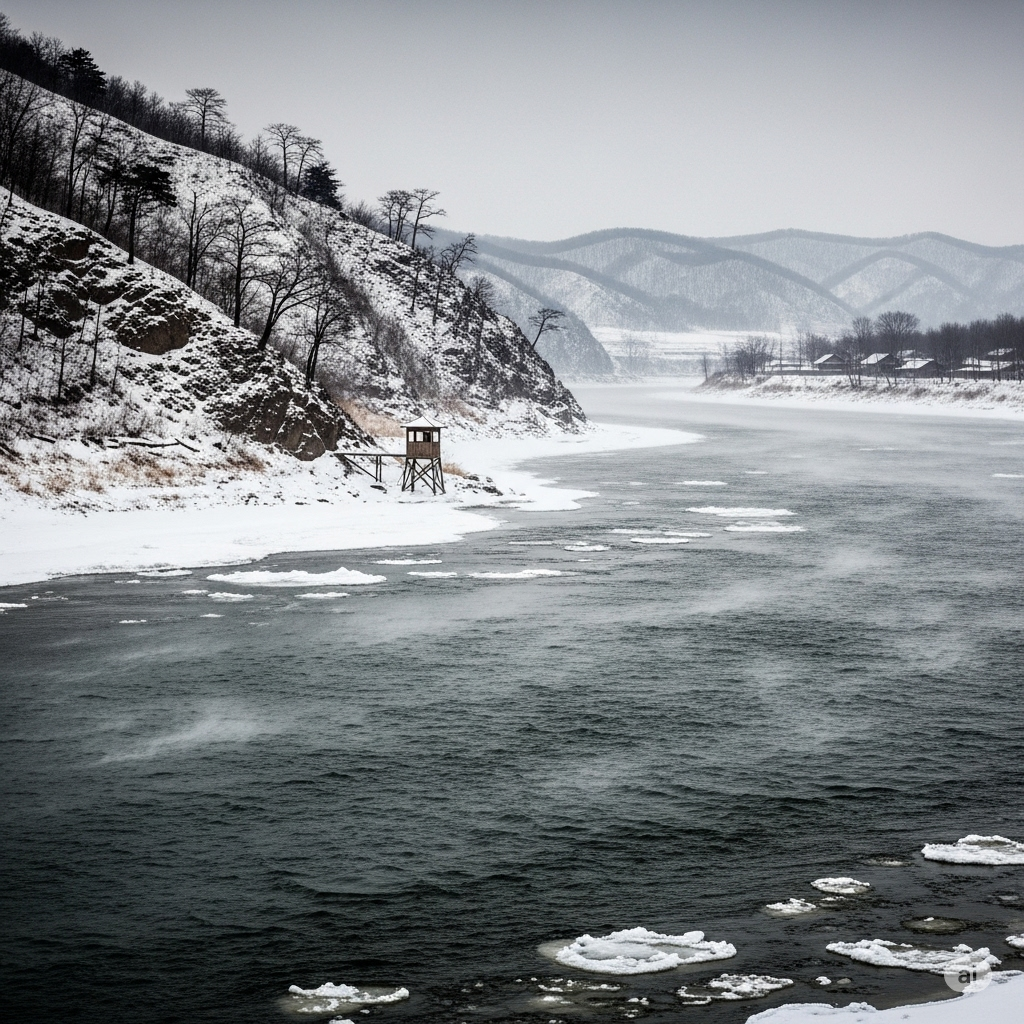
The story begins in the border area where the cold winds of the Yalu River sweep through. The fate of the nation rests on the shoulders of one man. With a single word or intonation, the relationship with the vast Ming Dynasty could lead to peace or war. He is neither a king nor a general, but the safety of Joseon is determined by the tip of his tongue. This man is the yeogwan.
This article is not just a record of interpreters. It tells the story of the state institutions that nurtured them, the harsh training, the shackles of social status and immense wealth, and the dangerous ideas secretly brought in alongside silk and books. Let us unfold the grand narrative of the yeogwan, who were the only window of Joseon for the past 500 years.
Part 1: A New Dynasty, A New Order: The Birth of the Translation Office
In 1392, the new dynasty of Joseon opened its doors. The newly born nation needed clever diplomatic strategies for survival. Thus, Joseon chose the very pragmatic path of ‘sadae-gyeorin (事大交隣)’. ‘Sadae’ means serving the powerful nation of China for stability, while ‘gyeorin’ refers to maintaining good relations with neighboring Japan and the Jurchens to manage the borders.
Who was needed to implement this strategy? Language experts, the vanguard standing at the forefront of diplomacy. Finally, in 1393, Joseon established the ‘Sayeokwon (司譯院)’, the official state foreign language education and translation institution. This was not just a language school; it was an educational institution nurturing talent and a key state agency overseeing diplomatic practices.
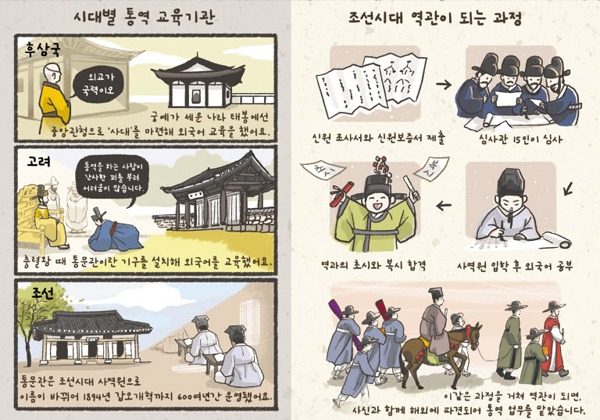
The structure of the Sayeokwon mirrored the situation Joseon faced at the time. It was divided into four core language departments, known as ‘sahak (四學)’.
- Han-hak (漢學, Chinese): Undoubtedly the first foreign language. As the heart of ‘sadae’ diplomacy, all official diplomacy with the Ming and Qing Dynasties relied on Han-hak interpreters.
- Mong-hak (蒙學, Mongolian): Established in 1410. Even after the fall of the Yuan Dynasty, the Mongols in the north remained a significant force, and communication with them was crucial for national defense.
- Wae-hak (倭學, Japanese): Incorporated in 1414. While struggling with the southern pirate problem, trade benefits were also necessary. Wae-hak interpreters were at the forefront of policies that sometimes opened ports (carrot) and sometimes conquered Tsushima Island (whip).
- Yeo-jin-hak (女眞學, Jurchen): Established in 1434. This department was aimed at dealing with the powerful Jurchens in the north. Later, when the Jurchens established the Qing Dynasty, Yeo-jin-hak was renamed ‘Cheong-hak (淸學)’.
Here, we discover an important fact. The establishment years of each department are not mere records; they vividly illustrate how the threats and strategic priorities faced by Joseon evolved over time. The Sayeokwon served as a ‘geopolitical barometer’, responding sensitively to changes in the international situation of East Asia.
The Four Pillars of the Sayeokwon: The Blueprint of Joseon Diplomacy
| Department Name | Language | Target Country | Establishment/Revision Year | Strategic Purpose |
|---|---|---|---|---|
| Han-hak (漢學) | Chinese | Ming, Qing | 1393 | Sadae (事大): Diplomatic stability and acceptance of advanced culture |
| Mong-hak (蒙學) | Mongolian | Northern Yuan (Mongolia) | 1410 | Gyeorin (交隣): Stabilization of northern borders and threat management |
| Wae-hak (倭學) | Japanese | Japan | 1414 | Gyeorin (交隣): Control of pirates and limited trade management |
| Yeo-jin-hak/Cheong-hak | Jurchen/Manchu | Jurchens, Qing | 1434/1667 | Gyeorin (交隣): Northern border and diplomatic response |
Part 2: The Melting Pot of Language: How Interpreters Are Made
So, how does one become a yeogwan? Let’s follow the life of a boy born into a middle-class family who walks the path of an interpreter. His journey is more of a destiny than a choice, as the position of yeogwan was often hereditary. According to records in the ‘Yeogwasebo (譯科世譜)’, the Cheonryeong Hyun family produced 89 yeogwan over nine generations, while the Haeju Oh family produced 22.
When the boy enters the Sayeokwon, what awaits him is only harsh training. Particularly, the space known as ‘Ueo-cheong (偶語廳)’ was truly a melting pot of language. Here, the use of Korean was prohibited, and from morning till evening, conversations had to be conducted solely in the foreign language being learned. It was akin to today’s ‘English villages’.
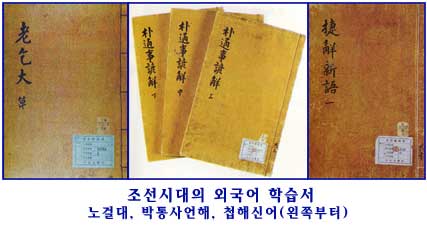
The curriculum was rigorously practical. The Chinese textbooks ‘Nogeoldae (老乞大)’ and ‘Bak Tongsa (朴通事)’ were not mere grammar books. They vividly captured the experiences of Goryeo merchants traveling in China through lively dialogues, teaching them living language skills such as booking inns, ordering food, and bargaining.
After completing all this training, the boy faces the life-changing national exam known as ‘Yeogwa (譯科)’. Held every three years, this exam selects a total of 19 candidates per language. Among them, 13 are for Chinese, while the others have only 2 each, illustrating the fierce competition.
Finally, the boy who passes becomes a member of the unique social class known as ‘Jungin (中人)’. They were essential experts in translation, medicine, and law for the state, but were always regarded as inferior to the yangban aristocrats. An invisible glass ceiling known as ‘Hanpumseoyongje (한품서용제)’ blocked their advancement.
At this point, the core contradiction of the yeogwan emerges. They were indispensable personnel for the state, yet simultaneously marginalized outsiders in society. Joseon could not conduct diplomacy without their tongues, yet the yangban-centered society did not grant them full honor. This fundamental contradiction led them to seek to prove their worth through ‘wealth’ instead of official positions, opening their hearts to a new worldview different from the old order.
The Path to Becoming a Yeogwan: Yeogwa (譯科) Exam
| Exam Stage | Subjects | Selected Candidates (based on the exam year) | Organizing Institution |
|---|---|---|---|
| Chosi (初試) | Memorization, Writing, Translation | Han-hak: 13, Mong-hak: 2, Wae-hak: 2, Yeo-jin-hak: 2 | Sayeokwon, etc. |
| Boksi (覆試) | Same as Chosi (in-depth evaluation) | Final selection from Chosi passers | Yejo, Sayeokwon |
Part 3: The Golden Age: Interpreters Become Wealthy Merchants
How did yeogwan become the wealthiest individuals in Joseon? The secret lies in their exclusive position to travel abroad. They were diplomats, spies, cultural intermediaries, and above all, the most profitable international traders.
The engine of their wealth was the unique system known as ‘Palpoje (八包制)’. The government granted yeogwan, who embarked on dangerous diplomatic missions, the right to conduct personal trade instead of a salary. The term ‘palpo (八包)’, meaning ’eight bundles’, initially referred to the right to take and sell 80 geun of ginseng.
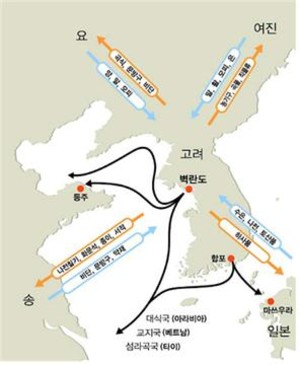
As time passed, the palpo system became more sophisticated, allowing them to take silver instead of ginseng for trade funds, and the yeogwan created a massive triangular trade connecting Joseon, China, and Japan. For instance, they could buy silk thread in China for 60 nyang and sell it in Japan for 160 nyang, yielding nearly three times the profit.
A symbol of this wealth is the yeogwan Byeon Seung-eop (卞承業) from the 17th century. He was the real model for the millionaire Byeon in Park Ji-won’s novel ‘Heosaengjeon’, demonstrating that the wealthiest person in Hanyang at the time was a ‘jungin’ yeogwan, not a high-ranking official.
Of course, this came with life-threatening risks. Their trade often involved smuggling prohibited items like gunpowder or military maps, and if caught, the penalty was death.
In a Confucian state like Joseon, which regarded agriculture as fundamental and looked down on commerce, the yeogwan were opened a path to become state-sanctioned trading capitalists. The government solved diplomatic tasks while saving on salaries, obtaining precious goods and information through the yeogwan. This illustrates how pragmatically the state operated behind ideological facades.
Part 4: Forbidden Beliefs, A New World: Yeogwan and the Cross
What the yeogwan brought through Joseon’s only window was not just silk and silver. Traveling between Beijing, they encountered a new knowledge package called ‘Seohak (西學)’, introduced by Western missionaries. This encompassed astronomy, geography, and the unfamiliar religion known as ‘Catholicism’.
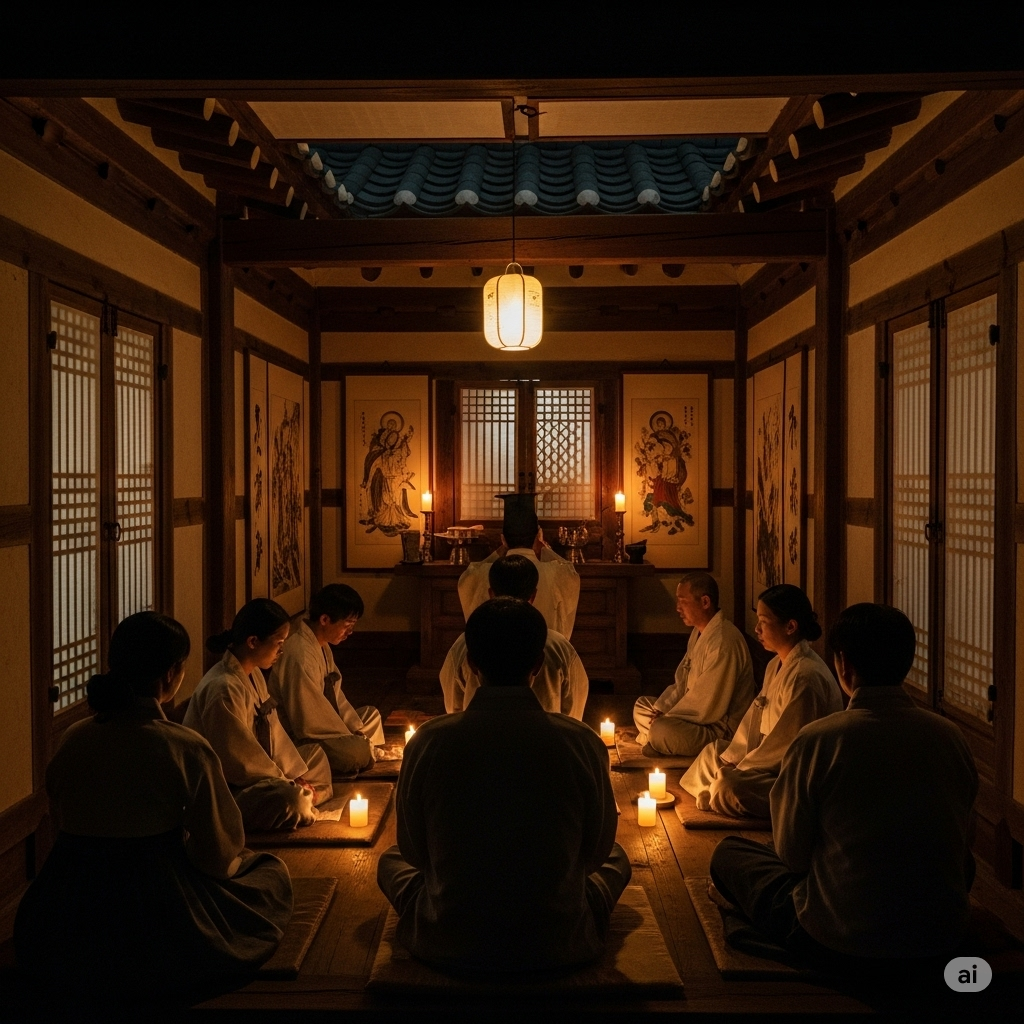
The story takes a tragic turn. In 1784, the home of yeogwan Kim Beom-woo (金範禹) became the hideout of Joseon’s first Catholic faith community. However, the following year, the ‘Myeongnyeongbang Incident’ exposed their secret gatherings. While yangban believers were lightly reprimanded and released, Kim Beom-woo, being a jungin, took full responsibility and died after severe torture in exile. He became the first martyr of Catholicism in Joseon.
Despite the horrific persecution, yeogwan stood at the center of the nascent Catholic Church in Joseon. They risked their lives to smuggle in the first foreign priest, Father Choi In-gil, and another yeogwan, who pretended to be Father Choi, was arrested and martyred in his place.
Why did yeogwan become so deeply immersed in Catholicism? First, they were the only group able to directly access Seohak. Second, the doctrine that ‘all are equal before God’ served as a powerful alternative to class discrimination. Third, their profession itself fostered flexible thinking about the outside world.
Here, a profound irony of history emerges. The Sayeokwon, created to uphold the Confucian order, paradoxically became the first channel through which a revolutionary worldview that would shake that order to its roots entered Joseon.
Part 5: The End of an Era: The Sayeokwon at the Forefront of Change
The final chapter of our story unfolds in 1894, amidst the massive storm of the ‘Gabo Reform (甲午改革)’. It was a radical attempt to dismantle everything old in Joseon and establish a modern state.
The changes were revolutionary. The class system that had persisted for centuries was legally abolished, and the civil service examination was also discontinued. In this great whirlpool, the Sayeokwon, boasting a 500-year history, officially closed its doors, and its functions were absorbed by the ‘Hakmuamun (學務衙門)’, akin to today’s Ministry of Education.
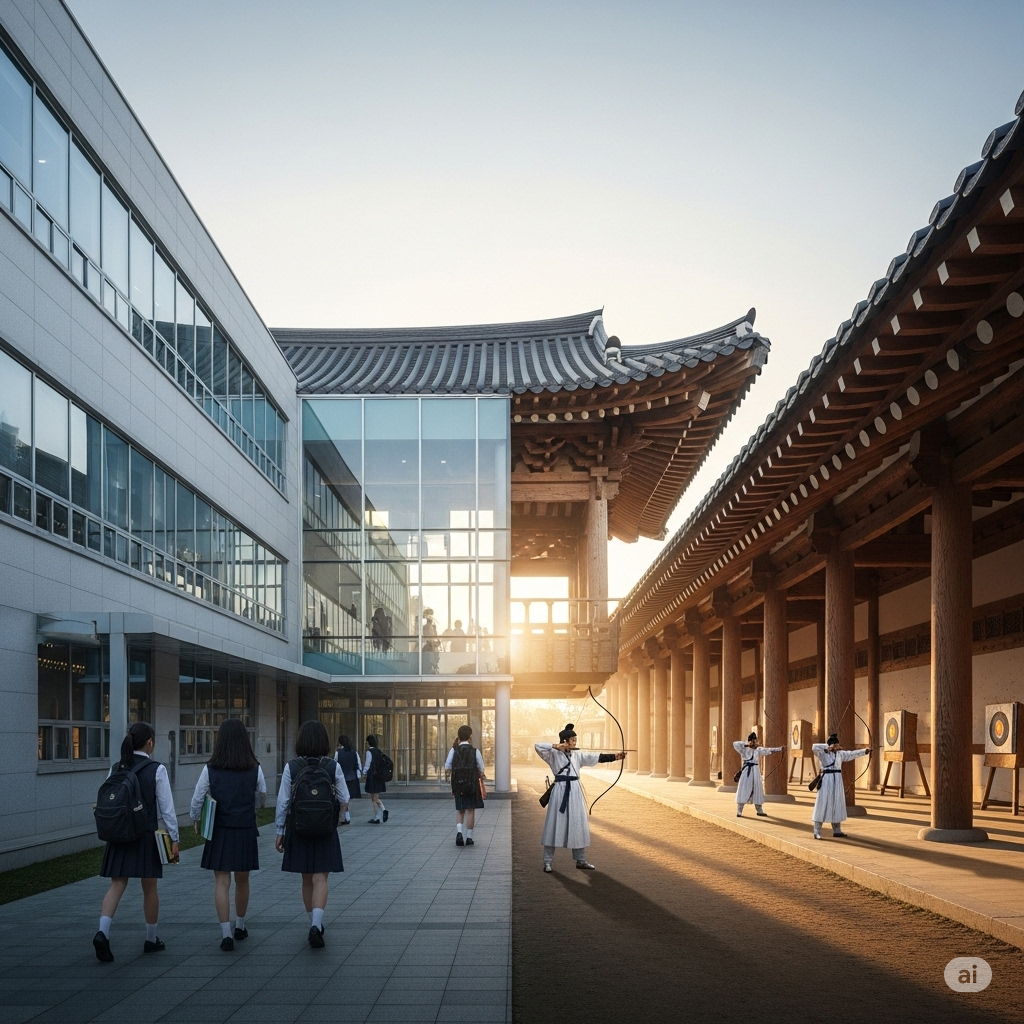
This was not merely an administrative reorganization. It marked the moment when one world, one culture came to an end. The professions passed down through generations, the life-risking exams, the palpo system that brought immense wealth, and even the identity of ‘jungin’—all that defined the yeogwan’s universe vanished into the annals of history.
Here, we encounter another paradox. The power and wealth of the yeogwan were possible because Joseon maintained a ‘closed country’ with only one channel to the outside world. However, as the doors of the nation swung wide open, the specialized gatekeepers who had guarded that door became less necessary. Ironically, the wave of modernization that the yeogwan had sown ultimately led to the obliteration of their own world.
Conclusion: The Echoes of the Yeogwan
The grand journey of 500 years has come to an end. We have followed the lives of the yeogwan, who began as tools of the state, became owners of commercial empires, and spread forbidden faith, ultimately disappearing with the new winds they had ushered in through their own window.
Their story shows that history is not just the domain of kings and generals. History is often made by those who, like them, stood at the borders, living in the spaces that connect the inside and outside. The yeogwan were the human bridge connecting an isolated kingdom to a dynamic world.
They were the window of Joseon, and through that window, the dawn of a new world emerged.