
A yellow can of tuna has always held its place in a corner of the kitchen cupboard.
It’s an ordinary, everyday side dish—something you mix with rice when you’re hungry or toss into a spicy kimchi stew.
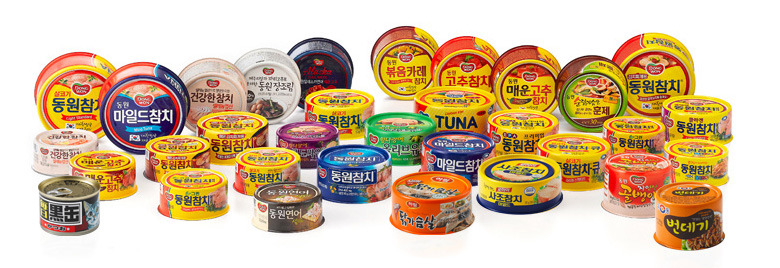
But in January 2025, this common fish appeared in the news with an entirely different face.
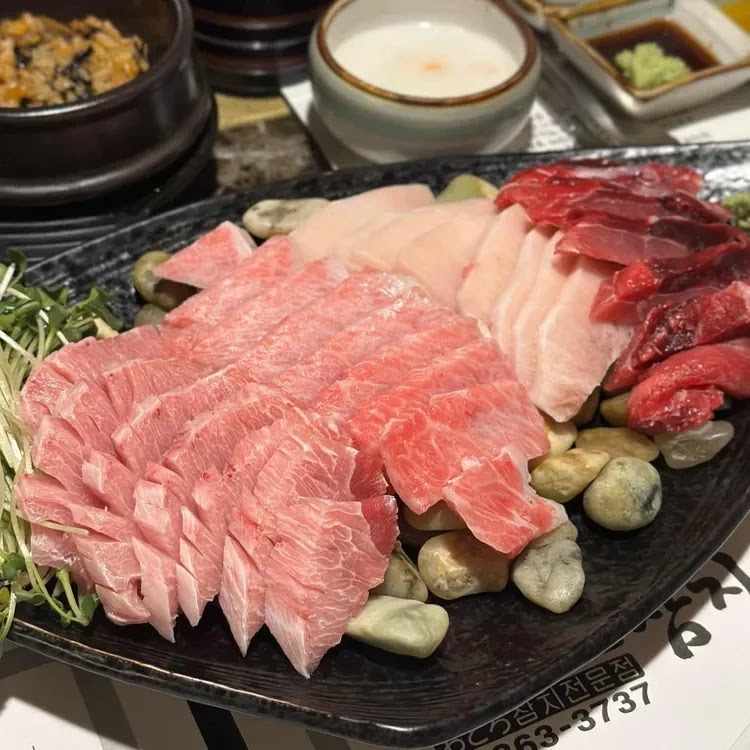
At the first auction of the new year at Tokyo’s Toyosu Fish Market, a 276kg bluefin tuna was sold for 207 million yen, or approximately 1.9 to 2 billion KRW. It was the second-highest price recorded since auction records began in 1999. The all-time record remains the 333.6 million yen tuna from 2019.
Why is one a dollar can and the other a multi-million dollar delicacy, despite being the same fish?
After digging through various reports, the answer lies not in the fish itself, but in the technology humans use to process it.
Canning and freezing—these two technologies have pushed the value of tuna in opposite directions, creating the two faces we see today.
| Era | Event |
|---|---|
| Neolithic Age | Tuna bones discovered in shell mounds at Dongsam-dong, Busan |
| Ancient Rome | Mediterranean tuna fishing, processing, and trade of the condiment ‘Garum’ |
| 1804 | Nicolas Appert invents canning technology in response to Napoleon’s prize |
| 1903 | First canned tuna produced in California, USA, using tuna caught as bycatch instead of sardines |
| 1957 | Korea’s first deep-sea fishing vessel, the Jinam-ho, catches tuna, originating the Korean name ‘Chamchi’ |
| 1969 | Kim Jae-chul founds Dongwon Industries |
| 1970 | Kindai University (Japan) begins research into full-cycle bluefin tuna aquaculture |
| 1971 | Joo In-yong changes the company name of Sijeonsa to Sajo Industries |
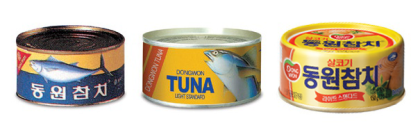
| 1982 | Dongwon Industries launches ‘Dongwon Tuna’, Korea’s first canned tuna |
| 2002 | Kindai University achieves the world’s first full-cycle bluefin tuna aquaculture after 32 years |
| 2025 | Toyosu New Year’s first auction: 207 million yen (approx. 1.9–2 billion KRW) winning bid |
Table: The relationship between tuna and humanity, from the Neolithic Age to full-cycle aquaculture
From the Neolithic Korean Peninsula to Rome: Why was tuna a measure of civilization?
Catching a bluefin tuna—a massive creature that swims at 70–90 km/h—using manual fishing techniques was proof that a society possessed significant navigational skills and organizational power.
In the Dongsam-dong shell mounds in Yeongdo, Busan, tuna bones were found alongside Neolithic artifacts, indicating that our ancestors already possessed the boats and technology to venture into the open sea to hunt tuna.
Ancient Rome was no different.
Roman fishermen ventured into the Mediterranean to catch tuna, and hundreds of processing plants along the coast shipped salted tuna throughout the empire.
In particular, ‘Garum,’ a fermented fish sauce made from tuna innards, was an indispensable condiment on the Roman table. With Garum jars found even in the ash-covered ruins of Pompeii, tuna was deeply embedded in Rome’s economy and food culture.
The birth of canned tuna, born from Napoleon’s reward
Ironically, it was war that made it possible to access tuna at any time.
In the early 19th century, Napoleon, needing a way to supply fresh food to soldiers for long periods, offered a prize for long-term food preservation technology. Parisian confectioner Nicolas Appert discovered that food sealed in glass jars and heated in boiling water would not spoil, perfecting the ‘canning’ technique. In an age before the concept of bacteria existed, he had mastered the principles of sterilization and sealing through experience alone.
Time passed until 1903, when a sardine cannery in California, USA, faced a shortage of raw materials.
They decided to can the albacore tuna that had been caught in the nets instead of sardines, figuring they had nothing to lose. The cooked meat was as lean and tender as chicken. Among sailors, albacore tuna, known for its white meat and mild flavor, had long been referred to as ‘Chicken of the Sea,’ a nickname that would later become a canned tuna brand name.
When World War I broke out, canned tuna was supplied in bulk to soldiers in the trenches as a cheap, nutritious source of protein, and after the war ended, it moved onto the daily tables of Americans.

The origin myths of food brands are often packaged slightly differently than the truth.
Even the story of Trader Joe’s founding myth, often explained in a couple of newspaper articles, actually has a different texture when you look closer. It is easy to simplify canned tuna as a case where ‘a single accidental event created the brand name,’ but in reality, it is closer to the long-standing jargon of sailors becoming cemented as an industry.
Dongwon and Sajo: How the K-Tuna myth was written
Canned tuna, which began in the US, crossed the Pacific to reach Korea, where it was divided by two figures: Kim Jae-chul of Dongwon and Joo Jin-woo of Sajo.
Kim Jae-chul, a former deep-sea fishing captain, founded Dongwon Industries in 1969 at age 35.
There is a famous anecdote about how he started his business by leasing two ships from Japan, relying solely on his reputation as ‘Captain Kim’ without any collateral.
The turning point came during an advanced management program at Harvard University. After learning the theory that “tuna becomes popularized in countries with a per capita income exceeding $2,000,” he thought of the Korean market, which was just crossing that threshold.
Thus, in 1982, ‘Dongwon Tuna’ was launched, using tuna that had previously been entirely exported for domestic canned consumption.
When initial sales were sluggish, all employees focused on tasting events, and by actively promoting recipes like tuna kimchi stew, it settled onto the Korean dining table. I still remember the tuna kimchi stew my mother used to make when I was young, and it is fascinating to realize that the origin of that taste was the decision of a single executive.
On the other side, Joo Jin-woo was studying political science in the US, planning a different career path.
Then, when his father passed away suddenly in 1979, he took over the company at the age of 29. The company’s roots lie in ‘Sijeonsa,’ founded by his father Joo In-yong, which changed its name to Sajo Industries in 1971. Although a novice to the sea, Joo Jin-woo expanded the company by acquiring struggling firms. He steered the company toward becoming a comprehensive food group by successively acquiring Sajo Haepyo, Sajo Daelim, and Oyang Fisheries.
| Category | Dongwon Group (Kim Jae-chul) | Sajo Group (Joo Jin-woo) |
|---|---|---|
| Founder background | Former deep-sea fishing captain | Political science major, 2nd gen successor |
| Reason for founding | Found market through field experience | Sudden succession due to father’s passing |
| Core strategy | Creating the domestic tuna can market | Expansion through M&A |
| Leadership | Field-oriented | Strategist-oriented |
Table: Dongwon and Sajo, the two growth models of the K-Tuna myth
When you place the two founding histories side by side, the two growth grammars of the Korean food industry—the field sense of the first generation and the M&A strategy of the second-generation successor—are perfectly layered into a single tuna can.
For reference, if you want to see another article covering a brand rivalry, the 120-year carbonated war history of Cider vs. Sprite is also interesting from a similar angle.
How tuna belly, ignored even by cats, became Otoro
While canned tuna filled the tables of the masses, tuna belly, or ‘Toro’ (トロ), was walking a completely different path in Japan. Known as ‘Nekomata-gi’ (ネコマタギ), or a part so fatty and fishy that even a cat would turn its nose up and walk away, it was considered a discardable part as recently as the Edo period, just over 100 years ago.
The reason this unwanted part ascended to the pinnacle of gastronomy was not a change in palate, but an advancement in technology.
After World War II, freezing technology and nationwide cold-chain distribution networks changed everything.
Rapidly freezing the fish to minus 60 degrees Celsius immediately after catching it on the deep-sea vessel meant that the fat, once the cause of spoilage, instead acted to lock in the flavor. It was a moment when a disadvantage was flipped into an advantage thanks to technology.
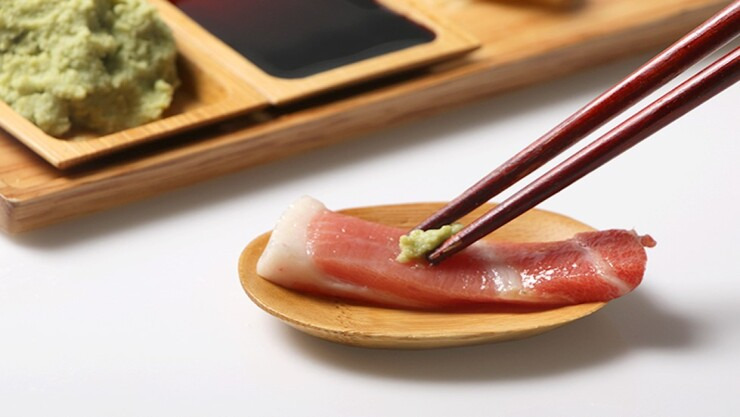
Japan’s economic boom added fuel to the fire.
People with disposable income began seeking more expensive and delicious things, and the beautifully marbled Toro became a symbol of wealth and fine dining. This is the background behind the multi-billion won winning bids at the Toyosu market’s first auction every January.
Can full-cycle bluefin tuna aquaculture save the future of tuna?
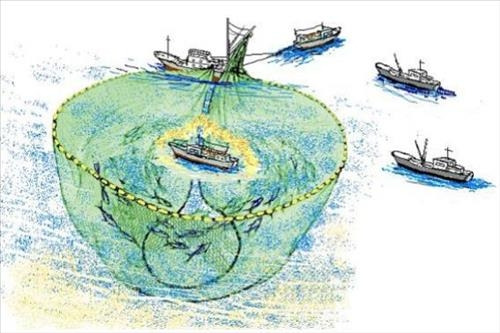
As demand exploded and resources dwindled due to overfishing, humanity had to shift from being ‘hunters’ to ‘farmers.’
Kindai University in Japan was the first to take on this challenge. In 1970, the Fisheries Laboratory began research into ‘full-cycle’ bluefin tuna aquaculture. Full-cycle aquaculture is a technology that completes the cycle without relying on wild resources, by raising artificially hatched fry to adulthood, having them lay eggs, and then raising the next generation from those eggs.
It was not as easy as it sounds.
Bluefin tuna are homeothermic, meaning their body temperature is about 3 degrees higher than the water temperature, and they are so sensitive that they can be startled to death by noise or light. In fact, in the early days of domestic aquaculture, there were cases where they died from a single clap of thunder. As a result, only a tiny fraction of the individuals survived from egg to the next generation of eggs, but after 32 years of maintaining this extreme survival rate, the first generation of artificially hatched tuna finally succeeded in spawning in 2002. It was the world’s first full-cycle bluefin tuna aquaculture success.
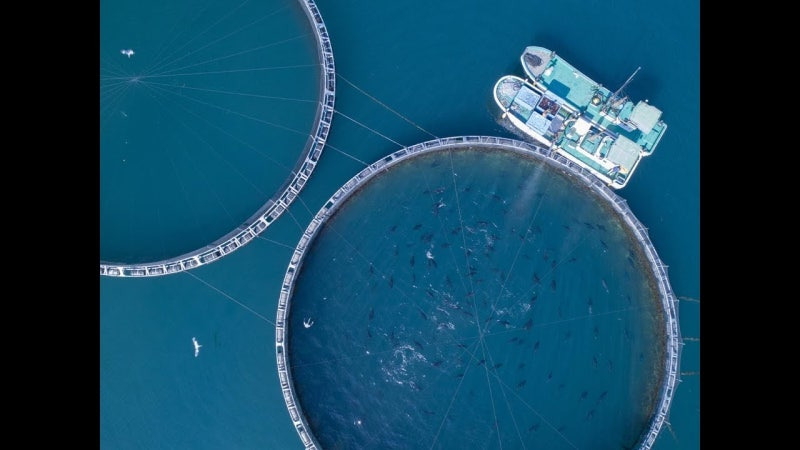
Korea has also jumped into securing this technology and succeeded in its first commercial shipment in 2018, but there is still a long way to go before mass production. Tuna hunting from the Neolithic era is moving into a new phase called ‘marine animal husbandry.’
Canning technology popularized tuna through a single can, and freezing technology elevated the belly of the same fish into a top-tier luxury item.
Although the directions were opposite, in both cases, it was technology that rewrote the value of tuna. The next time you take a tuna can out of the cupboard, it’s worth remembering that it contains this long tug-of-war that has continued since the Neolithic Age.
References
- YouTube, Extreme JOB: The Birth of Canned Tuna #001 – https://www.youtube.com/watch?v=AT1v2K2Do-I
- Chosun Ilbo, 276kg bluefin tuna at Japan's first new year auction, bid price nears 2 billion KRW – https://www.chosun.com/international/international_general/2025/01/06/XROX7C3ACZFJRGZXHR6OK7DAVM/
- Edaily, How big is Japan's first tuna of the year? "Sold for 1.9 billion KRW" – https://edaily.co.kr/News/Read?mediaCodeNo=257&newsId=01364486642035096
- YouTube, Tokyo's first tuna auction exceeds 1.9 billion KRW... "2nd highest ever" [Issue SNS] / KBS 2025.01.07. – https://www.youtube.com/watch?v=0UvMqqAbct0
- Encyclopedia of Korean Culture, Canning – https://encykorea.aks.ac.kr/Article/E0059418
- Weekly Hyundai, Future leap as a comprehensive food company... The story of Dongwon Group, the original tuna brand – http://www.hyundaenews.com/28896
- Seoul Shinmun, From unpaid sailor to acquiring a tuna can company... The passion and challenge of Dongwon Group's Kim Jae-chul – https://m.seoul.co.kr/news/2026/07/20/20260720500067
- Business Post, [Who Is?] Sajo Group Chairman Joo Jin-woo – https://www.businesspost.co.kr/BP?command=article_view&num=374001
- Newsis, Sajo Industries History (Sijeonsa → Sajo Industries name change in 1971) – https://mobile.newsis.com/view/NISX20250324_0003111006
- Money Today, Domestic bluefin tuna raised through aquaculture succeeds after 11 years, hits the table – https://www.mt.co.kr/economy/2018/06/22/2018062208160017210
- YouTube, 2 billion won for one fish? Why is Japan's first tuna auction of the year so expensive? |Current News – https://www.youtube.com/watch?v=gZ7b_oi4qIA
- YouTube, Tuna was just cat food 200 years ago? – https://www.youtube.com/watch?v=iQMZ-kQYsz4
- YouTube, What are the conditions for successful bluefin tuna aquaculture? – https://www.youtube.com/watch?v=YA_FX2RdlKU
- KBS News, [Reporter's Note] Who is the final winner in the global bluefin tuna market?… Stop the 'hype' about full-cycle aquaculture – https://news.kbs.co.kr/news/view.do?ncd=5016763