
Part 1: The Drug Called Winning - Why We Obsessively Strive to Win?
Chapter 1. Opening: A CEO’s Dinner Where Logic Won and the Deal Was Lost
In a dimly lit Michelin-starred restaurant in Manhattan, two men sit across from each other.
One is David, the CEO of Silicon Valley’s hottest EdTech startup.
His companion is Michael, his early investor and long-time mentor.
On the surface, it seems calm, but the air around the table is razor-sharp.
The topic was ‘Next Quarter’s Marketing Strategy.’
Michael proposed a conservative approach, while David argued for aggressive expansion.
David was meticulously prepared.
He pulled out his tablet, showcasing three years of user data in dazzling graphs, and systematically dismantled Michael’s concerns with statistical proof.
His logic was flawless. It was airtight, his articulation was eloquent, and the data was overwhelming.
After 30 minutes of intense debate, Michael could no longer counter.
Silence hung in the air, and David inwardly rejoiced. ‘I did it. I convinced him. My intellectual superiority is proven.’ David reveled in the victory, downing his wine.
But the email David received the next morning was not a victory report.
It was Michael’s notice of withdrawal of investment. The email read simply:
“Your logic is impeccable. However, you disrespected your partner. I do not invest in places where my opinion is not heard.”
David won the argument. But he lost the relationship.
And the cost of that loss was so immense it threatened the company’s survival.
Frankly, this story isn’t just about a fictional David. It’s a mistake countless highly educated individuals, professionals, and leaders make daily in modern society.
We learn in school how to get the right answers, how to win debates, and how to arm ourselves with logic through data.
But we are never taught ‘when to concede even when we are right,’ or that ’logical victory can lead to relational bankruptcy.’
Why are we so obsessed with ‘winning’?
Why do intelligent people fall deeper into this fatal trap?
In Part 1, we will dissect the psychological and biological mechanisms of ‘Winning Addiction,’

and explore the reality of the ‘Smart Mistakes’ we make.
Chapter 2. Anatomy of Smart Mistakes
Dr. Gini Graham Scott raises a compelling question in her research and writings: “Why do smart people make foolish decisions?”
We tend to believe that high intelligence shields us from biases, leading to objective judgment.
However, modern psychology and neuroscience show the opposite.
The higher one’s intelligence, the more susceptible they can be to biases.
This is known as ‘The Intelligence Trap,’ or as Dr. Scott calls it, ‘Smart Mistakes.’
1. The Paradox of Motivated Reasoning
An average person might feel uneasy and be more open to changing their mind when presented with clear evidence contradicting their intuition.
But highly intelligent individuals are different. Even when faced with evidence that their intuition is wrong, they activate ingenious logical defense mechanisms.
They use their superior intellect not to ‘seek truth’ but to ‘rationalize conclusions they have already reached.’
In psychology, this is called ‘Motivated Reasoning.’
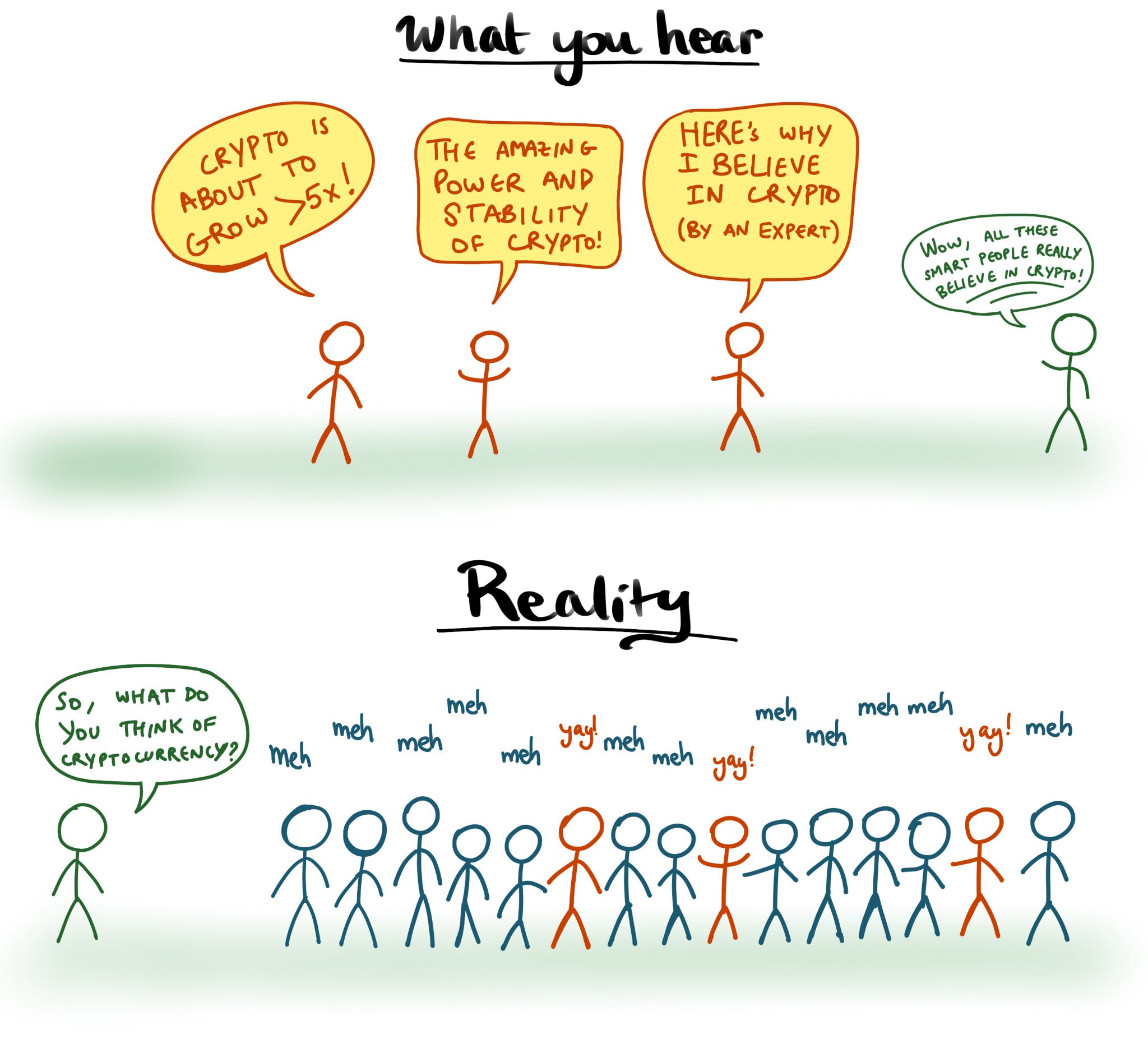
In essence, the smarter you are, the more sophisticated your rationalization becomes, allowing you to perfectly deceive even yourself.
This is why smart people often become more stubborn in conflict situations.
2. Cognitive Closure and Arrogance
Another cause of ‘Smart Mistakes’ is Cognitive Closure.

The more successful someone is in their field, the less tolerant they become of uncertainty.
When faced with conflict, they desire to quickly reach a conclusion (Closure) and control the situation.
In this process, the opposing viewpoint is not seen as a ‘variable to consider’ but as ’noise to be eliminated.’
Common Mistake: “I’m not sure, you might be right.”
Smart Mistake: “Your argument has logical leaps. The facts are A, B, and C. Therefore, I am right.”
Dr. Scott points out that this attitude is the biggest barrier to resolving conflict.
The other party feels their opinion has been ‘analyzed’ and ‘rejected,’ triggering immediate emotional backlash.
The more perfect your logic, the more insulted the other person feels. This is the interpersonal disaster committed by the highly intelligent.
3. Overconfidence in Self-Efficacy and Blind Spots
A confident leader believes, “I can solve this problem.”

But conflict is not a solo math problem.
Conflict is an interaction.
No matter how perfect my solution, if the other party doesn’t agree, it’s not a solution.
Those caught in winning addiction forget this simple truth.
They define conflict resolution as ’the process of persuading others to do as I wish.’
However, true conflict resolution is ’the process of creating a third way together with the other party.’ This difference in definition creates a world of difference in outcomes.
Chapter 3. The Trap of Zero-Sum Bias: “If I Live, You Must Die”
Our brains are not designed to handle the complex business negotiations of the 21st century.
Our brains evolved to be optimal for encountering lions on the savanna or engaging in tribal warfare tens of thousands of years ago.
This primitive legacy gives rise to the fatal error of ‘Zero-Sum Bias’ in modern conflict situations.

1. Amygdala Hijack and the Fight-or-Flight Response
When someone opposes our opinion in a conflict, our brain doesn’t perceive it as a mere ‘difference of opinion.’
The amygdala, the brain’s emotional center, interprets it as a ’threat to survival.’ It triggers an emergency alarm, just like encountering a predator in the wild.
At this moment, the function of the prefrontal cortex, which governs reason, is temporarily paralyzed.
Daniel Goleman named this phenomenon ‘Amygdala Hijack.’
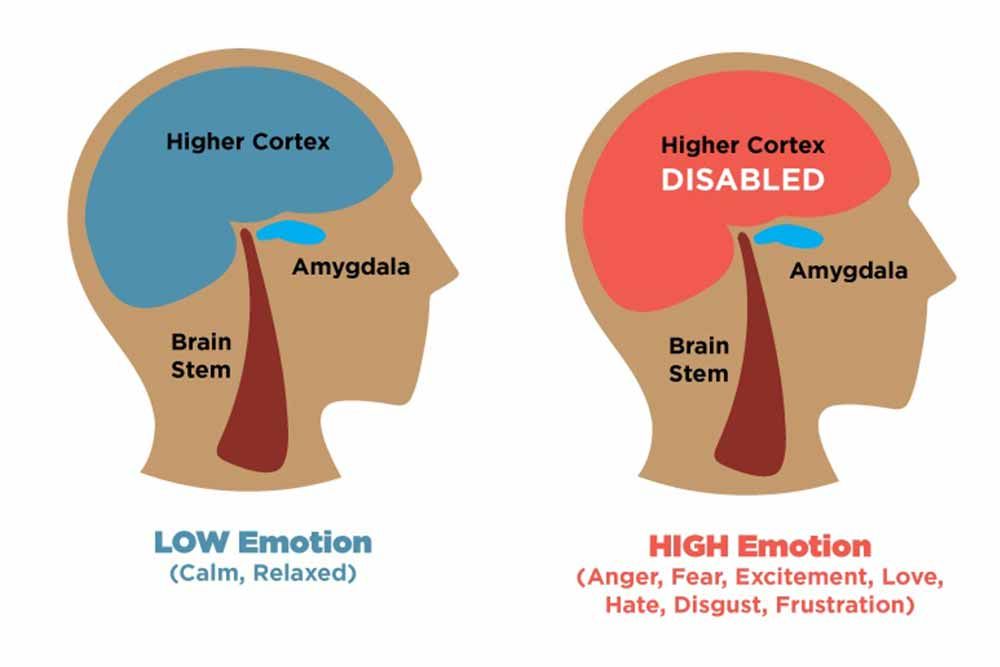
Blood flow shifts to the muscles, vision narrows, and thinking becomes extremely simplistic.
Friend or foe?
Fight or flee?
Kill or be killed?
In this state, high-level thinking like ‘creative cooperation’ or ‘mutual benefit’ is impossible.
Only ending the situation by defeating the opponent (Winning) becomes the sole objective.
This is the biological reason we go all out even in trivial arguments.
2. The Illusion of the Fixed Pie
Zero-sum bias makes us see the world as a ‘fixed pie.’ “Resources are limited, so if you get more, I must get less.”
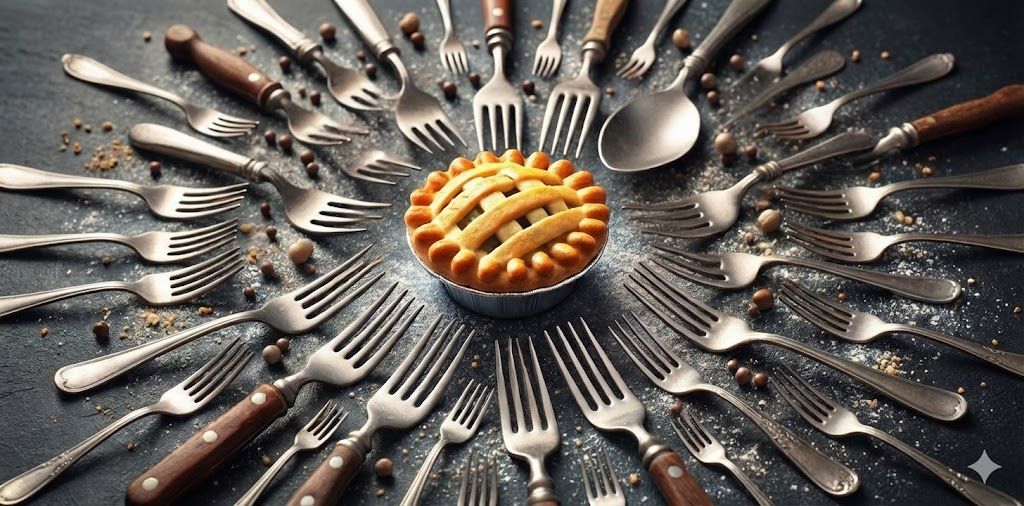
This mindset infiltrates business negotiations, salary discussions, and even marital relationships.
Salary Negotiation: If the company gives more money, the company loses; if I get less, I lose.
Work Distribution: If you’re comfortable, I’m struggling, and if I’m comfortable, you’re struggling.
But reality isn’t a mathematical zero-sum game.
Considering psychological value, relationship longevity, and future opportunity costs, the pie can always grow or change shape.
Addicted to winning, people fail to see this possibility. They make the mistake of overturning the table to snatch one more slice of the pie in front of them.
3. Relative Deprivation and Status Competition

In modern society, ‘winning’ goes beyond survival to become a matter of ‘Status.’
Yielding in a conflict is perceived as a decline in social status.
Especially within organizations, leaders often view their decisions being overturned as a challenge to their authority.
“If I back down here, it’s game over.” This inner voice escalates conflict.
In reality, the other party might just be expressing practical difficulties, but a leader addicted to winning interprets it as ‘a challenge to my authority’ and overreacts.
This is a shortcut to destroying psychological safety within an organization and turning members into silent _‘yes-men.’
Chapter 4. The Prison of Position: The Tragedy of Equating Stance with Self
Harvard Negotiation Project founders Roger Fisher and William Ury, in their negotiation bible ‘Getting to Yes,’ presented a crucial concept:
the distinction between Position (explicit demands) and Interest (underlying needs/stakes).
The prison in which the winning addicts are trapped is precisely this ‘Position.’
1. Ego-Identification with Position
A position is “what I want” – the specific demand stated outwardly.
“Give me a 20% salary increase.”
“The deadline for this project must be the 15th.”
“The minimum wage must be $15.”
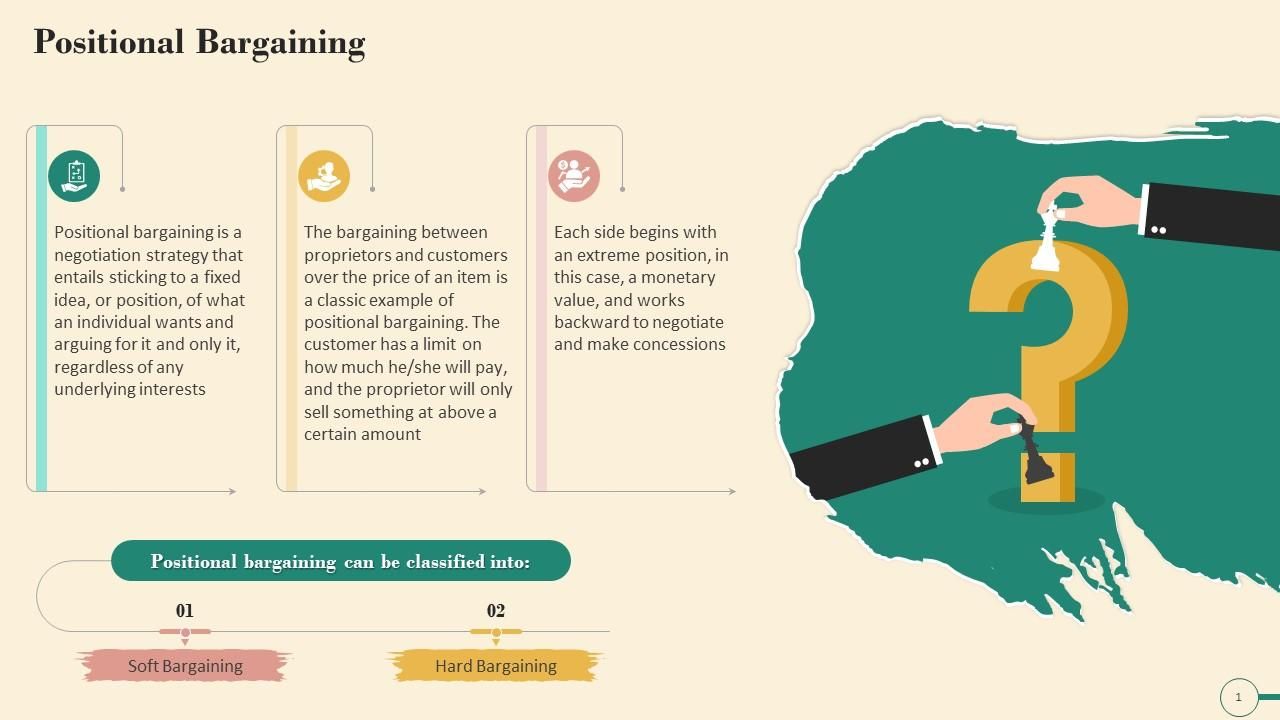
The problem is that the moment people declare their position, they begin to equate it with their Ego.
Once someone declares, “The deadline is the 15th!”, a suggestion to extend it to the 20th is not just a date change proposal but is perceived as a personal attack: “You are wrong,” or “You are incompetent.”
Therefore, defending a position becomes a holy war to protect one’s pride.
The essence of the conflict (successful project completion) disappears, leaving only a battle of pride over ‘who is right.’
This is the tragedy of Positional Bargaining.
2. The Shadow of Salary Negotiations: The Number $15
Consider a hypothetical salary negotiation. Here, the positions are clear:
Employee Side: “We want $15 per hour.” (Position A)
Management Side: “$15 is absolutely impossible. We’ll go bankrupt.” (Position B)
These two positions seem incompatible. One must win, the other must lose.
If the manager falls into winning-addicted thinking, they will create Excel spreadsheets to explain why $15 will lead to bankruptcy and try to ‘educate’ the employees.
Or they might resort to the “take it or leave it” power play.
But this isn’t conflict resolution; it’s suppression.
The employees’ discontent will fester and eventually lead to a decline in service quality, making the ‘bankruptcy’ feared by Jeff a reality.
The more one clings to a position, the more ironically they move away from the desired outcome (business success).
3. An Invitation to Underlying Interests: The Power of Asking “Why?”
The only key to escaping the prison of position is asking “Why?”.
“Why is the 15th deadline important?” -> “I’m afraid of losing the client’s trust (Interest).”
“Why $20% raise?” -> “Because of the need for recognition relative to peers (Interest).”
“Why $15 an hour?” -> “To secure a stable living wage and respect for my labor value (Interest).”
Shifting the question from “What do you want?” to “Why do you want it?”
allows us to move from the narrow prison of positions to the vast field of solutions.
Those addicted to winning fear asking this question.
They worry their logic might weaken if they listen to the other party. However, true masters abandon positions to secure interests.
[Summary and Recommendation of Part 1] We have examined why we are so fixated on winning and how it leads us to failure.
Smart Mistakes: Your high intelligence can sometimes serve as a tool to reinforce your biases.
Zero-Sum Bias: The brain’s primitive alarm system misinterprets complex modern conflicts as a ‘you die, I live’ war.
The Prison of Position: The moment pride is tied to a stance, the possibility of a win-win disappears.
Victory gained by logically defeating an opponent is merely a ‘Pyrrhic Victory.’
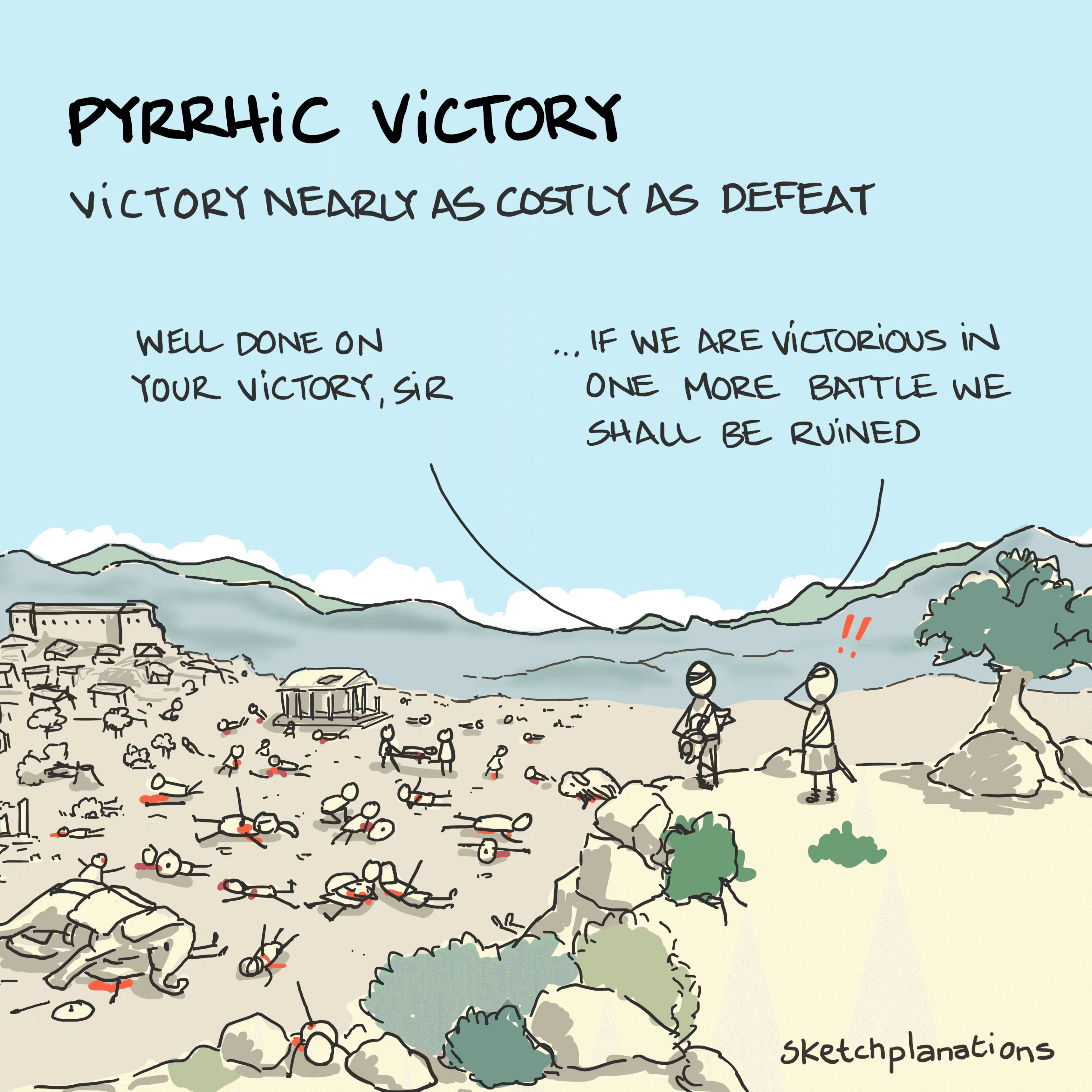
A victory won in battle but lost in war due to excessive sacrifice. So, what should be done?
Part 2: Deconstructing Conflict - See the Iceberg Beneath the Surface
In Part 1, we diagnosed ‘Winning Addiction.’ In Part 2, we will dissect the phenomenon of conflict.
The visible fight (Position) is merely the tip of the iceberg.
If we fail to grasp the reality of the vast needs (Interest) and emotions (Emotion) hidden beneath the surface, we are destined to sink forever.
Chapter 5. Reinterpreting the Orange Parable: Why Compromise is a Failed Win-Win
A classic fable appears on the first page of negotiation textbooks.
It’s the story of ‘Two Sisters and an Orange.’ Although widely known, few people truly grasp the ’trap of lazy intellect’ hidden within it.
1. Reconstructing the Story: The Tragedy of 50:50
Two sisters fight over the last orange left in the kitchen.
Older Sister: “I’m the older sister, so I should have it!” (Position: Own the whole orange)
Younger Sister: “I need the orange too! I saw it first!” (Position: Own the whole orange)
The mother appears. What’s the fairest, most reasonable solution? Imitating ‘Solomon’s wisdom,’ she takes a knife and cuts the orange exactly in half (50:50).
Result: The older sister takes her half, peels it, eats the pulp, and discards the peel. The younger sister takes her half, grates the peel for cake flavoring, and discards the pulp.
This is the reality of the compromise we often praise.
Mathematically, it’s fair. But economically, it’s a disaster.
If the orange is worth 100 units, the older sister got 50 (half the pulp), and the younger sister got 50 (half the peel).
The remaining 50 units of value (the peel discarded by the older sister, the pulp discarded by the younger sister) vanished into the trash.
This is not a Win-Win. It’s merely a variation of Lose-Lose, where both parties suffered a loss.
2. Compromise is a Product of ‘Intellectual Laziness’
Why did this inefficiency occur? Because no one asked “Why?”
If the mother had asked just one question before grabbing the knife: “Kids, what do you want to do with the orange?”
Older Sister’s Interest: “I’m thirsty and want juice.” (Needs pulp)
Younger Sister’s Interest: “I’m baking a cake and need orange zest.” (Needs peel)
This single question completely changes the situation. The older sister can have all the pulp, and the younger sister can have all the peel.
No resources are wasted, and satisfaction reaches 100 for both. This is collaboration and integrative negotiation.

Many leaders, wanting to quickly escape conflict, opt for compromise by saying, “Okay, let’s meet in the middle.”
Dr. Scott warns this is ‘Intellectual Laziness.’

Compromise is the easiest escape route when you can’t be bothered to think.
Chapter 6. In-Depth Analysis of the TKI Model: Are You a Competitor or an Avoider?
Understanding your conflict-handling instincts is the first step toward self-awareness (knowing yourself and your opponent).
Developed in 1974, the Thomas-Kilmann Conflict Mode Instrument (TKI) remains a powerful diagnostic tool even after 50 years.
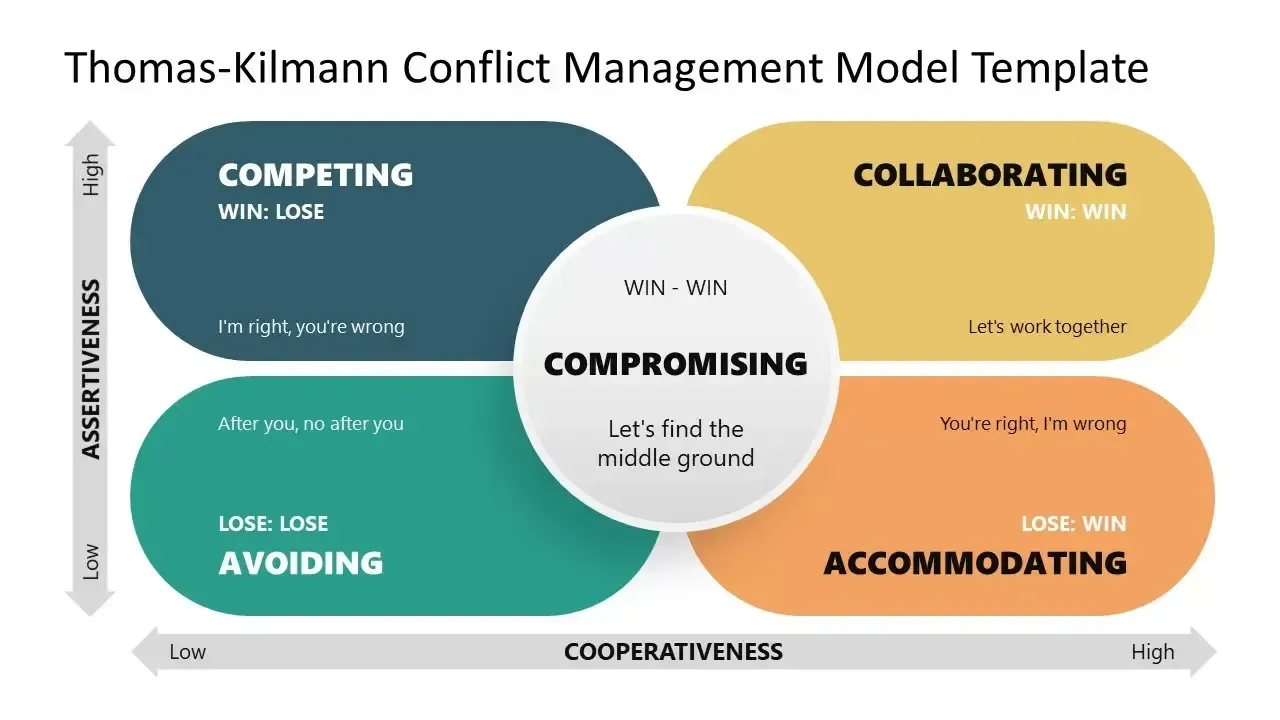
The horizontal axis represents Cooperativeness (effort to satisfy others’ needs), and the vertical axis represents Assertiveness (effort to satisfy one’s own needs).
Competing: The Winning Addict’s Primary Tool (High Assertiveness / Low Cooperativeness)
Characteristics: “My way or the highway.” Dominates others with power and logic.
When to use: Emergencies, when unpopular decisions must be made, when principles must be upheld.
Side effects: Overuse leads to an organization filled only with ‘yes-men,’ becoming rigid.
Avoiding: The Conflict Refuser (Low / Low)
Characteristics: “Let’s talk later.” Avoids issues or situations.
When to use: Minor issues, when emotions are high and a cooldown is needed.
Side effects: Chronic avoidance leads to small wounds festering into gangrene.
Accommodating: The Angelic Trap (Low / High)
Characteristics: “Whatever you want.” Sacrifices oneself.
When to use: When you are wrong, when you need to build relationship mileage.
Side effects: Continuous accommodation leads the other party to mistake it for a ‘right.’
Compromising: Mechanical Neutrality (Mid / Mid)
Characteristics: “Let’s split it 50/50.” Criticized in the orange fable.
When to use: When time is short, when the issue isn’t important enough for collaboration.
Warning: Do not make this your ultimate goal. It is an ‘imperfect peace.’
Collaborating: True Win-Win (High / High)
Characteristics: “Let’s solve our problem together.” Finds a third option that satisfies both my needs and yours.
Key: This isn’t about being nice; it’s about being persistent.
Cost: Requires significant time and energy. However, it must be used for important matters.
[Action Point] Think of a conflict you experienced last week. Which mode were you in?
Tools must be chosen based on the situation. If you only have a hammer (Competing), every problem will look like a nail.
Chapter 7. The Data of Emotion: Rebranding Feelings as Information
The biggest reason smart people fail at conflict resolution is ’emotion aversion.’
“Don’t be emotional. Let’s stick to the facts.” Such statements are actually the most unrealistic demands.
1. Emotion is Not Trash, It’s a ‘Dashboard’
Imagine the ’engine overheating’ warning light on your car’s dashboard.
Would you break the bulb because it’s annoying, or would you pull over and check the engine?
In conflict, when the other person gets angry or cries, it’s a warning light.
Anger: Signals “My value has been violated.”
Anxiety: Signals “The future is uncertain.”
Disappointment: Signals “Expectations have not been met.”
Winning addicts treat these signals as ’noise,’ but win-win strategists treat them as ‘data.’
The moment you process emotions as information, you can control the situation.
2. The Magic of Affect Labeling

UCLA professor Matthew Lieberman’s fMRI studies found that the moment we put a specific name to a negative emotion (e.g., “I feel insulted right now”),
the amygdala’s activity immediately decreases, and the prefrontal cortex reactivates.
Let’s apply this to negotiation.
When the other party is agitated, instead of refuting them with logic, label their emotion.
“Team Lead Kim, you seem quite concerned that this budget cut might lower team morale*(Labeling)*.”
This one sentence works like magic. The other person feels a sense of relief that “my feelings are understood,” and the amygdala lowers its guard.
Part 3: The Solution - A 3-Step Application of Reason to Flip the Script (ERI Model)
Now it’s time to integrate all this into a powerful, practical protocol: the ERI (Emotion-Reason-Intuition) model.
Remember, sequence matters. Jumping straight to reason, skipping emotion, is like flooring the gas pedal on an unheated engine.
Chapter 8. Step 1 Emotion (Cooling Down and Acceptance): The Art of Venting
Paradoxically, the first step in conflict resolution is ’not trying to resolve it.’ The goal of the first step is ‘connection’ and ‘detoxification.’
1. Venting: Releasing Emotional Pressure. When a pressure cooker is boiling, opening the lid causes an explosion. You need to vent first.
Bad Example: “Calm down. That’s not the truth.” (Provokes explosion)
Good Example: “That part must have made you very angry. Could you tell me more about it?” (Induces calm) Provide ‘psychological oxygen’ to the other party.
2. Validation is Not Agreement
Saying “I understand why you feel wronged” does not mean “I will meet your demands.” It’s a signal that “You are respected.” This signal is necessary to set up the negotiation table.
Chapter 9. Step 2 Reason (Analysis and Strategy): Ask ‘What is the Problem?’
Once the emotional storm has passed, wield the scalpel of cold reason.
- Interest Mapping: Take a piece of paper and divide it in half.
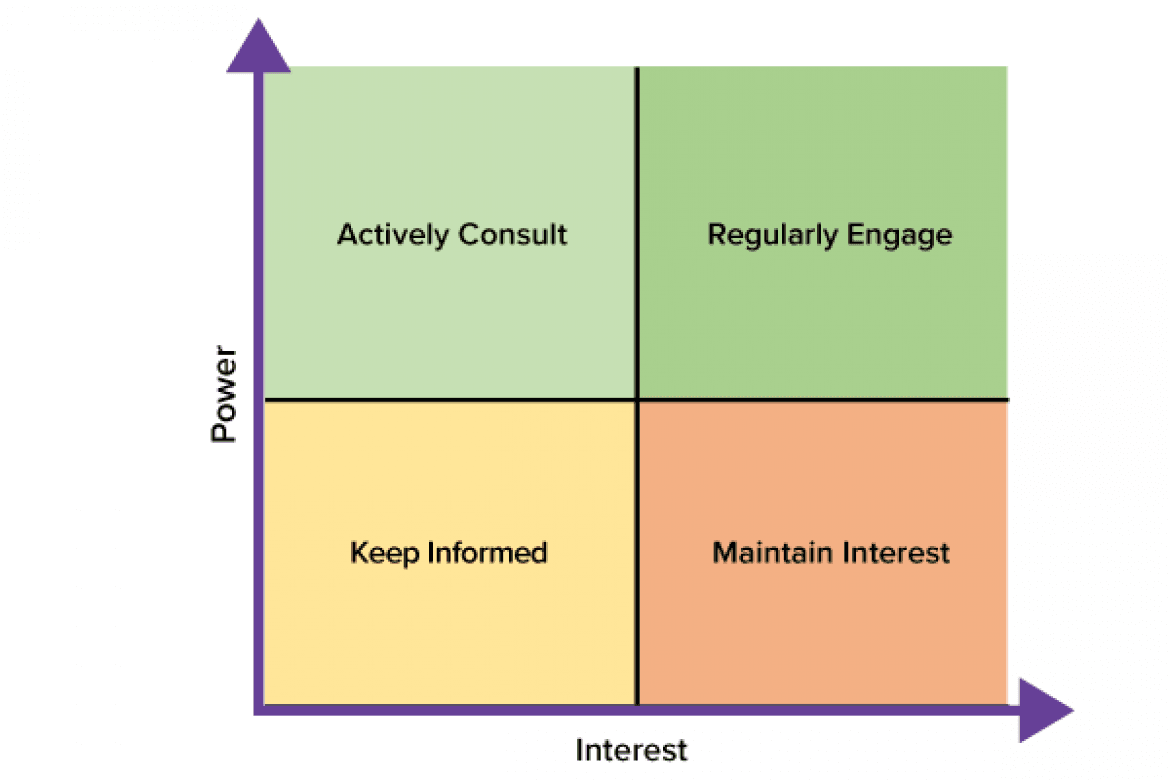
Fill in the underlying true needs (Interest) below the surface, not just the positions.
Other Party: “Give me a discount (Position)” -> Why? “I need to show results due to budget cuts (Interest: Saving face).”
Me: “Price reduction impossible (Position)” -> Why? “If the profit margin drops, HQ won’t approve (Interest: Adherence to procedure).”
Mapping it out this way reveals ways to save face for the other party without discounting the price.
2. Three-Dimensional Analysis of Conflict Causes
Facts: Resolved through information sharing.
Interests: Resolved through negotiation.
Values: Managed through mutual respect. Misdiagnosing the cause leads to incorrect prescriptions.
Chapter 10. Step 3 Intuition (Creative Leap): How to Engage Intuition When Logic Hits a Wall
When rational analysis offers no solution, intuition becomes necessary.
1. Brainstorming and Suspend Judgment: Even absurd ideas should be brainstormed.
“What if we merged?” “What if we signed a 10-year contract?” Intuition is high-level insight born from accumulated experience.
2. Reframing the Problem
Before: “How can I get more?” (Dividing the pie)
After: “How can we grow the entire market?” (Growing the pie) Shift the problem from ‘Me vs. You’ to ‘Us vs. The Problem.’
Chapter 11. [In-depth Case Study] The Salary Negotiation Project
Let’s now apply the ERI model to the salary negotiation crisis mentioned earlier.
1. Context
Issue: Proposed minimum wage hike to $15/hour.
CEO’s Position: “Impossible. We’ll go bankrupt.”
Employees’ Position: “We want $15. Tips are unstable.”
2. ERI Model Application Simulation
Step 1: Emotion (Sharing Anxiety)
The CEO puts away the spreadsheets and sits down with the employees. “I lose sleep worrying this restaurant will close. But I deeply empathize with your concerns about living expenses.”
The CEO’s display of vulnerability transforms hostility into a ‘shared sense of crisis.’
Step 2: Reason (Deconstructing Interests)
Employees’ true interests: Not the ’number $15,’ but *stability of total income’ and ‘fairness.’ Analysis reveals that simply raising the base wage creates unfairness, with servers earning more than kitchen staff, which is at the core of the conflict.
CEO’s true interests: Not ‘wage freeze,’ but *‘maintaining profitability’ and ’equity.’
Step 3: Intuition (Third Way)
Through brainstorming, the CEO and employees create a new model.
Option 1: Introduce a Service Charge: Eliminate tips and add a 20% service charge to menu prices, distributed fairly between front-of-house and kitchen staff.
Option 2: Transparent Pricing Policy: Inform customers, “We’ve adjusted prices to ensure fair wages for our staff.” (Targeting ethical consumption)
3. Outcome
The CEO wasn’t perceived as a greedy owner, and the company didn’t go bankrupt.
Instead, they innovated the business model together with the employees. This is Solving, not Winning.
Part 4: The Birth of a New Type - People Who Win Without Winning
Chapter 12. Future Leadership: ‘Integrative Complexity’ That AI Cannot Replace
Artificial intelligence (AI) can outperform humans in logical reasoning and finding optimized paths.
So, what will be the competitive edge for future leaders? It’s ‘Integrative Complexity.’
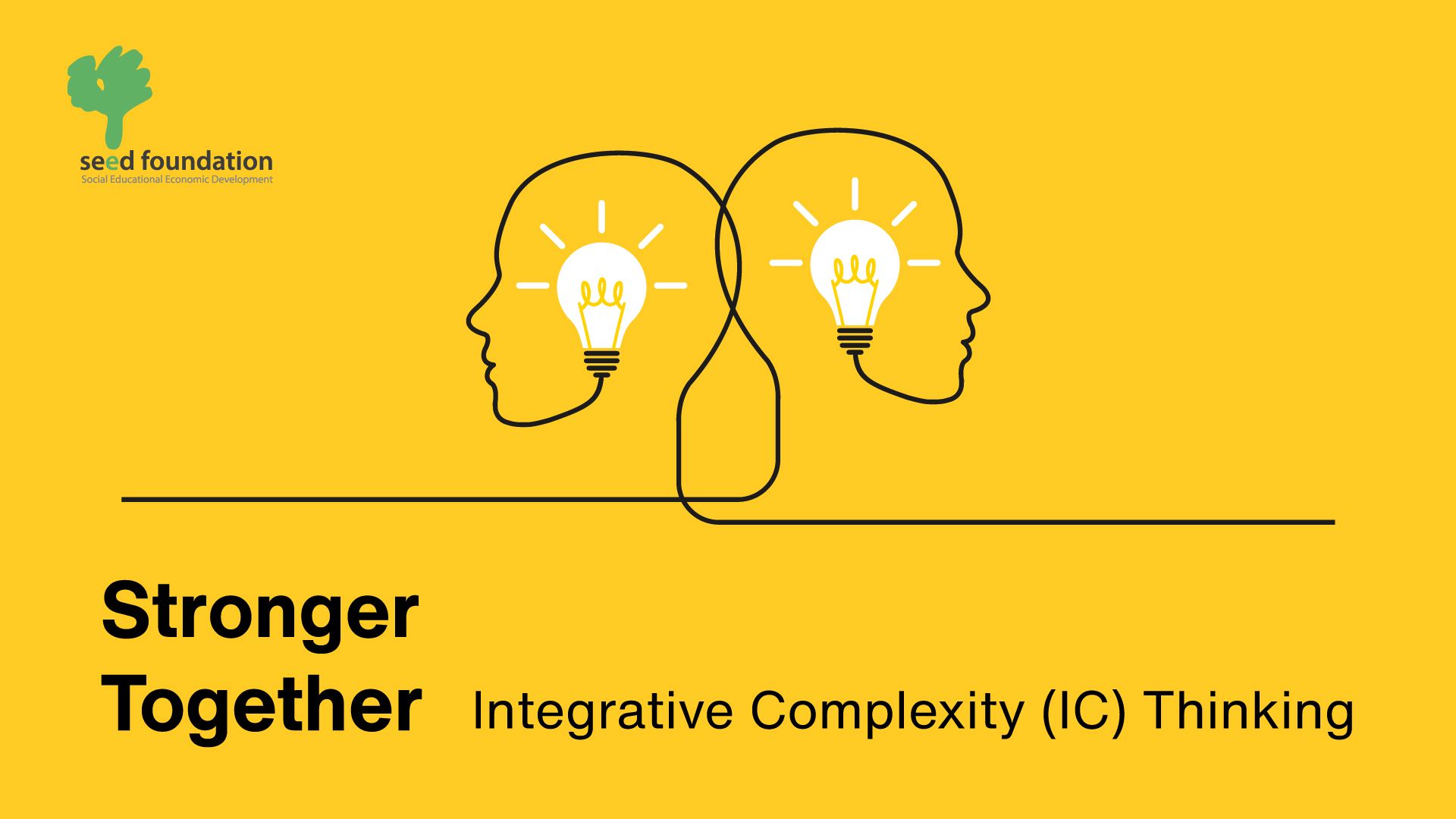
It’s the ability to hold two or more conflicting perspectives in mind simultaneously, avoiding black-and-white thinking, and achieving a higher-level integration.
Low Complexity: “A is right, and B is wrong.” (Winning Addiction)
High Complexity: “The efficiency of A and the stability of B seem contradictory, but on platform C, they are complementary.” (Win-Win Leadership)
Future leaders should not be ‘gladiators’ in debates but ‘Bridge Builders’ connecting different opinions.
Chapter 13. Daily Application Guide: A Workbook to Use Starting Tomorrow
Scenario A: Marital Conflict Over Household Chores
Old Way: “I have to do it again? You’re lazy.” (Accusation) -> “What are you good at?” (Counterattack)
ERI Application:
Emotion: “Seeing the dishes piled up makes me feel tired. You must be tired too, right?”
Reason: (Me) Want to rest and be fair. (Other) Want to rest right now.
Intuition: “How about buying a dishwasher, or establishing a rule that weekday evening dishes get done the next morning?”
Scenario B: A Tricky Salary Negotiation
Old Way: “If you don’t pay industry average, I’m leaving.” (Threat)
ERI Application:
Emotion: “I understand your difficulties due to the company’s budget situation.”
Reason: (Me) Value recognition and real income. (Company) Restraining fixed cost increases.
Intuition: “If a base salary increase is difficult, I propose a non-monetary package such as a one-time signing bonus or expanding remote work to once a week.”
Chapter 14. Conclusion: Redefining Victory - From ‘Me’ to ‘Us’
At the beginning of this article, we saw David.
He perfectly won the argument but lost the deal.
Any victory devoid of relationships is merely ‘delayed defeat.’
True victory is not about making the other person a loser.
It’s when I get what I want, and the other person also feels happy getting what they want. That is a ‘smart victory.’
Dear readers, do not use your brilliant intellect and logic as a ‘spear to pierce others.’
Instead, use them as a ‘scalpel to dissect the core of the problem’ and a ’tool to build new possibilities.’
Do not fear conflict. Instead, ask yourself:
“Can we imagine a bigger world where both of us can be satisfied?”
References
Scott, G. G. (2018). Smart Mistakes: How to Fix the Errors You Didn’t Know You Were Making.
Fisher, R., Ury, W., & Patton, B. (2011). Getting to Yes: Negotiating Agreement Without Giving In.
Thomas, K. W., & Kilmann, R. H. (1974). Thomas-Kilmann Conflict Mode Instrument.
Lieberman, M. D. (2007). Social Cognitive Neuroscience: A Review of Core Processes.
Jeffrey Schofield Case. Reconstructed based on Florida Politics (2019).