

In a world full of noise, how sincerely are we listening to each other?
Introduction: In the Age of Noise, Finding the Lost Frequency
Let’s take a moment to reflect on our day.
How many people did you have a conversation with today?
And after each conversation, did the other person leave feeling fulfilled, thinking, “Ah, this person truly embraces my heart completely”?
Or did they turn away with the bitter feeling, “As I suspected, my words scatter into the void”?
Honestly, everyone has memories of closing off their hearts after receiving hasty advice in return for sharing their worries. Conversely, I myself have countless times casually dismissed what someone was saying.
We live in an era of unprecedented connectivity, the most intricately intertwined in history, yet
paradoxically, we are immersed in a ‘poverty of communication’, listening less than ever.
_The incessant smartphone notifications, the flood of information, the compulsion to prove ourselves…
Haven’t all these noises robbed us of the space for others’ voices to enter?_
Dr. Stephen Covey, a world-renowned leadership authority, presented one of the most profound principles of human relationships in his masterpiece, ‘The 7 Habits of Highly Effective People’.
“Seek first to understand, then to be understood.”
This revolutionary declaration, seemingly simple yet directly opposing our innate nature, is accompanied by a map he provided for its practice: the ‘5 Steps of Listening’.
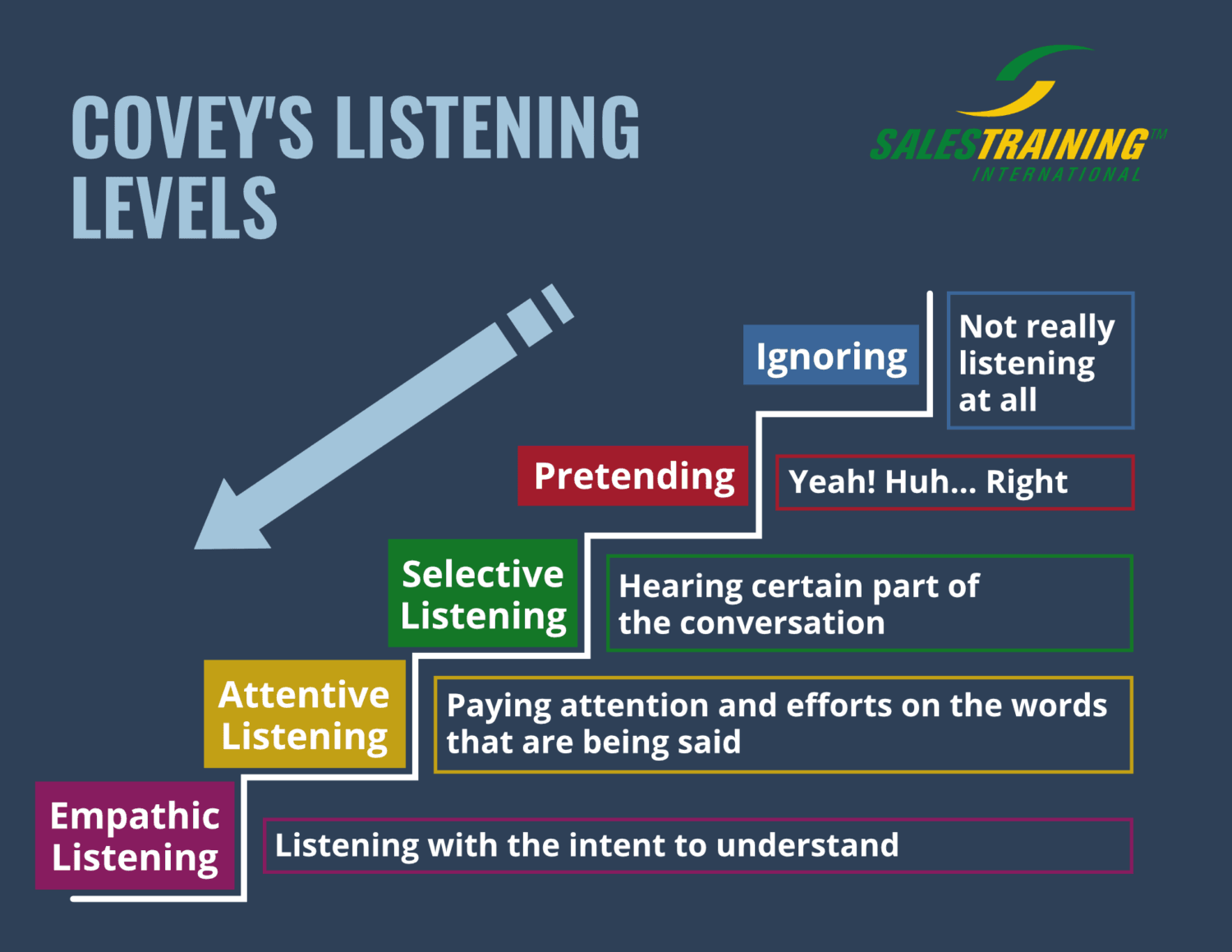
This article is not merely a collection of social etiquette tips or conversation skills. It is an intellectual journey that combines Covey’s insights with neuroscience, psychology, and behavioral economics to explore why we fail to connect with each other and how we can enter the realm of genuine ’encounter’.
Now, are you ready to open your ‘heart,’ not just your ears?
Part 1. The Brain’s Betrayal: Why Are We Wired Not to Listen? (Analysis of Steps 1-3)
Don’t beat yourself up too much for failing to listen. This might not be an issue of your character as much as it is that our brains are fundamentally designed ’not to listen’ to conserve energy. The lower three steps Covey describes are, in reality, survival strategies created by our lazy brains and the primary culprits that ruin relationships.
[Step 1: Ignoring] The Violence of Treating Someone as Invisible
This is the lowest level: ‘Ignoring’. Though physically in the same space, a perfect barrier is erected psychologically. When a spouse speaks to you, but you don’t tear your eyes away from the TV sports commentary, or a boss engrossed in their monitor types away while a subordinate reports – it doesn’t feel unfamiliar, does it?
Psychologically, this is an act of denying the other person’s very existence. William James, the father of psychology, stated, “The worst and most terrible thing in the best and most stimulating of lives is to be a failure.” He also noted that the greatest tragedy of life is to be ignored.
Social rejection stimulates the brain’s pain centers.
Surprisingly, according to neuroscience research, the brain regions activated when we are ignored (the anterior cingulate cortex) precisely overlap with those activated when we feel physical pain. The moment you are looking at your smartphone while half-listening to your child, their brain is experiencing physical pain. Ignoring is not mere carelessness; it can be an assault on the brain.
[Step 2: Pretending] The Soulless Performance of “Uh-huh, Yeah”
If Step 1 is too blatant and pricks your conscience, the brain adopts a more cunning strategy: ‘Pretending’ to listen. You interject with “Mmm,” “I see,” or “Right” at opportune moments, but your mind is busy simulating tonight’s dinner menu or weekend golf plans.
At its core lies the instinct of a ‘Cognitive Miser.’
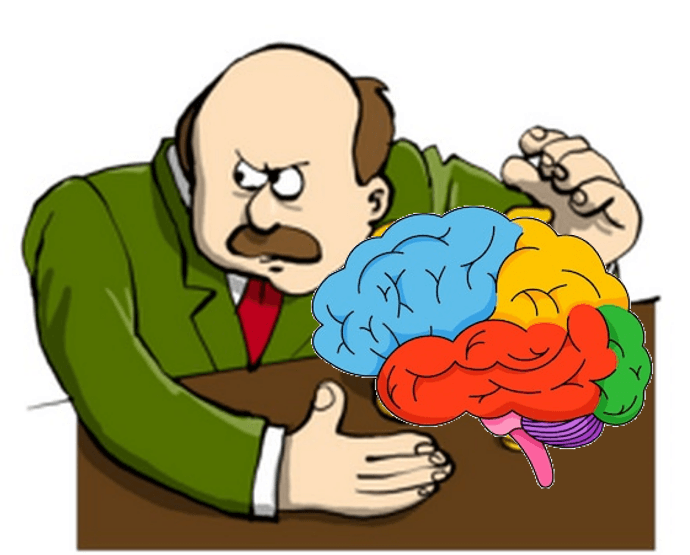
As explained by Princeton professor Susan Fiske, the brain avoids the energy-intensive act of ’true listening’ and attempts to maintain the relationship with minimal effort.
“Uh-huh, Yeah” is merely the brain’s deceptive compromise to create an alibi that says, ‘I wasn’t ignoring you.’
[Step 3: Selective Listening] The Filter Bubble of Confirmation Bias
From this stage onward, the conversation appears quite plausible. However, the danger is greater. This is because instead of listening to the entirety of what the other person is saying, you ‘selectively’ listen to parts that align with your interests or logic.
Let’s take marital arguments as an example. A wife expresses her grievances for 10 minutes, conveying emotions, context, and the hardships of her day. However, the husband snatches onto just one ‘fact’ – “You broke your promise last time” – and launches his counterattack.
This is a classic case of ‘Confirmation Bias.’

It’s not about seeking the truth, but rather listening to find evidence that reinforces one’s existing beliefs.
Step 3 is not a conversation but merely ‘information hunting,’ leaving no room for the other person’s heart.
Part 2. The Trap of Competence: Why Does ‘Attentive Listening’ Fail? (Analysis of Step 4)
Many mistakenly believe Covey’s Step 4, ‘Attentive Listening,’ is the pinnacle of listening. They make eye contact, take notes, and focus on every word (Text) the other person speaks. This is often the goal of school or business etiquette training. But Covey states firmly:
“That is not yet empathy.”
Why We Listen Attentively But Don’t Connect
The critical limitation of Step 4 is that the ‘frame of reference’ still remains ‘mine.’
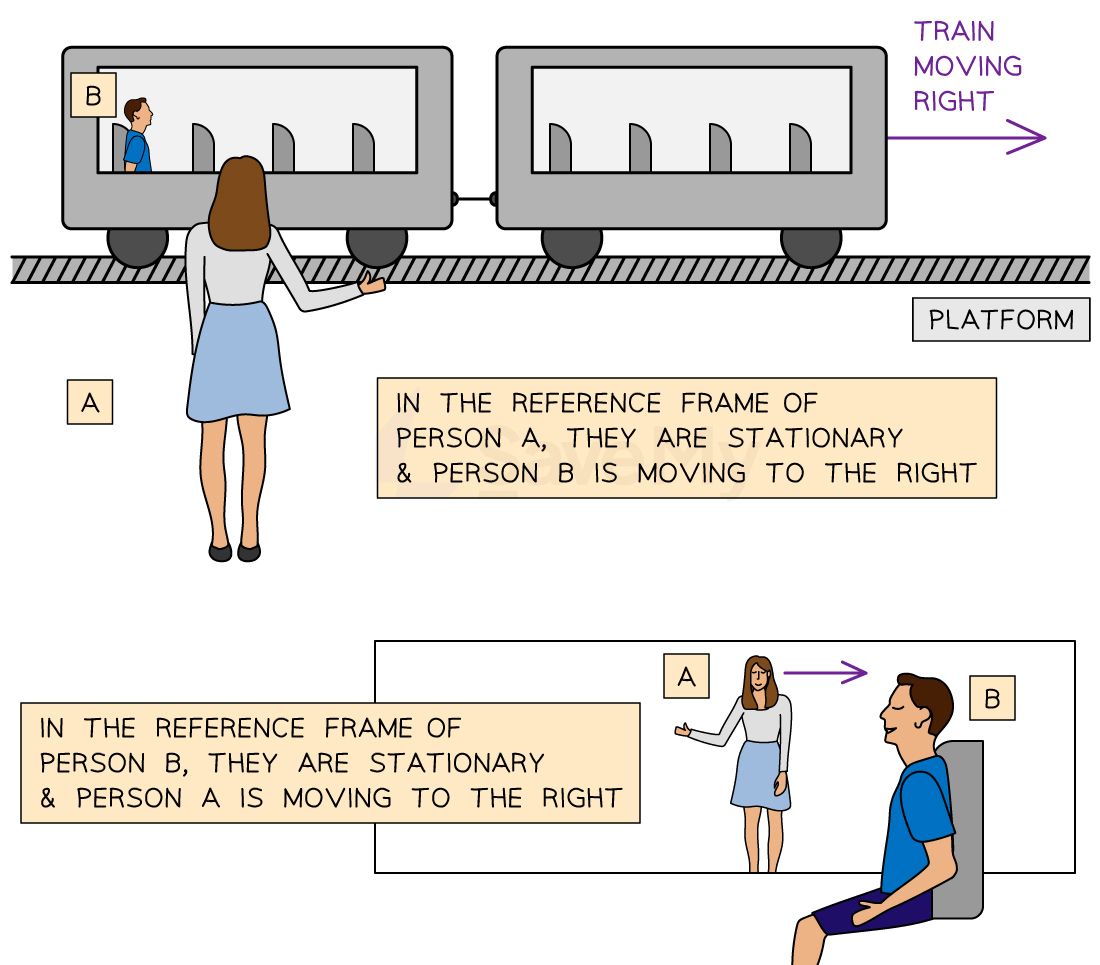
Although you are listening attentively, the purpose is not ‘complete understanding’ but preparing ‘my response.’
- “What advice should I give after hearing this?”
- “Based on my experience, that’s wrong. I need to fact-check it.”
The brain spins furiously, simulating my answer. Information is inputted but ends up being dissected by my logical circuits.

“In my opinion…” - The Four Prisons of Autobiographical Response
Covey points out that when we listen to others, we fall into four traps by reacting based on our own experiences and history. These are called ‘Autobiographical Responses’.
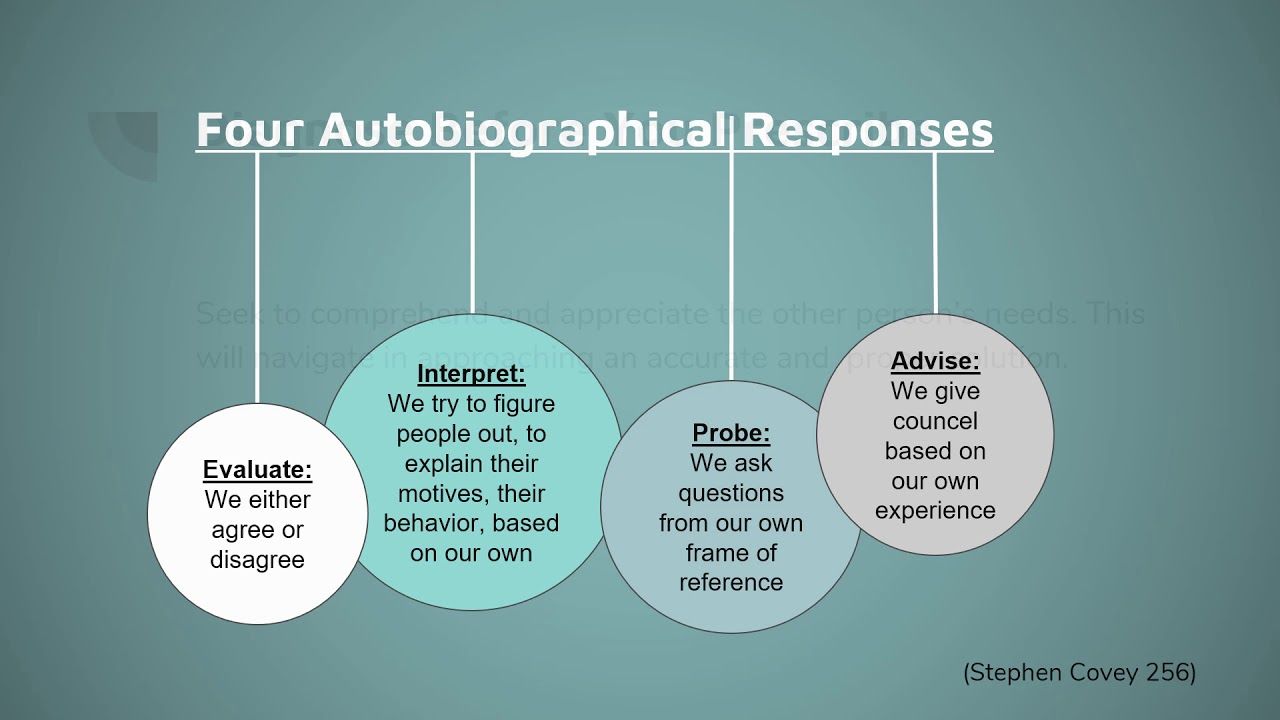
- Evaluate: Agree or disagree as soon as you hear it. (“That’s wrong,” “That’s right.”)
- Probe: Ask questions like an interrogation to satisfy my curiosity. (“So? Who said that? When?”)
- Advise: Offer solutions even when not asked. (“In that situation, you should do this.”)
- Interpret: Judge the other person based on my own standards. (“You’re being too sensitive,” “That’s an inferiority complex.”)
While it may seem helpful on the surface, it is underpinned by intellectual arrogance: “Your problem is simple, and I know the answer.”
This makes the other person feel, “My feelings were ignored,” suffocating the vitality of the conversation.
Part 3. Resonance of the Soul: The Anatomy of ‘Empathic Listening’ (Analysis of Step 5)
If Steps 1-4 involve looking at the other person through my own glasses, Step 5, ‘Empathic Listening,’ means taking off my glasses and putting on the other person’s.

Providing ‘Psychological Oxygen’
Covey defines empathic listening as “entering into the frame of reference of the other person with a genuine intention to understand.” Just as the physical body needs oxygen to live, the heart needs ’the feeling of being understood and accepted’—in other words, psychological oxygen—to thrive.
When the other person is emotionally agitated, logical persuasion will never work. It’s like trying to feed food to someone who is suffocating.
When you signal, “I fully understand you” through Step 5 listening,
the other person can finally breathe and regain stability.
Problem-solving comes after that.
Mirror Neurons: How Does the Brain Copy Others’ Pain?
Empathy is not merely a sentimental attitude; it is science. ‘Mirror Neurons,’ discovered by a research team at the University of Parma in Italy, activate the same brain regions when we see someone else perform an action or express an emotion as when we perform it ourselves.
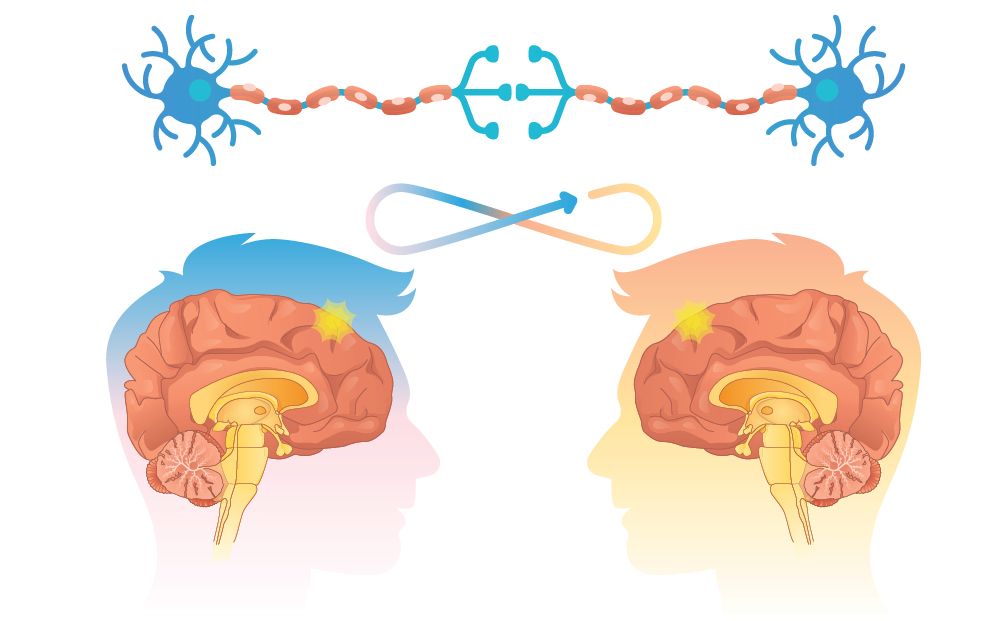
Step 5 listening is an act that switches on these mirror neurons.
It involves turning off the ’noise-canceling’ effect of our own judgments and biases and receiving the other person’s frequency with our entire being.
This goes beyond intellectual understanding to achieve emotional identification.
It’s not thinking “They must be sad” with the head, but an experience where your chest genuinely feels heavy.

Carl Rogers’ ‘Unconditional Positive Regard’ Meets Covey
Covey’s theory aligns with that of humanist psychologist Carl Rogers. Rogers argued that what changes a person is not analysis but ’the experience of being fully accepted.’
Step 5 doesn’t mean agreeing because what the other person says is correct.
Even if the content is wrong, it is about acknowledging that the ’emotions’ and ‘perspective’ they feel have a right to exist.
It’s an attitude of “I deeply understand that you can feel that way” (acceptance), not “You are right (agreement).”
This unconditional regard alone disarms the other person’s rigid defense mechanisms.
Part 4. Practical Solutions: Shifting Gears with the Art of Empathy
So, how can we resist the powerful temptation of the 4th step (autobiographical response) and transition to Step 5? Here are concrete ‘gear-shifting’ techniques.
1. The Skill of Abandoning ‘Why’ and Asking ‘What’
In counseling or conversation, ‘why’ can often be a forbidden word.
“Why did you do that?” or “Why are you angry?” carries a nuance of accusation, making the other person defensive.

Try rephrasing your questions.
- Instead of “Why are you angry?” → “What made you so upset?”
- Instead of “Why are you late?” → “What happened on your way here?”
This small difference makes the other person feel like ‘a respected individual,’ not ‘a suspect.’
2. The Power of Silence: The Miracle Created by a 3-Second Pause
Most people respond within 0.5 seconds after the other person finishes speaking, signaling, “I can’t wait to say my piece.” When the other person finishes speaking, try counting “One, two, three” in your head. This 3-second silence works magic.
- It shows respect for the other person, indicating you are deeply processing their words.
- It allows space for the other person to express deeper feelings they hadn’t yet articulated.
- It provides time to suppress the ‘advice and judgment’ you were about to reflexively offer.
3. Becoming a Reflector of Emotion: Reflecting and Clarifying
Rephrase the hidden emotions (Feeling) and intentions (Intent) in the other person’s words using your own language. This is not about parroting.
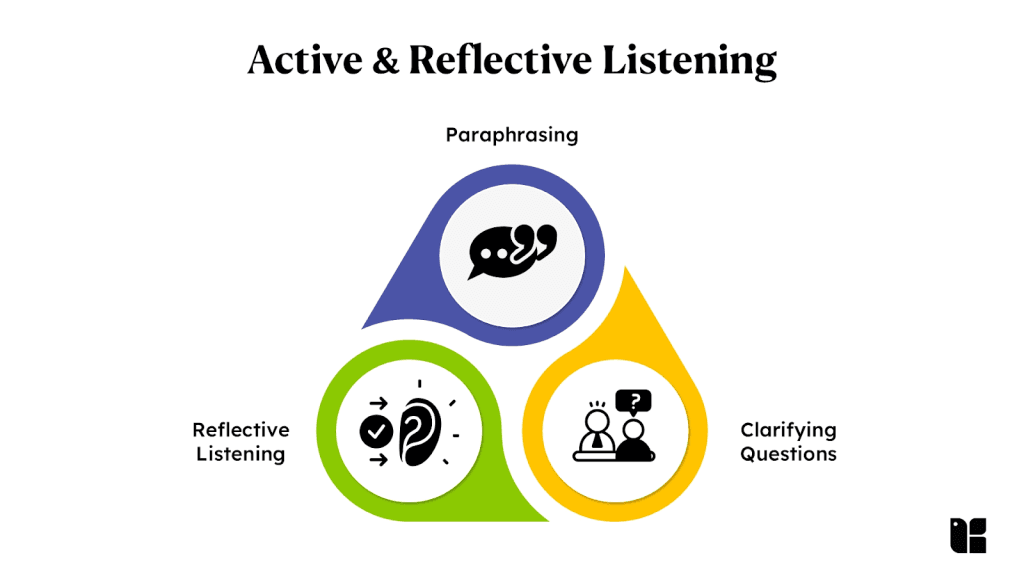
(Situation: “I don’t want to go to school! I hate my teacher!”)
- Step 4 (Probe/Advise): “What did you do this time? You need to listen to the teacher.”
- Step 5 (Reflecting): “You must be feeling very hurt and upset because of your teacher, to the point you don’t want to go to school. Are you feeling very wronged?”
When you mirror their feelings, the other person can objectively view their emotions and gain the power to solve the problem themselves. Covey called this process “clearing the emotional residue.”
Part 5. Real-World Application: The Alchemy of Listening to Revive Relationships
[Couples] John Gottman’s ‘Turning Toward’
Relationship expert Dr. John Gottman could predict divorce based on couples’ subtle conversation patterns. When a spouse makes a small bid for connection (e.g., “Look at that bird”), the key is ‘Turning Toward’ by responding with Step 5 listening, such as, “Wow, it’s really beautiful.” Research shows that couples who divorced within six years had a ’turning toward’ rate of only 33%, while those who maintained their marriage had an 86% rate.
Great love is not a romantic event, but a sum of moments where we listen attentively to trivial everyday words.
[Parenting] P.E.T. Communication for Building a Child’s Self-Esteem
Thomas Gordon’s ‘Parent Effectiveness Training (P.E.T.)’ is a parenting version of Covey’s theory.
When you act as a Step 5 listener for your child during difficult times, instead of a problem-solver, the child feels, “My emotions are important,” and “My parents trust me.”
This plants a firm root of “self-esteem” within the child.
Listening is the greatest psychological inheritance a parent can give.
[Business] The ‘Economics of Listening’ That Turns the Negotiation Table
In business, listening is not charity but a cold strategy. When a customer makes an unreasonable demand, Step 4 defends with logic: “It’s against regulations.” But Step 5 hears the underlying needs and fears.
- “You’re concerned that this issue might jeopardize your position within the company.”
This one sentence of empathy transforms you from an adversary into someone they perceive as ‘on their side.’ As Teddy Roosevelt famously said:
“People don’t care how much you know until they know how much you care.”
Conclusion: Listening is Another Name for Loving
Stephen Covey’s ‘5 Steps of Listening’ are ultimately a matter of character, not skill. It involves letting go of the enormous desire of the ’ego’—the urge to speak, to show off knowledge, to quickly solve problems.
Step 5, empathic listening, is a noble decision to embrace the universe of another person within oneself.
It requires immense energy and patience because one must be stable to receive the waves of others.
Covey said, “Seek first to understand.”
This does not mean unconditional concession.
Only by deeply understanding others do the doors to genuine influence open.
Examine your conversations today. Are you creating noise, or are you supplying psychological oxygen?
When you feel the urge to interrupt, to judge, pause, take a deep breath, and remind yourself:
“Am I listening to respond, or am I listening to understand?”
This single question will change your relationships, your leadership, and your life.
Listening,