
A few days ago, I watched a video about Trader Joe’s on the MBC 14F YouTube channel.
I’ve never been to the US, but I remembered seeing their eco-bags somewhere, so I clicked play.
The story about the founder changing his business direction after reading two newspaper articles, and the fact that their frozen kimbap came from a factory in Gumi, South Korea—it was a fascinating narrative.
However, after finishing the video, I habitually searched for the founding year, and thought, “Wait, this seems a bit off.” So, I decided to look up the original sources one by one.
Trader Joe’s was founded in 1958, not 1966
To start with the conclusion, ‘Pronto Market,’ the precursor to Trader Joe’s, opened in 1958, not 1966.
It was a venture set up by Owl Drug, a subsidiary of the large US pharmacy chain Rexall, to enter the convenience store market. Joe Coulombe, who was 26 at the time, was put in charge. Starting with a small 2,500-square-foot store in Pacific Palisades, Los Angeles, in 1958, it grew to six stores in four years and expanded to 18 by around 1965.
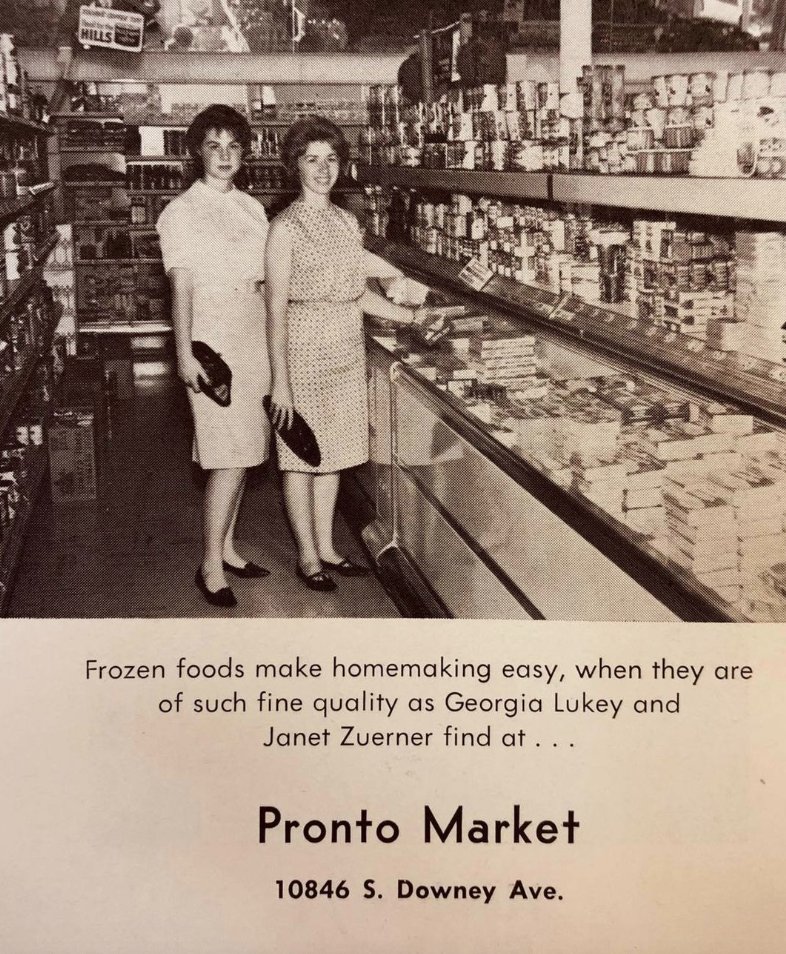
The narrative about a head-on collision with 7-Eleven isn’t far from the truth, but the timing is different.
As Coulombe himself revealed, Rexall, the parent company of Owl, decided to pivot toward the tumbler business (Tupperware) in 1962 and wanted to liquidate Pronto. Coulombe managed to acquire the chain by rallying employee stock participation. Then, at the end of 1965, while having lunch with the head of Adohr Milk Farms, a milk supplier for Pronto, he heard, “We decided to sell our company to 7-Eleven.” It wasn’t an attack by a large corporation, but rather the moment he witnessed his own business partner being taken over by a competitor. The fact that this decisive moment was a casual lunch conversation rather than a newspaper article was something I didn’t know before checking the original sources.
The legend of the two newspaper articles: What really happened?
The source of the story that the business direction changed after encountering two news items—‘soaring college enrollment rates’ and ’the launch of the Boeing 747’—is a bit more specific.
According to an interview Coulombe gave to the LA Times in 2014, the story about college enrollment rates came from statistics he read in Scientific American.
It stated, “60% of those eligible for college are actually attending.”
And for the popularization of international travel, he explained that he came across an article about the Boeing 747 in the Wall Street Journal—meaning the two media outlets and the two articles were separate.
There’s a point here that requires closer inspection.
The Boeing 747 only had its maiden flight in February 1969, and the first commercial flight was by Pan Am in January 1970. However, the first Trader Joe’s store had already opened in 1967.
In other words, Coulombe bet on a plane that hadn’t even taken off yet.
In a later interview, he actually said, “As the 747 actually launched, the cost of overseas travel plummeted, and I judged that it would broaden people’s horizons.” If you take his tense literally, it becomes strange. At the time he was conceptualizing the store, the 747 was just a rumor that it would be coming soon. It seems more accurate to view him as someone who acted based on that rumor. It’s hard to completely rule out the possibility that he polished the story after his prediction turned out to be correct.
The name was actually an homage: Trader Joe’s and Trader Vic’s
This was the most interesting part for me personally. While it’s often explained as “Tiki culture was trendy, so they named it that,” there was a more direct trigger.
At the time, there was a Tiki-concept restaurant in Beverly Hills, California, called ‘Trader Vic’s.’ Opened in 1955, it was famous for Polynesian cuisine and rum cocktails, but the price range was inaccessible to the average person. Coulombe is said to have parodied the name and concept of this restaurant to create ‘Trader Joe’s’—in a sense, it was a humorous deception, as if to say, “If Trader Vic’s is for the rich, Trader Joe’s is the neighborhood version.”
Adding wooden roofs to the store interiors and dressing employees in Hawaiian shirts were details that emerged within this larger framework of a ‘Trader Vic’s parody’ rather than a pure interest in Hawaiian culture itself.
This sense of twisting and recycling popular culture instead of simply copying it is repeated in the later private label (PB) strategy.
It’s a method of using market reactions already verified by others, but subtly changing the price point and positioning.
The radio segment story is similar.
He conducted a one-minute segment introducing wine and food on an LA classical music station starting in 1976. The narrative that this continued for over a decade, establishing the brand locally without advertising costs, is common across multiple sources. However, as the exact number of years broadcast varies slightly by source, it is safer to focus on the direction of ‘imprinting the brand with just a voice without advertising’ rather than the exact number of years.
Aldi acquired Trader Joe’s, but the US Aldis are strangers
While the fact is often summarized as “sold to Aldi Nord in 1979,” this section is likely the most unfamiliar and interesting structure for readers.
The German discount store ‘ALDI,’ which you might have heard of even in Korea, is not actually one company.
In 1946, the Albrecht brothers, Karl and Theo, inherited their mother’s small grocery store and grew it, but parted ways around 1960. The reason is somewhat absurd: it is said they fought over whether or not to sell cigarettes. Karl, who opposed it, citing theft risk, took over Southern Germany to establish ‘Aldi Süd,’ while Theo, who wanted to sell cigarettes, took the North to establish ‘Aldi Nord.’ The two companies have been legally and financially separate since 1966.
What’s interesting is that the two Aldis that entered the US exist under different names.
Karl’s Aldi Süd started its US business in Iowa in 1976, and that ‘Aldi’ store you see commonly across the US is from this lineage.
On the other hand, Theo’s Aldi Nord entered the US market by acquiring Trader Joe’s in 1979. So, the US is the only country in the world where Aldi Süd and Aldi Nord operate simultaneously, and under different banners (Aldi vs. Trader Joe’s).
From the consumer’s perspective, they shop while perceiving the two as completely different brands, unaware that they are both ‘Aldi-affiliated.’
Wikipedia currently summarizes that Trader Joe’s has a ‘sister company’ relationship with Aldi Nord and that the generation of Theo Albrecht’s sons holds ownership, though sources differ slightly on the exact equity structure. However, multiple sources confirm that the two companies operate completely independently.
The conditions set by Joe Coulombe at the time of the sale are also worth noting. An anecdote says he demanded the contract be written on a single page, and when German lawyers expressed concern, Coulombe’s lawyer wrote it instead. Perhaps thanks to that, Coulombe kept his CEO position for nearly 10 years until 1988, and the brand identity remained largely unchanged.
80% private label share: The real strategy behind the numbers
The figure of over 80% for private label products is a number repeated in various sources and is reliable. However, it’s worth examining why this number is special.
The average US supermarket’s private label share is around 15–20%, and while Costco’s is higher, it’s not like Trader Joe’s. It means they maintain a ratio 4–5 times the industry average.
Usually, private labels are perceived as low-cost substitutes for branded products, but Trader Joe’s private label strategy is the opposite. While regular private labels aim to sell 20–30% cheaper than famous brands, Trader Joe’s doesn’t bring those brand product lines into the store at all. There is no Coca-Cola, Doritos, or Cheerios. Instead, they contract directly with manufacturers worldwide to create products you ‘can’t buy anywhere else,’ and strictly keep that supply chain information secret. From the consumer’s perspective, price comparison itself becomes impossible—since the same product isn’t in other stores, the phrase “that place is cheaper” doesn’t hold up.
Comparison of private label (PB) product shares by retailer
| Retailer | PB Share | Characteristics |
| — | — | — |
| Domestic (Korea) General Marts | ~10% | Value-oriented products |
| Walmart (US) | ~20% range | Everyday low price strategy |
| Costco | ~30% | Paid membership, bulk sizes |
| Trader Joe’s | Over 80% | Secret supply chain, small size/high quality |
This strategy is possible because under current US law, if the retailer and manufacturer are different, it is legal to indicate only the retailer’s information on the packaging.
Trader Joe’s writing only ‘Distributed by Trader Joe’s’ on the packaging is a result of utilizing this clause. The principle is similar to how iPhones have the phrase ‘Designed by Apple’ on the back instead of the manufacturing factory.
This strategy is also reflected in the numbers. According to industry research, Trader Joe’s sales per square foot are around $3,000, which is several times higher than Walmart (approx. $400) or Target (approx. $300). This means that even though the store size is much smaller, the sales per unit area are overwhelmingly high, which is proof that the principle of “stock less, but only stock what will sell” is actually working. The turnover rate, where one of the 4,000 or so SKUs is removed without hesitation if it underperforms, works on a completely different logic than the large mart model, which displays over 80,000 products and spreads inventory risk.
Why did frozen kimbap come from a small factory in Gumi?
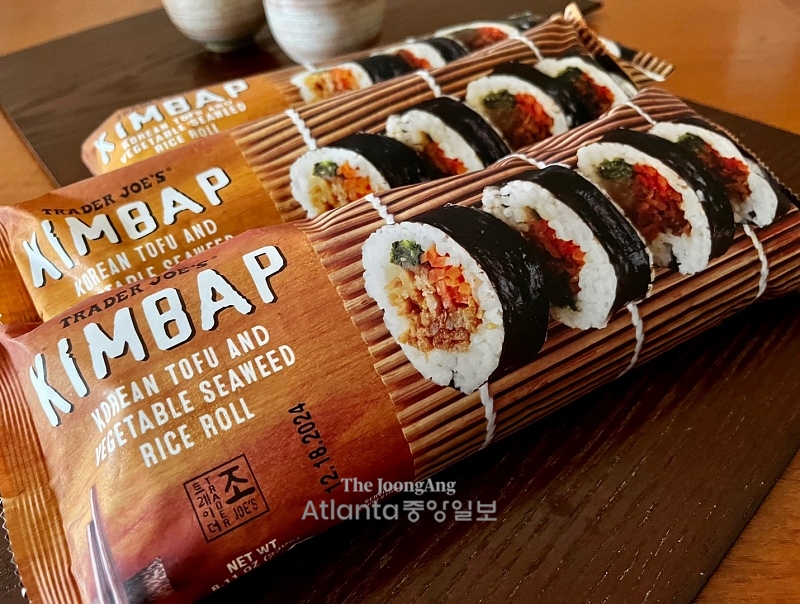
This part has already been covered multiple times through domestic media reports.
Trader Joe’s launched frozen kimbap for the first time in August 2023, and it is known through domestic retail media reports that a food company based in Gumi, Gyeongbuk, was the actual supplier.
However, there is one point to address regarding the explanation of the cause. It’s a bit complex to attribute the start of this craze solely to the ‘fearsome sourcing ability of Trader Joe’s buyers.’
In reality, the decisive moment for the kimbap to sell explosively was TikTok. A video by a Korean-American creator, who shared her experience of being teased for her kimbap lunchbox when she was young, exceeded 11 million views, stimulating curiosity among US consumers about “what on earth is this strange frozen roll?” As a result, it sold out in all stores in less than a month, and there are behind-the-scenes stories of customers who couldn’t wait for restocking going to the Korean market H-Mart. In other words, it is more accurate to view that the viral social media buzz was layered on top of good sourcing, rather than the craze being created by good sourcing alone. It is true that Costco followed suit after sensing this trend, and interestingly, by 2025, even ‘Aldi (US Aldi, i.e., the Aldi Süd lineage)’ released its own frozen kimbap. As we saw earlier, these two companies have split roots, so it resulted in a situation where separated siblings are competing with the same menu.
Why are $2.99 eco-bags being sold for hundreds of dollars?
Trader Joe’s ’treasure hunt’ marketing has continued to repeat between 2024 and 2026, with the mini canvas tote bag being a representative case. This $2.99 mini bag became a topic on TikTok in March 2024, causing lines to form before opening at every store, and listings for $999, and even $49,000, appeared on eBay. When it was re-released in pastel colors in 2025, the same commotion was repeated.
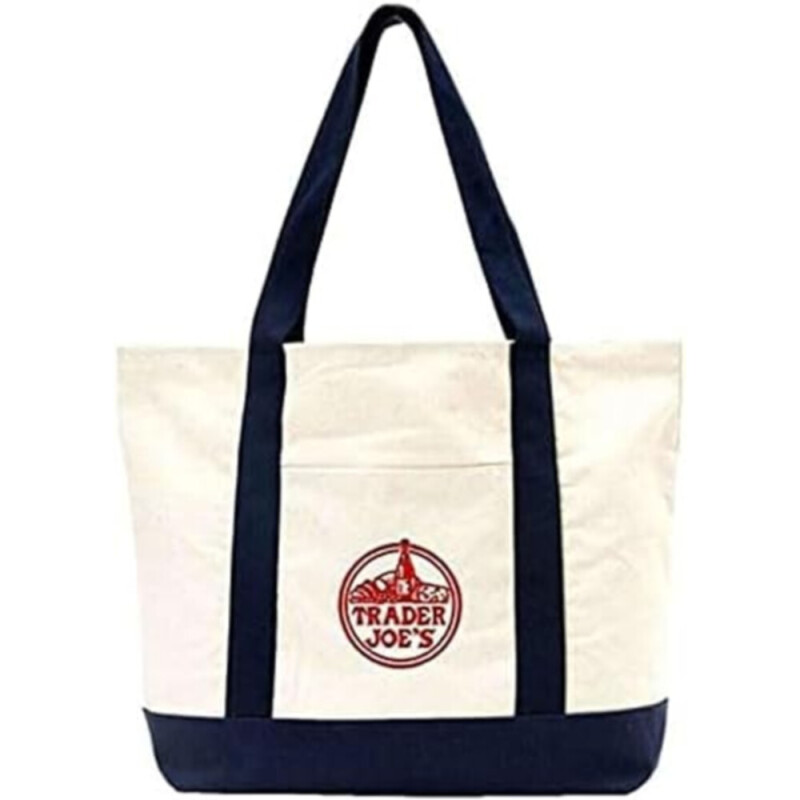
What is particularly striking is that this resale craze is not something happening only within the US. In cities like Seoul, Tokyo, and London, where there are no Trader Joe’s stores at all, this bag is consumed like ‘proof that you have been abroad,’ and there have been reports of it being traded at high prices on Korea’s Karrot Market as well.
This phenomenon of only the merchandise being distributed through the resale market in countries without stores can be seen as an example showing that Trader Joe’s unique principle of ’no online sales + supply restriction’ actually functions as a marketing asset. In the sense that they create buzz with scarcity alone without advertising, it is not unreasonable to see it as a continuation of the way Joe Coulombe imprinted the brand without advertising costs using just a radio segment some 60 years ago.
One retail expert pointed out this phenomenon, saying “Humans have a habit of wanting to hoard items that social media has made them believe are precious,” but personally, I felt this blurred the point that separates the Supreme limited edition or Starbucks merchandise craze from the Trader Joe’s case. Supreme’s scarcity is a result designed from the beginning, but Trader Joe’s puts out reactions like “we didn’t know it would sell this much” every time. Whether consumers can distinguish between intentional and accidental stockouts is a separate issue, but at least looking at the company’s official stance and initial volume allocation method, it does not look like a campaign designed from the beginning to target the resale market.
References
- https://en.wikipedia.org/wiki/Trader_Joe's
- https://en.wikipedia.org/wiki/Joe_Coulombe
- https://en.wikipedia.org/wiki/Aldi
- https://www.supermarketnews.com/finance/trader-joe-s-sails-through-shifting-fortunes
- https://www.fundinguniverse.com/company-histories/trader-joe-s-company-history/
- https://www.nbcnews.com/news/us-news/trader-joe-s-founder-joe-coulombe-dies-89-n1145786
- https://www.tastingtable.com/1710675/look-back-trader-joes-history/
- https://edition.cnn.com/2022/05/07/business/trader-joes-history-joe-coulombe
- https://www.thekitchn.com/aldi-trader-joes-parent-company-rumor-260999
- https://www.foodrepublic.com/1836465/trader-joes-aldi-company-connection/
- https://shahmm.medium.com/trader-joes-building-a-cult-brand-through-private-label-innovation-8de2194cc55c
- https://www.tradlinx.com/blog/market-trend/미국에서-완판-신화-만들고-있는-냉동-김밥의-수출-비결
- https://www.nbcnews.com/news/asian-america/trader-joes-kimbap-tiktok-rcna103403
- https://www.sfchronicle.com/bayarea/article/trader-joes-mini-tote-bags-resale-20269320.php
- https://news.designrush.com/trader-joes-tote-bag-international-status-symbol-resale