
A journey to find the true owner of the lost empire, Balhae, which vanished a thousand years ago in the harsh winds of the Manchurian plains.
- Understand the core logic behind the Northeast Project’s claim that Balhae is part of Chinese history.
- Examine clear evidence proving that Balhae was a state of the Korean people, inheriting Goguryeo.
- Grasp the significance of why the ancient history debate matters to us today.
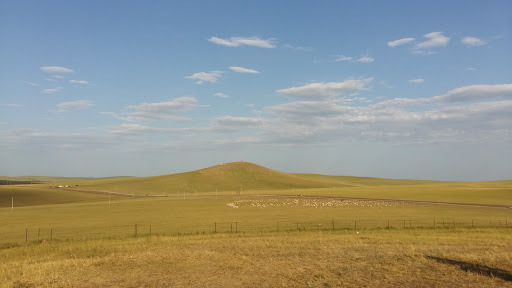
Imagine standing against the harsh winds of the Manchurian plains. Before you lies only the faint outline of a city that was once the heart of a great empire. This is the old site of the ghost-like vanished empire, Balhae. And one question arises: Who is the true owner of the history that sleeps beneath this land?
For 228 years, this empire ruled East Asia and now stands at the center of the fiercest ‘history war’ of the 21st century: China’s Northeast Project (東北工程). This is not merely a debate about the past; it is an ongoing struggle that involves national identity and future.
This article embarks on a journey to the heart of that colossal battle. We will follow the clues left by the Balhae people and hear their voices directly.
Part 1: The Phoenix of Goguryeo - The Birth and Revival of Balhae
A Kingdom Rising from the Ashes
Every story begins in the year 668, with the tragic fall of the powerful Goguryeo Empire. Among the scattered refugees who lost their country, there was a man who would later become the protagonist of history. His name was Dae Joyeong (大祚榮), an old general of Goguryeo. He is the hero of our story, carrying the hope of a fallen nation.
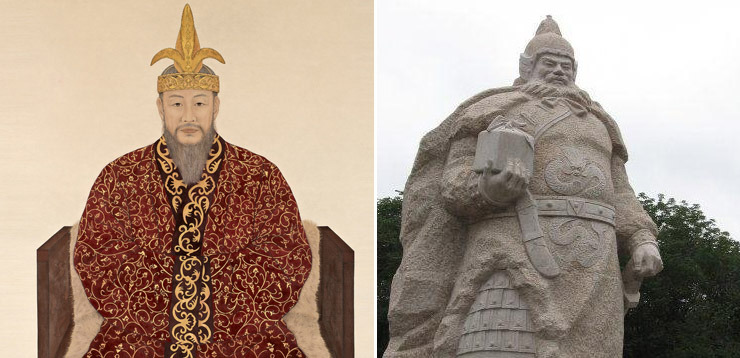
In 696, as the Khitan tribe rebelled and the northeastern borders of the Tang Dynasty were thrown into chaos, Dae Joyeong seized the opportunity. He led the Goguryeo refugees and allied Malgal tribes in a desperate escape, achieving a miraculous victory against the Tang pursuers at the Battle of Cheonmunryeong.
Finally, in 698, he established a new kingdom called Jin (振) at the foot of Dongmo Mountain. This was a powerful declaration announcing their existence resurrected from the east.
“A Prosperous Nation East of the Sea” (海東盛國)
Balhae grew into an empire encompassing vast territories from Manchuria to northern Korea and Primorsky Krai. As the true successor of Goguryeo, standing shoulder to shoulder with Silla to the south, later scholar Yu Deuk-gong named this period ‘The Era of the Northern and Southern States (南北國時代)’.
Especially during the reign of the 10th king (宣王), Balhae reached its zenith, receiving envious praise from the Tang Dynasty, which referred to it as ‘Haedong Seongguk (海東盛國)’, meaning ‘A Prosperous Nation East of the Sea’.
However, in 926, the empire, once powerful, suddenly collapsed due to a surprise invasion by the rising Khitan tribe. Balhae left behind a brilliant legacy and a vast historical void, which became the prologue to today’s ‘search for the owner’ war.
Part 2: The Claim of ‘A Local Regime of China’ - Dissecting the Logic of the Northeast Project
How does the Northeast Project define Balhae? Their core argument is that Balhae is not a state of the Korean people but a local regime established by the Malgal tribe under the Tang Dynasty.
- Argument 1: The founders were the Malgal tribe. Chinese academia claims that Dae Joyeong was originally of the Malgal tribe based on the phrase in the Old Book of Tang (舊唐書) stating that ‘Dae Joyeong was originally a separate breed of the Goguryeo, from the Sogmal Malgal (本高麗別種粟末靺鞨)’. Since the Malgal tribe is currently a minority in China, this logic leads to the conclusion that Balhae naturally becomes part of Chinese history.
- Argument 2: The name and throne were granted by the Tang Dynasty. They argue that the identity of the state itself was a dependent one conferred by the Tang Dynasty, based on the fact that in 713, the Tang granted Dae Joyeong the title of ‘King of Balhae (渤海郡王)’.
- Argument 3: The tribute-vassal relationship is evidence of a superior-inferior relationship. They present Balhae’s tribute to the Tang and its receipt of investiture as clear evidence of a lord-vassal relationship, concluding that Balhae was merely a ’local regime (地方政權)’ within the Tang Empire and not an independent state.
These claims stem not from pure academic curiosity but from a political necessity emphasizing the ‘unified multi-ethnic state theory (統一的多民族國家論)’ that promotes ‘One China’. The intention is to incorporate all histories that occurred within China’s borders into Chinese history, thereby blocking the possibility of minority ethnic groups seeking independence and eliminating potential future territorial disputes.
Part 3: The Echoes of Goguryeo - Evidence of a Korean State
Now it is time to take up the detective’s magnifying glass and search for evidence to refute the claims of the Northeast Project. Fortunately, the Balhae people left their true story scattered throughout history.
Clue 1: Testimony from Diplomatic Documents - “We are the Kings of Goguryeo”
The most compelling evidence that dismantles the ’local regime’ argument is the voice of the Balhae people themselves. They clearly stated their identity through official diplomatic documents, known as national letters (國書), sent to Japan.
- In 727, King Mu boldly declared in a national letter sent to Japan that “We have reclaimed the old lands of Goguryeo (復高麗之舊居)”.
- The following King Mun referred to himself as “King of Goguryeo, Dae Hyeonmu (高麗國王 大欽茂)”. Here, ‘Goguryeo’ refers to Goguryeo itself.
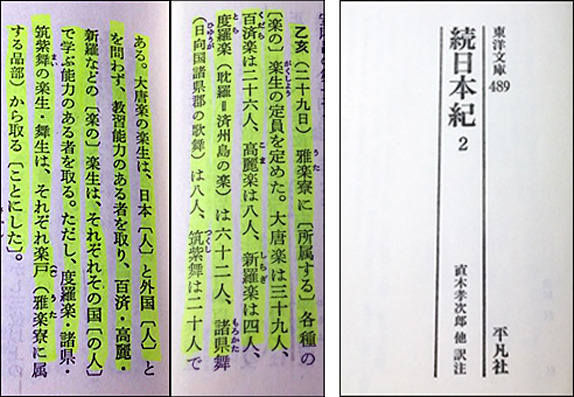
This is corroborated by Japan’s official historical records, the Chronicles of Japan (續日本紀), which consistently recorded Balhae as ‘Goguryeo’ and its envoys as ‘Goguryeo envoys (高麗使)’. A ’local regime’ forming an alliance with another country (Japan) against its ‘owner’, the Tang Dynasty’s ally (Silla), cannot exist.
Clue 2: The Truth Beneath the Ground - The Story of Two Princesses and Ondol
What I find most fascinating is the archaeological evidence. Artifacts and ruins do not lie, much like a time capsule left by Balhae.
- Tombs of Princess Jeonghye and Princess Jeonghyo: The tombs of King Mun’s two daughters provide decisive clues. The tomb of Princess Jeonghye is a typical Goguryeo-style stone chamber tomb. The tomb of her sister, Princess Jeonghyo, is influenced by Tang Dynasty architecture but retains the traditional Goguryeo structure of bracketed roofs. Crucially, the epitaph records her father, King Mun, with the title ‘Emperor (皇上)’, which is used only for emperors.
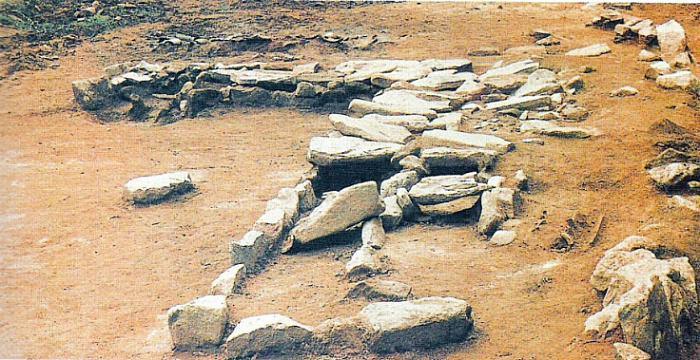
- Traces of Ondol (溫突): The unique Korean heating method, ondol, has been found throughout the vast territories of the Balhae Empire, including the capital, noble, and commoner residences, extending even to Primorsky Krai in Russia. This shows a direct continuation of the living culture from Goguryeo.
These evidences demonstrate that Balhae was not a passive recipient of Tang culture but a confident independent empire that selectively adopted foreign cultures based on its pride in inheriting Goguryeo.
Clue 3: The Power of Names - The Use of Independent Era Names
Balhae used its own era names (年號) such as Inan (仁安) and Daehung (大興). In the East Asian worldview, proclaiming an independent era name is the ultimate expression of sovereignty that only the ‘Son of Heaven’ (天子), or emperor, can perform. This act alone fundamentally undermines the ’local regime’ theory.
Clue 4: War, Crying for Independence
In 732, King Mu mobilized the navy to preemptively attack Tang’s Dengzhou (Shandong Peninsula) to check the Tang Dynasty. This was a clear international war waged by a sovereign state for its own interests. A ’local regime’ cannot invade a ‘central government’ across the sea.
| Category | Goguryeo’s Legacy | Manifestation in Balhae |
|---|---|---|
| Political Identity | Use of the official state name ‘Goguryeo (高麗)’ | Use of the title ‘King of Goguryeo’ in Japanese diplomatic documents, declaration of ‘recovery of Goguryeo’s old lands’ |
| Sovereignty | Use of independent era names (e.g., Yonglak) | Use of independent era names (e.g., Inan, Daehung), internal title of emperor ‘Hwangsang’ |
| Tomb Style | Stone chamber tombs, bracketed roofs | Jeonghye’s tomb (Goguryeo style), Jeonghyo’s tomb (retaining Goguryeo-style ceiling) |
| Residential Culture | Ondol (溫突) heating method | Ondol remains found in palaces and residences throughout the empire |
| Artifacts | Chimneys, roof tiles, Buddha statues | Confirmation of direct inheritance of Goguryeo style in tiles, Buddha statues, pottery, etc. |
| Historical Memory | - | Yu Deuk-gong’s concept of ‘The Era of the Northern and Southern States’, acceptance of Balhae refugees by Goguryeo |
Part 4: External Voices - How Does the International Community View Balhae?
How did third-party witnesses perceive Balhae?
- Northern Perspective (Russia): Early Russian academia relied on Chinese literature, but after the 1990s, clear evidence of Goguryeo culture, such as ondol, was discovered in the Primorsky Krai region, leading to a change in perspective. Currently, many Russian scholars conclude that Balhae was an independent state that succeeded Goguryeo.
- Eastern Perspective (Japan): This part is particularly interesting. Ancient Japan, as a direct ‘witness’ to Balhae, vividly recorded Balhae as an independent nation succeeding Goguryeo in their historical texts. However, some modern Japanese scholars intentionally downplay this and prefer the neutral term ‘multi-ethnic state’. When seeking the truth of history, shouldn’t we give greater weight to the vivid testimonies of contemporary witnesses rather than modern cold interpretations?
Conclusion
All evidence points to one conclusion. Balhae was never a passive local regime of China. Balhae was a proud, independent, and powerful northern empire of the Korean people, succeeding Goguryeo.
The reason this struggle is important is that it does not remain in the past. The logic of the Northeast Project has evolved into a current cultural war, claiming kimchi, hanbok, and more as Chinese culture, known as ‘Cultural Project (文化工程)’. It is an extension of the same logic that seeks to absorb neighboring cultures under the vast umbrella of ‘Sinocentrism (中華)’.
- Key Summary
- Balhae clearly declared itself as the “successor of Goguryeo.”
- Tombs, ondol, and other archaeological evidence prove the direct inheritance of Goguryeo culture.
- The historical debate over Balhae is part of an ongoing cultural war that extends to kimchi, hanbok, and more.
The fight to preserve Balhae’s history is ultimately a fight to protect our right to tell our own story. Listening to the questions posed by the ghost empire on the Manchurian plains is our duty as we live today.