
Nvidia announced that its revenue for the past quarter reached $96.22 billion. That is $4 billion higher than the market consensus of $92.1 billion. Earnings per share also beat expectations, and Q3 revenue guidance exceeded the average analyst forecast by more than $7 billion. Data center revenue jumped 117% year-over-year, accounting for 92% of total revenue.
Immediately following the release, the stock briefly spiked in after-hours trading. Then it sank back down.
Why couldn’t the stock find relief when every single metric surpassed expectations? If this question sounds unfamiliar, it is because you might have missed the pattern Nvidia has repeated over the past four quarters. Posting surprise earnings only to see the stock drop the following day has now happened four times in a row. A securities analyst pointed out this phenomenon, noting that the correlation between the company’s fundamentals and its stock price has weakened.
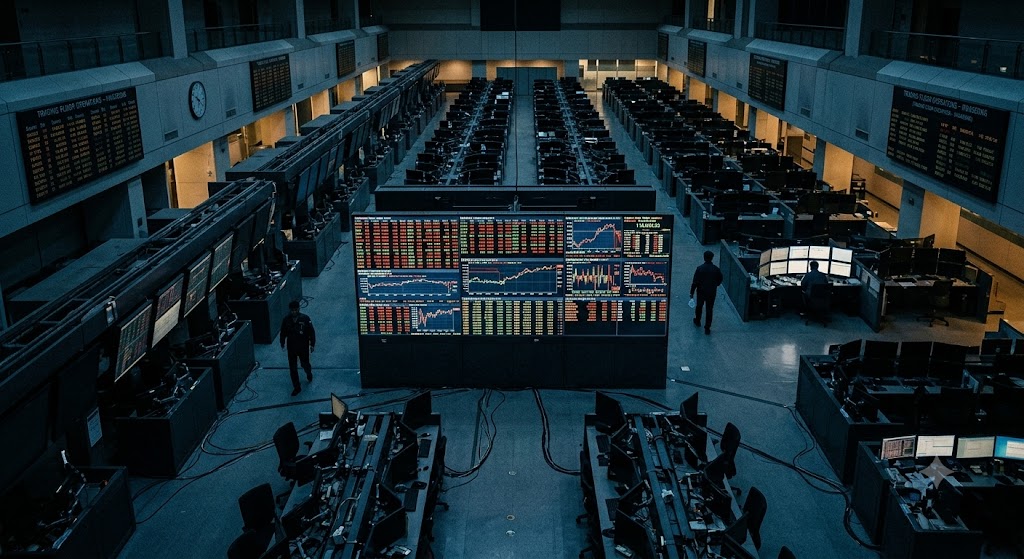
If the market is not reassured even by strong numbers, what exactly is moving it?
This question hits close to home for Korean investors as well. Samsung Electronics and SK Hynix account for more than half of the KOSPI’s total market capitalization. Both companies’ stock prices depend heavily on Nvidia’s memory demand—particularly the volume of HBM orders. Even though the Bank of Korea raised its benchmark interest rate for the second consecutive time the day after Nvidia’s earnings release, the KOSPI still finished up over 1%, largely driven by semiconductor stocks surging from early morning. Domestic pension funds including the National Pension Service, retail investor accounts, and index funds tracking the KOSPI 200 are all tied into this flow. Reading Nvidia’s earnings report is not about looking at a foreign company’s report card across the Pacific; it is closer to reading which direction your pension balance will move in advance.
A Teaser Trailer, Not an Earnings Report
Another event overlapping in the same week illustrates this dynamic even more clearly. Two days after Nvidia’s earnings report, the Fed Chair delivers a keynote address at Jackson Hole. The market treats every single phrase in this speech as a signal to gauge the trajectory of interest rate policy. Even though no actual rate decision is made on that stage, the market reallocates tens of billions of dollars in bonds and stocks based purely on the speech’s tone and choice of words.
Nvidia’s earnings conference call is consumed in the exact same manner. Revenue and profit margin figures are already laid out in the press release. What the market is truly waiting for is the tone in which Jensen Huang explains those numbers. Just as the Fed Chair’s words move interest rates, Jensen Huang’s words move semiconductor valuations—structurally serving the exact same role. The data is already set; what the market is trying to buy is conviction in that data.
On this call, Jensen Huang stated that AI is now performing genuinely useful tasks and has entered a stage where computing itself translates directly into revenue. He also emphasized that the new platform, Vera Rubin, has entered full-scale mass production. Chief Financial Officer Colette Kress projected that next year’s revenue would grow by about 70% compared to this year, and Jensen Huang went a step further, adding that if supply had been sufficient, that growth rate would have exceeded 70%.
“From our vantage point, we see something completely different (from bubble concerns).” — Jensen Huang, Earnings Conference Call
The numbers had already been released, yet this single line was where the market reacted.
Moments When Conviction Outweighed Numbers
Heading into this earnings release, the options market priced in a potential 5.27% single-day swing in the stock price. Considering Nvidia’s market capitalization exceeds $5 trillion, this meant roughly $275 billion—around 380 trillion KRW—could change hands in a single trading session. A sum rivaling the annual budget of a decent-sized nation was hanging on a single expression from Jensen Huang.
Indeed, right after the announcement, the stock jumped 4.71% in after-hours trading. A few hours later, around the time the conference call ended and trading settled, the stock actually closed down 1.5% at $206.48. Despite revenue, earnings, and guidance all exceeding Wall Street expectations, it failed to sustain an upward momentum. This pattern is not unfamiliar. A securities analyst noted that in the previous quarter, revenue surged 85% and EPS soared 130%, yet the stock showed weakness the following day. The simplest formula—that strong earnings lead to rising stock prices—has failed to work for this company for four consecutive quarters.
The Korean market’s reaction reflects this dynamic from another angle. At dawn on the day of the earnings release, the KOSPI opened higher on the strength of semiconductor stocks, attempting to reclaim the 7,000 level. However, when the Bank of Korea raised the benchmark interest rate for the second consecutive time that morning, the gains narrowed immediately. In the end, the KOSPI closed up around 1% at the 6,912 level. While Nvidia’s strong earnings set the direction, the magnitude of that rise was ultimately decided by an entirely different variable: domestic monetary policy.
The Q3 gross margin guidance announced on the same day was 74%, slightly lower than Q2’s 75%. Rising HBM and server DRAM prices increased cost pressures. This means that while revenue is growing, margins are slightly eroding, and if this trend persists, the answer to whether “AI investment is truly a profitable business” becomes cloudier.
The Real Reason Numbers Alone Are No Longer Enough
Behind why surprise earnings no longer provide reassurance is the financing structure Nvidia created itself. Nvidia previously partnered with six global financial institutions to build a $500 billion AI infrastructure financing platform. In this structure, Nvidia invests in or finances clients, and those clients use that capital to buy Nvidia’s GPUs. Multiple AI companies, including OpenAI, are part of this circular loop. If a significant portion of revenue growth stems from these circular transactions, suspicions inevitably grow that this growth might be money circulating only on balance sheets rather than genuine end demand.
Another event fueling this suspicion was news that SoftBank Group Chairman Masayoshi Son and billionaire investor Peter Thiel had liquidated their entire stakes in Nvidia. The fact that early spotters of the AI industry walked away shook market sentiment far more than any number on the earnings report.
At this juncture, the weight of Jensen Huang’s remarks takes on a different significance. During his visit to Korea, when the domestic stock market plunged, he commented that it should be seen as an opportunity to buy stocks cheaper. When asked about concerns that AI-related stocks are overvalued, he directly pushed back, stating he disagrees with claims that demand forecasts are excessive. A Bloomberg columnist noted regarding such remarks that a CEO’s habit of constantly talking up suppliers is actually cause for concern. Regardless of actual performance, repeatedly preaching optimism was interpreted as evidence that the market is seeking reassurance rather than demanding empirical proof.
Structurally, it boils down to this: under the overlapping anxieties of circular financing doubts, big-ticket investor departures, and margin compression, no matter how strong a quarterly performance is, it cannot completely erase the unease. What the market wants is not next quarter’s figures, but conviction that this circular structure will not collapse. And the only person who can provide that conviction is not a financial statement, but Jensen Huang alone.
When he briefly remarked at Computex in Taiwan that a certain semiconductor company would “grow to $1 trillion," that company's market cap surged by $50 billion in a single day. It wasn’t an earnings announcement or a new product launch—just a single phrase. Remarks of this magnitude are usually reserved only for central bank governors or heads of state. Today, a CEO of a semiconductor company stands in that very spot.
If the Next Reassurance Fails to Arrive
Whether Jensen Huang succeeded in calming the market once again is likely already answered by the stock price trend at the moment you read this. Yet, separate from that answer, one question remains.
Is the current AI rally sustained by physical metrics like data center demand, or by the tone of one person explaining those metrics? If the stock fails to cheer even after beating expectations for five or six consecutive quarters, will the market still be waiting for his voice on the next conference call?
The numbers have already been verified. What remains unverified is only the market’s conviction in whether those numbers can be trusted.
References
- Herald Economy, Nvidia Q2 Revenue Reaches $96.2 Billion… Jensen Huang Declares AI Inflection Point Reached
- Aju Business Daily, Nvidia Hits Record Earnings Again on AI Investment… Margins and China Business Remain Variables
- Investing.com, Why Nvidia Stock Fell in After-Hours Trading
- EBN News, Nvidia's Earnings Surprise Isn't Enough… Hinges on Margins and Jensen Huang's Words
- Money Today, Three Variables Shaking the KOSPI: Nvidia, MPC Rate Decision, Jackson Hole
- Money Today, KOSPI and KOSDAQ Rise in Tandem… Caution Lingers Ahead of Nvidia Earnings
- Smart Biz, KOSPI Reclaims 6,900 Level on Nvidia Earnings Expectations
- Financial News, KOSPI Closes at 6,912 Level Up Over 1% Amid Nvidia Strong Earnings vs Rate Hike
- Etoday, Asian Markets Hold Breath Ahead of Nvidia Earnings
- Newspim, Nvidia Tailwinds Forecast to Drive Gains Centered on Semiconductor Stocks
- Benzinga Korea, Nvidia Could See $282 Billion Fluctuation Following Earnings Release
- The Korea Daily, $50 Billion Bet on a Single Word from Jensen Huang
- Edaily, Stock Swings on a Single Word from Jensen Huang… Bloomberg Cautions Against Excessive Optimism
- Newsis, Nvidia Earnings D-1… What Matters More Than Results Is Investment Sustainability