
In early July, I read an article that Meta was preparing its own cloud business, reportedly named ‘Meta Compute.’ The news alone caused shares of Nebius and CoreWeave to drop 15% in a single day. At first, I wondered why the reaction was so extreme, but it turns out Meta is a major customer for both companies. The market immediately priced in the fact that a customer could turn into a competitor overnight.
As a result, I’ve been encountering the term ‘Neocloud’ quite often lately. However, I didn’t fully understand what exactly it refers to, which companies are involved, or why they are all taking on so much debt to run their businesses. So, I dug into it.
What exactly is Neocloud?
Unlike general-purpose hyperscalers like AWS, Microsoft Azure, and Google Cloud, Neocloud refers to cloud providers or business models that specialize exclusively in providing the GPU infrastructure required for generative AI training and inference. The term reportedly began to be used in earnest after Nvidia CEO Jensen Huang mentioned at GTC 2024 that AI infrastructure would be reorganized in a way different from traditional cloud services.
Traditional cloud services were designed to handle a wide range of general-purpose workloads, such as web service operations, streaming, and corporate system hosting.
In contrast, Neocloud is designed with a single goal in mind: GPU-centric, high-speed networking (NVLink, InfiniBand), and massive parallel computing. The reason for its emergence is simple. A survey found that about one-third of AI companies had to wait 2 to 4 weeks, or even up to 3 months, to secure GPUs from hyperscalers. That waiting time itself created the market.
Who is playing in this field right now?
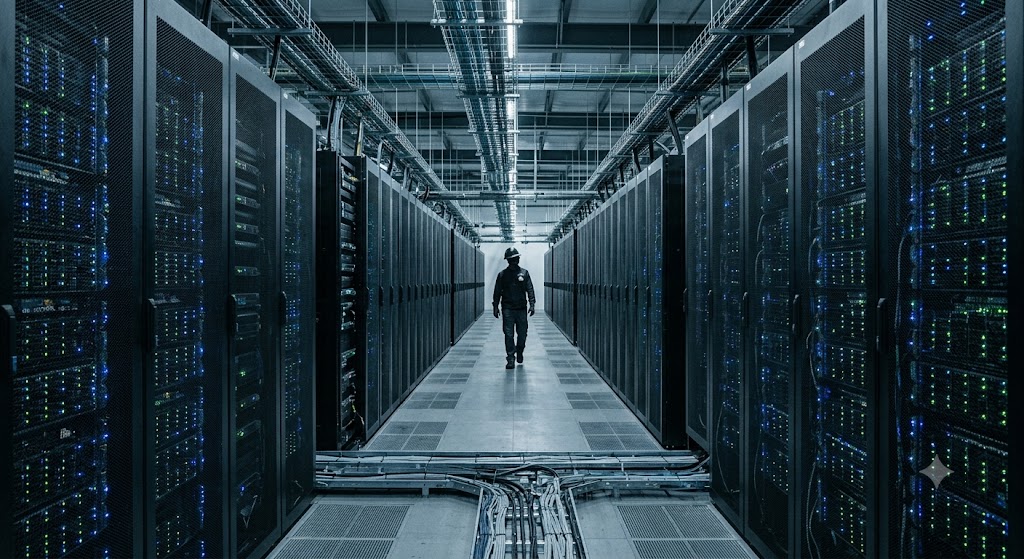
*Five companies are typically mentioned as representatives.
They are CoreWeave, Nebius, Lambda, Crusoe, and Groq. The way these five companies operate is quite different.
CoreWeave is considered the leader in this industry. It is listed on the Nasdaq, and its Q2 2026 revenue was $2.575 billion, up 112% from the previous year. However, with operating expenses at $2.624 billion, it posted an operating loss of $49 million, and when interest expenses are added, the net loss grew to $626 million. Its contract backlog has reached $104.2 billion, exceeding its market capitalization, and it is notable that 93% of the revenue growth came from expanding existing customers rather than new ones. The top three customers account for 72% of quarterly revenue.
Nebius is a European company headquartered in Amsterdam with data centers in Finland and the U.S. Its revenue for the same quarter was $582.3 million, a 454% increase year-over-year, and looking only at the AI cloud segment, it grew by 514% with an adjusted EBITDA margin of 49.7%. It also signed an infrastructure contract worth up to $19 billion with Microsoft. Lambda remains private and has secured over $1.5 billion in Series E funding and a $1 billion credit facility, with rumors suggesting it is eyeing an IPO in the second half of 2026. Crusoe uses a unique model of generating its own electricity from natural gas wasted at oil fields to power GPUs, and it is one of the few places that handles not only Nvidia but also AMD’s MI300X and MI355X. After licensing its proprietary LPU technology to Nvidia in December 2025, Groq shifted its focus toward inference cloud infrastructure.
| Company | Characteristics | As of Q2 2026 |
|—|—|—|
| CoreWeave | Premium position for Frontier Labs (Meta, Anthropic, OpenAI) | $2.58B revenue, \~$35.6B debt |
| Nebius | Europe-based, partner-first strategy | $582M revenue (+454%), \~$8.5B long-term debt |
| Lambda | One-click clusters, ease of use | Series E $1.5B+, pursuing IPO |
| Crusoe | Self-generated natural gas power, handles AMD | Announced 4.5GW natural gas capacity |
| Groq | LPU architecture, inference-focused | Tech licensed to Nvidia (2025.12) |
## What does it mean to build data centers with debt?
The most striking aspect of this industry is that its growth blueprint is almost entirely based on borrowing. Looking at CoreWeave alone, its total debt as of the end of Q2 was approximately $35.6 billion, with a weighted average interest rate of around 9%, and quarterly interest expenses alone amount to $640 million. When converted to an annual basis, interest payments alone are set to reach around $3 billion, yet the company has never consistently posted a GAAP operating profit. Its 2026 capital expenditure guidance is $35 billion to $39 billion, a structure where spending always outruns revenue.
What makes this unique is that most of these loans use the GPUs themselves as collateral. Consequently, there are concerns that the loan maturities for companies like CoreWeave, Nebius, Lambda, Crusoe, and Applied Digital are concentrated between 2026 and 2028. This is the so-called ‘refinancing wall,’ and the concern is compounded by the fact that the lenders providing these loans are concentrated among a small number of financial institutions that overlap with one another.
However, digging into this structure, I discovered a truly interesting point of contention.
It’s the issue of depreciation periods. CoreWeave sets the useful life of its GPUs for accounting purposes at 6 years. Google, Amazon, and Microsoft also extended the useful life of their servers from 3–4 years to 6 years around 2023, and it is estimated that this change alone reduced total depreciation expenses for big tech by about $18 billion in 2024.
Michael Burry, famous for ‘The Big Short,’ directly criticized this last November, calling it a common accounting fraud where companies artificially extend useful life to hide losses. The logic is that given Nvidia releases a new architecture every two years (A100→H100→B200) and performance jumps 2–3 times each generation, the actual economic life of a GPU is much closer to 2–3 years than 6 years. Since CoreWeave’s loan agreements reportedly include clauses requiring additional collateral or interest rate hikes linked to the depreciation rate of the GPUs, the speed of depreciation is not just an accounting issue but is directly tied to the actual repayment burden.
But there is a twist here. In CoreWeave’s Q2 2026 earnings call, it was revealed that H100 GPUs whose contracts ended in 2022 are being re-signed at 95% of their original price. This means that items that should have long since dropped below half their value according to Burry’s argument are still fetching close to their original price in the market. Some interpret this as proof that inference demand has grown so much that even older generation GPUs have not lost their utility, but it doesn’t seem like the risks have completely disappeared either. It seems there is no proven answer in this market yet.
In addition, there are criticisms that Nvidia is simultaneously a chip supplier, a major shareholder in CoreWeave, and a source of funding for CoreWeave’s customers. When the supplier, shareholder, and financier are one and the same, it is difficult from the outside to determine whether the ‘demand’ numbers are actual demand or circular transactions among them.
The risk of customers becoming competitors
The Meta Compute incident mentioned earlier was a perfect example of this risk.
On July 1, 2026, when Bloomberg reported that Meta was considering its own cloud business and might sell excess AI capacity to outsiders, shares of Nebius and CoreWeave dropped about 15%, and IREN fell by 6%. Since there was already a precedent of SpaceX marketing its Colossus capacity to outsiders, this was not an entirely baseless worry. Because of this structure where the biggest customer can immediately become the biggest competitor, some venture capitalists are cynical, suggesting that Neocloud is less about being a tech company and more about overlaying an AI narrative onto real estate and power market bets.
Customer concentration is also significant. It is said that for CoreWeave, the top three customers account for 72% of revenue, while for Nebius, Microsoft alone accounts for about 67%. This means the entire company’s performance can be swayed by the direction of one or two contracts.
Why did Korea choose a different path?
After looking into all this, I naturally wondered how Korea is handling it.
It turns out that domestically, things are moving in a quite different direction from the U.S.-style GPU-backed loan model.
Three telecommunications companies—SK Telecom, KT, and LG Uplus—are each preparing their own ‘GPU farm’ businesses, and large CSPs like Naver Cloud and KT Cloud are also expanding their GPU services based on their own data centers. What stands out is how the government is directly investing budget into securing GPUs. The ‘AI Computing Resource Utilization Foundation Strengthening (GPU Rental Support)’ project, promoted by the Ministry of Science and ICT and the National IT Industry Promotion Agency, is an example, providing GPUs held by the private sector to AI model developers in a cloud format with a budget of about 150 billion KRW. SK Telecom was selected as the track 1 operator to supply at least 1,000 Blackwell (B200) units, and Naver Cloud took on track 2. This is said to be one of the three major AI infrastructure projects promoted by the government, along with the ‘National AI Computing Center Construction Project’ and the ‘GPU 10,000 Unit Procurement and Operation Support Project.’ Meanwhile, domestic GPU cloud startups like Mondrian AI, VESSL AI, and Elice Cloud are also finding their footing one by one.
If the U.S. Neocloud structure involves raising funds from the bond market and private credit using GPUs as collateral, in Korea, government budgets and large corporate investments are filling that gap. This means that financial market risks like the ‘refinancing wall’ or GPU depreciation-linked loan clauses are relatively less of a burden. Instead, it seems we are carrying a different kind of risk: the speed of infrastructure procurement being dependent on budget cycles and changes in political priorities. I think it is too early to judge which path is safer.
So, what is the next move?
Looking at their growth strategies, we can see the five companies gradually expanding their reach beyond the single business of GPU leasing.
- Service Diversification — CoreWeave announced that it aims to grow its recently launched managed inference service to over $250 million in Annual Recurring Revenue (ARR) by the end of 2026. The focus is shifting from simple GPU leasing to managed services.
- Hardware Diversification — Moving away from an Nvidia-only approach, Crusoe is handling AMD MI300X and MI355X to target customers who want to reduce their dependence on Nvidia.
- Capital Market Entry — Lambda is targeting an IPO in the second half of 2026. Listing would make it the third SEC-reporting company after CoreWeave and Nebius, and also a channel to raise capital with better conditions than the bond market.
- Positioning Differentiation — CoreWeave was the only company to receive a Platinum rating in SemiAnalysis’s ClusterMAX 2.0 evaluation, leveraging premium reliability to set its H100 hourly price high at around $6.16. Conversely, Nebius uses a partner-first strategy instead of direct enterprise sales, and Crusoe competes on price competitiveness (around $3.9 per hour for H100).
- Energy Procurement Competition — Like Crusoe’s natural gas self-generation, there is frequent talk that securing power before GPUs will be the next bottleneck.
It is difficult to say for sure right now whether this field will settle into a stable infrastructure industry in five years or if a few companies will be cleared out somewhere along the refinancing wall. However, I will definitely keep checking the next quarterly earnings reports, especially how GPU re-contracting prices and debt ratios are moving.
References
- Wikipedia - Neocloud (ko.wikipedia.org/wiki/네오클라우드)
- Namuwiki - Neocloud (namu.wiki/w/네오클라우드)
- The Register - CoreWeave revenue doubles as debt pile reaches $35.6B (2026.08)
- Yahoo Finance - CoreWeave's AI Data Center Capacity Is Exploding (2026.08)
- 247wallst.com - CoreWeave's $35 Billion Debt Load (2026.08)
- MarketWise - AI Infrastructure Stocks: What CoreWeave's Debt Reveals
- MarkTechPost - Best GPU Neoclouds 2026: CoreWeave, Nebius, Lambda, Crusoe, Groq (2026.08)
- trendingtopics.eu - Neoclouds Challenge the Hyperscalers (2026.07, Refinancing Wall, Meta Compute)
- scult.in - Neoclouds Explained: CoreWeave, Nebius, Nscale
- ABI Research - Profiling Seven Leading Neocloud Companies
- Electronic Times - SKT/Naver Cloud win 150 billion KRW GPU rental support project (2025.07)
- Green Post Korea - SKT/KT/LGU+ GPU Farm Competition (2024.11)
- Hankyung - Big Tech's GPU Life Manipulation Controversy, Michael Burry (2025.11)
- The Public - Nvidia's 'GPU Assetization' Gamble Captivating Wall Street (2026)
- vessl.ai - What is Neocloud? A New Choice for GPU Cloud