
The relationship between NVIDIA and SK Hynix over AI semiconductor supremacy is entering an era of ‘cooperative competition’ beyond ‘one team’.
- The background of the birth of the NVIDIA and SK Hynix ‘one team’ alliance
- HBM market upheaval and the survival strategies of the two companies
- The impact of next-generation HBM4 technology competition on the semiconductor market
The Signature That Became a Myth and the Invisible Cracks
In 2025, at Taiwan’s ‘Computex’, NVIDIA CEO Jensen Huang visited the SK Hynix booth and left the phrases “JHH Loves SK Hynix!” and “One Team!” on the next-generation memory HBM4 wafer. This moment seemed to symbolize the peak of the technological alliance between the absolute monarch of AI chips and the strongest memory player.
The partnership between NVIDIA, which dominates 80% of the AI chip market, and SK Hynix, leading the core High Bandwidth Memory (HBM) market, appeared to be more than just a supply relationship; it seemed like a community of shared destiny.
However, before the ink of this grand signature could dry, massive tectonic shifts were beginning beneath the vast chessboard of semiconductors. As the saying goes, “There are no eternal allies,” will the ‘one team’ myth of these two giants truly last forever?
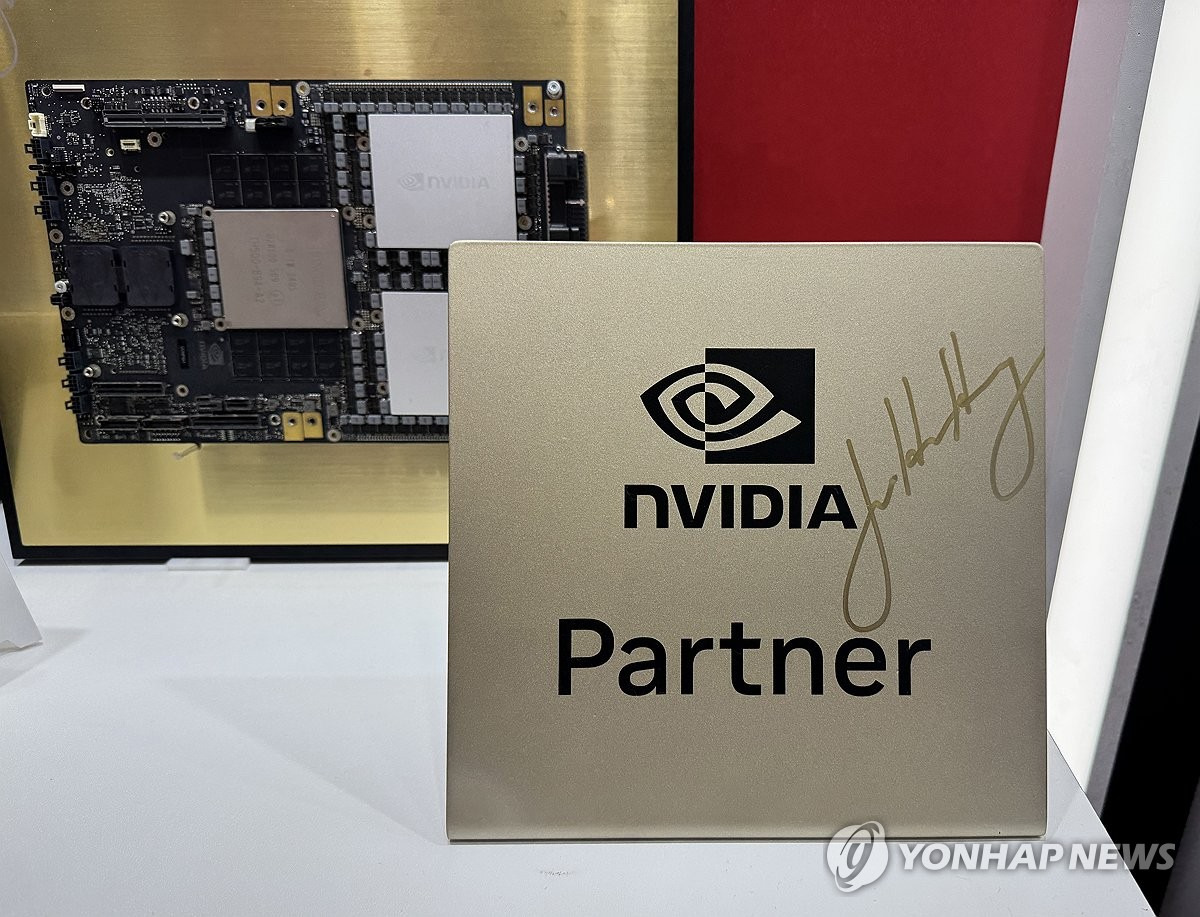
1. The ‘One Team’ Myth Created by the Challenger’s Gamble
The beginning of this great alliance was a harsh test for the ‘perennial second place’.
“Try to match Samsung’s output”
In 2015, NVIDIA focused on HBM as a key component to unleash the potential of AI accelerator GPUs. At that time, SK Hynix had an opportunity alongside industry leader Samsung Electronics, but the demand to “try to match Samsung’s output” was their cold reality.
The Underdog’s Bold Bet
However, the position of ‘second place’ paradoxically became SK Hynix’s weapon. The spirit of challenge, unafraid of failure, became the driving force to boldly bet on the uncertain technology of HBM, which accounted for less than 1% of the entire DRAM market at the time. With little to lose, they could aim for something greater.
The early HBM division struggled so much that it was called ’the graveyard of executives’, but they did not give up. Starting with the world’s first HBM development in 2013, after persistent technological development, they became the only partner to reliably supply HBM3 to NVIDIA’s latest GPUs when the AI market exploded with ChatGPT in 2022.
Technical Explanation: Why is AI Excited About HBM?
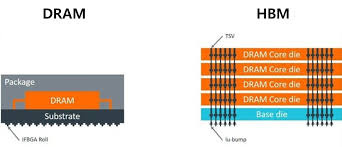
HBM (High-Bandwidth Memory) is essential in the AI era. While traditional DRAM is like a single-layer warehouse, HBM resembles a high-rise building with DRAM chips stacked vertically. By connecting the chips using ‘Through-Silicon Via (TSV)’ technology, it dramatically reduces the footprint.
More importantly, ‘bandwidth’, or the width of the path data travels, is crucial. If the data passage of traditional memory is a two-lane highway, HBM is like a 1024-lane ultra-wide expressway, solving data bottlenecks and maximizing AI computation speed.
SK Hynix’s Secret Weapon: MR-MUF
SK Hynix’s decisive advantage comes from its unique packaging technology called ‘MR-MUF (Mass Reflow Molded Underfill)’. This method fills and solidifies the gaps between vertically stacked DRAM chips with a liquid protective material all at once, dramatically improving process efficiency and productivity.
In particular, this technology improves heat dissipation efficiency by 45%, making it a crucial factor in meeting NVIDIA’s demanding standards for high performance.
2. The Emperor of the Empire, NVIDIA’s New Rules
The success of ‘one team’ has led NVIDIA, the emperor of the AI empire, to new strategic considerations.
The Inevitability of Supply Chain Diversification
For NVIDIA, relying entirely on one company (SK Hynix) for the core component HBM poses a significant long-term risk. To ensure the stability of the empire, supply chain diversification became an inevitable step.
This is not a betrayal of partners but a rational management strategy to create competitive dynamics, ensuring supply stability and enhancing price negotiation power. Already, the next-generation AI chips ‘Blackwell’ and ‘Rubin’ include not only SK Hynix but also Samsung Electronics and Micron in the supply chain.
The Emergence of ‘Custom HBM’
A more fundamental change is the emergence of ‘Custom HBM’. HBM is no longer a standardized product according to international standards (JEDEC) but has evolved into a customized solution developed together from the AI chip design stage.
This change has transformed the relationship between memory manufacturers and chip designers from a simple ‘client-supplier’ to a deep technological partnership. NVIDIA is rewriting these rules and leading the market. Jensen Huang’s public praise serves as gratitude to the best partners while sending a strong message to other suppliers: “You must meet this level to become my partner.”
3. The Partner’s Counterattack: Building SK Hynix’s Own Kingdom
While NVIDIA is restructuring its supply chain, SK Hynix is also executing survival strategies in preparation for the ‘post-NVIDIA’ era.
Beyond NVIDIA to the Entire AI Industry
Leveraging the technological capabilities gained from collaboration with NVIDIA, SK Hynix has begun to diversify its customer base. They have redefined themselves not as ‘NVIDIA’s supplier’ but as ’the memory supplier for the entire AI industry’.
They have already secured remarkable achievements by acquiring new customers such as Google (TPU), Amazon (AWS), and AMD, which are competitors of NVIDIA and developing their own AI chips. This is a strong declaration of their will to build an independent ecosystem away from NVIDIA’s shadow.
This phenomenon, where both giants pursue diversification strategies for their survival, shows that the once monopolistic partnership is evolving into a ‘symbiotic decoupling’ relationship coexisting within a broader industrial ecosystem.
Comparison/Alternatives
HBM4 War: SK Hynix vs. Samsung Electronics
The competition surrounding the next-generation HBM4 market clearly illustrates the philosophical differences between the two giants. Which strategy will become the standard in the AI era?
| Feature | SK Hynix | Samsung Electronics |
|---|---|---|
| Core Strategy | Evolutionary Approach (Proven Technology + Strategic Partnerships) | Revolutionary Approach (Innovative Technology + Vertical Integration) |
| Main Packaging Technology | Advanced MR-MUF (Proven High Yield) | Attempt to switch to Hybrid Bonding (High Risk/High Reward) |
| HBM4 Base Die | Collaboration with TSMC (‘Best Combination’ Model) | Utilizing In-House Foundry (‘Integrated One-Pack’ Model) |
| Market Position | Current HBM Market Leader, Defending the Throne | Challenger, Game Changer Bet with HBM4 |
Conclusion: The Dawn of the ‘Cooperative Competition’ Era
The relationship between NVIDIA and SK Hynix signals the beginning of a new era that is more complex and dynamic, rather than the ’end of the alliance’.
-
Key Summary:
- The End of the ‘One Team’ Era: The era where a single absolute ruler and partner dominated the market has ended, opening a multipolar world with multiple strong players competing.
- The Rise of ‘Co-opetition’: The two companies are evolving into a new form of relationship where they technically cooperate while fiercely competing in the market.
- Acceleration of Innovation: The fierce technological competition surrounding HBM4 and next-generation packaging will ultimately lead to improvements in AI semiconductor performance and supply chain stabilization, positively impacting the entire industry.
The signature left by Jensen Huang at Computex is a monument recording the peak of an era and a signal heralding the start of a much larger game. We are now witnessing a more exciting competition than ever on the semiconductor chessboard.
Who do you think will be the ultimate winner of the HBM4 war?
References
- JoongAng Ilbo “Jensen Huang loves SK Hynix,” signed HBM
- Korea Economic Daily Jensen Huang loves you, Hynix!… SK Hynix rises sharply in early trading
- Weekly Chosun The secret behind SK Hynix capturing Jensen Huang’s heart
- Dong-A Ilbo The secret of SK Hynix’s ‘world No. 1’ HBM… from NVIDIA’s love call 9 years ago…
- Seoul Wire The background of SK Hynix emerging as a key player in the AI era
- Korea Economic Daily “Samsung hesitated, but in the end…” The ‘father of HBM’ reflects on a historical event
- Yonhap News WSJ “SK Hynix, NVIDIA’s partner… actively betting on HBM 10 years ago”
- Monthly JoongAng [In-depth Analysis] SK Hynix vs. Samsung Electronics… HBM (High Bandwidth Memory) Extension…
- YouTube The hottest memory semiconductor these days!? Understanding HBM at once!
- Namuwiki HBM
- Seongyun-dev Tistory [Exploring HBM] Overview and Necessity of HBM Memory
- Samsung Newsroom Memory that is 7 times faster than the current highest speed? The secret of 4GB HBM DRAM
- Business Post SK Hynix celebrates its 41st anniversary, standing tall with HBM honed over 15 years
- Seongyun-dev Tistory [Exploring HBM] Analysis of HBM Manufacturing Process Technology
- Digital Daily [Industry Changer] ②
HBM LeaderSK Hynix, can’t guarantee the 6th generation… Samsung Electronics is closing in - Chosun Ilbo Will HBM also see the light… The key is supplying to ‘big player’ NVIDIA
- ZDNet Korea SK Hynix accelerates HBM supply to US big tech companies
- OBC The One Broadcasting ‘NVIDIA’s rival’ AMD declares… “Our heart has Samsung and Micron HBM”
- Business Post NVIDIA’s semiconductor supply chain diversification benefits Samsung Electronics, SK Hynix, and Micron
- Seoul Wire Micron is strengthening its technological and capital power… Will it threaten Samsung Electronics and SK Hynix?
- Straight News Samsung Electronics’ competitor is not SK Hynix but US Micron… Attention to the second half battle
- News1 The flood of custom AI chips cracks NVIDIA’s monopoly… Will the HBM market landscape change?
- Apple Economy Targeting NVIDIA GB300… Samsung and SK, a showdown over HBM
- Marvell Custom HBM: What Is It and Why It’s the Future
- Seoul Economic TV Jensen Huang “Samsung memory in the new GPU… SK Hynix’s development speed is fast”
- YouTube Love call to SK Hynix… “Alliance with Jensen Huang and Physical AI”
- The Value News SK Hynix’s stock price broke 200,000 won… entering a historic high due to NVIDIA’s benefits
- Korea Economic Daily HBM is SK Hynix’s world… sweeping up Google and Amazon’s volumes
- Daily Money Google’s next-generation TPU, HBM capacity 6 times… AI competition makes SK Hynix and Samsung smile
- Newsis From NVIDIA to Google… SK Hynix has an abundance of HBM customers
- e4ds News SK Hynix supplies the world’s first ‘HBM4 12-layer’ sample
- SK Hynix Newsroom [ONE TEAM SPIRIT] EP.2 The world’s first but a dark history of SK Hynix’s HBM No. 1 story
- Bloter ‘Samsung HBM’ chosen by AMD, facing off against NVIDIA with next-generation AI chips
- Korea Economic Daily [Exclusive] Will next-generation ‘Custom HBM’ also belong to Hynix?
- ZDNet Korea SK Hynix, “We will maintain MR-MUF even for 16-layer HBM4”
- Electronic Times Samsung’s mobile AP stacked in two tracks… developing ‘TC-NCF’ in addition to hybrid bonding
- Hankyoreh Turning point for HBM technology… Will Samsung’s ‘desperate gamble’ work?
- Hans Economic Samsung and SK are putting their lives on the line to develop ‘Hybrid Bonding’… Examining their strategic differences
- Chosun Ilbo Stacking more DRAM… The upcoming ‘dream HBM technology’
- Yonhap Infomax Samsung Electronics’ Lin Jun-cheong says “Smooth sailing applying hybrid bonding to HBM 16-layer development”
- YouTube What is Custom HBM that Samsung is pursuing… Google and NVIDIA are lining up
- Global Economic Targeting NVIDIA GPU… Samsung aims to surpass TSMC with 2nm and HBM bets