
On August 26, 2026, Nvidia announced quarterly revenue of $96.221 billion, a 106% increase year-over-year, beating market consensus of $92.3 billion by 4%. The data center segment alone reached $89 billion, growing 117% from the previous year. Net income approached $59.7 billion, marking the 13th consecutive quarter of record-breaking revenue.
However, the stock price moved strangely that night. Immediately after the announcement, it briefly fell 2% in after-hours trading before rebounding to a 4% gain. This is a pattern that has repeated for four consecutive quarters. While earnings consistently beat expectations, the stock price has failed to sustain its climb or convince investors. Wall Street has labeled this phenomenon ‘sell-on,’ implying that even with good news, those who want to sell will sell.
The reason the market hesitated in the face of record-breaking earnings was not the numbers themselves, but how those numbers were generated. The item the financial industry was most focused on ahead of the earnings call was neither revenue nor margins; it was the scale of purchase commitments and financial guarantees provided by Nvidia to its customers.
Photo: Taylor Vick / Unsplash
To understand why this item is important, we must look back to last February. At that time, Nvidia scaled back its plan to invest $100 billion in OpenAI—$10 billion annually for 10 years—to a one-time $30 billion equity investment. Most of the invested funds were intended to be used to purchase Nvidia’s GPUs. Wedbush analyst Dan Ives dubbed this flow of money—starting from an investor, passing through a supplier, and returning as revenue for that supplier—‘Circular Financing.’ In March, Jensen Huang announced that Nvidia would effectively stop further equity investments in OpenAI and Anthropic, and this structure seemed to subside for a while.
Over the summer, something else filled that gap: purchase commitments and financial guarantees instead of equity investments. On August 17, Nvidia agreed to provide a conditional guarantee of up to $105 billion for a 20-year lease agreement for an OpenAI data center in Ohio. Vivek Arya, a researcher at Bank of America, evaluated Nvidia's $500 billion external financing platform, noting that the burden of capital procurement has shifted from Nvidia to a consortium of financial institutions. While the hand providing direct equity has stepped back, a new hand providing guarantees has appeared.
The Evolution of Circular Financing
The flow of this money does not just circulate within the walls of Silicon Valley.
When it was an equity investment, Nvidia’s balance sheet would shake if losses occurred. Now that it has shifted to guarantees and purchase commitments, that risk is distributed among a financial consortium of banks and insurance companies. Such institutions hold individual savings, insurance premiums, and pension funds. This means the epicenter of risk has expanded from a single company to the entire financial system. If the circular structure falters, the impact will be felt first in the accounts of individuals preparing for retirement, not in Silicon Valley boardrooms.
Then there is the share of the local residents where the data centers are built. In the summer of 2026, San Francisco experienced two large-scale power outages in a single week, leaving driverless taxis stalled on the roads. It was the result of aging power transmission facilities failing to keep up with the surge in electricity demand. While the valuations and guarantee scales created by circular investment are just numbers on a screen, power outages arrive with the sound of refrigerators turning off.

Circularity in a Sealed Glass Bottle
If you have ever seen a sealed terrarium, you know how it works. If you put soil, moss, and small plants in a closed glass bottle, it sustains itself for months. The moisture released by the plants condenses on the glass and falls back into the soil, and the oxygen produced during the day is breathed back in at night. Even without adding a drop of water from the outside, the inside remains moist.
For this bottle to keep living, it needs only one thing: light. You can close the lid, but if you don’t keep it by a window, even the most elaborately cycling bottle will eventually wither. The cycle itself is not proof of life; the fact that the cycle alone is not enough is the proof.
Nvidia changing its equity investments to purchase commitments and guarantees is akin to changing the circulation path inside the bottle. Only the channels through which the water flows have changed; the fact that the bottle needs light has not. The identity of the light is clear: money that Fortune 500 companies actually pay for AI services, subscription fees paid by consumers every month, and wallets opened by third parties not part of this circular loop.
Anthropic is often mentioned in this context. As payments from companies using Claude for B2B accumulated, Anthropic raised capital on favorable terms, and in February 2026, it secured a $30 billion investment with its corporate value doubled. While OpenAI has significant consumer service revenue, it is not entirely free from the suspicion that a large portion of that revenue is entangled with investors, suppliers, and guarantors within the same ecosystem.

When Numbers Are Felt Viscerally
The speed at which valuations are inflated is hard to grasp just by looking at graphs. You have to line up the dates to feel it.
Databricks’ corporate value was $62 billion in December 2024. A year later, in December 2025, it had more than doubled to $134 billion. Half a year later, in July 2026, it jumped again to $188 billion. In August, another $2 billion was added in just one month, reaching $190 billion, or approximately 260 trillion KRW. It is as if the number of digits changed three times in one year and eight months.
Databricks Corporate Value Timeline
Absence also serves as evidence. In Nvidia’s Q2 earnings, the collection period for accounts receivable actually shortened from 52 days to 45 days. Revenue concentration among a small number of customers has increased, but the speed of collecting payments has also accelerated. The market was divided over this figure. One side read it as a sign that the customers’ payment capacity is truly robust, while the other read it as a sign that the desperation to collect payments has grown just as much. The fact that the same number can tell diametrically opposite stories shows the magnitude of the uncertainty surrounding this structure.
The most cold-blooded numbers came from construction sites, not accounting books. In the summer of 2026, 75 data center construction projects worth $130 billion were halted in the U.S. alone. It wasn’t because of a lack of capital; it was because there was no way to secure electricity. Industry experts say the power consumed by a single data center is equivalent to that of a city with a population of 200,000 to 300,000. Such facilities are waiting for approval in droves across the U.S. The power demand for data centers that have applied to be built by 2029 alone is 49,397 megawatts, a scale equivalent to 53 gigawatt-class power plants.
Money changes direction by simply rewriting contracts. Power grids do not work that way.
From equity investment to purchase commitments and guarantees, the form of circular financing has changed once in half a year. It could change again. Wolf Research analyst Chris Caso noted regarding this earnings report that the problem right now is not this method itself, but whether it is becoming the ‘primary way’ of financing data centers. While it doesn’t seem like a big problem now when AI demand is strong, it means the shock this structure will have to absorb the moment demand falters will be that much greater. The Wall Street Journal has raised similar concerns. When the economy turns, it doesn’t end with a decrease in revenue and profit. The value of the investment assets held by Nvidia could also decline, putting dual pressure on the balance sheet.
All these discussions still share one premise: the premise that if a problem arises, it will be resolved within the financial system. The premise that if we rewrite guarantee conditions, change the composition of the consortium, and write off assets, it will be sorted out somehow.
Power grids are outside this logic. The licensing and construction period for building new substation facilities takes at least several years. Nuclear reactors take even longer. You cannot replace transmission facilities that were laid decades ago overnight. No matter how much capital there is, no matter how elaborately the guarantees are designed, all you can buy with it is ‘sequence.’ You can move up the line, but you cannot eliminate the line itself.
So the question must change. It shouldn’t be “Will the AI bubble burst?” but “Where will it burst from?” If it bursts within the financial structure, it ends with a readjustment. Just as equity turned into guarantees, guarantees will turn into something else, some startups will close, and surviving companies will acquire cheap assets and start over. Silicon Valley has experienced this curve several times.
If it bursts in the power grid, it doesn’t end that way. Power outages cannot be renegotiated. A model that was being trained must be restarted from the point where the server went down, and the loss of those few days cannot be covered by accounting. This power outage is not just a problem for data centers. Hospitals, traffic lights, and refrigerators connected to the same power grid will also go dark. The collapse of circular financing is a loss for investors and financial consortia, but the collapse of the power grid is a blackout for the entire neighborhood.
Those trying to break through this physical bottleneck first are actually the companies that have spent less capital. Apple maintains its AI dominance through collaboration with Google based on its 2.5 billion active devices, and a single iOS update becomes its distribution network. It is a structure that does not require building new data centers. Samsung Electronics also has the potential to transfer its hardware dominance into AI revenue through a model that combines memory semiconductors and mobile device market share. The calculations are beginning to diverge between those building infrastructure directly and those using screens already built in others’ hands.
Nvidia is highly likely to announce record revenue again next quarter. Analysts will look at those numbers and check what form of financial structure has appeared this time, and the stock price will move based on the interpretation of that structure, not the earnings.
But on the night that report appears on the screen, somewhere in the neighborhood, a transformer will be quietly testing the limits of its capacity. No one talks about that transformer in the earnings call.
Numbers can move from account to account, from equity to guarantees, and get new names time and again. The current flowing through power lines cannot.
No one knows for sure right now which one will reach its limit first.
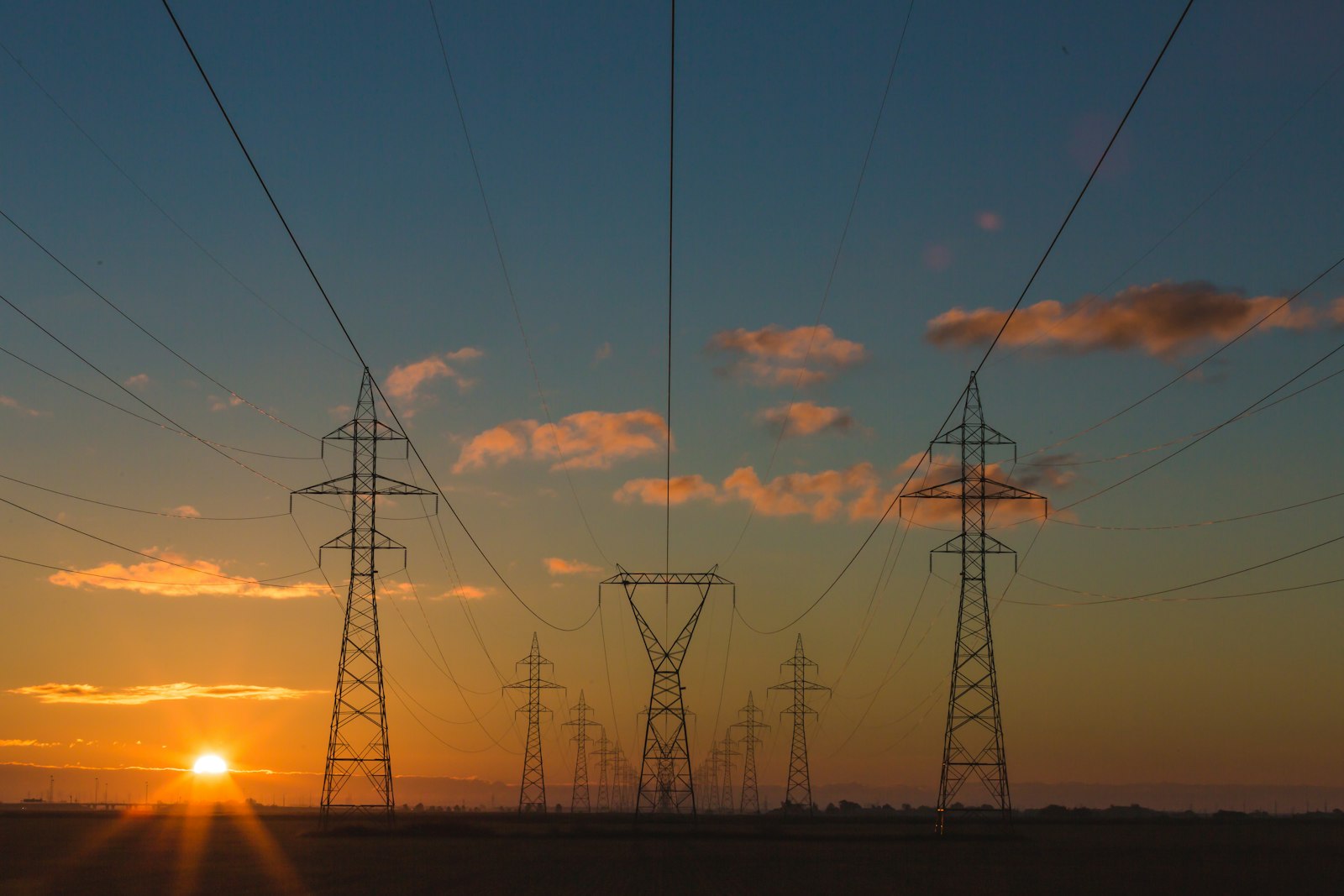
Photo: Matthew Henry / Unsplash
References
- Korea Economic Daily, 'Revenue Up 106% and Guidance Beat... In-depth Analysis of Nvidia's Q2 Earnings', 2026.8.27
- Money Today, 'Nvidia Next Year Revenue Up 70%... Memory Bull Market Ignites', 2026.8.27
- Herald Business, 'Nvidia Quarterly Revenue 133 Trillion KRW... 13th Consecutive Quarter of Record Revenue', 2026.8.27
- News Today, 'Nvidia Earnings D-Day... Purchase Commitments and Guarantees, Not Revenue, Decide Circular Financing Controversy', 2026.8.26
- Opinion News, 'Wall Street Divided Over Nvidia's Strong Earnings: Strong Demand vs. Circular Financing Concerns', 2026.8.27
- Aju Business Daily, 'Will Nvidia Put the Circular Financing Controversy to Rest?... A Test of AI Boom Sustainability', 2026.8.25
- E-Today, 'Nvidia Earnings D-Day: Wall Street Focused on Demand Outside Big Tech', 2026.8.25
- Newsis, 'Will the AI Rally Reignite?... Eyes on Nvidia's Earnings', 2026.8.24
- Global Economic, 'Nvidia Stock Plummets 2.89% Due to Uncertainty Over $100B OpenAI Investment', 2026.2.2
- Korea Economic Daily, 'Nvidia Cuts OpenAI Investment from $100 Billion to $30 Billion', 2026.2.20
- ZDNet Korea, 'Is Nvidia Removing Circular Investment Bubbles?... Jensen Huang Says No More Additional Investments in OpenAI/Anthropic', 2026.3.5
- ZDNet Korea, 'Databricks, Valued at 260 Trillion KRW, Raises 7 Trillion KRW in Additional Investment', 2026.8.14
- Wow Tale, 'Databricks Surpasses Snowflake, Secures Investment at $188 Billion Valuation', 2026.7.18
- CIO, 'Power Shortage, Carbon Capture, AI Automation, etc... 5 Key Variables for Data Centers in 2026', 2026.1.16
- The Milk, '2026 Outlook 6: U.S. Power Outages Become Routine... Power Grids Shaken by AI Data Centers'
- Original Upload Report: 'Pros and Cons of the AI Circular Investment Ecosystem: Analysis of Circular Financing Structures and Scenarios Centered on Nvidia and Big Tech'