
The “hiss” sound you hear when opening a cold can from the fridge is the result of over 200 years of trial and error.
The history of the beverage can began with a British patent for tin-plated iron containers in 1810, leading to the first canned beer in 1935, aluminum cans in 1959, and the stay-on tab in 1975, eventually evolving into the shape we know today.
From Bottles to Cans: Preservation Born from War
The starting point wasn’t beverages, but military rations.
In 1795, the French government offered a 12,000-franc prize for a way to preserve food for their expeditionary forces. In 1810, at the height of the Napoleonic Wars, the chef Nicolas Appert won the prize. It was essentially ‘bottled food’—storing food in glass jars, sealing them with corks, and heating them in boiling water.
The problem was the glass. It was heavy and fragile, making it unsuitable for marching soldiers.
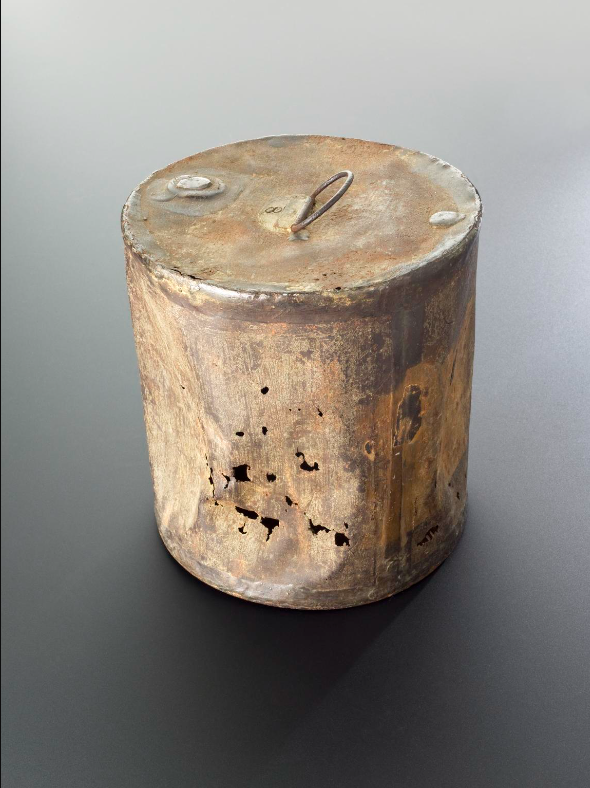
the answer came from England the same year.
In 1810, merchant Peter Durand patented a tin-plated iron container. He called it a tin canister. Lightweight and light-blocking, these containers soon became standard issue for the British Royal Navy and became the direct ancestor of the modern can. This is also why cans are still referred to as ’tins’ in the UK today.
While it is widely believed that the American word ‘can’ is a shortened form of ‘canister’, some interpret it as deriving from an old English word for a container.
The Korean word ‘kkangtong’ (깡통) is believed to have originated from the word ‘can’ being combined with the suffix ‘-tong’ (meaning container) after passing through the Japanese word ‘kan’ (缶).
The Unopenable Can and the Franklin Expedition
Early cans were excessively sturdy. They were made of thick iron plates that required a hammer and chisel to open, and a dedicated can opener wasn’t patented until about 50 years later, in 1858.
The sealing method was also dangerous. At the time, cans were soldered with lead. When high lead levels were found in the remains of the John Franklin expedition, which disappeared in 1845 while searching for the Northwest Passage, canned food was blamed. However, subsequent studies have also pointed to other sources of lead, such as the ships’ water systems, as well as factors like scurvy and tuberculosis, so it is difficult to conclude that canned food was the sole culprit. Nevertheless, the incident clearly left a lesson: ‘opening it safely’ is just as important as ‘sealing it well.’
1935: The First Canned Beer: Steel That Withstood Carbonation Pressure
Once the can succeeded in storing food, the next challenge arose: carbonated beverages, specifically beer. It had to withstand the internal pressure created by carbonation while preventing the beer from reacting with the metal and losing its flavor.
The catalyst was not technology, but law.
After Prohibition was repealed in the US in 1933, the beer market opened up, and the American Can Company introduced a beer can with an internal coating. In January 1935, the Krueger Brewing Company in New Jersey test-marketed the world’s first canned beer in Richmond, Virginia. The response was positive, and it quickly spread nationwide.
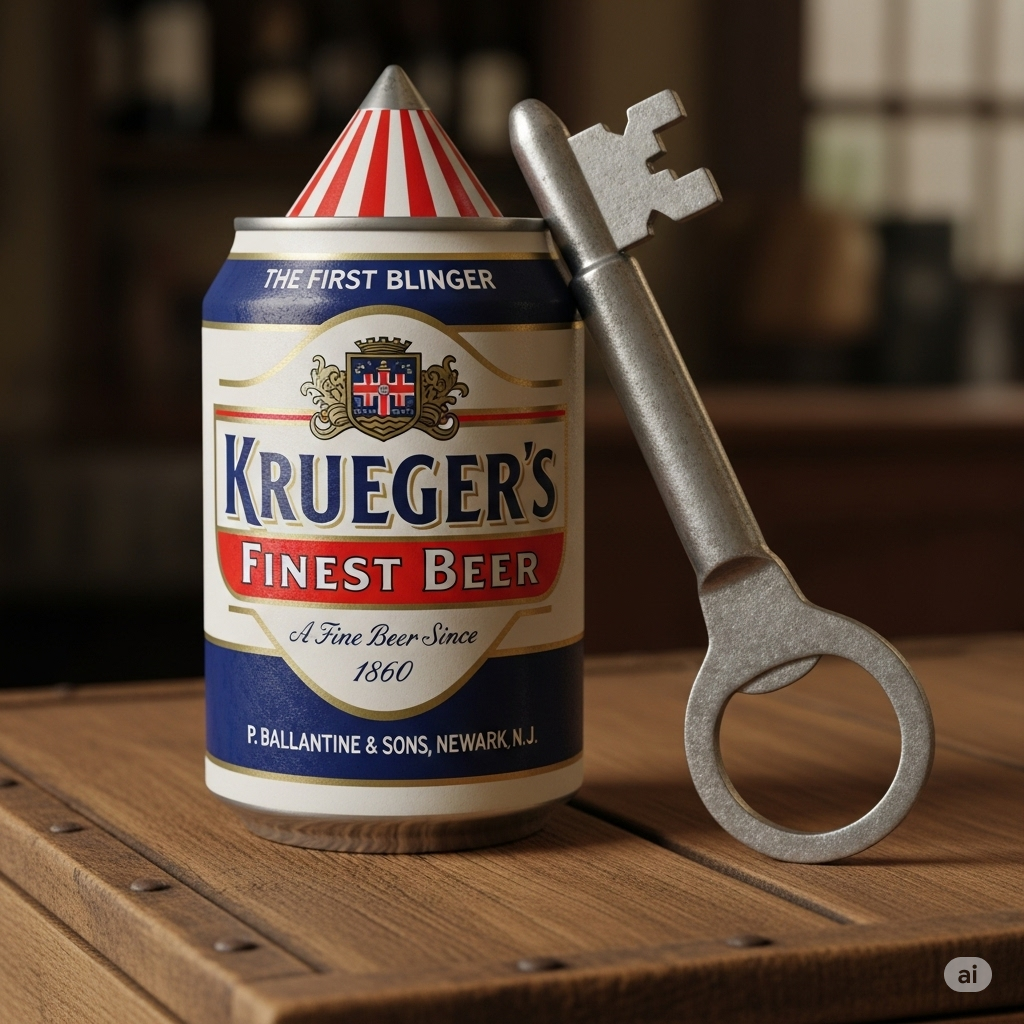
This first can was a three-piece steel can.
It was made by separately manufacturing the cylindrical body, the bottom, and the lid, then attaching them. Steel withstood the pressure and completely blocked light. Hops in beer produce a ‘skunky’ off-flavor when exposed to light, and in this regard, the can was even more advantageous than brown bottles.
There were disadvantages, too. It was heavy, and you needed a sharp opener called a church key to open it. Still, consumers welcomed it because it eliminated the hassle of returning empty bottles to stores for a deposit.
Opening Cans Without an Opener: From Pull-Tabs to Stay-on-Tabs
Even after canned beer became common, the inconvenience of ’not being able to drink without an opener’ remained.
In 1959, Ermal Fraze, who ran a tool company in Dayton, Ohio, found himself at a picnic without an opener and struggled to puncture a can with the edge of a car bumper. This experience stayed with him.
His solution was to score the lid beforehand and secure a ring to it with a rivet. When you pulled the ring, the scored section would be torn away entirely. The pull-tab, which allowed for opening without tools, was first used on beer cans around 1963 and spread rapidly.
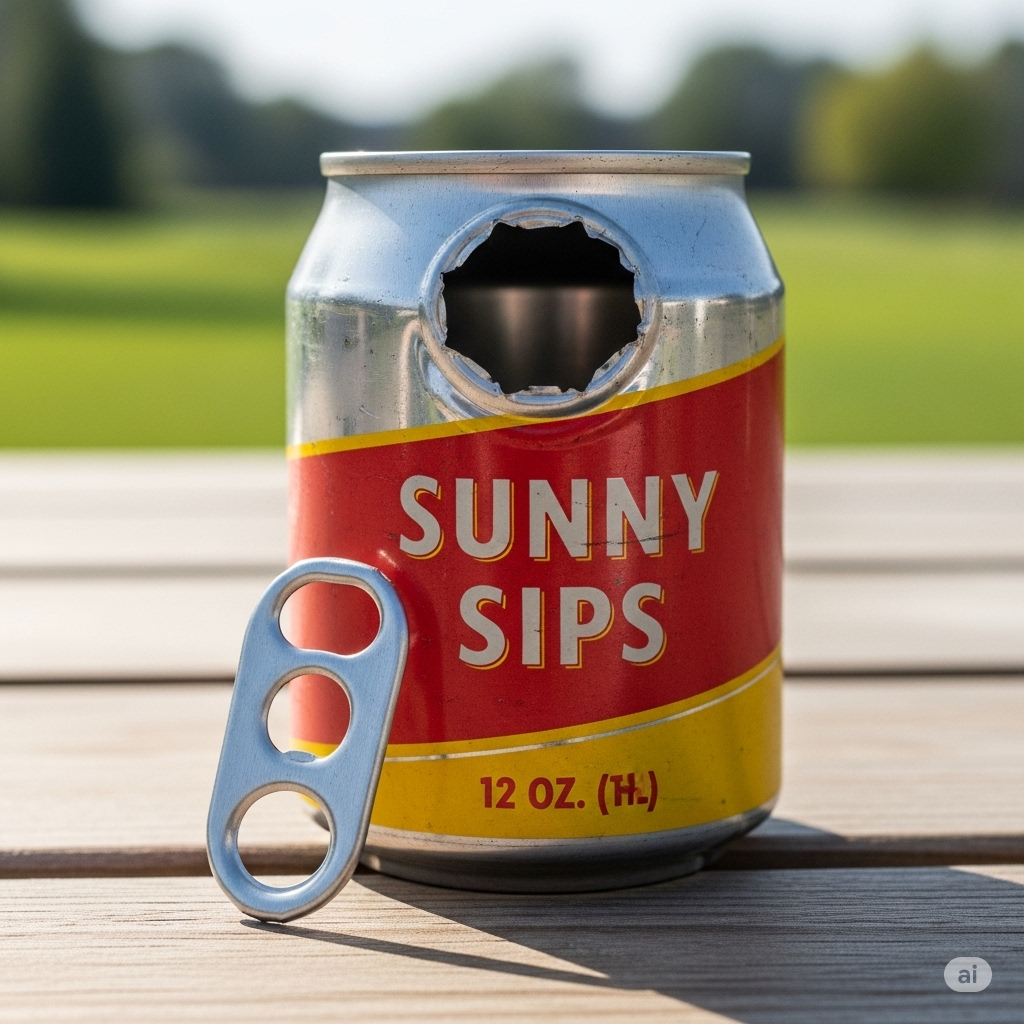
However, the detached rings caused problems. Sharp metal pieces accumulated on beaches and in parks, leading to injuries and animals swallowing them.
The person who solved this was not Fraze, but Daniel F. Cudzik, an engineer at Reynolds Metals. His stay-on-tab, introduced in 1975, kept the ring attached and pushed a part of the lid into the can. This is the exact design we use today.
1959: The Aluminum Can: Why It Pushed Out Steel
In that same year, 1959, the material of the can also began to change. Bill Coors, who led Coors in Colorado, was dissatisfied with steel cans because they affected beer flavor and discarded cans rusted in piles. After research, Coors introduced the seamless two-piece aluminum can in 1959 and initiated a recycling program that paid for returned empty cans.
The manufacturing method changed as follows:
- 3-piece steel can: The body is rolled and seamed at the side, with the bottom and lid attached. The seams became a weak point for leaks and rust.
- 2-piece aluminum can: A single sheet of aluminum is pressed into a cup where the body and bottom are one piece (the
DWIprocess), and only the lid is sealed. There are no side seams, ensuring a perfect seal.
Comparing the two materials shows why aluminum took over the beverage can market.
| Feature | Steel Can | Aluminum Can |
|---|---|---|
| Weight | Heavy, high shipping costs | Density is about 1/3 of steel |
| Manufacturing | 3-piece, leaks/corrosion at seams | 2-piece, superior sealing and carbonation retention |
| Corrosion/Taste | Needs tin plating to prevent rust, ‘metallic’ taste | Oxide film prevents rust |
| Cooling | Relatively slow | Higher thermal conductivity, cools faster |
| Recycling | Possible, but lower scrap value | High value, strong incentive for collection |
Steel cans haven’t disappeared. Steel is still widely used today for coffee cans or food tins where pressure is lower.
Beverage Cans in Korea: Vending Machines and Let’s Be
In Korea, canned drinks became a part of daily life in the 1980s. Vending machines, which were appearing all over cities, were perfectly suited for the standardized and sturdy cans.
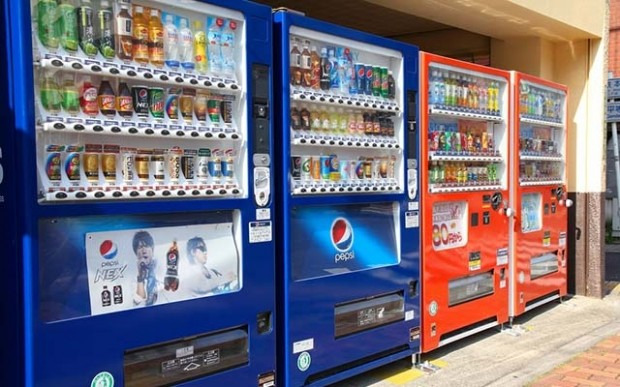
As demand grew, domestic can manufacturers like Hanil Can and Lotte Aluminum established themselves, and Lotte Chilsung’s canned coffee, Let’s Be, became the representative drink for vending machines and convenience stores.
After You Drink: Between 96% and 37% Recycling Rates
The real strength of the aluminum can emerges after it is emptied. According to industry data, collected cans return as new cans in as little as 60 days, and the energy required to make a can from recycled aluminum is about 5% of what is needed to produce it from raw ore. Because it does not lose its properties significantly when melted, it can be recycled repeatedly.
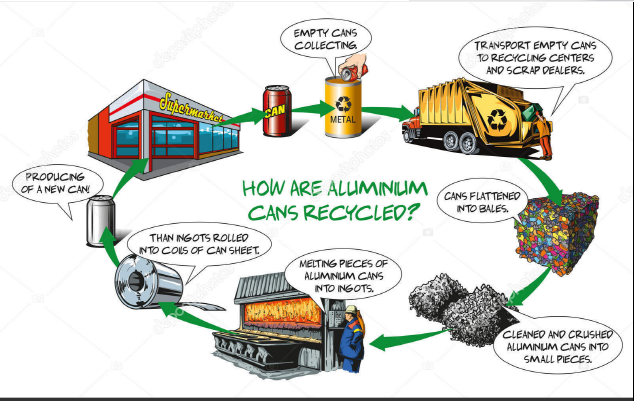
Korea shows an interesting set of numbers here.
According to a 2025 Hankook Ilbo report, Korea’s aluminum can collection rate is 96%, one of the highest in the world, but the rate at which they are turned back into cans is only 37%.
This is because the quality is degraded by residual beverages, cigarette butts, and contamination from other materials, leading to a large portion being downcycled into products like castings. As a result, domestic can manufacturers are actually in a situation where they import used cans from overseas.
Rinsing, emptying, and separating cans is the most direct way to increase this 37%.
Summary: Three Transitions That Changed the Beverage Can
- Preservation: It started in 1810 with iron containers intended to preserve military rations.
- Convenience: The pull-tab removed the need for an opener, and the stay-on-tab eliminated the waste of detached rings, changing how we open them.
- Material: The 1959 2-piece aluminum can solved both weight and recycling issues.
Next time you hear that “hiss,” try rinsing the can after the last sip. That is the next chapter in this 200-year-old story.
References
- Can Manufacturers Institute, The History of the Can
- Wikipedia, Steel and tin cans
- Wikipedia, Aluminum can
- Molson Coors, Happy 60th birthday to the recyclable aluminum can
- Stibee, Canned food created by the Napoleonic Wars / History of canned food
- Hankyoreh, When was canned beer first made?
- Masism, Which is tastier, bottled beer or canned beer?
- Masism, Great inventors who changed the history of beverages
- POSCO Group Newsroom, Coffee cans and soda cans are different, why?
- Gongdae Sangsang, A sip of engineering filled in a can
- GCM, About Aluminum Cans
- Korea Packaging Recycling Cooperative, Metal Cans
- Hankook Ilbo, Korea's aluminum can collection rate is 96%, why do we use imported waste cans? (2025.02)
- YouTube, How Are Tin and Aluminum Cans Made?