
What happened to the 100% semiconductor tariff? As of early September 2026, only a 25% tariff on select items, such as NVIDIA H200-class AI chips, is in effect, and the exemption status for Samsung Electronics and SK Hynix remains unconfirmed.
When I first wrote this article in August 2025, the 100% figure was the headline. Fourteen months have passed, and while the numbers have come down, not much has been finalized.
Written on 2025-08-22 · Last updated 2026-10-06 · Based on the January 2026 proclamation and reports from September-October 2026; specific implementation may vary.
How far has the semiconductor tariff gone since the 100% threat?
The progress can be summarized in three stages: the 100% threat, the 25% implementation, and the yet-to-be-defined targeted tariff threat.
The progression of semiconductor tariffs becomes clearer when viewed chronologically.
Table 1: Semiconductor Tariff Timeline (August 2025–October 2026)
| Date | Content | Notes |
|---|---|---|
| August 2025 | 100% tariff on imported semiconductors threatened; exemptions for companies promising domestic factory construction | Not an official measure. The South Korean Trade Minister stated Samsung/SK were not targets (Reuters) |
| Jan 15, 2026 | 25% tariff implemented on select items including high-performance AI chips (Proclamation 11002) | Excludes imports for U.S. data centers, R&D, and consumer use |
| Sep 2, 2026 | Commerce Secretary Lutnick signals targeted tariffs | Items, rates, and timing undisclosed |
| Oct 3, 2026 | President Trump mentions 150–300% tariffs on foreign companies not building factories (Campaign speech) | Not exclusively targeting semiconductors |
The wording of the January measure is key. Proclamation 11002 states that the 25% tariff applies to imports that do not contribute to building a U.S.-based technology supply chain. Imports for U.S. data centers, research and development, startups, and consumer electronics are exempt. According to the law firm Mayer Brown, the move is ultimately aimed at AI chips that do not enter the U.S. supply chain.
Phase 2 remains a blank slate. According to the proclamation published in the Federal Register, the Commerce Secretary was advised to expand tariffs to significant levels after negotiations conclude and to include a compensation system that lowers tariffs for companies investing in the U.S.
On September 2, Secretary Lutnick told CNBC, “if you build here, you don’t pay.” He did not specify items, rates, or timing. Politico reported that the Secretary favors duty-free import quotas linked to company-specific U.S. production plans, and The Korea Herald noted that proposals to expand tariffs to products containing chips, such as laptops, game consoles, and data center servers, are also being discussed. On October 3, at an Ohio rally, the President suggested that tariffs of 150–300% could be imposed after a grace period of about a year and a half, as reported by The Korea Herald.
Why semiconductor tariffs are not immediately reflected in electronics prices
The 25% tariff currently in effect targets AI accelerator-grade chips and excludes consumer imports, meaning it is not structured to be immediately added to the price tags of laptops or smartphones.
The price issue will likely emerge in Phase 2. If finished goods containing chips are included in the scope of tariffs, companies like Apple, Dell, and HP will have to either absorb the costs—sacrificing profit—or pass them on to consumers, risking a decline in sales volume. An analyst cited by CRN suggests that raising prices is their best path forward.

However, a 100% chip tariff does not equal a 100% increase in product prices. Chips are only a fraction of the total manufacturing cost, so the price increase depends on the chip’s share of the final cost and how much of that cost the company chooses to bear. I covered how tariffs and geopolitical costs are layered into smartphone prices in my article on the 100-dollar geopolitics seen through iPhone 17 pricing.
If tariffs were applied across all semiconductor imports, how significant would the impact be? The table below shows the results of an ITIF model from May 2025. Note that the premise assumes tariffs on all semiconductor imports, so it cannot be directly applied to the current narrow scope.
Table 2: Estimated U.S. GDP Impact by Semiconductor Tariff Rate (ITIF, May 2025 Model)
| Tariff Rate | First-Year GDP Growth Reduction | 10th-Year GDP Growth Reduction |
|---|---|---|
| 10% | 0.06% | 0.20% |
| 25% | 0.18% | 0.76% |
| 50% | 0.38% | 2.56% |
Source: [ITIF, “Short-Circuited”]
Breaking down the 25% scenario: ICT products are price-sensitive, so consumption would drop by approximately $11.8 billion, and the cumulative growth in living standards for Americans would decrease by $4,208 over 10 years. ITIF also points out that rising semiconductor costs would drive up the costs of AI training and data center construction.
The contradiction: Semiconductor tariffs increase the cost of building state-of-the-art fabs
State-of-the-art semiconductor fabs cannot be built using only U.S.-made equipment. Essential machinery, such as ASML’s EUV lithography systems from the Netherlands, must be imported. The title of the January proclamation explicitly mentions semiconductor manufacturing equipment. If high tariffs are applied to this equipment in Phase 2, the cost of building advanced fabs in the U.S. will rise, potentially undermining project viability.
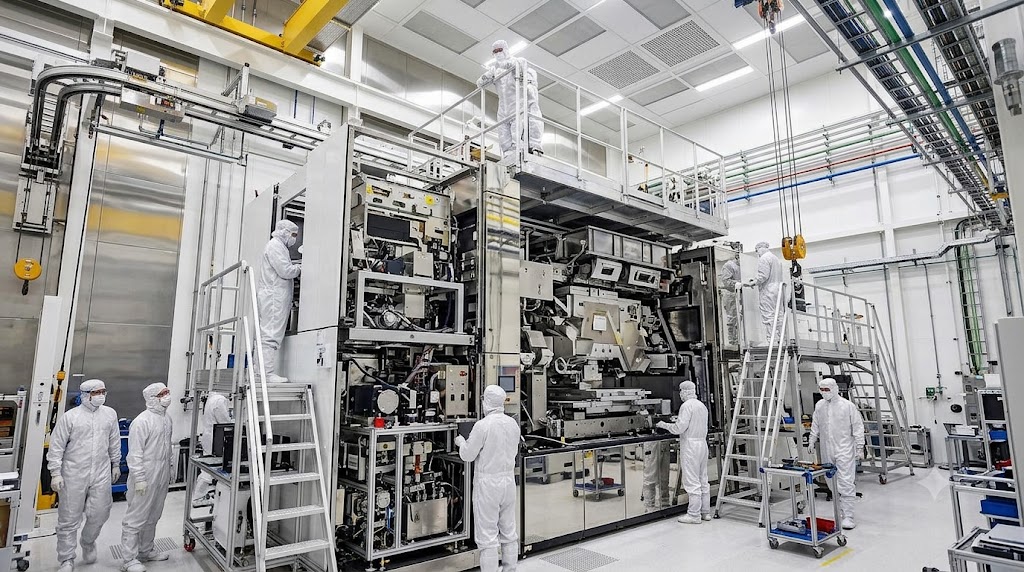
This contradiction was first pointed out by the very companies expected to benefit. There were reports that Micron, Qualcomm, and Texas Instruments urged for a reconsideration of these tariffs. My interpretation is that the U.S. is stepping on the gas (CHIPS Act subsidies) with one foot while stepping on the brake (essential equipment tariffs) with the other, which could significantly erode the effectiveness of the subsidies.
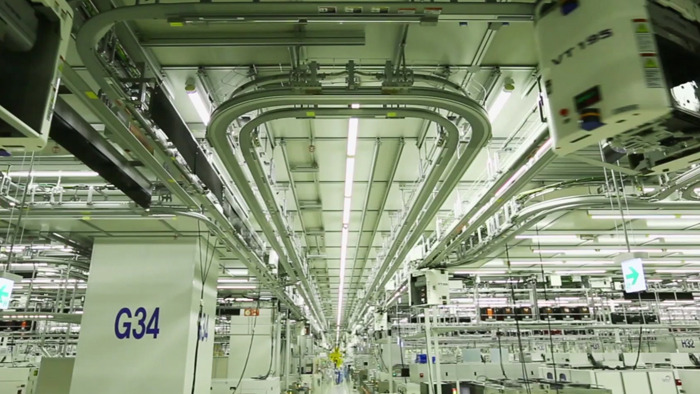
Can Samsung Electronics and SK Hynix avoid the semiconductor tariffs?
While an exemption was anticipated in August 2025, as of September 2026, the exemption criteria themselves remain unconfirmed. The South Korean Presidential Office stated in early September that they understand no specific details have been finalized.
Compared to Taiwan, South Korea’s disadvantage is clear. Taiwan has secured production-linked exemptions. According to The Korea Herald, they have a structure that allows for duty-free imports up to 2.5 times planned production capacity during construction and 1.5 times after completion. The Korea Times pointed out that Korea has only received a promise of similar treatment, and that Samsung Electronics and SK Hynix do not have memory production facilities within the U.S.
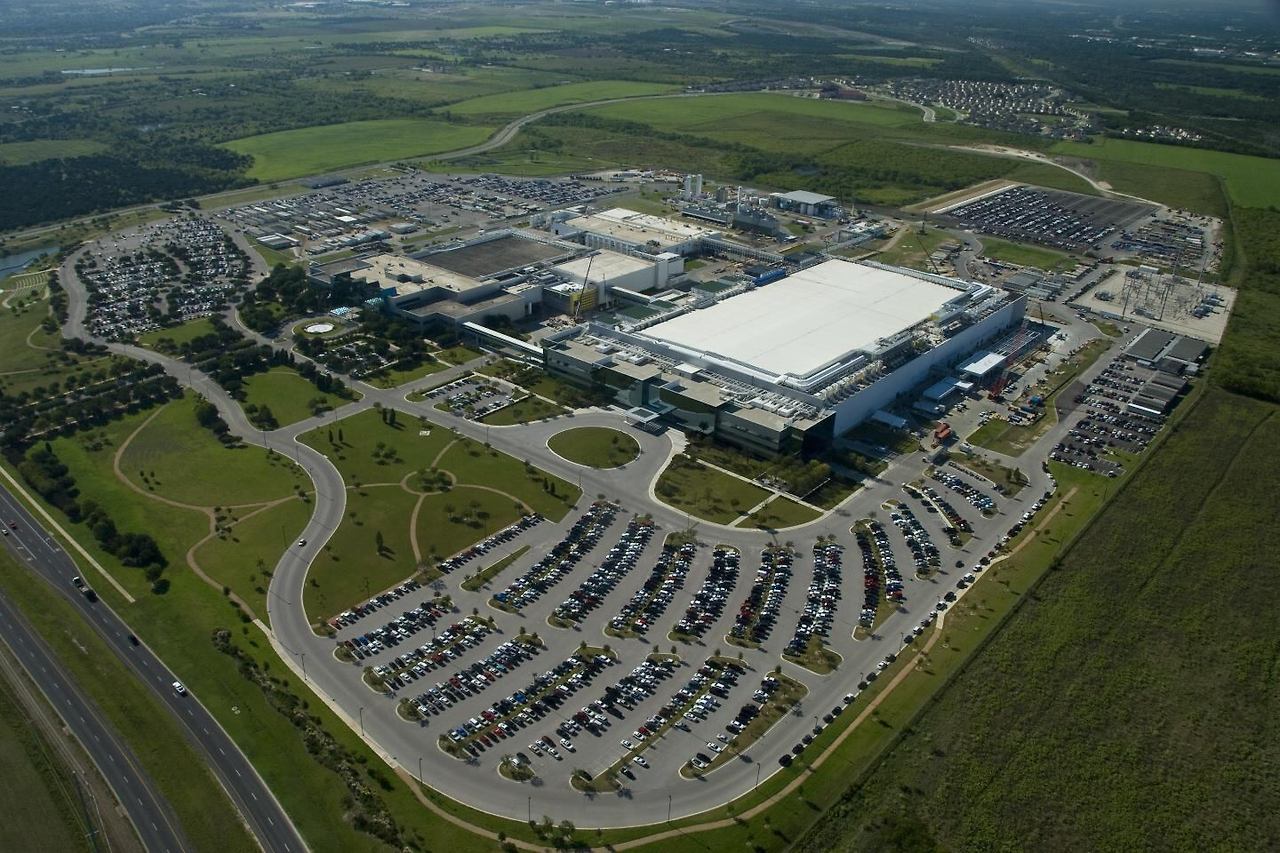
The scale of investment is not small. Samsung Electronics has committed over $37 billion in Texas, including the Taylor foundry, and SK Hynix has pledged over $4 billion in Indiana. The issue is that the Indiana facility is for HBM packaging and research, not a memory fabrication plant. The Korea Herald analyzes that if the exemption criteria require domestic wafer production, this facility—which held its groundbreaking ceremony on August 27—might fall short.
A variable even greater than the tax rate is where the tariff is applied. South Korean HBM often goes to TSMC in Taiwan to be packaged with processors designed by NVIDIA, then imported by U.S. companies in the form of accelerators or servers. Memory in electronics assembled in Southeast Asia follows a similar path. The impact on Korean companies will vary significantly depending on whether the tariff is applied to the chip, the component, or the finished product. I covered the broader U.S. tariff policy and Korea’s response in my 2025 U.S. Tariff Policy Anatomy and Korea’s attempts to reduce memory dependence in NPU and Korean Semiconductors.
Why semiconductor tariffs are also read as a bargaining chip with China
The very act of threatening to raise tariffs creates room for negotiation. A research fellow at the Korea Economic Research Institute analyzed that even if high tariffs are difficult to implement immediately, keeping the option on the table provides negotiation flexibility, such as extending existing easing measures. This is why semiconductor tariffs are read as both a tool to pressure investment and a bargaining chip against China.
The semiconductor supply chain is specialized, divided among Taiwan (foundry), Japan (materials), and the Netherlands (equipment). Because it is a bottleneck structure where blocking one point can shake the entire chain, the weight of control is significant. CSIS analysis shows that when the U.S. introduced export controls in October 2022, the Netherlands updated its own equipment export controls in March 2023.
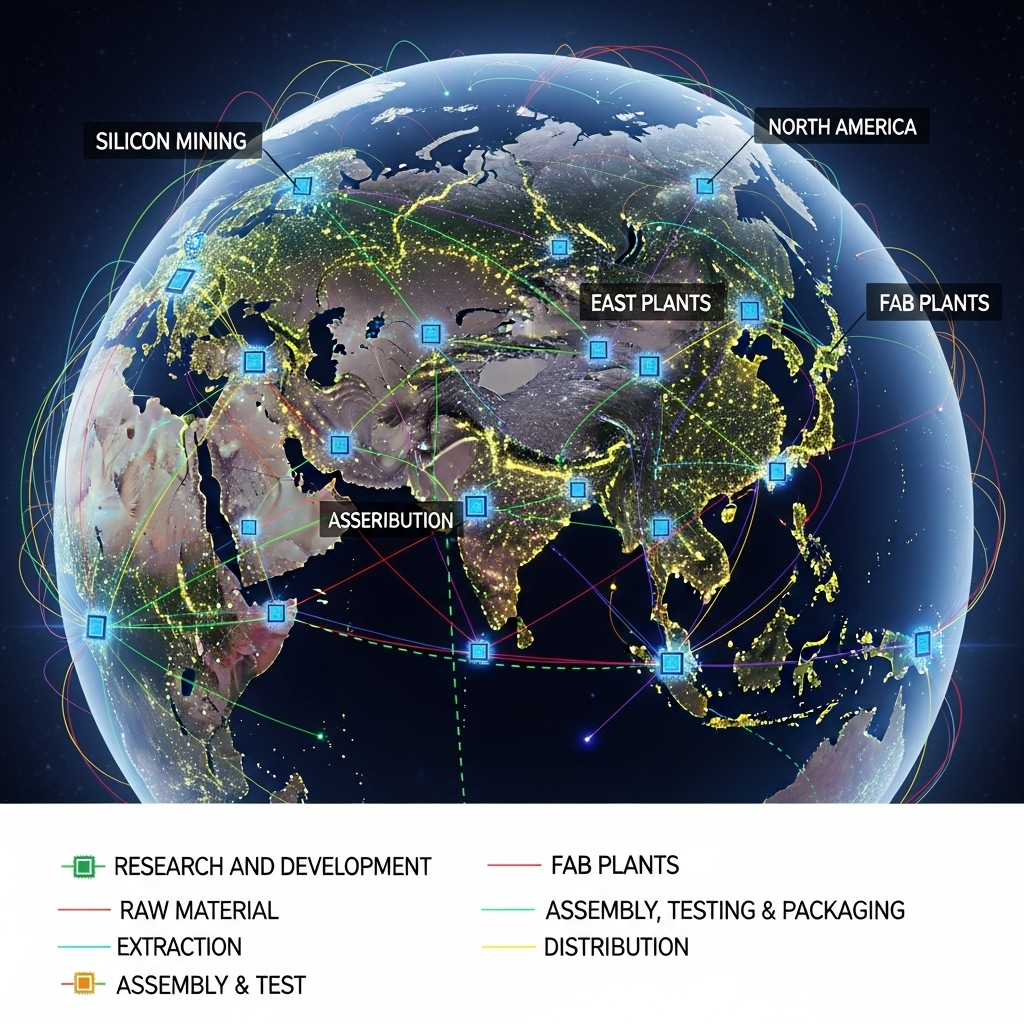
There is a cost to this. CSIS’s July 2024 analysis assessed that because China is the world’s largest semiconductor market, cutting off relations with Chinese customers could have a significant impact on the long-term competitiveness of U.S. companies. While this refers to export controls, it is a risk in the same direction, as tariffs could push overseas customers and investment sites outside the U.S. This connection is my own interpretation.
The remaining variables are the items, the tax rate, and the implementation timing. None of these were disclosed in the early September statements, and until these are defined, no numbers are final.
This article is based on publicly available information at the time of writing and is not a solicitation for specific investments or financial products. Policies and figures are subject to change. (Last checked: 2026-10-06)
References
- Proclamation 11002: Adjusting Imports of Semiconductors, Semiconductor Manufacturing Equipment, and Their Derivative Products (The White House, 2026-01-14)
- Adjusting Imports of Semiconductors, Semiconductor Manufacturing Equipment, and Their Derivative Products Into the United States, 91 FR 2443
- Administration Policies on Advanced AI Chips Codified, with Reverberations Across AI Ecosystem
- President Trump Announces Section 232 Tariffs on Semiconductors and their Derivative Products
- Build in US or pay: Trump revives chip tariff threat
- Trump threatens tariffs of up to 300% as Korea faces pressure over US investment
- What Washington's tariff push means for Korea's semiconductor industry
- US chip tariffs raise stakes for Samsung, SK Hynix's US memory plans
- Short-Circuited: How Semiconductor Tariffs Would Harm the U.S. Economy and Digital Industry Leadership
- US Semiconductor Tariffs Could Reduce GDP Growth by $1.4 Trillion
- Dell, HP And Apple Face Tariffs. 'Raising Prices' Is Their Best Option
- Collateral Damage: The Domestic Impact of U.S. Semiconductor Export Controls (CSIS)