
The Epic of Interest Rates, Inflation, and Crisis Response
- How the Federal Reserve (Fed) was born and how its role has evolved
- The decisions made by the Fed during major economic crises such as the Great Depression, stagflation, and the 2008 financial crisis
- How the Fed’s policies directly impact our mortgages, investments, and prices today
This morning, if you checked your mortgage interest rate, worried about the fluctuations in your stock portfolio, or sighed at the soaring grocery prices, you have already stepped into the vast narrative of the Federal Reserve (Fed). The decisions made in Washington D.C. are invisibly connected to our wallets, investments, and future.
The history of the Fed is not just a list of economic policies. It is a dramatic epic of power, failure, and adaptation. This article will delve into the tumultuous history of the Fed over the past 110 years, exploring how a series of major crises have forged this institution from a limited financial safety net into the world’s most powerful economic entity.
The Birth of a Giant: The Panic of 1907 and the Establishment of the Fed
An Era Without a Central Bank
In the late 19th and early 20th centuries, the United States was at the peak of the ‘Gilded Age.’ It was a massive industrial power dominated by steel and railroads. However, behind this glamour lay a fatal weakness: the absence of a central bank.
At that time, the money supply was tied to the amount of government bonds held by banks, leading to an ‘inelastic currency’ problem that could not be flexibly adjusted according to economic conditions. This exposed the entire financial system to the risk of periodic panics.
J.P. Morgan, the Savior of the Crisis
In October 1907, a ‘bank run’ occurred on Wall Street due to speculative failures, bringing the financial system to the brink of collapse. Even the New York Stock Exchange was on the verge of bankruptcy.
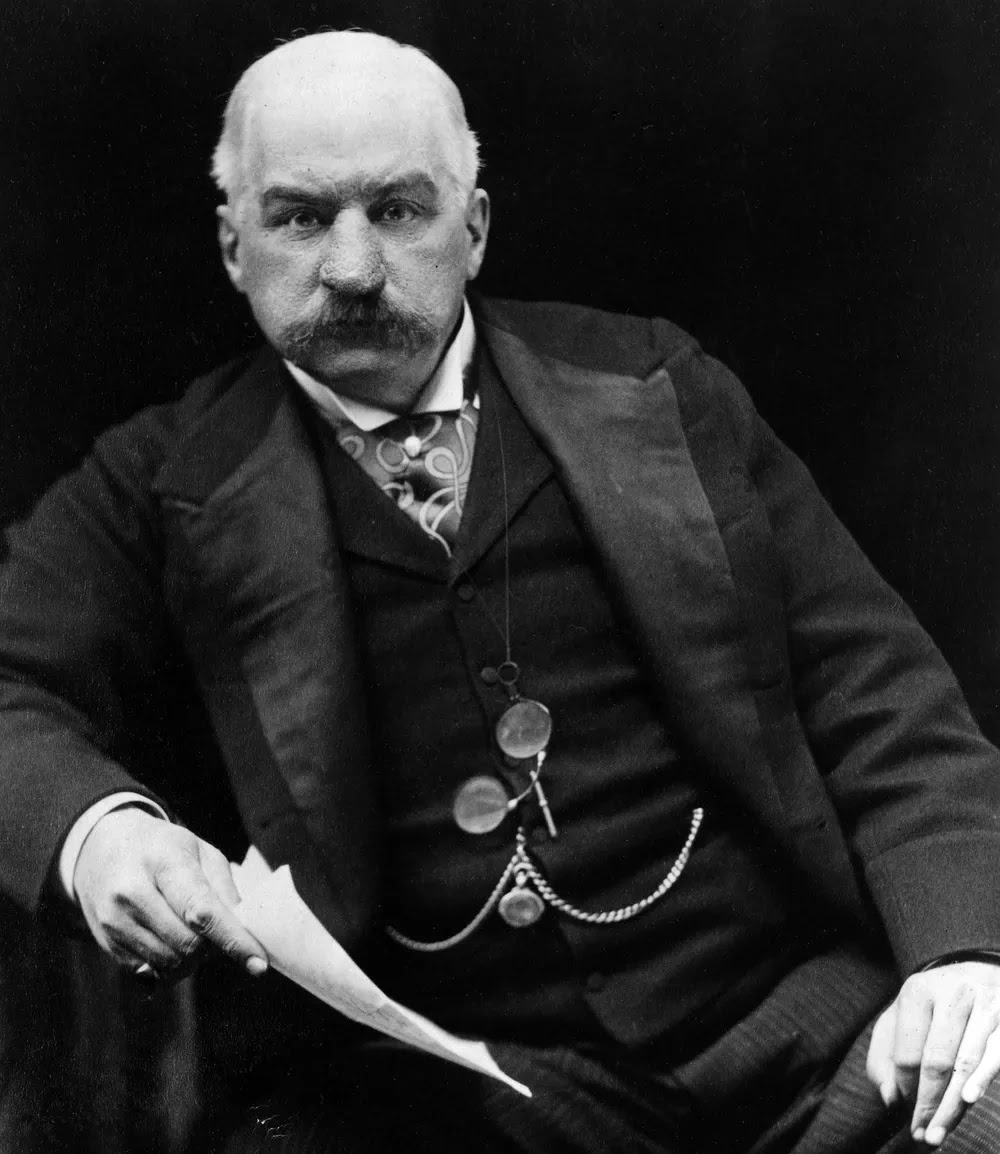
At this moment, the greatest financier of the time, J.P. Morgan, stepped in as a savior. He mobilized his capital and pressured other bankers to create a bailout, effectively performing the role of a central bank on his own.
This event revealed the uncomfortable truth that the fate of the American economy rested in the hands of a single private individual and sparked a political demand for the establishment of a central bank.
The Federal Reserve Act: A Product of Compromise
Amid political tensions, the ‘Federal Reserve Act’ was born in 1913. Instead of a single central bank like in Europe, it devised a decentralized ‘system’ dividing the United States into 12 districts, each with its own regional Federal Reserve Bank.
The initial mission of the Fed was closer to that of a plumbing system for the financial system rather than macroeconomic management.
- Elastic Money Supply: Cash supply to prevent bank runs
- Lender of Last Resort Role: Providing liquidity support to banks through a ‘discount window’
- Improvement of Payment Systems: Streamlining check exchange procedures
Crucially, at this time, concepts like ‘monetary policy’, ‘maximum employment’, and ‘price stability’ did not exist.
The Great Depression: The Darkest Hour in Fed History (1929–1950)
The Roaring Twenties and the Seeds of Disaster
After World War I, a boom known as the ‘Roaring Twenties’ arrived. The Fed raised interest rates in 1928 and 1929 to control speculative excess, but later economist Milton Friedman argued that this action pulled the trigger on the recession.

Fatal Inaction and the ‘Original Sin’
After the stock market crash in 1929, a series of bank failures swept through the United States until 1933. It was at this point that the Fed betrayed its reason for existence.
The Fed, which was supposed to act as a lender of last resort, essentially stood by as thousands of banks collapsed. This ‘great betrayal’ led to a one-third drop in the money supply, drying up the lifeblood of the economy and triggering a vicious cycle of mass unemployment. This event is recorded as the Fed’s ‘original sin.’
Causes of Failure: Erroneous Ideology
The reason the Fed was powerless was not due to a lack of tools, but rather the erroneous ideology that dominated their thinking.
- Real Bills Doctrine: They believed that rescuing banks in crisis with speculative assets was not the role of a central bank.
- Blind Faith in the Gold Standard: They made the worst move of raising interest rates dramatically to prevent gold outflows while the economy was collapsing. This was akin to pouring oil on a burning house.
Later, Milton Friedman and Anna Schwartz asserted in ‘A Monetary History of the United States’ that the Great Depression was not a failure of capitalism but a failure of government, particularly the Fed. This painful lesson would greatly influence future crisis responses by Chairman Ben Bernanke.
After this disastrous failure, the Fed’s status plummeted, and it effectively lost its independence, becoming a lackey of the Treasury.
Declaration of Independence: The 1951 Accord and a New Era of Power
Inflation Pressures and Conflicts
After World War II, the Fed had to artificially keep government bond rates low to manage the massive government debt. When the Korean War broke out in 1950, inflation pressures increased, and by February 1951, the consumer price index had reached 21%.
The Fed wanted to raise interest rates, but President Harry Truman strongly opposed it. This conflict became public and escalated into a crisis.
The 1951 Treasury-Fed Accord
Ultimately, in March 1951, the historic ‘Treasury-Fed Accord’ was signed.
- Content of the Accord: The Fed was no longer obligated to keep interest rates fixed at a certain level at the government’s request.
- Historical Significance: This event, known as the ’liberation of monetary policy,’ established the core principle of ‘independence’ for modern central banks. This allowed the Fed to implement true monetary policy.
Insight: This accord represented a fundamental power rebalancing between the entity that spends money (the government) and the entity that controls the value of money (the Fed). This empowered the Fed to inflict short-term pain (interest rate hikes) on the economy for long-term price stability, even if it was politically unpopular. This independence became the institutional foundation that enabled Paul Volcker to tackle inflation in the 1980s.
Stagflation and the Birth of the Dual Mandate (1971–1979)
The Collapse of the Phillips Curve and Shocks
Before the 1970s, economists believed in the ‘Phillips Curve’ theory, which posited a stable inverse relationship between unemployment and inflation. However, two massive shocks shattered this belief.
- Nixon Shock (1971): President Nixon severed the last link of the gold standard by suspending the dollar’s convertibility into gold.
- OPEC Oil Embargo (1973): Oil prices quadrupled, delivering a massive ‘supply shock’ to the entire economy.
The Emergence of the Monster ‘Stagflation’
The result was the emergence of ‘stagflation,’ a horrific monster characterized by high unemployment and high inflation occurring simultaneously. The economy stagnated while prices soared, placing the Fed in the worst dilemma.
The Birth of the Dual Mandate
In this chaos, Congress passed a law in 1977 requiring the Fed to pursue “maximum employment and stable prices” simultaneously. This marked the birth of the Fed’s famous ‘dual mandate.’
This was more of a political outcome that shifted conflicting responsibilities onto the Fed rather than a clear solution. This ambiguous responsibility set the stage for the next chairman, Paul Volcker, to make painful choices.
The Volcker Shock: Taming the Inflation Dragon (1979–1987)
By 1979, the inflation rate in the U.S. was nearing 15%, and inflation expectations were running wild like an unbridled stallion. The Fed had completely lost credibility.
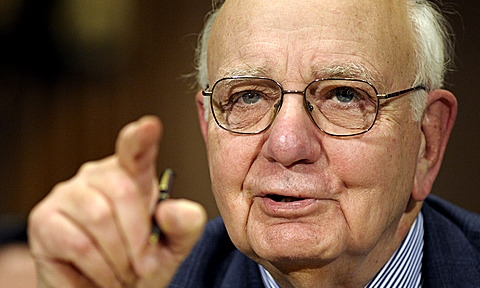
President Jimmy Carter appointed the staunch anti-inflationist Paul Volcker as Fed Chairman. He believed that shock therapy was necessary to break the cycle of expected inflation.
The ‘Volcker Shock’ and Painful Victory
In October 1979, Volcker announced a radical shift in monetary policy. As a result, the federal funds rate soared to an astonishing 20% by June 1981.
This action plunged the U.S. economy into two deep and painful recessions. Unemployment approached 11%, and social backlash was immense.
However, despite all this pain, the ‘Volcker Shock’ succeeded. Inflation fell below 3% in 1983. Volcker restored the Fed’s credibility as an independent inflation fighter and laid the groundwork for two decades of price stability.
Insight: Volcker chose ‘price stability’ at the cost of temporarily sacrificing ‘maximum employment.’ His success left a powerful precedent that equated the Fed’s credibility with the will to fight inflation for the next 30 years. This became the institutional DNA of the Fed, leading to Greenspan, Bernanke, and Yellen.
Maestro and Collapse: From the Great Moderation to the 2008 Crisis
The Great Moderation and the ‘Greenspan Put’
After Paul Volcker, the tenure of Chairman Alan Greenspan was marked by low inflation and steady growth, known as the ‘Great Moderation.’
However, there was a problem. The Fed lowered interest rates during stock market crashes or financial crises, rescuing the markets. This instilled a belief in the ‘Greenspan Put,’ that the Fed would always bail out the markets, encouraging excessive risk-taking by financial institutions.
The 2008 Global Financial Crisis
Ultimately, the housing market bubble burst, and the bankruptcy of Lehman Brothers in September 2008 triggered a global financial panic.
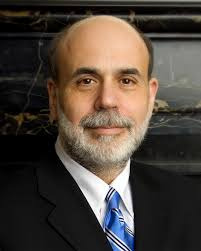
Bernanke’s Response: “We Messed Up”
At the time, the Fed Chairman was Ben Bernanke, a leading authority on the Great Depression. He vowed not to repeat the mistakes of the 1930s and mobilized unprecedented policies.
- Zero Interest Rate Policy (ZIRP): Reduced the federal funds rate to virtually 0%.
- Alphabet Soup Bailouts: Provided direct liquidity support not only to banks but also to other key sectors of the financial system.
- Birth of Quantitative Easing (QE): Created new money to purchase massive amounts of long-term government bonds and mortgage-backed securities (MBS), directly lowering long-term interest rates.
Insight: The response to the 2008 crisis permanently expanded the role of the Fed. The Fed transformed from a traditional bank regulator into the ultimate safety net for the entire financial system and a direct manipulator of long-term asset prices. This marked the beginning of a ’new normal’ where the Fed’s balance sheet became a key policy tool, setting a precedent for even greater intervention in 2020.
Table 1: The Era of Quantitative Easing (QE1-QE3)
| Program | Announcement/Start Date | Major Purchase Assets |
|---|---|---|
| QE1 | November 2008 | Agency Debt and MBS |
| QE1 Expansion | March 2009 | Agency Debt, MBS, Long-term Treasuries |
| QE2 | November 2010 | Long-term Treasuries |
| QE3 | September 2012 | Long-term Treasuries and MBS |
Notes: This table shows how quantitative easing evolved from a simple emergency measure to an intentional tool for economic stimulus.
Pandemic Panic: The Fed Bets It All (2020–2021)
The COVID-19 pandemic was a public health crisis that forced the economy to a standstill. The speed of the collapse was incomparable to 2008.
Led by Chairman Jerome Powell, the Fed immediately pulled out the script from 2008, but the scale and speed were on a different level.
- Back to Zero Rates: Reduced rates to 0% through two emergency meetings.
- Unlimited Quantitative Easing: Declared effectively ‘unlimited QE.’
- Bailing Out Everything: For the first time, supported the corporate bond market, local governments, and mid-sized companies.
As a result, the Fed’s balance sheet exploded to nearly $9 trillion by early 2022.
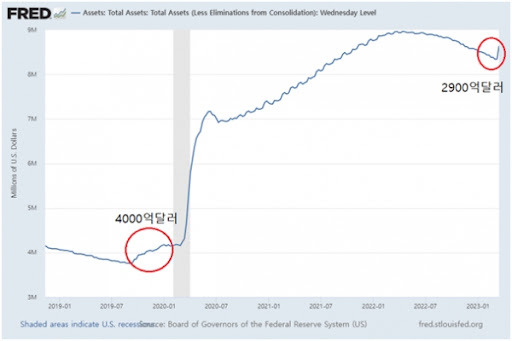
Insight: The 2020 response proved that the ’non-traditional’ policies of 2008 had now become the Fed’s standard crisis response mechanism. However, by directly supporting corporate bonds and other areas traditionally within Congress’s domain, it raised fundamental questions about the Fed’s independence and the limits of its mission.
The Mistake of ‘Transitory’ and the Great Shift (2021–Present)
The Surge in Inflation and Misjudgment
In 2021, massive stimulus measures and pent-up demand exploded, causing inflation to surge. Chairman Powell’s Fed initially judged this inflation to be ’transitory.’ They were accustomed to fighting ’low inflation’ over the past decade and believed it was due to supply chain bottlenecks. Essentially, they were fighting the last war.
Humiliating Shift and Aggressive Rate Hikes
By the end of 2021, as it became clear that inflation was much more persistent, Chairman Powell officially declared the term ’transitory’ to be “discarded.”
Subsequently, the Fed undertook a dramatic policy shift. Starting in March 2022, it embarked on the most aggressive rate hikes in 40 years, raising the federal funds rate from 0% to over 5% in just over a year. Simultaneously, it began to shrink its balance sheet through ‘Quantitative Tightening (QT).’
Insight: The misjudgment of ’transitory’ reveals the fundamental challenges facing the modern Fed. The powerful tools that successfully prevented a deflationary crisis paradoxically created the conditions for the next inflation crisis. The Fed may now be trapped in a new cycle. Successfully conquering a deflationary crisis may have sown the seeds for the next inflation crisis. Navigating this new world will be a key challenge for the Fed in its next chapter.
Conclusion
The 110-year history of the Fed has been a journey of constant evolution driven by crises. Starting as a simple financial plumber, experiencing the failures of the Great Depression, reborn as an independent power, taming the inflation dragon, and becoming the ultimate savior of the markets.
Three Key Points:
- Crises Create the Fed: The Fed’s powers and roles have dramatically expanded through major crises such as the Panic of 1907, the Great Depression, and the 2008 financial crisis.
- Trust is Earned Through Struggle: Securing independence in 1951 and the Volcker Shock of the 1980s symbolize the trust of the Fed that must be earned by pursuing long-term stability against political pressure.
- New Era, New Challenges: Since 2008, the Fed has gained immense power to save the entire financial system, but this has led to another crisis of inflation, complicating policy decisions.
The precarious balancing act between the Fed’s goals of curbing inflation, promoting growth, and maintaining financial stability is like an endless drama. Based on the historical context gained from this article, I hope you can gain a deeper understanding of the Fed’s future policy decisions and apply it to your asset management.
References
- The Panic of 1907 - Wikipedia Link
- The Evolution of the Role of the Federal Reserve - Mercatus Center Link
- Overview: The History of the Federal Reserve - Federal Reserve History Link
- [Kim Dae-ho Column] Why the Fed is a Corporation… The Birth of the FRB and Secrets of Its Governance - Global Economic Link
- J.P. Morgan⑧…The 1907 Financial Panic, Acting as a Central Bank - Atlas News Link
- 1913 Federal Reserve Act: Definition and Why It’s Important - Investopedia Link
- The Federal Reserve - Namu Wiki Link
- The Great Depression - Federal Reserve History Link
- The Great Error of the Fed during the Great Depression: Raising Interest Rates - Atlas News Link
- The Treasury-Fed Accord - Federal Reserve History Link
- Federal Reserve Reform Act of 1977 - Federal Reserve History Link
- Volcker’s Announcement of Anti-Inflation Measures - Federal Reserve History Link
- What did the Fed do in response to the COVID-19 crisis? - Brookings Institution Link