
Whenever I opened the freezer door, there it was: a green bag.
Haitai ‘Gohyung Mandu’.
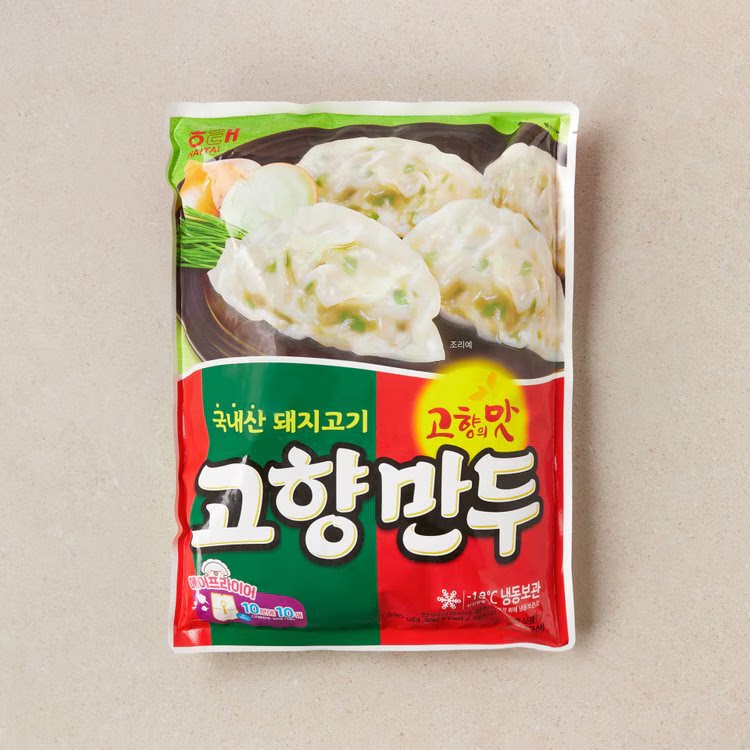
If you remember the sound of dumplings sizzling in a greased pan, the fact that this brand dominated the frozen dumpling market for over 30 years won’t come as a surprise to you.
However, if you open the freezer at the grocery store these days, the situation is completely different.
Occupying the most prominent shelf space is the blue packaging of ‘Bibigo Wang Gyoja.’ How did Gohyung Mandu lose a throne it took 30 years to build?
The answer begins with a single statistic regarding home appliance penetration, passes through the price paid for settling for a ‘standard,’ and ultimately narrows down to whether or not a brand had true fans.
1987: How Gohyung Mandu Turned Frozen Dumplings into a National Snack
Before 1987, dumplings were a dish that required the effort of the whole family gathered together during holidays.
That year, Haitai Confectionery changed the landscape by launching Gohyung Mandu using large-scale automated facilities. The timing was perfect.
In the late 1980s, as the economy grew rapidly ahead of the 1988 Seoul Olympics, the decisive variable that changed the dinner table was none other than home appliances.
As the refrigerator penetration rate surpassed 90% per household, a new empty space called a ‘freezer’ appeared in every home, and Haitai targeted this space precisely.
They mass-produced dumplings that looked handmade using automatic molding machines and appealed to changing family dynamics with the slogan, “A special meal even Dad can make.” The message was that even if you weren’t good at cooking, you could tear open a bag and have a decent meal—a sentiment that perfectly matched the growing trend of dual-income families at the time.
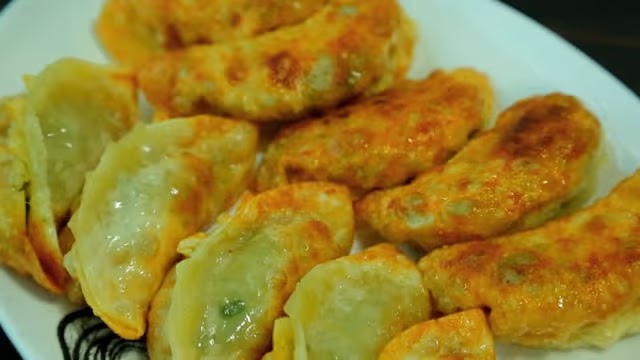
Sales reached 20 billion won in the first year of its launch. From then on, dumplings shifted from a ‘special occasion food’ to an ’everyday meal’ consumed at any time.
Why the 30-Year Frozen Dumpling Empire Stopped Innovating
Gohyung Mandu soon became the generic name for frozen dumplings.
In 1988, when Haitai even disclosed its blending ratio and claimed the title of ‘standard’ itself, it actually ended up hindering them. The moment you become the standard, the reason to change disappears.
Meanwhile, competitors kept finding gaps in each era.
During the 1997 IMF financial crisis, CJ CheilJedang’s ‘Baekseol Fried Dumplings’ competed on value for money by adding glass noodles.
In 2002, riding the wellbeing craze, Pulmuone’s boiled dumplings established a foothold with their clean, light taste.
During the 2008 financial crisis, Dongwon F&B opened up a new use-case of ‘a full meal’ with their 70g ‘Gaeseong Wang Mandu.’
Why did challengers read the times every time while Gohyung Mandu stayed the same? This is the ironic part.
The asset of being the ‘standard’ was safe as long as you just protected it. Since sales figures were maintained every year, there was no incentive to take risks by changing the recipe or installing new lines. To be precise, the reasons not to change increased one by one every year.
As The Scoop pointed out, Gohyung Mandu had customers who bought them out of habit, but no passionate fans.
This gap would eventually become the decisive blow that cost them the crown.
Bibigo Wang Gyoja: Rewriting the Formula for Frozen Dumplings
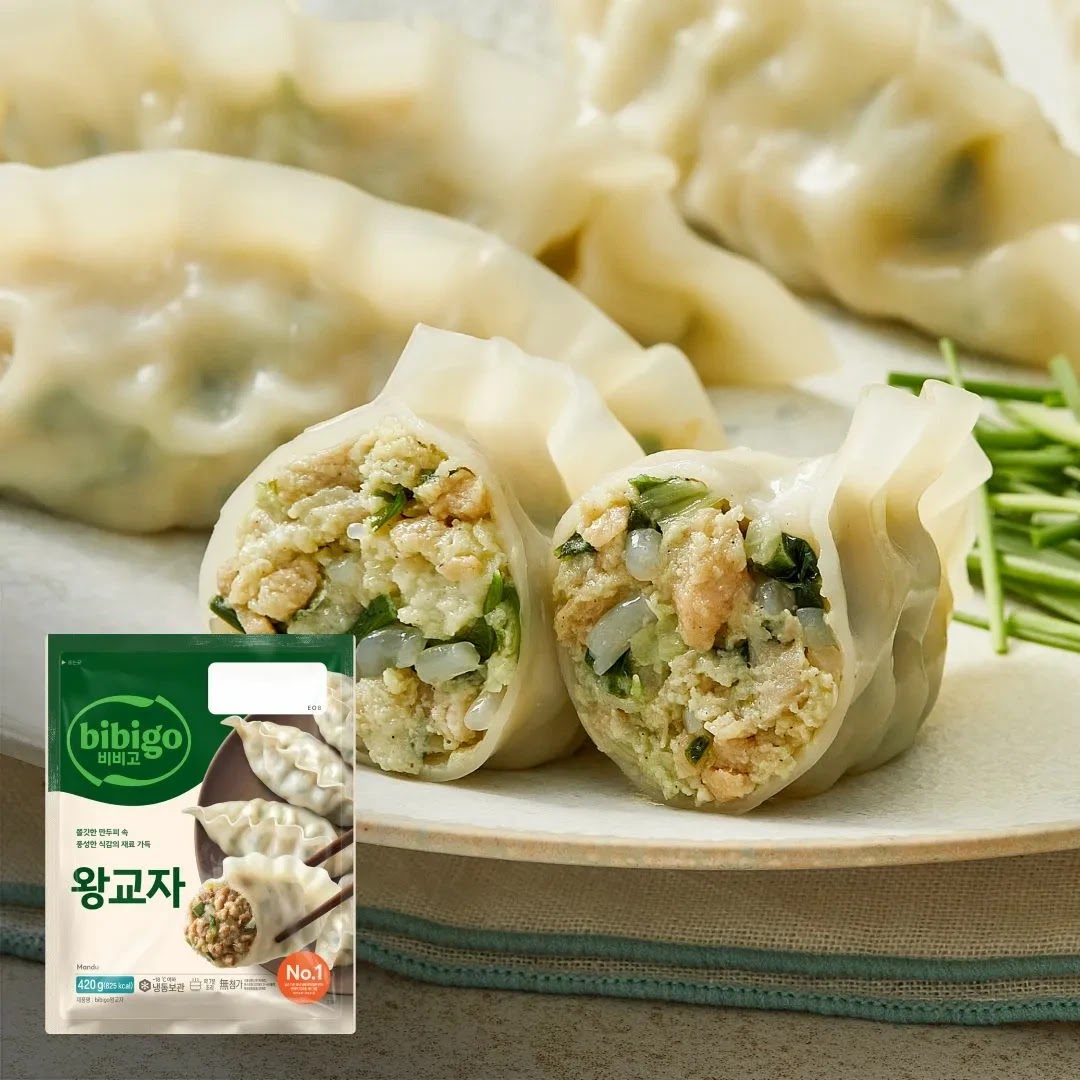
In 2013, the goal CJ CheilJedang set was not to make a ‘slightly better Gohyung Mandu.’
It was a completely different approach: to recreate the quality of a specialty restaurant at home. The direction CJ internally established was, “Not something better, but something entirely different.”
R&D was divided into four main pillars.
Instead of grinding ingredients, they were diced to preserve texture and juiciness.
The dough was kneaded over 3,000 times to achieve a thin yet chewy wrapper.
The size was increased to 35g, more than double the existing size, to create a sense of presence.
They added wave-shaped pleats to signal at a glance that it was a “different product from existing dumplings.”
They even gave it a new name, ‘Wang Gyoja,’ to avoid direct comparison with Gohyung Mandu.
Even if each change seemed minor, when combined, it likely felt like an entirely different category of food to consumers.
The Throne Shift in One Year: Three Reasons the Frozen Dumpling Market Flipped
Bibigo Wang Gyoja pushed Gohyung Mandu out and took the No. 1 spot just one year after its launch.
That is an incredibly short time for a new product to topple a 30-year-old top brand. The reasons can be summarized into three main points.
First is the aforementioned difference in fans, the so-called ‘Passion Gap.’
Gohyung Mandu had customers who bought them out of habit, but Bibigo created fans who loved the taste so much they spread the word themselves.
Second is the fact that Haitai’s response was too slow. Follow-up products only chased the ‘premium’ framework created by Bibigo, failing to rewrite the rules of the market themselves and ultimately failing to regain the lead.
Third came from an unexpected path. Bibigo fought its first battle in the U.S. dumpling market rather than Korea, pushing out Chinese brands that had held their ground for nearly 25 years. This news instilled in domestic consumers the perception that it was a “globally recognized product,” and that perception became a weapon to overcome price resistance.
Gohyung Mandu vs. Bibigo Wang Gyoja: A Spec Comparison
When organized by the numbers, the different paths taken by the two brands become clearer. There is almost no overlap in categories, from concept to size and dough-making methods.
Comparing the two brands that divided the frozen dumpling market by specs:
| Feature | Haitai Gohyung Mandu (Standard of Nostalgia) | CJ Bibigo Wang Gyoja (Premium Challenger) |
|---|---|---|
| Concept | Convenient, affordable ’national snack’ | Premium ‘specialty restaurant dish’ enjoyed at home |
| Filling | Finely ground meat, vegetables, glass noodles | Diced meat and vegetables for texture and juiciness |
| Size (per piece) | Approx. 13g | Approx. 35g |
| Wrapper | Standard and relatively thick | Thin and chewy, kneaded over 3,000 times |
Where is the Next Frozen Dumpling Battlefield?
Currently, Bibigo maintains the No. 1 spot in the domestic frozen dumpling market with a market share of approximately 44%.
According to reports from Chosun Biz, the competition for the second-place spot is becoming fiercer. Rather than the stagnant domestic market, the next battlegrounds appear to be in four areas:
- Premium and Diversification: Products targeting subdivided tastes like shumai and dim sum are increasing. The strategy is to divide the shelf not by “tastier dumplings,” but by “different types of dumplings.”
- Vegan Dumplings: Products made with 100% plant-based ingredients have emerged as a new growth axis, directly targeting consumers who reduce meat consumption for religious or environmental reasons.
- Unique Collaborations: Limited editions featuring famous restaurants or special ingredients like sea urchin are generating buzz. These are products where the buzz itself is the goal, rather than just sales volume.
- Global Expansion: This is the biggest battlefield. Amid the K-Food craze, the domestic market is now more of a test bed for overseas expansion. A sequence has been established where recipes verified in Korea are modified to suit international palates.
The nearly 40-year history written together by Gohyung Mandu and Bibigo shows how different it is to protect a standard versus settling for one.
In a way, even the bag of dumplings in your freezer right now carries that much history.
References
- [Food Museum]① Origin of Frozen Dumplings, Haitai Gohyung Mandu that Led Innovation — E-Daily
- Gohyung Mandu CF Dumpling Party Edition (1987) — YouTube
- Frozen Dumpling Originator Gohyung Mandu, 700 Million Bags Sold in 30 Years — Korea Economic Daily
- The Reversal of Frozen Dumplings... 30 Years of Transformation Alongside Modern History — Kookmin Ilbo
- What CJ Focused on to Become No. 1 in the US Dumpling Market [#CJOnAir] — YouTube
- Frozen Dumpling Market Report 2033 Global Forecast — Business Research Insights