
The Drama of War, Survival, and Cultural Turnaround Encased in a Can
- The cultural background of how one food has drastically different statuses in the West and Korea.
- The evolution from wartime rations to a ’national rice thief’ and the best holiday gift.
- The amazing cultural reversal phenomenon as it rides the K-food wave and is ’re-exported’ back to its country of origin.
The Two Faces of Ham: The Story of Spam
Here lies a food that, in the Western world, is often the subject of jokes or is associated with the label “mystery meat”, evoking images of wartime rations from World War II. Yet, this very same food lives a completely different life in Korea. In the upscale department stores of Seoul, this Spam is elegantly packaged and displayed as a “refined gift” to convey feelings to loved ones.
On one side, it is cheap junk food; on the other, it is the best gift for holidays. How did this ordinary processed meat come to lead such a dramatic double life? This article tells the story of war and survival, reinvention and reversal, and ultimately, cultural power. We trace Spam’s incredible journey from its birth amidst the bombings of World War II, through the ruins of the Korean War, to finally becoming a K-food ambassador and launching a ‘counterattack’ on the global stage.
Spam: A Comparison of Perceptions in the West and Korea
Few products illustrate how culture can give entirely different meanings as clearly as Spam. The stark contrast in perceptions between the West and Korea succinctly encapsulates Spam’s tumultuous history.
| Feature | Perception in the West (primarily the US/UK) | Perception in South Korea |
|---|---|---|
| Historical Context | World War II / Post-war rations | Korean War / Post-war premium goods |
| Main Image | Cheap and convenient “junk food”, nostalgic joke | Premium, versatile side dish, “rice thief” |
| Culinary Use | Simple grilling, sandwiches, kitschy recipes | Core ingredient in symbolic dishes (budae jjigae, gimbap), egg frying |
| Social Status | Essential in the cheap grocery pantry | Precious holiday gift set, symbol of care and practicality |
| Modern Trend | Rediscovery and reevaluation through K-food trends | Firmly established as a “national food”, driver of global food trends |
A Product of War: From American Invention to Soldier’s Staple
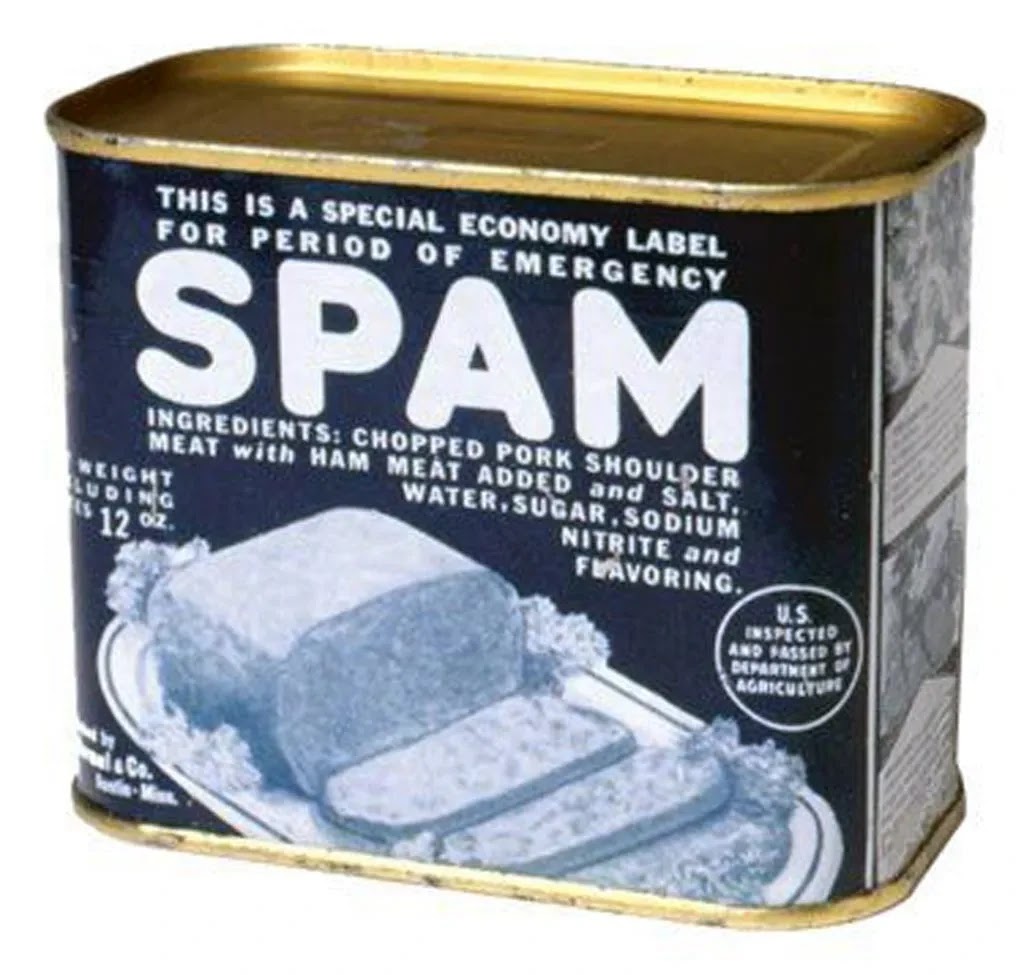
The story of Spam begins in 1937 at Hormel Foods in Austin, Minnesota. Developed to utilize the less profitable pork shoulder cuts, the name of this canned product is known to be an abbreviation of ‘Spiced hAm’.
However, Spam gained its global fame (or infamy) due to war. With its advantages of being protein-rich and having a long shelf life at a low price, it became a staple food for Allied soldiers during World War II. Over 100 million pounds (about 45,000 tons) of Spam were sent to the front lines, and in the process, Spam became ingrained in the minds of many as a food that was ’not a choice but a necessity.’ This excessive supply soon led to disgust and fatigue, solidifying its image as ‘junk food.’
A Fateful Encounter: Spam Arrives in War-torn Korea
The stage of the story shifts to the 1950s, transitioning to a Korean Peninsula devastated by war. In the midst of severe food shortages, fresh meat was a luxury that was unimaginable. It was in this barren land that American soldiers and their supplies began to arrive.
Spam, flowing through the PX (Post Exchange) of the US military, was seen as ‘something better’ in Korea at the time. While it was considered a lower-tier food in the West, it became a symbol of wealth and abundance in Korea. As one testimony puts it, “Spam was a luxury that only the wealthy or well-connected could obtain,” making it a gateway to experiencing American prosperity and a desperately needed source of protein.
The Birth of Budae Jjigae: The Great Harmony of Spam and Kimchi
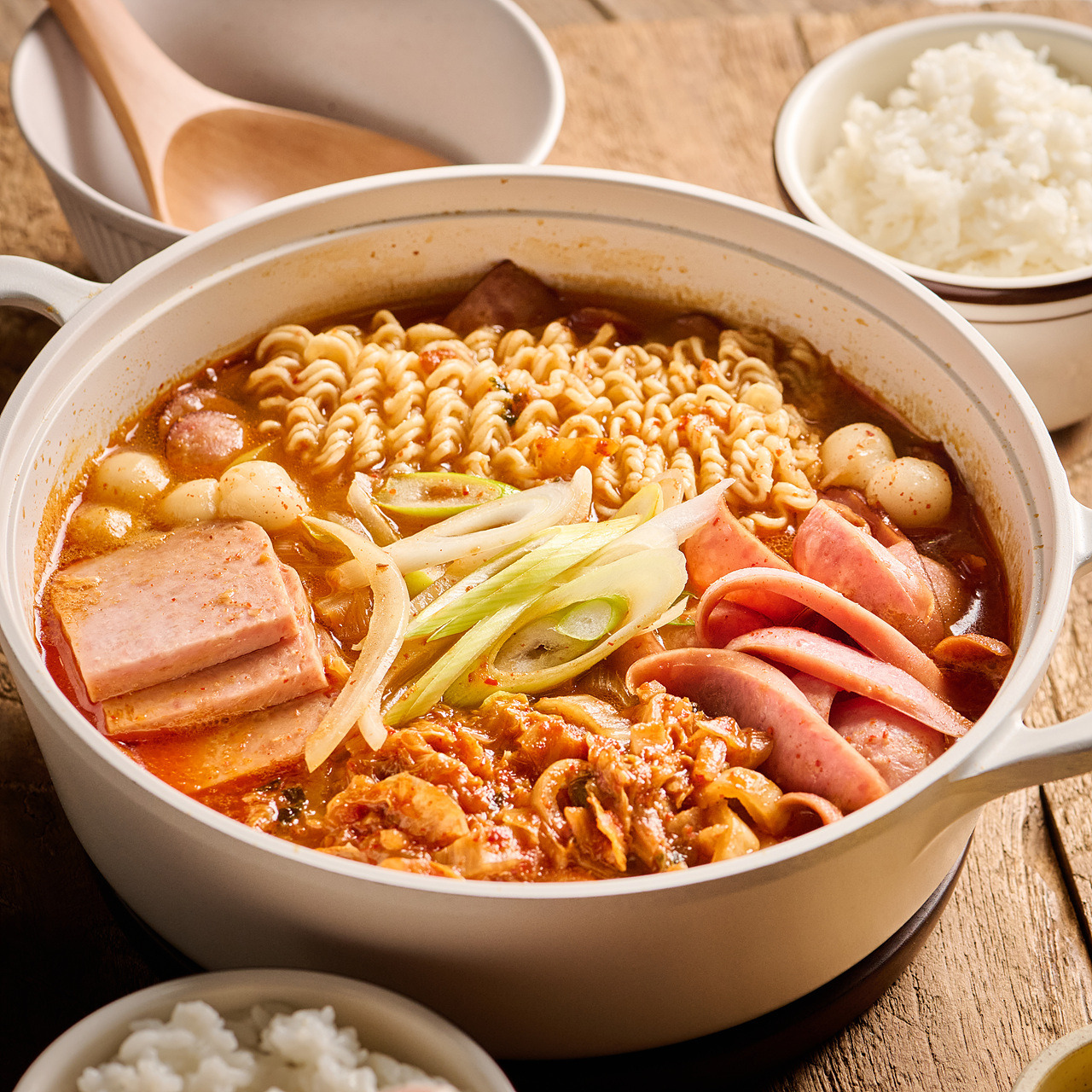
When discussing Spam’s history in Korea, one cannot overlook the birthplace of ‘budae jjigae’ in Uijeongbu, Gyeonggi Province. This dish, made by boiling Spam and sausages that leaked from US military bases with Korean kimchi and gochujang, is a perfect fusion dish and an invention that encapsulates the zeitgeist of post-war Korea.
At the center of this story is the late grandmother Heo Gi-sook, who opened the ‘Odeng Restaurant’ in 1960. She began by stir-frying ham and sausages from the military base, and at the request of customers, developed it into a stew by adding kimchi and broth. The miraculous harmony of America’s surplus product (salty and greasy Spam) meeting Korea’s soul (spicy and tangy kimchi) in one pot is a testament to its painful yet creative history. The name ‘budae (Army Base) jjigae’ proudly narrates that history.
Localization Strategy: Spam Becomes the True ‘Rice Thief’
In 1987, CJ CheilJedang began direct production of Spam in Korea through a technical partnership with Hormel Foods, marking a historic turning point. CJ CheilJedang did not merely replicate the product but improved it to suit Korean tastes.
They increased the pork content to 92.44%, removed starch to build a premium image, reduced saltiness, and created a softer texture, implementing a thorough localization strategy. In 2002, an advertisement featuring actress Kim Won-hee with the tagline “A piece of Spam on warm rice” ingrained Spam as the ultimate ‘rice thief’ in the public consciousness, establishing it as a key player in Korean food culture.
Unique Gift Culture: Spam Becomes a Symbol of Conveying Feelings
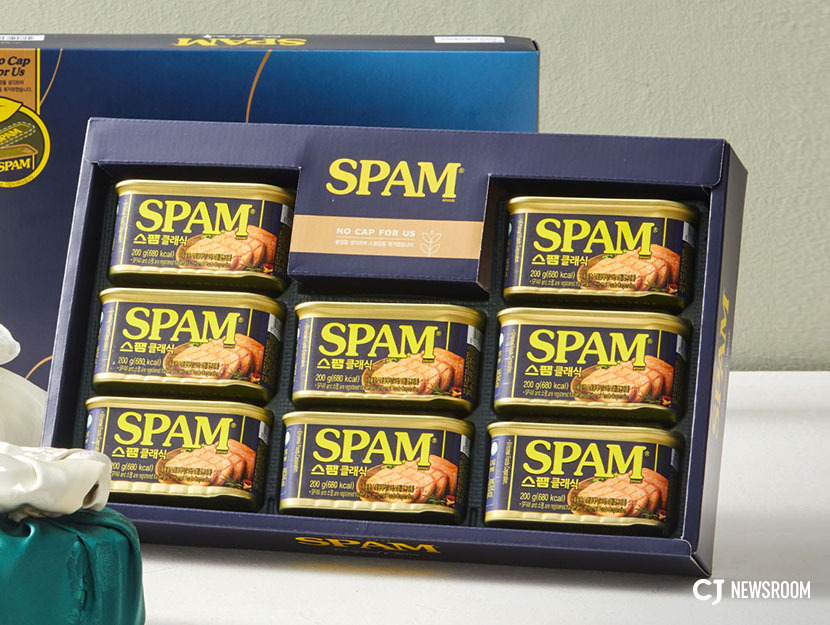
The most dramatic phenomenon showcasing Spam’s status in Korea is the ‘holiday gift set’ culture. Surprisingly, about 60% of Spam’s annual sales come from holiday gift sets. What does a Spam gift mean to you?
This unique culture is the result of a historical image of being a ‘precious food,’ a reasonable price point providing high satisfaction, and practicality due to its long shelf life and versatility. Additionally, its status as a ‘safe’ choice with a low failure rate due to minimal taste preferences plays a significant role. This unique culture has repeatedly caught the attention of foreign media, including the New York Times, providing an interesting window into Korean society.
The Revenge of the Rice Thief: Spam’s Globalization as K-Food
After decades of unilaterally accepting culture, Spam’s history has begun to flow in reverse. Riding the wave of Hallyu represented by K-pop and K-dramas, Spam has started its ‘counterattack’ on the global stage dressed in ‘Korean flavors.’
Young generations overseas are beginning to perceive Spam as ‘a part of hip Korean cuisine’ through Korean content. The original company, Hormel, has also acknowledged this change by prominently featuring Korean recipes like budae jjigae and gimbap on its official website.
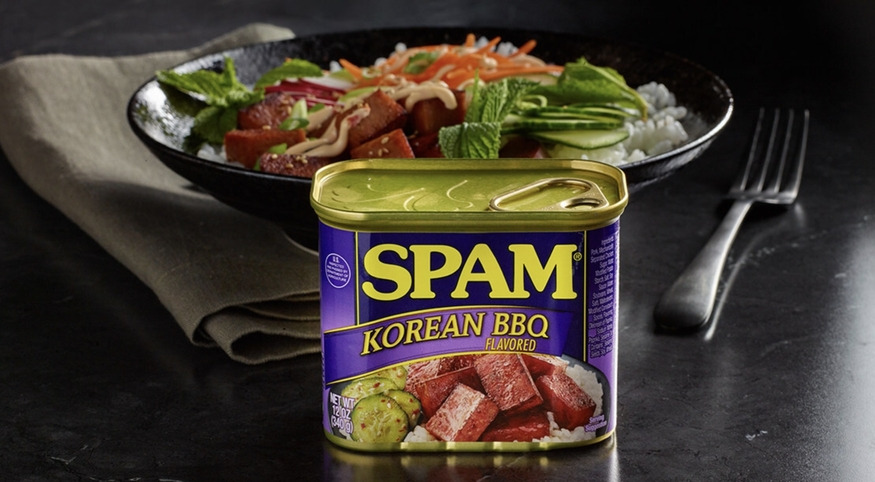
And in 2024, Hormel officially launched ‘Spam Korean BBQ flavor’ and ‘Spam Gochujang flavor’ in the US market, marking the climax of this reversal drama. This is clear evidence that a food once delivered from America to Korea is now being re-exported back to the US with a Korean identity, showcasing a perfect cultural reversal phenomenon.
Conclusion: More Than Just a Can of Ham
Spam’s journey is the very embodiment of modern Korean history encased in a can. I vividly remember exchanging Spam gift sets during holidays, and it is astonishing to realize the deep narrative contained within.
- Symbol of Survival and Abundance: Spam was a protein source for survival amidst the ruins of war and an object of envy.
- Creative Reinvention: It was reborn into unique dishes like budae jjigae and captured the taste of Koreans through localization strategies.
- Icon of Cultural Reversal: Now, riding the influence of K-food, it is being re-exported back to its origins, demonstrating the power of cultural identity.
This story proves that the true meaning of food lies not in the ingredients but in the history and hearts of the people who embrace it. Now, discover the grand narrative of war, survival, and cultural power in a piece of Spam on your table. If you have your own special recipe using Spam, please share it in the comments.
References
- Spam (Ham) - Newiki link
- Spam was a ‘war hero’ - Zum Hub link
- NY Times on Spam in Korea: The ‘Glamour of Pink Bricks of Pork Shoulder’ link
- From Combat Ration to Korean National Side Dish… 30-Year History of Spam - Korea Economic Daily link
- Why is Spam, the ‘National Gift’, Especially Loved During Holidays? – CJ Newsroom link
- Spam, once a Combat Ration, Now the World’s Second Largest Consumer in Korea - Chosun Ilbo link
- [God of Brands] CJ CheilJedang’s ‘Spam’… The ‘Rice Thief’ that Captured Korean Tastes for 31 Years - E Today link
- The Popularity of Spam Rising Every Holiday… Reading the Economy of the Lunar New Year through Gift Sets - Woman Times link
- Did Spam Rise with the K-Food Boom? “This is How We Eat in Korea” [Food Cravings] - Herald Economy link
- [Definition Implementation Dictionary] Spam - Hankyoreh 21 link
- From Seoul to Supermarkets - Inspired - Hormel Foods link
- The Makers of the SPAM® Brand Fire Up Fan Tastebuds with New SPAM® Korean BBQ Flavored Variety - Hormel Foods link