
The ‘Grand Chessboard’ Hidden Behind Simplicity
In 2016, Netflix launched FAST.com into the world. As many of you who have visited know, the site is bewilderingly simple. No ads, no complex graphs, no server selection menus. Just the iconic red Netflix numbers ticking up and then stopping.
Most people thought, “Netflix created a simple meter for customer convenience.” But the industry saw it differently. This simple tool was actually **Netflix’s ‘quiet declaration of war’ on Internet Service Providers (ISPs)**. The history of a hidden war lies behind the birth of this tool.
1. The Prelude to War: The Trauma of 2014
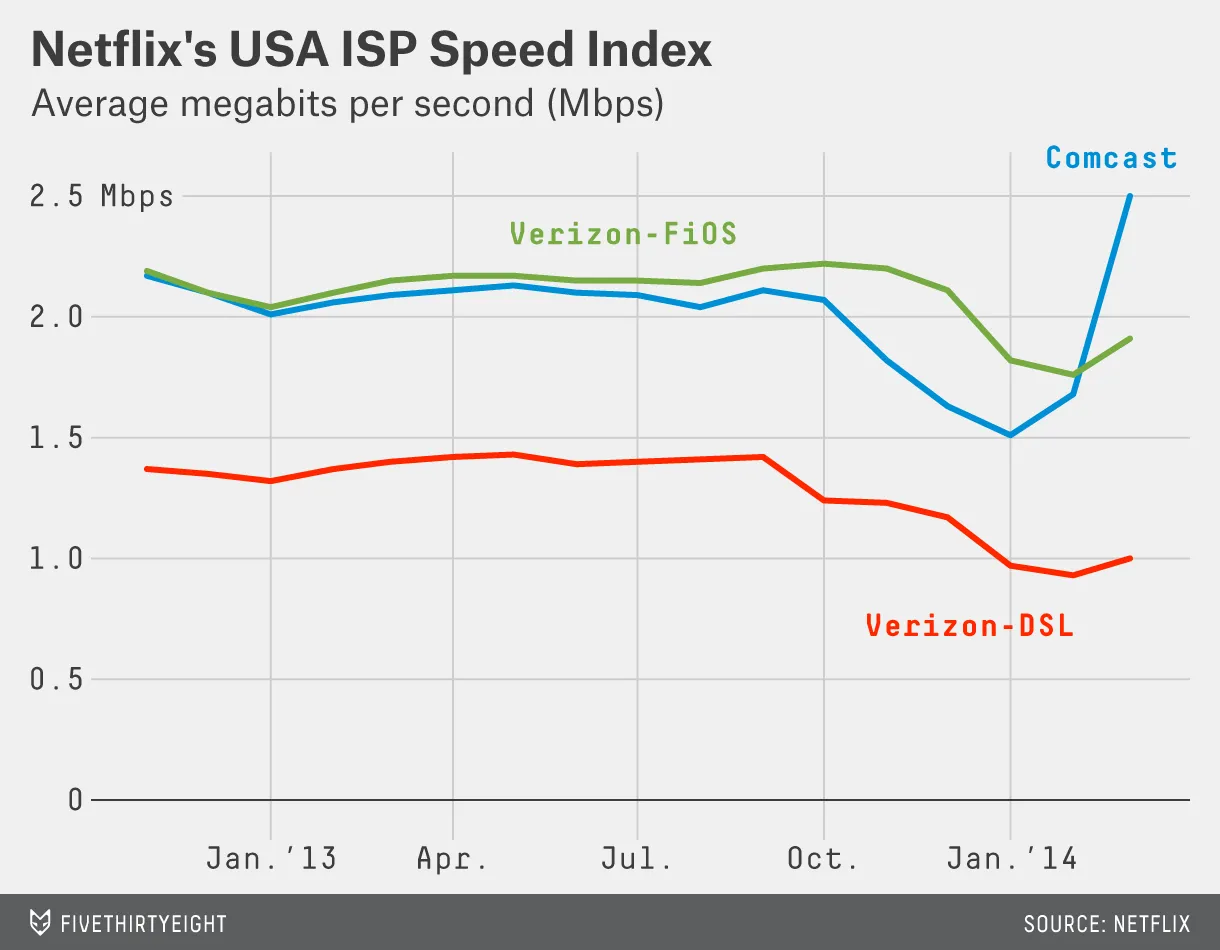
Let’s turn back the clock to 2014. In the US, tensions were at their peak between Netflix and the giant telecom provider Comcast. One day, users on Comcast’s network began experiencing pixelated low-quality video or buffering issues while using Netflix.
Naturally, users complained to Netflix. “Why is it so choppy when I’m paying for it?” they demanded. But Netflix felt wronged. Their servers were fine. The problem occurred at the ‘gateway’ where Netflix’s data entered Comcast’s network. Comcast, citing the surge in Netflix traffic, was delaying network expansion and demanding what was effectively a ‘digital toll’.
Ultimately, Netflix begrudgingly paid hefty network usage fees, and immediately, the speeds miraculously normalized. This incident left Netflix with a painful lesson.
“The user is not at fault. But when the telecom provider plays games, the arrows of blame always point to us (Netflix).”
To break this information asymmetry, Netflix’s move was transparency, specifically FAST.com.
2. Speedtest.net vs. FAST.com: What’s the Difference?
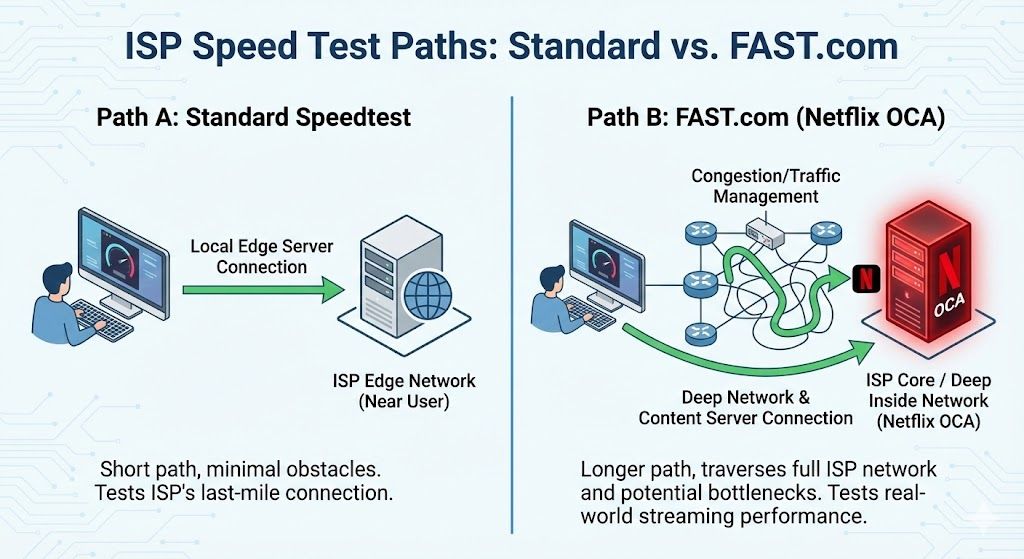
Sites like ‘Benchbee’ or ‘Speedtest.net’ that we commonly use, and FAST.com, operate fundamentally differently. And that difference is intentional.
Most speed test sites connect you to the nearest ‘dedicated test server’. The problem is that telecom companies know this test server route very well. Just like a school tidies up thoroughly during an education board inspection, telecom providers tend to prioritize and clear the data path to speed test sites. This leads to the phenomenon where “speed tests show 500Mbps, but YouTube stutters.”
But FAST.com is different.
FAST.com retrieves data from the servers (Open Connect) that connect when you watch Netflix videos.
It’s impossible for telecom companies to manipulate FAST.com’s speed alone to appear fast. This is because the traffic for FAST.com technically appears identical to the traffic when watching actual Netflix videos. If a telecom provider limits the speed on FAST.com? The Netflix picture quality also drops. Conversely, if they increase the speed? The Netflix service quality improves. Netflix has cornered the telecom providers.
3. Netflix’s Secret Weapon: Open Connect (OCA)
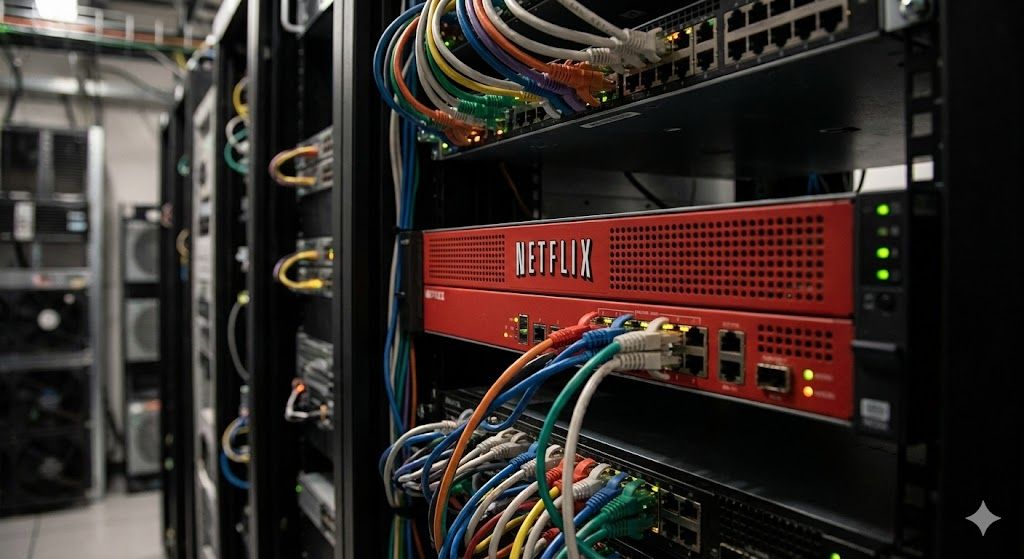
This strategy is possible because Netflix has installed its own dedicated servers, **‘Open Connect Appliances (OCAs)’**, inside telecom company central offices (data centers) worldwide.
Running FAST.com doesn’t mean communicating with a server far away on the internet. It means directly communicating with the red Netflix box (OCA) installed inside your local telecom provider’s building. In other words, this speed is the **‘real perceived speed’** when consuming content, without any artificial inflation.
4. Weaponizing Data: “Naming and Shaming”
If FAST.com is a weapon for individuals, Netflix has another tool to pressure telecom companies on a corporate level: the **‘ISP Speed Index’**.
Every month, Netflix measures and publicly ranks the average Netflix speeds of telecom providers worldwide. It’s a lineup from first to last place. This sparks competition among telecom companies. Rumors like “Telecom A’s Netflix is choppy” are devastating for marketing.
Ultimately, telecom providers with lower rankings are forced to contact Netflix first, requesting, “Please install a server (OCA)” or “Let’s increase the bandwidth.” Netflix has established a system where telecom providers voluntarily improve quality without much effort.
5. The 2017 Verizon Incident: Becoming a Surveillance Camera
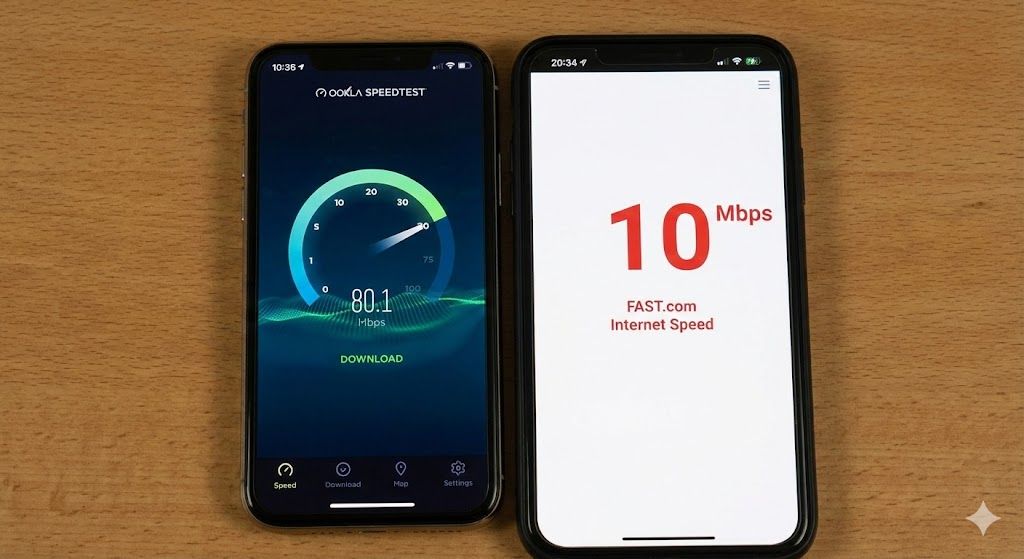
The power of FAST.com was proven in the US in 2017. At the time, users on Verizon’s unlimited plan complained, “The internet is fast, but only YouTube and Netflix are slow.”
Users conducted experiments. While general speed test apps (Ookla) showed 80Mbps, FAST.com inexplicably stopped at 10Mbps. They discovered this discrepancy.
As these screenshots spread through online communities, it was revealed to the world that Verizon was selectively throttling video streaming traffic. Without FAST.com, users might have just dismissed it as, “Is the signal weak today?” This tool effectively acted as a ‘CCTV’ monitoring invisible network policies.
Conclusion: The World’s Smartest ‘Free’ Service
Ultimately, the reason Netflix operates this ad-free site is clear. It’s to empower consumers.
In the past, if videos buffered, consumers thought, “Netflix’s server must be the problem.” But now, they check FAST.com and think, “It’s my home internet connection problem, I need to call the telecom provider.” This shift in perception is the victory Netflix desired.
Go home today and try running FAST.com. That red number isn’t just a speed; it’s a technical power that allows consumers to gain leverage against giant telecom companies.
Access **FAST.com** now. If other speed test apps show very fast speeds, but it’s significantly slower here? It could be a strong signal that your telecom provider is limiting the speed for specific content, or that your international network connection is poor. In such cases, you should contact your telecom provider’s customer service without hesitation.