
Ten-Baggers are on the ‘Server’, Not in the Classroom: Uncharted Territories and Next-Gen AI in the 800 Trillion KRW EdTech Market

The EdTech market, which accounts for 6% of global GDP but has a digital penetration rate of only around 5%, possesses explosive growth potential.
Let’s be honest.
If you could go back 10 years, would you have hesitated to invest, dismissing Amazon as just an ‘online bookstore’ or Netflix as a ‘video rental store’?
One of the most dangerous biases in the investment market is the stereotype that “education isn’t profitable.”
Certainly, the education market of the past was conservative, slow to change, and most importantly, a labor-intensive industry with poor scalability.
However, in 2025, we stand before the monumental wave of ‘EdTech 2.0’.

The education market is projected to expand to a staggering 10 trillion USD (approximately 13,000 trillion KRW) by 2030.
But there’s a key data point that demands attention: its digital penetration rate is a mere 5%.
For investors, this ’low figure’ is not a pessimistic sign. Instead, it is the most definitive indicator of ‘unlimited upside potential’.
If EdTech 1.0 was about replacing chalkboards with electronic screens, EdTech 2.0 and beyond represents a revolution where AI acts as teacher, tutor, and administrator, guaranteeing ’learning outcomes’.
In the 800 trillion KRW digital education market, who will be the protagonist delivering tenfold returns (Ten-Baggers)?
We will seek the answer through a three-dimensional analysis of technology, companies, and the market.
1. Technological Evolution: How AI Surpasses the ‘Teacher’
To identify true ten-bagger companies, one must look beyond flashy marketing slogans to understand the ’technological engine’ beneath.
AI technology in EdTech has evolved incrementally, much like autonomous driving technology.
1.1 First Generation: Static Analysis (Driving by Looking in the Rearview Mirror)
Early educational AI, or more accurately, algorithms, primarily relied on Item Response Theory (IRT).
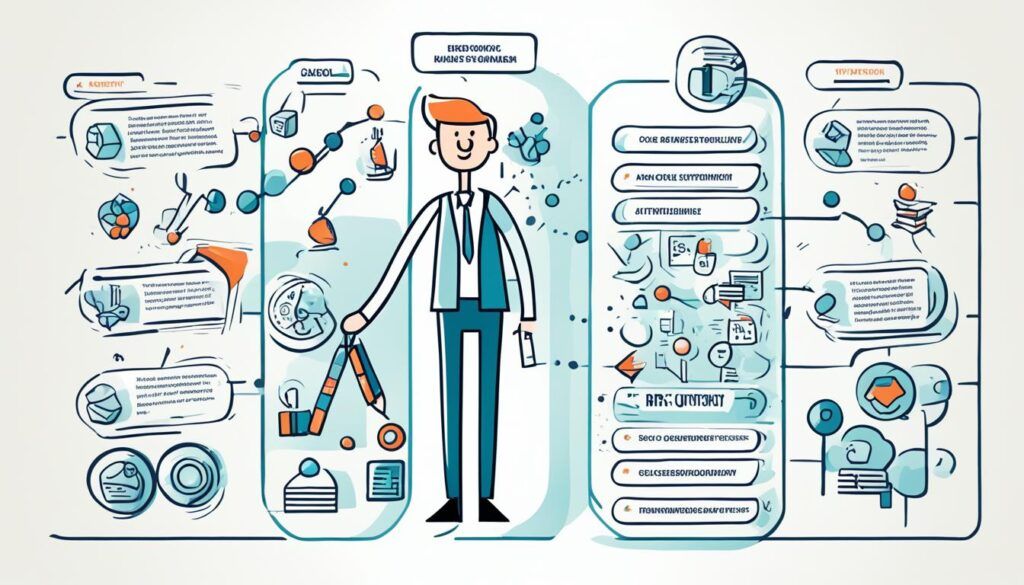
The fatal flaw of this approach is its assumption that a student’s proficiency remains unchanged during an exam.
It’s akin to trying to understand your current position by looking only in the rearview mirror while driving, without looking ahead.
This method of judging the present based on past data has clear limitations in detecting real-time changes in a student’s ability.
1.2 Second Generation: Knowledge Tracing and Transformers (The Advent of Navigation)
The introduction of deep learning technology revolutionized the education sector.
In particular, the Transformer-based Deep Knowledge Tracing (DKT) model, applied by leading companies like Riiid, changed the game.
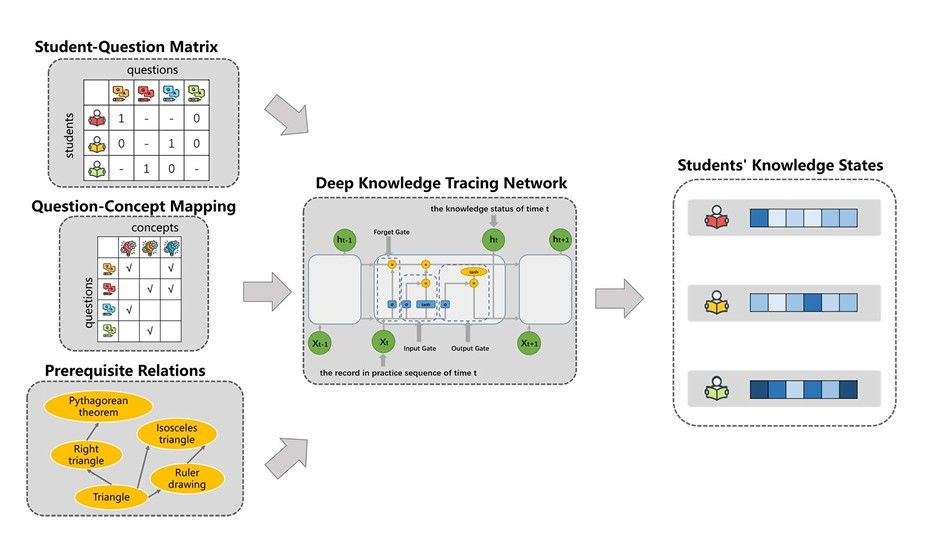
The DKT model is a core technology that analyzes student problem-solving data chronologically to predict future correct/incorrect answer probabilities.
This technology analyzes a student’s problem-solving history as ’time-series data’.
_“This student hesitated for 3 seconds on the relative clauses question, so there’s an 80% chance they’ll get the next subjunctive mood question wrong.”
In this way, AI predicts a student’s next action and suggests the optimal path.
It acts like a navigation system guiding you to the fastest route to your destination, truly opening the door to ‘personalized learning’.
1.3 Third Generation: Agentic AI (The Era of Autonomous Driving)
The biggest buzzword in 2025 is undoubtedly ‘Agentic AI’.
While previous AI were passive entities answering “What should I solve next?”, Agentic AI are active agents capable of autonomous judgment and action.
Diagnosis: “Your accuracy rate on the participial phrase section has been dropping lately.”
Prescription: “I’ve summarized YouTube videos explaining the relevant concepts and generated 5 practice problems. Let’s start with these.”
Administration: “This week’s attendance rate is low. I’ve drafted an email to your parents for consultation. Would you like to review it?”
Agentic AI automates workflows by autonomously performing diagnostic, prescriptive, and administrative tasks.
This entire process is achieved through ‘workflow automation’ without human intervention.
Ten-bagger companies are born from this point. Companies that maximize service quality while driving costs to near zero – that’s the target we should be looking for.
2. In-depth Company Analysis: Who Will Claim the Throne?
The market’s major players are preparing for battle with their own unique weapons.
We delve deep into three types of company strategies to watch.
2.1 Riiid / Sokrat AI: A Bold Pivot for Disruption

Riiid, a leading South Korean EdTech unicorn, has made its boldest move yet.
It has undergone a complete transformation from a B2B technology supplier to a comprehensive B2C service company.
Core of the Strategy: The integration of ‘Technology (AI)’ and ‘Content (Qualson)’. They realized that no matter how brilliant the AI technology, it cannot succeed without engaging content to attract consumers. Riiid has absorbed the proven IP of ‘RealClass’ to launch ‘Sokrat AI’, where AI teaches English using Hollywood movies.
Investment Point: This AI, employing Socratic dialogue, is not just an answer dispenser (Solver). It is a tutor that cultivates critical thinking through continuous questioning. If this model successfully establishes itself in the market, it has the potential to grow into a ‘Netflix-style educational platform’, extending beyond the Asian market.
2.2 Sana Labs: Capture the Corporate Brain

Sana Labs from Sweden aspires to be more than just an EdTech company; it aims to be an ‘Enterprise OS’.
Key Weapon: Its RAG (Retrieval-Augmented Generation) based universal search technology. When an employee inputs “Find last month’s marketing report,” it searches across all channels like Slack, Notion, and Google Drive to provide the precise answer. Even more remarkably, it ‘automatically generates’ new employee training materials based on this information.
Investment Point: While general education is perceived as a ‘cost’ by companies, Sana Labs’ solution is recognized as a ‘productivity tool’. In times of economic downturn, companies are more willing to invest in tools that enhance productivity. This is why the B2B SaaS model offers the most stable and highest valuation potential.
Sana Labs provides an enterprise solution that integrates internal data search and transforms it into learning materials.
2.3 Duolingo & Kyron Learning: Kings of B2C and Niche Markets
Duolingo: Already a publicly traded company, but its growth is far from over.

It is evolving beyond a simple language app into a ‘super app’ by expanding into ‘Math’ and ‘Music’ categories.
In particular, AI-first strategies like the ‘Max subscription plan’ based on GPT-4 are significantly boosting profitability.
Kyron Learning: Presents an innovative model combining ‘video’ and ‘conversation’.

The instructor poses questions on screen, and when a learner responds, the AI recognizes it and provides immediate feedback.
This is the most realistic alternative for democratizing the effect of 1:1 tutoring, and it’s why the Bill & Melinda Gates Foundation is paying attention.
3. Uncharted Territory for Capital: A Compass for Finding Ten-Baggers
After analyzing technology and companies, it’s crucial to observe the ‘pathways’ where capital is flowing.
The job transformation driven by AI is creating a massive corporate reskilling market.
3.1 Corporate Reskilling
The most reliable ‘money trail’ lies within the corporate education market.
In an era where existing jobs are disappearing or transforming due to AI adoption, companies must ‘reskill’ their employees instead of laying them off.
Simple internet course subscriptions are no longer sufficient.
AI agent solutions that analyze employee work data in real-time and precisely identify and teach ‘skills needed for the job right now’ will dominate the market.
3.2 Automation of Special Education
This is a lesser-known but highly significant niche market.
One of the biggest pain points for public schools in the US is administrative work.
Especially for students requiring special education (IEP), the legal paperwork is extraordinarily time-consuming.
What if AI could automatically generate and manage complex legal documents? Schools would gladly pay a premium subscription fee.
The more regulated and complex the tasks, the greater the opportunity for monopolies.
3.3 Korea’s AIDT (AI Digital Textbook): A Global Testbed
The AIDT (AI Digital Textbook) project being pursued by the South Korean government is a massive experimental ground attracting global attention.

It’s true that there are challenges, such as privacy concerns and resistance from the field.
However, the ’large-scale public education data’ and ‘on-site expertise’ accumulated through this process will serve as an unparalleled reference point for South Korean EdTech companies to venture into the global B2G (Business-to-Government) market, something other countries cannot easily replicate.
4. Conclusion and Investment Recommendations: Seize the Future
The ten-baggers in EdTech will not come from flashy graphics or the charisma of star instructors.
They lie within ‘systems’ that process data invisibly, automate workflows, and significantly save learners’ time.
Savvy investors must ask the following three questions:
Is there a moat of data? (Is it more than just a superficial service merely connecting to the GPT API?)
Has it captured the workflow? (Does it seamlessly integrate into the user’s work and life, even when they don’t actively open the app?)
Does it prove results? (Does it show concrete metrics like “grades improved” or “work hours reduced,” rather than just subjective feedback like “it’s fun”?)
In 2025, EdTech is transitioning from an ‘option’ to a ’necessity’ for survival.
A massive wave of 800 trillion KRW is coming.
Only prepared surfers (investors) will be able to ride this wave to achieve the exhilarating success of a ten-bagger.
References
1. 2025 Global Education Outlook [HolonIQ]-
Educational Technology Market Size to Hit USD 572.08 Billion by 2034 [Precedence Research]
-
Deep Item Response Theory as a Novel Test Theory [MDPI]
-
Deep Knowledge Tracing is an implicit dynamic multidimensional item response theory model [Ghosh et al., arXiv]
-
AI Agents in Education: Top Use Cases and Examples [Workday Blog]
-
Sana hits $500M valuation with $55M raise [Tech Funding News]
-
Riiid Announces Its Acquisition of Qualson [PR Newswire]
-
Duolingo (DUOL) Q3 2025 Earnings Call Transcript [The Motley Fool]
-
South Korea: PIPC announces results on inspections of AI textbooks [DataGuidance]
-
How AI is streamlining special education [eSchool News]