
A Strange World Beyond the Freezer Door
Do you remember the frozen food aisle in American supermarkets around 2010? Before it was filled with delicious foods from around the world, it was quite a familiar sight. Opening the door greeted us with cold air and the usual frozen pizzas, lasagnas, and macaroni and cheese that had always been there. Even if there was an ’exotic’ corner, it was just Americanized fried rice or sweet chicken dishes.

At that time, we were gradually becoming smarter consumers. After experiencing the 2008 financial crisis, we cooked more at home instead of dining out, and began to prioritize quality over quantity, focusing on ‘value for money.’ Furthermore, interest in organic and locally produced products was slowly rising. A new breeze began to blow through the frozen food aisle, as more consumers wanted convenience without sacrificing health and quality.
During that time, ‘K-food’ was an unknown territory for most Americans. It was a special cuisine that could only be tasted in Koreatowns in big cities like New York or LA, requiring a deliberate effort to seek it out. Although chefs like Roy Choi showcased the potential of Korean food with kimchi taco food trucks, it was still a foreign name to us.
Who could have imagined that Korean frozen foods would become a staple in American kitchens? Yet, ‘Bibigo’ defied all expectations and wisely rode the wave of change. Instead of creating a new wave, they accurately read the existing one and danced beautifully on it.
Chapter 1: First Encounter, The Trojan Horse in the Steamer
Bibigo’s challenge in America was not successful from the start. Initially, they opened restaurants featuring representative dishes like bibimbap and tried textbook methods to promote kimchi and gochujang. However, the results were not good. Most Americans found dolsot bibimbap confusing to eat, and even if they bought a jar of gochujang, they had no idea how to use it in cooking. The approach of ’teaching Korean food’ hit a cultural wall.
At this moment of failure, Bibigo’s greatest transformation began. They decided to focus on one very specific and universally known item instead of the grand slogan of ‘globalizing Korean food.’ That item was dumplings.
Dumplings were the perfect ‘Trojan horse.’ Americans were already familiar with foods similar to dumplings, such as potstickers from Chinese restaurants, gyoza from Japan, and even pierogi from Poland. Instead of introducing a completely new food, Bibigo proposed a ‘better version’ of something we already loved.
Their genius shone through the concept of ’localization.’
- Translation of Flavor: They didn’t simply insist on Korean flavors. They used chicken as the main ingredient, which Americans consider healthier, and added cilantro, a familiar ingredient through Mexican cuisine, instead of unfamiliar chives. This small change was a sophisticated strategy signaling, ‘This is a safe and delicious food you’ve tried before.’
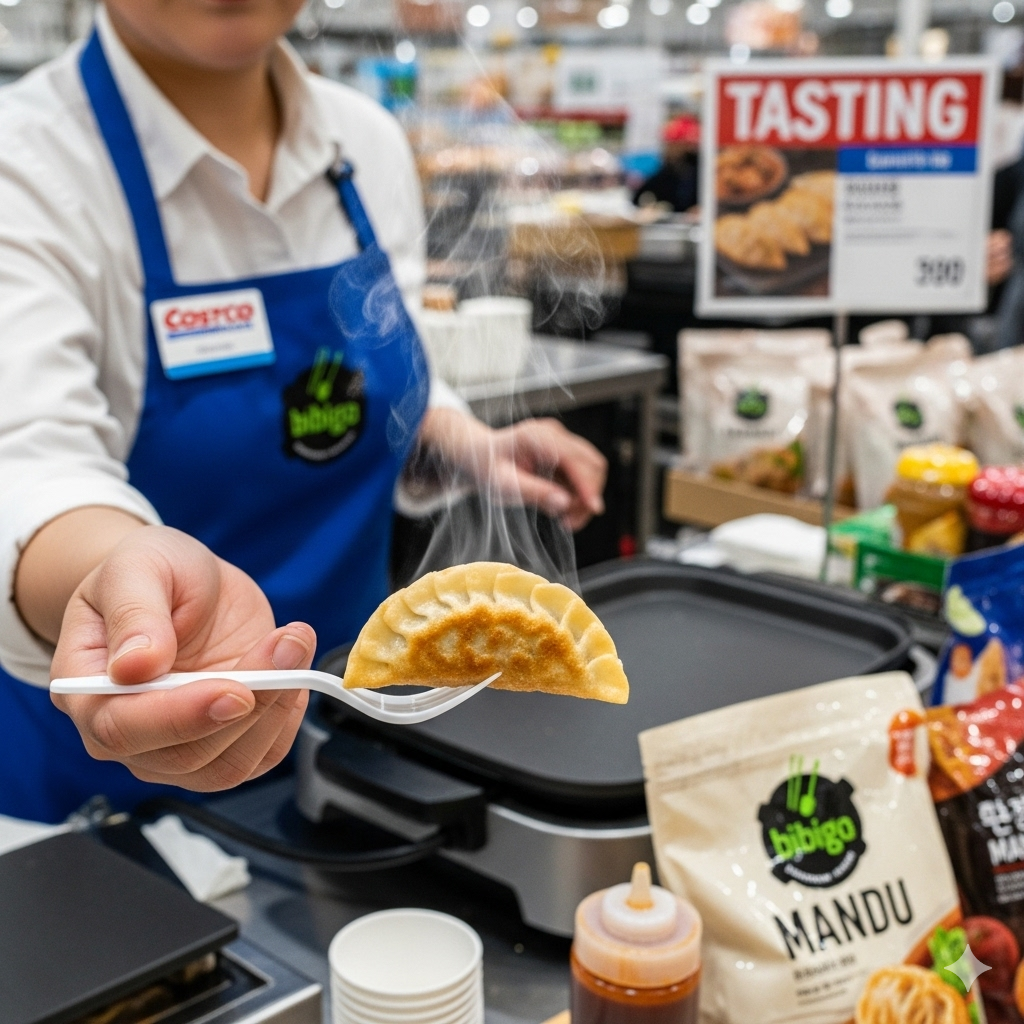
- Choice of Location: Why Costco? Costco is not just a place to buy items; it’s a space to ’experience’ new products. Instead of expensive advertising, Bibigo met consumers directly at the tasting corner. The delicious experience of a steaming dumpling was more powerful than any advertisement. Moreover, with easy microwaveable steaming trays and bulk packaging, it had everything Costco customers wanted.
Instead of forcing unfamiliar Korean cuisine, Bibigo built a familiar bridge with dumplings, gently leading us into the world of Korean food. That unconscious act of picking up a dumpling piece at the Costco tasting counter was the beginning of everything.
Chapter 2: Quiet Invasion, “Suddenly It’s Everywhere”
The popularity that began at Costco spread like wildfire. Initially a ‘special item only sold at Costco,’ Bibigo dumplings began appearing at local Kroger and Walmart stores. “Oh, now it’s everywhere.” Behind this quiet expansion was a massive movement that most people did not notice.
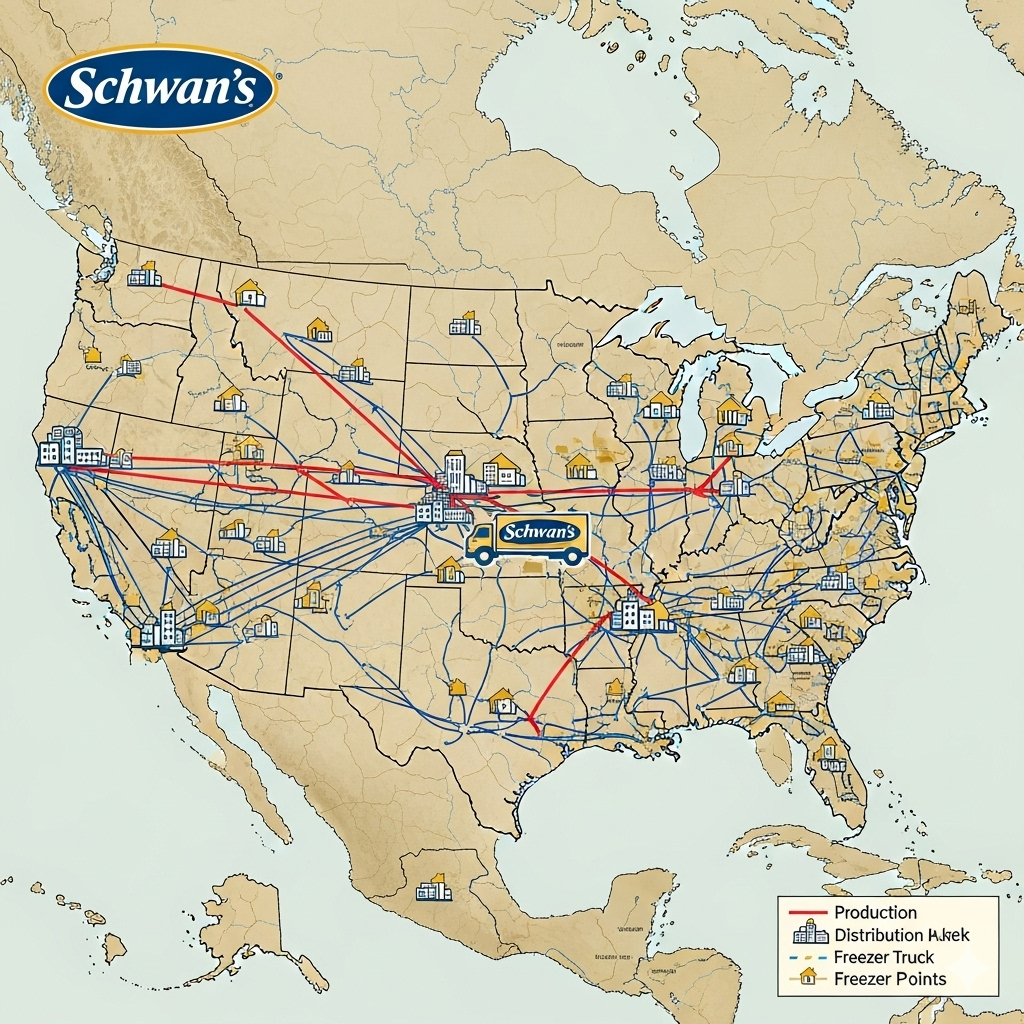
The secret weapon was the acquisition of Schwan’s Company, a giant frozen food company in the U.S., in 2019. Bibigo’s parent company, CJ, invested billions of dollars to acquire this company with a dense distribution network across the U.S. This was a decisive move that changed the landscape of the American food market.
The acquisition meant an explosive expansion of accessibility. Overnight, Bibigo transformed from an imported brand to a domestic powerhouse alongside giants like Nestlé and Tyson. Through Schwan’s distribution network, Bibigo products could be stocked in over 30,000 new stores.
The effects were truly remarkable.
- Within just two years of the acquisition, CJ’s U.S. food sales grew nearly tenfold.
- They surpassed Japan’s Ajinomoto, which had long been the market leader, to claim the new throne of the U.S. Asian food market.
Furthermore, Bibigo began to change the very landscape of supermarkets. They created a specialized area called ‘Asian Destination’ in the frozen food aisle, gathering scattered Asian foods in one place. Shoppers could now enjoy the pleasure of exploring Asian foods comfortably in one spot, without the need to search like a hidden picture puzzle.
Instead of building a distribution network from scratch, they bought an already completed infrastructure. After choosing dumplings as their product, this was Bibigo’s next smartest and most decisive move.
Chapter 3: Tipping Point, The Day I Saw ‘Bibigo’ on LeBron’s Jersey
Every brand has a decisive moment that imprints itself on the public beyond a small group of fans, known as the ’tipping point.’ For Bibigo, that moment came in 2021 when we spotted the bold ‘Bibigo’ logo on the iconic uniforms of the LA Lakers. This was not just an advertisement; it was a cultural event where a brand from the grocery aisle appeared in the heart of American culture.
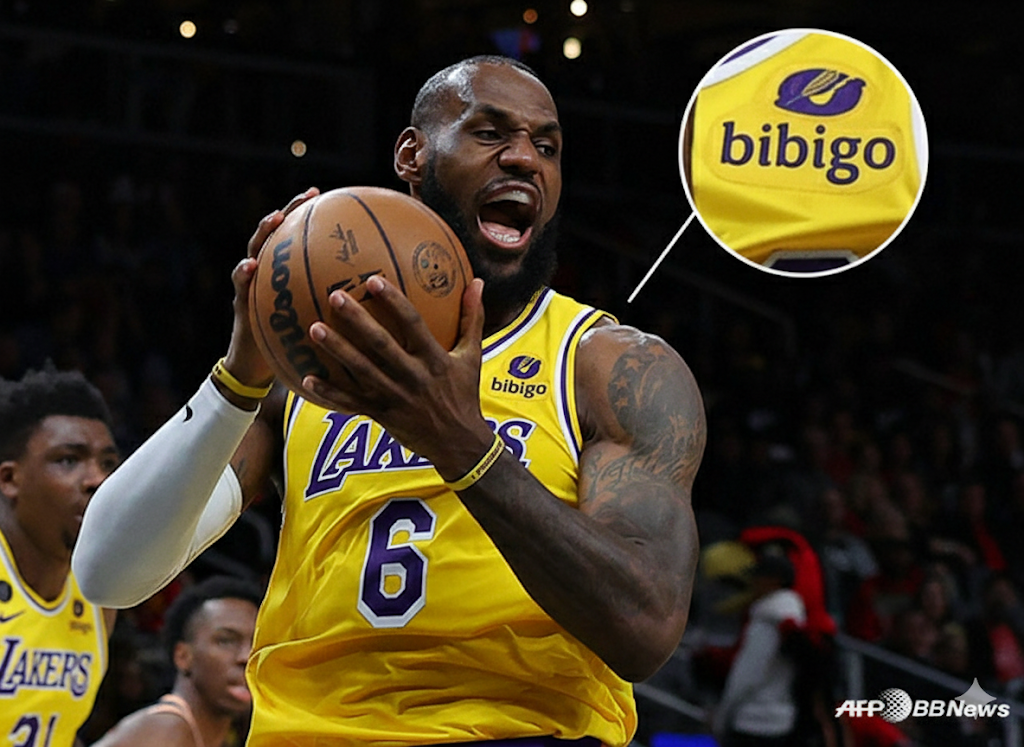
The surprising fact is that it was not Bibigo that first proposed the massive partnership worth over $100 million over five years, but the LA Lakers. The Lakers recognized Bibigo’s potential to expand globally alongside the growth of K-culture. It was a moment when the balance of power completely shifted.
This partnership brought about an ‘identity transfer’ beyond mere logo exposure. By teaming up with the LA Lakers, where superstars like LeBron James play, Bibigo absorbed values such as excellence, global popularity, and multicultural energy into its brand. This boldly declared that Korean food was no longer just the cuisine of a specific ethnicity, but a mainstream part of global culture.
Bibigo’s three-step strategy in America can be summarized as follows:
- Accessibility: Breaking down barriers with taste and convenience at Costco,
- Availability: Making it available everywhere in the U.S. through the acquisition of Schwan’s,
- Aspiration: Transforming into a coveted brand through the partnership with the LA Lakers.
The moment we saw the logo on LeBron’s uniform, Bibigo undoubtedly became part of the American cultural landscape.
Chapter 4: The World of Bibigo, From the Freezer to the Social Media Feed
Now we live in a fully ‘Bibigo world.’ Using the success of dumplings as a stepping stone, Bibigo is quietly but surely taking over our dining tables. Bibigo is no longer just ’that dumpling brand.’
Building on the trust established with dumplings, they are now introducing a wider world of Korean cuisine with crispy crunchy chicken, convenient fried rice and rice bowls, and even ‘K-street food’ like tteokbokki and Korean hot dogs.
However, Bibigo’s true cleverness does not stop at bringing products into our homes. They actively answer our question, ‘What can I make with this?’ through social media.
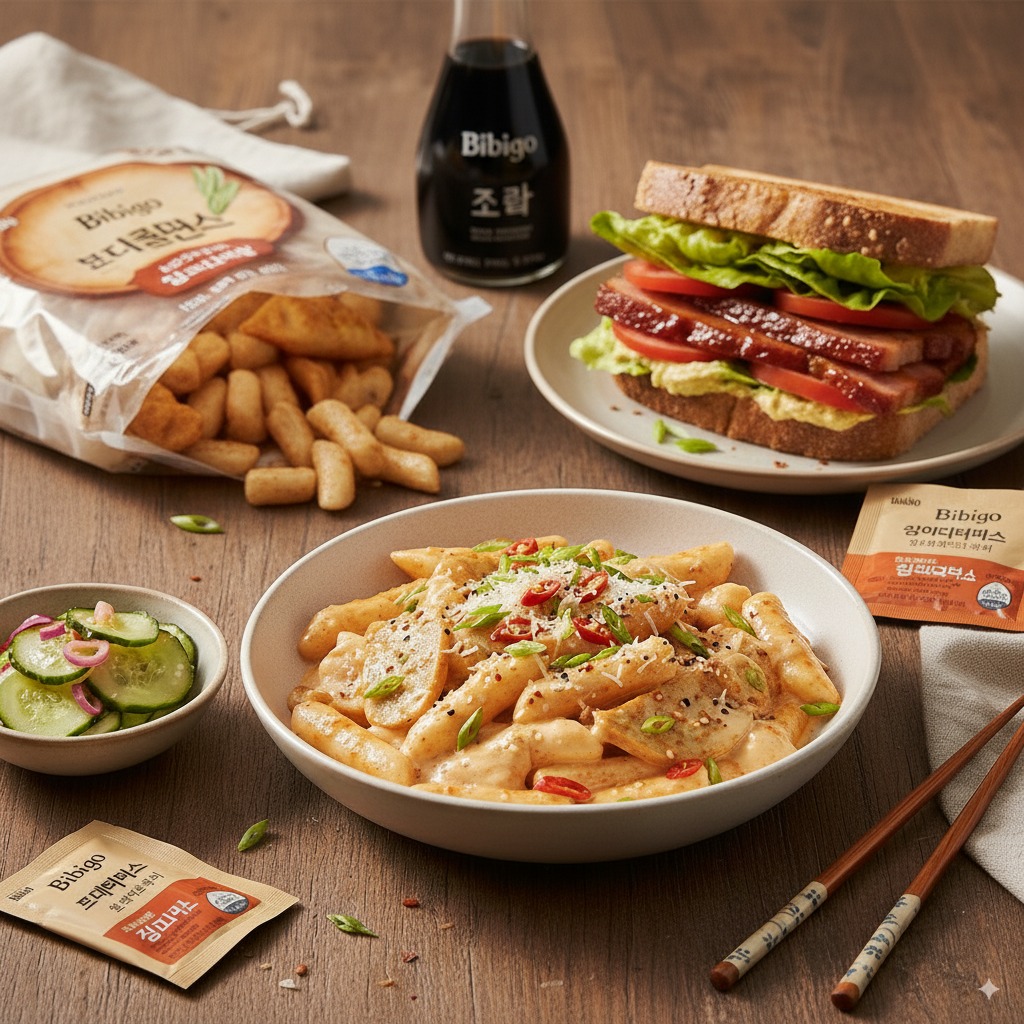
Bibigo’s TikTok and Instagram feel like playgrounds full of creative recipes. They don’t just teach how to cook dumplings; they constantly suggest imaginative fusion recipes like ’tteokbokki carbonara’ or ‘gochujang cookies.’ Through this, we become part of a community that enjoys cooking with Bibigo, transforming from mere consumers into engaged participants. Making a purchase is a ’transaction,’ but enjoying that product in various ways in our daily lives is about building a ‘relationship.’
Conclusion: A Masterclass Beyond a Meal
The path Bibigo has taken transcends the success story of a single food brand. It serves as a masterclass on how culture and business strategy can harmoniously coexist.
They did not impose their culture unilaterally but listened to the market’s voice and willingly transformed themselves. By building a bridge with the familiar dumpling, they gently led us into the unfamiliar world of Korean cuisine.
This is a story about sophisticated strategy, cultural respect, and above all, the powerful impact of a truly delicious dumpling. When we open our freezer door tonight and find Bibigo dumplings inside, we may not just be pulling out a convenient meal but writing a page of this amazing story together.