

“In 2026, are your assets safe?”
This is not merely a cyclical recession or boom.
The global economy stands on the brink of a monumental ‘Great Collision,’ where the macroeconomic consensus we’ve believed in for the past two decades is collapsing, and an entirely new order is about to be born.
On one side, artificial intelligence (AI) is driving a technological singularity, propelling stock prices to stratospheric heights in an ‘Everything Rally’.

But on the other side, the liquidation of the ‘Yen Carry Trade,’ which has underpinned global asset markets for decades, and the physical reality of energy depletion are sharpening the blade of deflation.
This article presents a concrete path not just to survive, but to seize wealth amidst the soaring asset prices (Melt-up) and sharp declines (Crash) that could occur starting in 2026.
We will dissect everything from the ‘One Big Beautiful Bill Act (OBBBA)’ enacted in the US in July 2025, to the Bank of Japan’s interest rate hikes, and the internal contradictions of the Korean economy.
Fasten your seatbelts. We are now entering the scene of the Great Collision.
1. AI Hypercycle and the Risk of ‘Money Wall’ Collapse
What is the most powerful engine supporting the stock market today?
It’s the unimaginable AI infrastructure investment (Capex) by Big Tech companies.
However, 2026 will be the ‘moment of truth,’ determining whether this investment is a golden goose or mere tinder that burns money.
1.1 A $405 Billion Bet: The Biggest Capital War in History
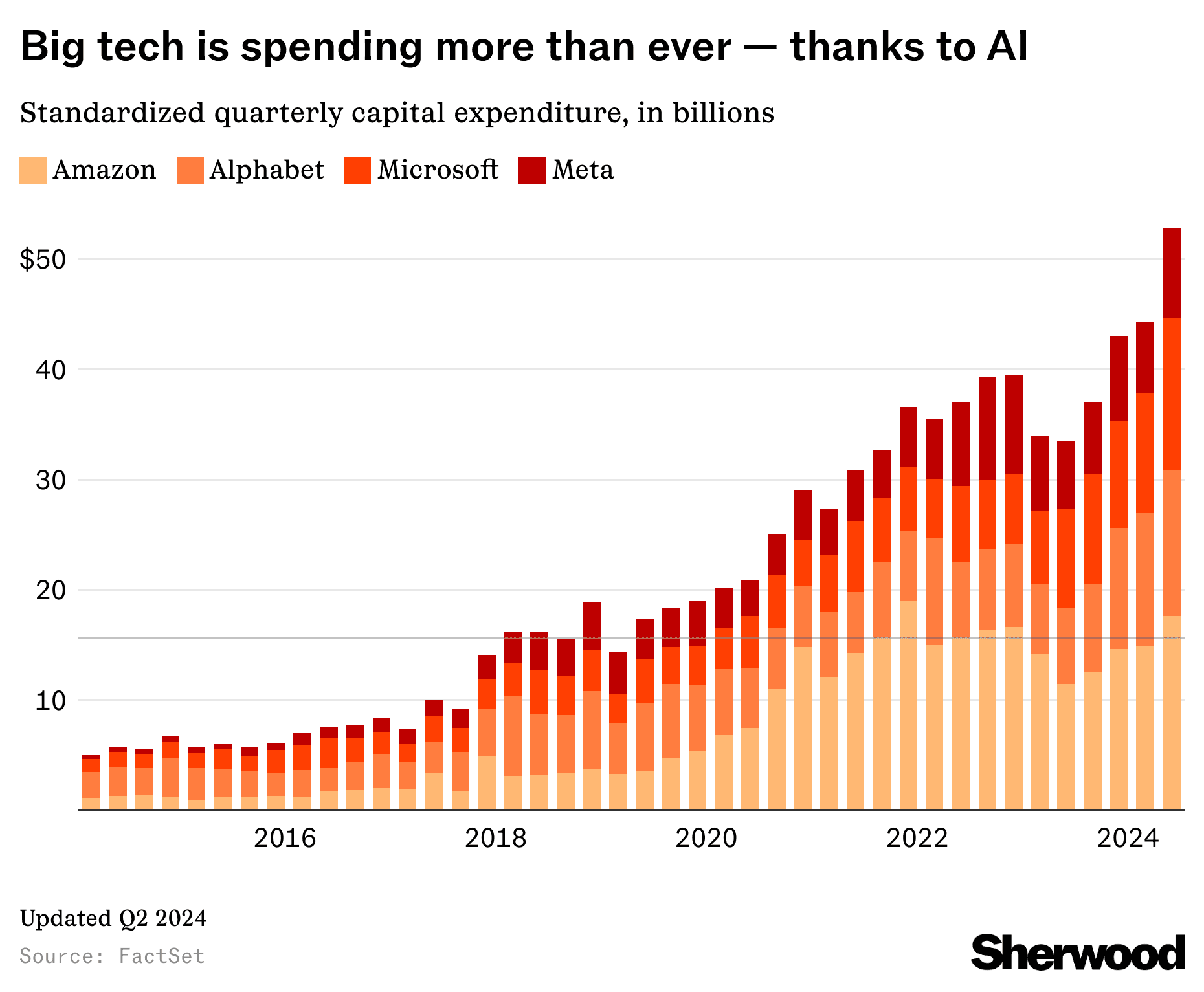
As of the end of 2025, the four major US tech giants (Microsoft, Amazon, Alphabet, Meta) have poured an astonishing $405 billion.
This is a 62% increase year-over-year. Goldman Sachs expects their total spending to reach $1.15 trillion by 2027.
This isn’t just investment; it’s an ‘arms race’ for survival.
- Amazon: Investing $125 billion in 2025 (51% increase), expanding AWS spending in 2026.
- Google: Exceeding $90 billion in 2025, forecasting 75% growth in 2026.
- Meta: Declared that 2026 spending will be “notably larger” to achieve AGI.
In the short term, these funds will heat up the semiconductor and power equipment markets, driving a ‘Melt-up’ in the stock market.
This is precisely why the S&P 500 could surpass 7,000 points.
1.2 The Cliff of ROI and the Collision of Physical Limits
However, where there is strong light, there is also a deep shadow.
The core of the 2026 Great Collision begins with the discrepancy between ‘investment’ and ‘returns.’
- The Revenue Gap: Billions of dollars have been spent on GPUs, but cloud revenue is not keeping pace. The emergence of high-performance open-source models like ‘DeepSeek’ threatens the monopolistic position of Big Tech, eroding their ’economic moat.’ Morgan Stanley warns that this could lead to a nearly 20% decrease in hyperscalers’ free cash flow in 2025.
- Physical Constraints: Some things cannot be bought with money. That is electricity. US data center electricity demand is projected to surge to 106GW by 2035, but grid connection waiting times have increased to up to 7 years. A data center without electricity is just scrap metal.
Ultimately, by mid-2026, when the earnings of AI companies fall short of expectations and power shortages become a reality, the market could rapidly shift into a ‘Melt-down’.
And the trigger will be pulled not in the US, but in Japan.
2. The Reality of the Black Swan: Yen Carry Trade Liquidation and Liquidity Evaporation
The true detonator of the 2026 financial market is the ‘Yen.’
The event that will shut down the pipeline of cheap liquidity that has inflated global asset prices for the past 30 years – the liquidation of the Yen Carry Trade – awaits.
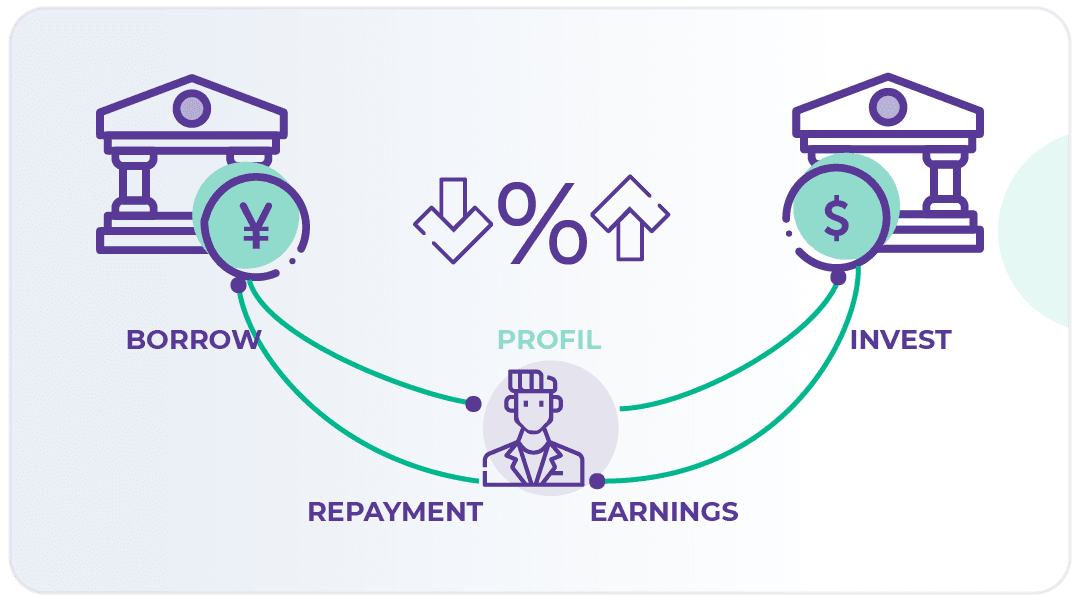
2.1 Invisible Leverage and the Ueda Shock
The Yen Carry Trade involves borrowing Yen at near 0% interest rates and investing in high-yield assets like Nvidia or corporate bonds in the US.
The Bank for International Settlements (BIS) estimates its scale, including derivatives, to be up to trillions of dollars.
It is a massive tower of debt built on the belief that “the Yen will always be cheap.”
However, Bank of Japan (BOJ) Governor Kazuo Ueda has signaled continued interest rate hikes until 2026.
- US (Rate Cuts) vs. Japan (Rate Hikes): As the interest rate differential between the two countries narrows, the Yen’s value surges.
- The Fear of Margin Calls: Investors who need to repay their Yen-denominated debt will be forced to sell off their holdings of US stocks and government bonds.
2.2 Simultaneous Impact Scenario (The Collision)
The most dire scenario is “when the Yen carry trade liquidation occurs precisely when the US stock market reaches its peak driven by AI optimism.”
Do you remember how the market reacted to even a slight interest rate hike by Japan in August 2024?
The shock in 2026 will be far greater. Systemic risk that could halve the S&P 500 lurks.
3. Regulatory Tectonic Shifts: OBBBA and the Forced Energy Transition
Another variable that will reshape the economic landscape in 2026 is energy policy combined with US politics.
The ‘One Big Beautiful Bill Act (OBBBA),’ enacted on July 4, 2025, is the key.

3.1 Speed Race and Protectionism
OBBBA enshrines “America First” in energy policy. The core components are two-fold:
- Groundbreaking Deadline: To receive tax benefits, solar and wind projects must break ground before July 4, 2026. This will cause construction demand to explode in the first half of 2026.
- PFE (Politically Exposed Foreign Entities) Regulation: Strictly excludes the use of Chinese-made components. This presents both a crisis and an opportunity for Korean companies.
3.2 Indirect Benefits for Korean Batteries and Nuclear Power
- Battery 3 Companies’ ESS Transition: Companies like LG Energy Solution and SK On have shifted their focus to Energy Storage Systems (ESS) to overcome the EV slowdown. As tariffs on Chinese products increase to 25%, Korean batteries are gaining indirect benefits, with LG Energy Solution already securing an order backlog of over 120 GWh.
- Nuclear Renaissance: Solar power alone cannot meet the energy demands of AI data centers. Small Modular Reactor (SMR) projects, in which Doosan Enerbility is involved, are gaining attention as the sole viable power alternative for data centers.
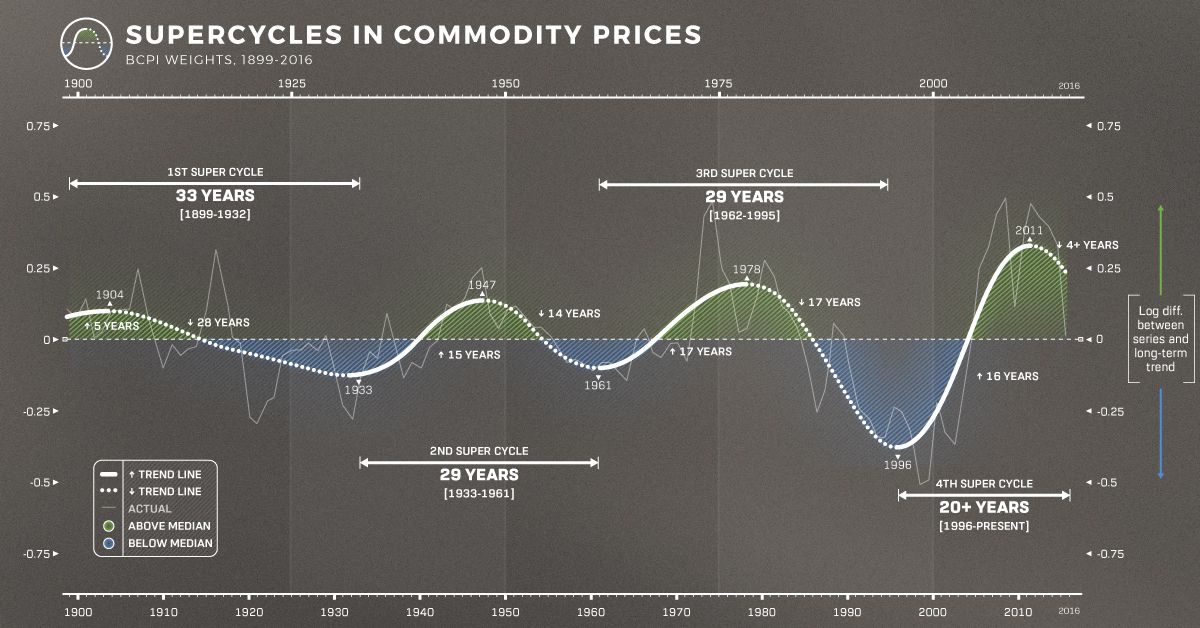
4. Resource Wars: The Return of the Supercycle
When financial assets become volatile, capital seeks refuge in ‘Real Assets.’
2026 will mark the peak of the commodity supercycle.
4.1 Copper: The Rice of Electrification
There will be a critical shortage of copper.
- Price Surge: CitiGroup predicts copper prices to reach $13,000 per ton by 2026 (a record high).
- Supply Cliff: Mines are aging, while demand from AI data centers and power grid upgrades is surging. Traders like Mercuria have already begun hoarding copper.
4.2 Gold: The Era of $5,000
Gold is not just a precious metal; it’s a hedge against ‘US debt.’
Goldman Sachs anticipates gold prices to approach $4,900 per ounce by the end of 2026.
If central banks continue to accumulate gold instead of dollars, and individual investors join in, surpassing $5,000 will be a matter of time.
5. Duality of the Korean Economy: Internal Collapse and External Advance
In 2026, the Korean economy will be divided into two extreme ‘countries.’
- Domestic Demand (Real Estate) in Agony: The polarization of housing prices between Seoul and provincial areas has reached an irreversible point. The collapse of provincial construction companies and Project Financing (PF) defaults threaten a chain reaction crisis in the secondary financial sector.
- Exports (K-Defense/Shipbuilding) in Triumph: On the other hand, money is being raked in from abroad.
- K-Shipbuilding: HD Hyundai Heavy Industries and Hanwha Ocean have already secured three years’ worth of orders. As China’s shipbuilding industry faces scrutiny due to US-China tensions, Korea is monopolizing the benefits.
- K-Defense: Exports by LIG Nex1 to the Middle East and Hanwha Aerospace’s dominance in Europe and Poland demonstrate that geopolitical crises present opportunities for Korea.
6. Strategic Asset Allocation for Survival in 2026 (Barbell Strategy)
So, what should we do? We must avoid being intoxicated by the ‘Everything Rally’ or paralyzed by fear.
A ‘Barbell Strategy’ that embraces both extremes simultaneously is effective.
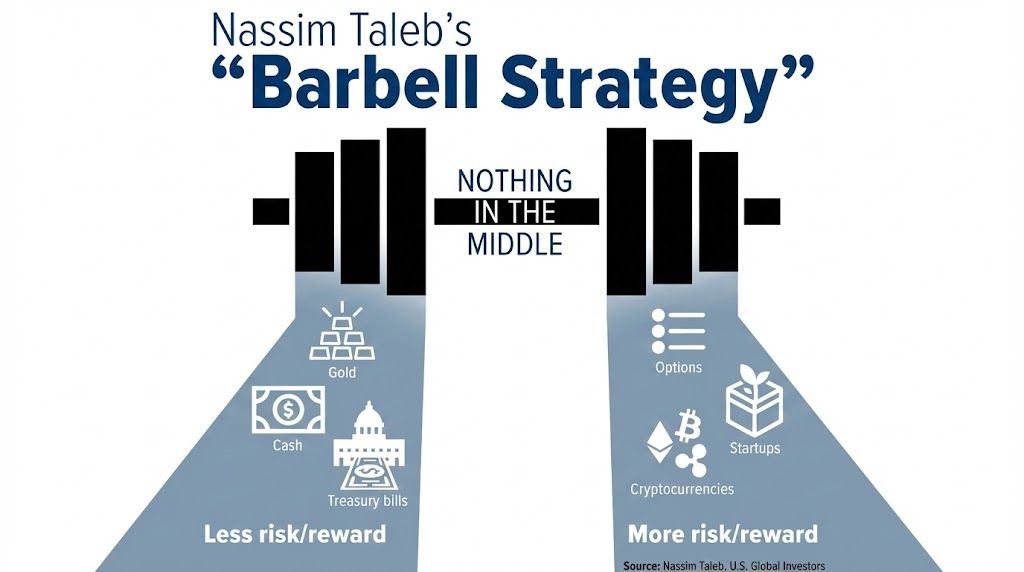
6.1 Defensive Assets (30%): Survival Insurance
- Recommendations: Physical Gold, Short-Term US Treasury Bonds
- In a liquidity shock, gold, with no counterparty risk, is the only reliable asset. You need an anchor to stabilize portfolio volatility.
6.2 Growth Assets (40%): Physical Infrastructure
- Recommendations: Copper mining companies, Power grid (LS Electric), Nuclear power (Doosan Enerbility), Defense stocks
- Even if the AI software bubble bursts, data centers and power grids must be built. Invest in tangible ‘physical growth.’
6.3 Opportunistic Assets (30%): Riding the Volatility
- Recommendations: K-Shipbuilding (HD Hyundai Heavy Industries), HBM Semiconductors (SK Hynix)
- Shipbuilding companies with order backlogs that remain strong even in a downturn, and the leading memory semiconductor company, will boost portfolio returns. However, swift responses are needed to fluctuations in the Yen exchange rate.
Conclusion: Crisis is an Opportunity for the Prepared
The Great Collision of 2026 is an unavoidable future.
When the rosy illusions brought by AI collide with the sandcastles built on debt, unprepared assets will turn to dust.
But remember:
For investors holding assets that control bottlenecks—copper, power equipment, shipyards, reactors—2026 is a historic opportunity to get on the wealth fast track.
Now is not the time to pop champagne, but to drop anchor and trim the sails in preparation for the coming storm.
Where is your capital moving right now?
References and Sources
- Big Tech’s $405B Bet: Why AI Stocks Are Set Up for a Strong 2026 \[IO Fund\]
- The Coming Melt Up…and Melt Down \[Nasdaq\]
- Japan Week Ahead: Markets Continue Betting on BOJ Rate Hike \[TradingView\]
- The Electricity Supply Bottleneck on U.S. AI Dominance \[CSIS\]
- Copper Price Forecast 2026: Supply Deficit & $13K Target \[Discovery Alert\]
- Goldman Sachs bullish: Gold could surge to $4,900 by 2026 \[GOLDINVEST\]
- Credit FAQ: The U.S. Changes Policies, The Korean Battery Firms Change Strategy \[S&P Global Ratings\]