
On the morning of September 4, I was scrolling through my timeline when I saw something strange. I expected a live stream of Musk on stage talking about the first passenger ride event for the Cybercab, but there was no stream. I heard that even the invited guests had to sign an NDA. Wondering why such a milestone—the car hitting the road just two years after its prototype reveal—was so quiet, I looked into it and found an article stating that federal regulators had launched an investigation before the event even concluded. This happened on the very day the vehicle hit the road.
I had two questions.
What makes the Cybercab different from existing robotaxis like Waymo or Zoox to cause such an issue, and is this something that can actually go beyond the U.S.?
As I dug deeper, I realized both questions were actually connected.
What Sets the Cybercab Apart from Other Robotaxis
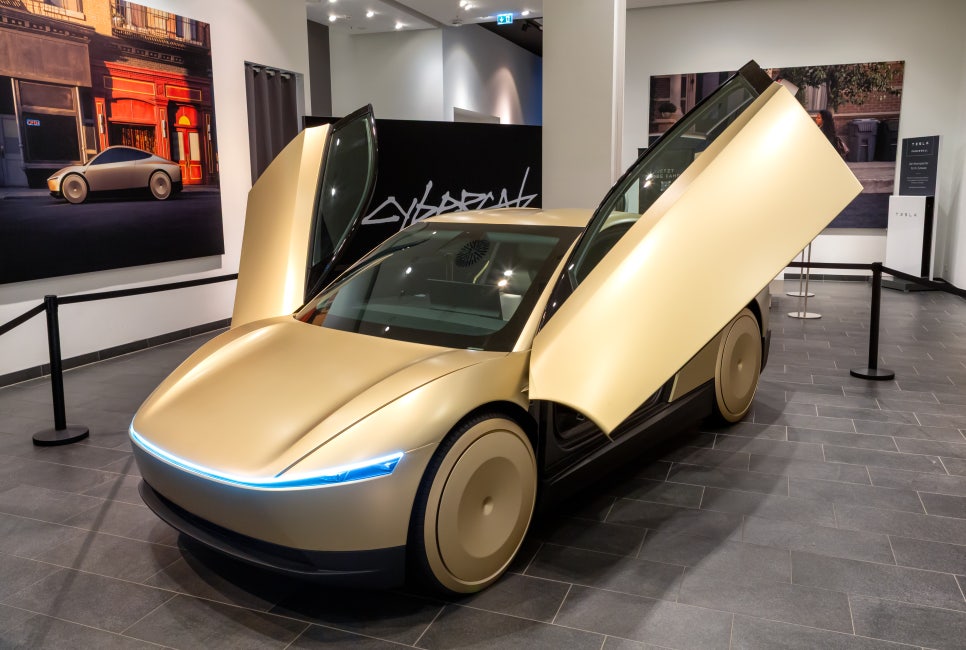
The Cybercab is a two-seater with no steering wheel, pedals, or side mirrors. It is designed with the premise that human operation is entirely unnecessary.
It features butterfly doors, a gold-colored body, an EPA-estimated 47.6kWh battery, a front-wheel-drive 219hp motor, and a combined range of about 472km. Its only sensors are nine cameras.
There is no LiDAR or radar.
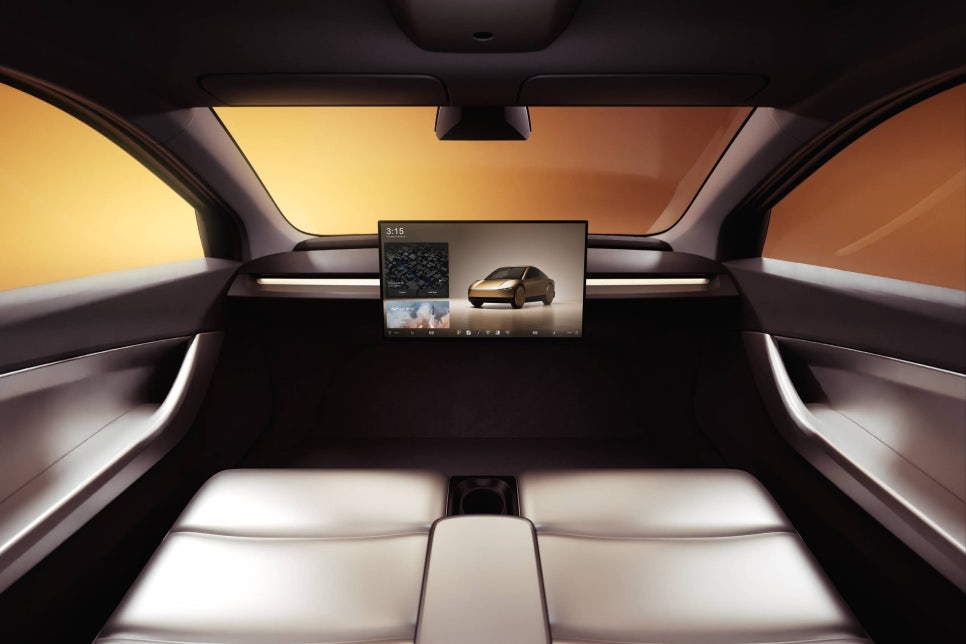
Why this matters is because Waymo and Amazon-owned Zoox have taken the exact opposite path.
Waymo relies on ‘multi-sensor fusion,’ layering LiDAR, radar, and cameras. Even their 6th-generation vehicle, Ojai, while reducing the number of sensors, still uses 13 cameras along with LiDAR and radar. Zoox also uses a cube-shaped body equipped with multiple sensors.
Tesla, on the other hand, has insisted on a ‘vision-only’ route, relying solely on optical cameras and AI computing. The Cybercab is the most extreme realization of that philosophy.
The price is also different. The target is under $30,000. While not finalized, the calculation seems to be that they can produce them much cheaper and in much higher volume than the method of retrofitting existing mass-produced cars like Waymo or Zoox.
In fact, on August 31, seven Cybercabs were added to the Texas DMV registration records, bringing the total number of Tesla robotaxis registered in Texas to 276 (269 Model Ys + 7 Cybercabs). Although still at a pilot level, the move to scale up seems clear.
One thing to note is that while the Cybercab is self-certified as SAE Level 4 on paper, initial operations involve a safety driver in the passenger seat and remote monitoring.
It is still different from Waymo’s fully driverless state (where the driver’s seat is empty). The design is built to exclude human intervention, but the operation is in a transitional phase where a human sits by and watches.
Why the Investigation Started on Launch Day
The U.S. operates its Federal Motor Vehicle Safety Standards (FMVSS) through a ‘self-certification’ system rather than prior authorization.
Manufacturers can declare that they meet the standards and put the vehicles on the road; if a problem occurs, the National Highway Traffic Safety Administration (NHTSA) investigates retrospectively.
However, this system was originally designed with the premise that a human is driving. Clauses regarding brake pedals, steering wheels, and side mirrors are all based on this.
Tesla independently determined that these clauses were ’not applicable’ to the Cybercab and completed the certification.
This is exactly what the NHTSA is scrutinizing. They want to see the technical data and the process behind that judgment.
An Audit Query number has even been assigned. Coincidentally, this is a path Zoox went through in 2022.
Zoox also self-certified its steering-wheel-less cube robotaxi, only to be hit with special orders and audit queries, eventually ending the investigation on the condition that they withdraw their claim that their vehicle met all federal standards. Afterward, they pivoted to seeking ’exemption approval’ rather than self-certification, and only obtained temporary exemption for commercial service in July 2026. However, there was a condition: a cap of 2,500 commercial vehicles per year for the next two years.
Tesla chose a different path than Zoox. Instead of applying for an exemption, they self-certified that the Cybercab already meets all federal standards.
If this works, they can scale up production without limits, but if the NHTSA does not recognize the basis for that certification, they could be stopped in their tracks.
While the U.S. Department of Transportation is working on revising regulations to remove the requirement for manual controls in vehicles without human drivers, it has not yet been completed. Tesla has effectively jumped the gun, and some media outlets have described this as a ‘game of chicken with regulators.’
Musk’s side isn’t exactly hiding it either. While the head of engineering mentioned an “excellent relationship” with the NHTSA director during an earnings call, that hasn’t spared them from the investigation.
If this audit ends poorly, the problem is that the moment the NHTSA decides that the standards do apply, the Cybercab could be subject to a defect determination process despite already being on the road.
In the worst-case scenario, it could lead to measures equivalent to a recall.
Conversely, if the certification is accepted, they won’t be tied to the 2,500-unit annual limit like Zoox, allowing them to scale up immediately—a gamble worth taking from the company’s perspective.
And this is at the federal level; actual robotaxi operations are subject to additional regulations in each state.
Musk once expressed that this situation is “incredibly painful,” pushing for a unified federal framework instead of fragmented state regulations. Looking at what the Cybercab is going through now, one can understand why he feels that way.
Passing a single federal standard is complex enough; adding state-by-state regulations on top of that means operators have to redraw their maps.
This is the situation within the U.S. What happens when it crosses the border?
Europe — No Higher-Level Regulations Exist Yet
Europe moves in line with international regulations set by bodies under the United Nations Economic Commission for Europe (UNECE).
While this body recently adopted world technical regulations separating Driver Control Assistance Systems (DCAS) and Automated Driving Systems (ADS), these are merely ‘frameworks’ that only become effective once individual countries or the EU adopt them into actual legislation. This means the process of reflecting them into national standards remains.
Furthermore, the UN standards themselves do not yet contemplate vehicles like the Cybercab.
Some analyses predict that Tesla’s urban autonomous driving features will be difficult to certify under UNECE regulations until at least 2028.
Currently, what Tesla is doing in Europe is essentially ‘ride-alongs’ for the general public in France, Italy, and Germany. It’s a stage for building trust rather than formal approval, with the approval process by the Netherlands Vehicle Authority (RDW) cited as a watershed moment for European expansion.
If FSD with a steering wheel is at this stage, the Cybercab without one is far behind in line.
It’s not that Europe is actively blocking it; it’s more that the regulations that would serve as the basis for judgment haven’t been finalized yet.
China — Design Philosophy and Law Collide Head-On
China is different. They have established their own regulations that are even stricter than the UN standards.
Not only have they codified manufacturer liability for accidents, but they have also legally mandated that a human must be able to regain driving control within at least 10 seconds.
But the Cybercab is a car without a steering wheel or pedals. There is no control device for a human to take over, whether in 10 seconds or 100.
This isn’t a problem that will solve itself over time. It means there is no way to meet the minimum conditions required by Chinese law with the current design. On top of this, there is a ban on the cross-border transfer of data.
Tesla’s core competitive edge in autonomous driving comes from training data accumulated on U.S. roads, but China prohibits taking that data out of the country. Therefore, if they want to enter China, they would need to build new data centers and training infrastructure locally, and the vehicle itself might need a redesign to the extent of adding a steering wheel back.
If Europe is a place they can’t enter because ’there are no standards yet,’ China is a place they can’t enter because ’the car itself doesn’t match the existing standards.’
South Korea — Guidelines Exist, but Not Yet Law
South Korea was the first in the world to create Level 3 vehicle safety standards in 2019, so their institutional preparation was relatively fast. However, when it comes to fully driverless, or Level 4, it’s a completely different story.
It wasn’t until July 2026 that the Ministry of Land, Infrastructure and Transport issued its first ‘Guidelines for Safe Operation of Unmanned Autonomous Vehicles,’ which are administrative guidelines, not legislation.
A key requirement is that to receive a temporary operation permit, the vehicle must have completed over 15,000km of demonstration driving, and the guidelines were reportedly created by referencing the UNECE terminology system and some overseas cases.
The more fundamental problem is that the Passenger Transport Service Act itself is designed with the premise of a human driver. Since special legislation to change this premise is targeted for 2027, more time is needed for the actual law to be refined, not just the guidelines.
Interestingly, there is the issue of speed standards. UN R157 regulations limit robotaxi speeds to 60km/h, but South Korea chose not to adopt this, opting not to set a specific cap. This means there are areas where they are looser than international standards. However, that doesn’t make the overall picture favorable, as commercialization remains confined to pilot operation districts and regulatory sandboxes.
While Waymo has reportedly established a Korean subsidiary, it seems we will have to wait for these guidelines to be turned into actual law before we see cars on the road.
The Core Point Is That the Types of Barriers Are All Different
Lining up these four countries, it’s interesting that while the conclusion—’they can’t go’—is the same, the reasons are all different.
The U.S. has an open market, but faces procedural risks regarding whether the ‘self-certification’ gamble will hold up.
Europe has a timing issue where the higher-level regulations serving as the basis for judgment haven’t been created yet.
China has a structural issue where the current design clashes directly with the law.
South Korea has a problem of institutional maturity where the guidelines are out, but the law hasn’t caught up.
It’s too simplistic to lump them all together under the term ‘regulatory barrier.’
Personally, I think the Cybercab’s greatest strength—’no steering wheel’—might end up being its biggest obstacle abroad.
Especially in places like China, where the law requires the very existence of control devices, they might eventually have to create region-specific variants with steering wheels added back. If that happens, the original strength of ‘reducing costs through purpose-built design’ could be diluted. However, this is just my speculation, and since regulations often change suddenly based on a country’s industrial situation, I honestly don’t know how valid this map of barriers will be in 1–2 years.
References
- https://finance.yahoo.com/technology/articles/feds-launch-investigation-tesla-cybercab-120114512.html
- https://electrek.co/2026/09/04/tesla-cybercab-nhtsa-investigation-fmvss-certification/
- https://abcnews.com/Business/feds-launch-probe-teslas-deployment-cybercab-vehicles-brakes/story?id=136202521
- https://techcrunch.com/2026/09/04/feds-launch-investigation-into-teslas-cybercab-deployment/
- https://www.axios.com/2026/09/04/tesla-cybercab-nhtsa-regulatory
- https://www.ntd.com/federal-regulators-probe-teslas-safety-certification-of-cybercab_1170939.html
- https://www.evshift.com/521150/tesla-hit-with-nhtsa-investigation-amid-no-steering-wheel-cybercab-rollout-2/
- https://www.jodaleconomy.com/news/articleView.html?idxno=3116
- https://www.aitimes.com/news/articleView.html?idxno=214885
- https://www.theguru.co.kr/news/article.html?no=106597
- https://auto.danawa.com/news/?Work=detail&no=5835821&NewsGroup=M
- https://www.g-enews.com/article/Global-Biz/2026/08/2026081123442975870c8c1c064d_1
- https://www.digitaltoday.co.kr/news/articleView.html?idxno=536636
- https://www.lawtimes.co.kr/news/articleView.html?idxno=222058
- https://marketin.edaily.co.kr/News/ReadE?newsId=03591606645512224
- https://www.epnc.co.kr/news/articleView.html?idxno=321388
- https://zdnet.co.kr/view/?no=20260711011640