
Last week in Phoenix, a passenger was captured on social media video-chatting from the backseat of a car with no one in the driver’s seat. When they mentioned, “I’m in a self-driving car right now,” the person on the other end was visibly shocked.
At this point, that reaction feels almost dated; robotaxis are becoming the backdrop of everyday life.
Yet, it’s strange. Even though autonomous vehicles have become common, I’m still the one holding the steering wheel of my own car. Why is that?
The answer lies not in hardware, but in data.
I recently wrote about the Big Tech AI investment war, estimated at $405 billion, and autonomous driving is essentially a microcosm of that massive conflict. When I first posed this question at the end of 2025, I examined the battle between two whales, Waymo and Tesla, and the situation facing Hyundai as it chased them.
Ten months later, the landscape has shifted far faster than expected. Waymo has doubled its weekly ridership, Tesla FSD has pushed three more minor versions, and most importantly, the founder of 42dot—a central figure in my original piece—has stepped down from his position.
As of September 2026, let’s revisit the questions I raised back then.
Why Waymo Still Won’t Give Up on LiDAR
Waymo’s answer remains consistent.
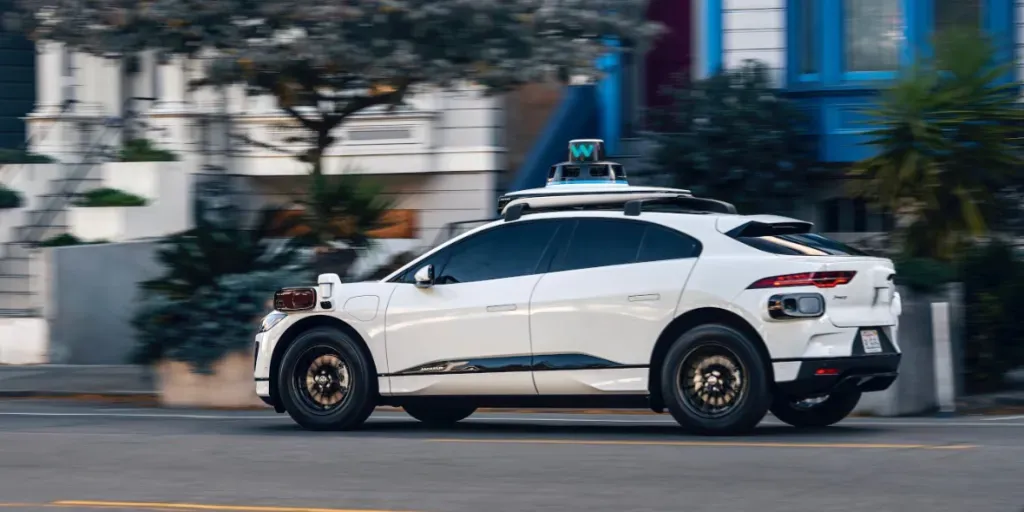
They don’t trust any single sensor 100%. The 5th-generation Waymo Driver is layered with LiDAR that sees 300 meters away, cameras, and imaging radar that can track speeds even in bad weather.
It’s a car with three eyes; if heavy rain blinds the cameras, the LiDAR and radar take over.
Waymo’s real weapon is that this stubbornness has been proven by statistics.
They have published papers, verified by global insurers like Swiss Re, showing a 92% reduction in pedestrian injuries and an 85% reduction in serious injury accidents compared to human drivers.
In contrast, Tesla’s safety figures are primarily based on internal reports, which makes them different in nature.
While their internal stat of one accident every 6.69 million miles with Autopilot engaged is impressive, it differs in verification standards from Waymo’s peer-reviewed results.
This ‘proven safety’—rather than just sheer mileage—has been the key to convincing demanding cities and regulators.
And that persuasion is now manifesting in the numbers.
When I first wrote this, Waymo was handling 250,000 paid robotaxi rides per week. As of the first half of 2026, that figure has already exceeded 500,000 weekly rides. They have expanded to over 10 cities. Alphabet has set a goal of 1 million weekly rides by the end of 2026 and has secured $12 billion in funding, giving them a valuation that surpasses many established automakers.
However, their growth slowed slightly this summer due to a temporary suspension of highway driving and a software recall—a testament to how cautiously the ‘proven safety’ brand is being managed.
Tesla FSD: How Far Has ‘Vision-Only’ Come?
Tesla’s approach is the exact opposite.
They stripped away LiDAR, calling it an “expensive and useless crutch,” and are attempting to mimic human driving entirely using eight cameras and neural networks.
In the past, developers would write 300,000 lines of C++ code for logic like “There is a person → Predict their position in 3 seconds → Hit the brakes.” Now, they show the neural network millions of hours of real-world driving footage and let it learn on its own.
This is the ’end-to-end’ approach, and the fuel driving it is the real-time data collected by millions of Teslas worldwide.
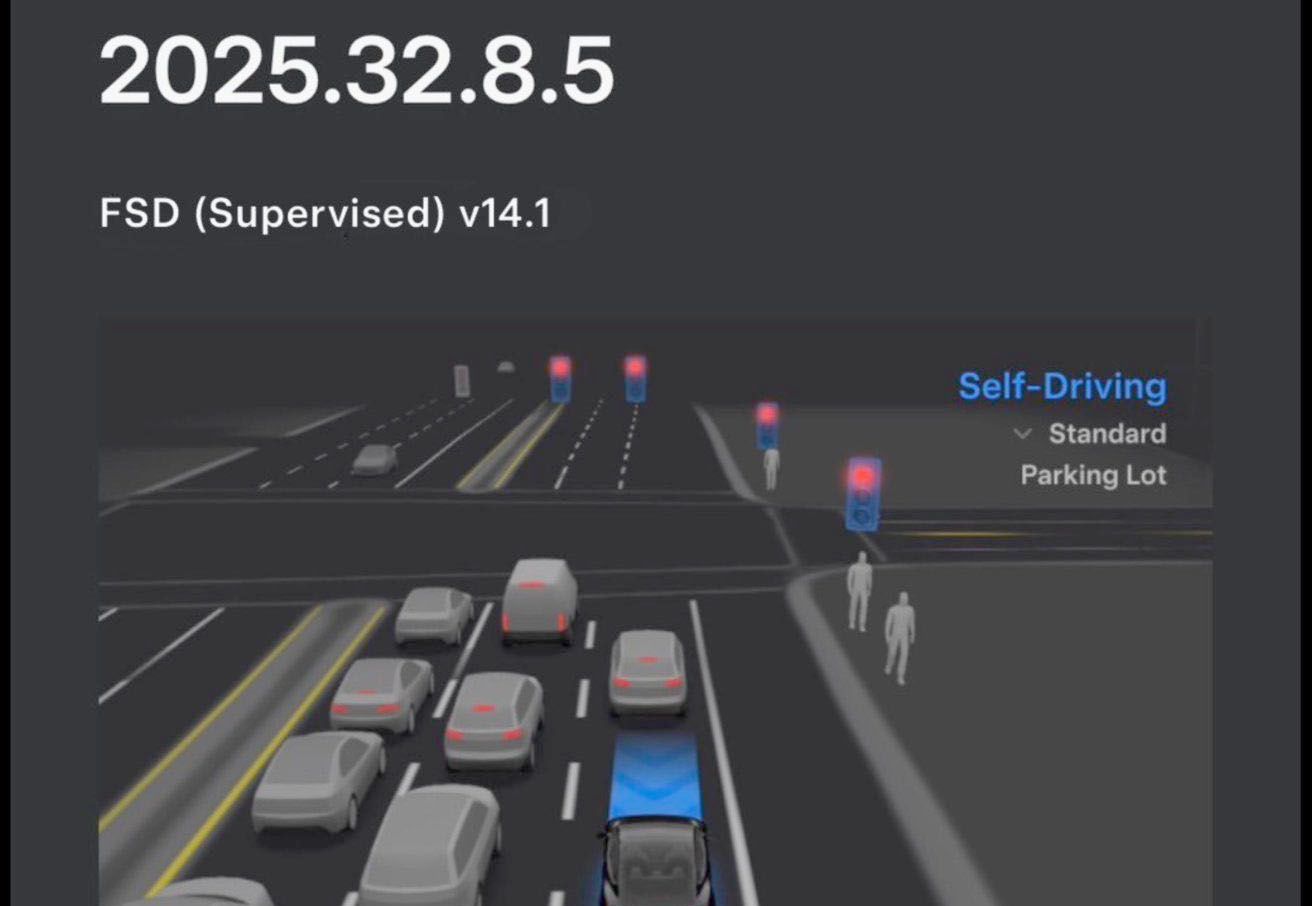
FSD v14, released in October 2025, was truly a “fundamentally different AI model design,” featuring a new architecture with 10 times the model capacity.
The problem was that this new model was optimized for the latest HW4 hardware, effectively freezing performance for owners of older HW3 vehicles.
As of September 2026, FSD has reached v14.3.9, and by rewriting the neural network vision encoder and AI compiler, they’ve boosted response speeds by about 20%.
HW3 owners are now receiving a scaled-down ‘FSD v14 Lite’ in phases. The fundamental reality remains: peak performance is still exclusive to HW4.
The evolution of v14 is also noteworthy.
Upon arriving at a destination, users can now specify exactly where they want to get off—‘parking lot,’ ‘driveway,’ or ‘parking garage.’ Navigation and route-setting are now integrated into the AI neural network, so if it detects traffic, it instantly recalculates a detour. Recognizing and yielding to ambulances or police cars is now a standard feature. It is transitioning from a simple lane-keeping tool to a ‘personal assistant that completes the mission to your destination.’
The power of the data accumulated by this version is vividly apparent in user reviews.
Videos have surfaced showing cars navigating a 5-story parking garage on their own to find the exit, or slightly reversing to give pedestrians more space. Users report that much of the unnecessary braking and hesitation has been smoothed out. These aren’t behaviors that can be hard-coded; they are the results of the AI learning patterns from millions of videos showing how humans behave in those situations.
[Key Comparison] Waymo vs. Tesla — 2026 Autonomous Driving Philosophy
| Feature | Waymo | Tesla |
|---|---|---|
| Core Philosophy | Proven Safety (Machines must be more perfect than humans) | Scalable AI (AI learns and evolves like humans) |
| Sensor Suite | Redundant LiDAR+Camera+Radar | 8 Cameras, Vision-Only |
| AI Approach | Modular + Sensor Fusion | End-to-End (FSD v14) |
| Primary Market | L4 Robotaxis (500k weekly rides, 10+ cities) | L2+ ADAS (FSD subscription, millions of vehicles) |
| Safety Proof | Peer-reviewed & Insurer-verified | Primarily internal reports |
Why is China’s Autonomous Driving Race So Fast?
While the two US giants grapple with tech reliability and AI design, China has taken a shortcut via government deregulation.
Baidu’s Apollo Go completed 2.2 million fully driverless rides in Q2 2025 alone, a 148% increase year-over-year, supported by policies that mitigate criminal liability even in the event of accidents.
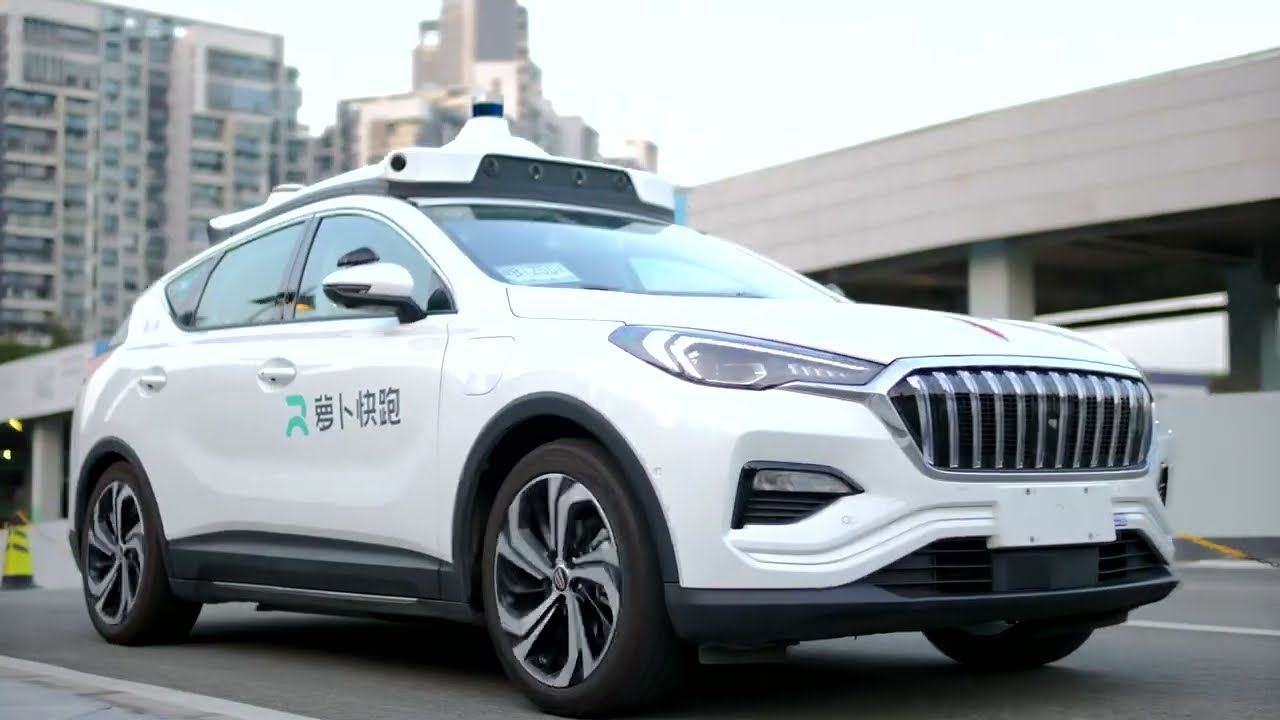
Industry experts call this ‘regulatory arbitrage.’
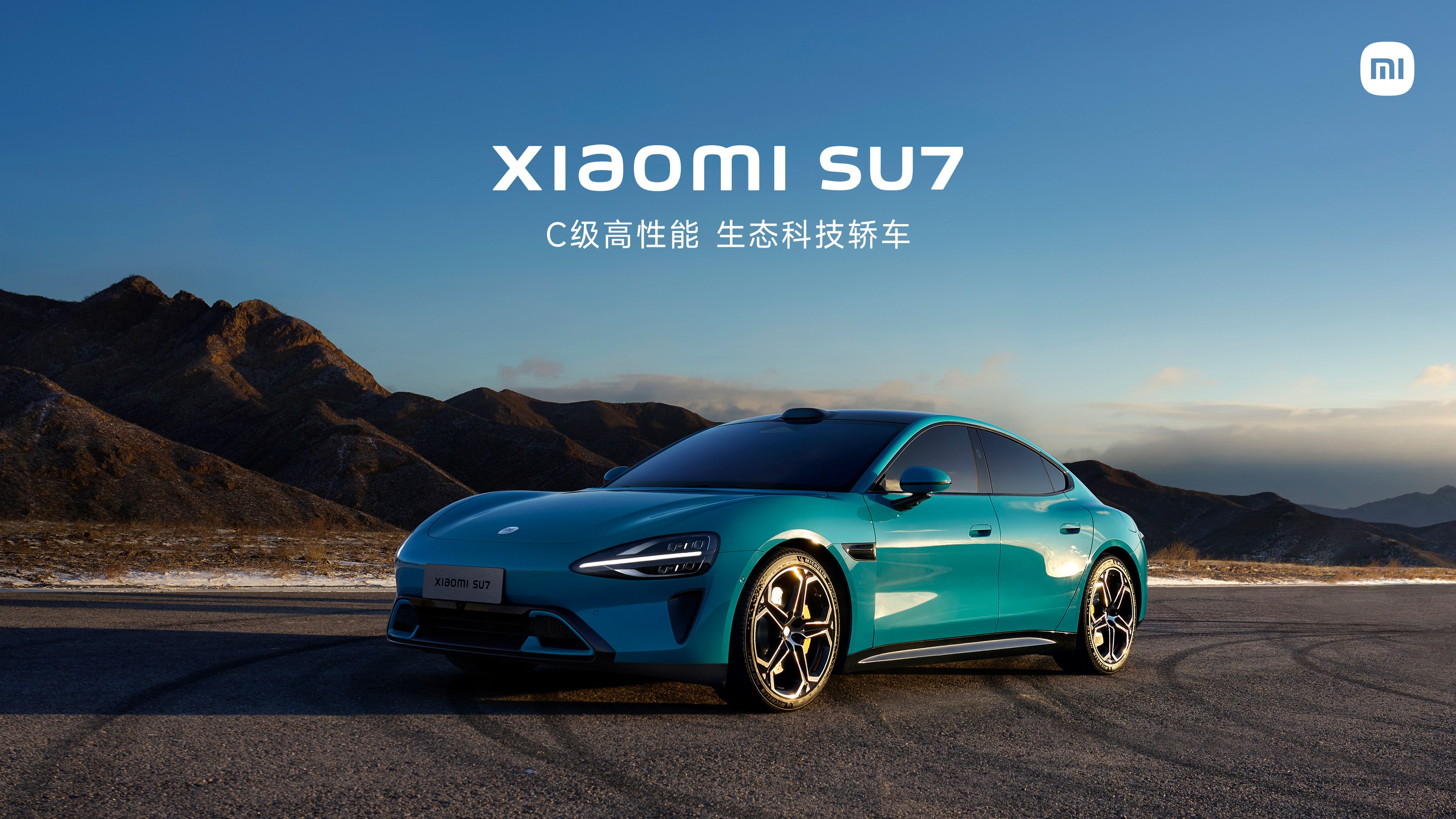
Xiaomi, formerly a smartphone company, has emerged as the most threatening new entrant.
They introduced an end-to-end framework called ‘ORION’ at a computer vision conference, chasing Tesla’s approach at a terrifying pace. However, there is a dark side. In March 2025, a crash involving driver-assist features led to 3 deaths, and in August, they recalled 110,000 vehicles due to software defects. They are currently paying the price for their breakneck speed.
Companies Holding Autonomous Data Without Building Cars
Nvidia is no longer just a GPU company.
They have become a ‘vertically integrated’ platform, selling the chips, software, and complete AI models needed for autonomous driving. They proved their prowess by winning the CVPR Autonomous Driving Challenge for three consecutive years.
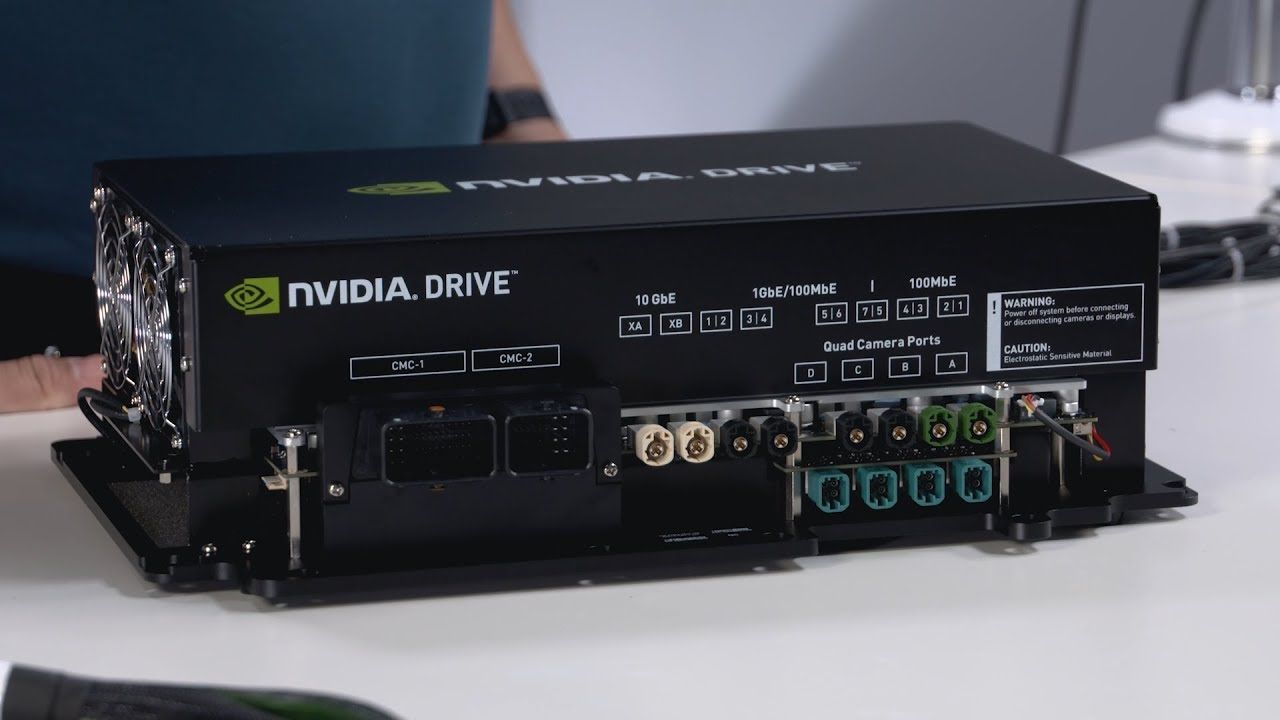
The trend of increasing dependency on the Nvidia ecosystem across the semiconductor industry is being mirrored in autonomous driving, increasing the risk that legacy automakers with weak internal software capabilities will become mere vassals to this ecosystem.
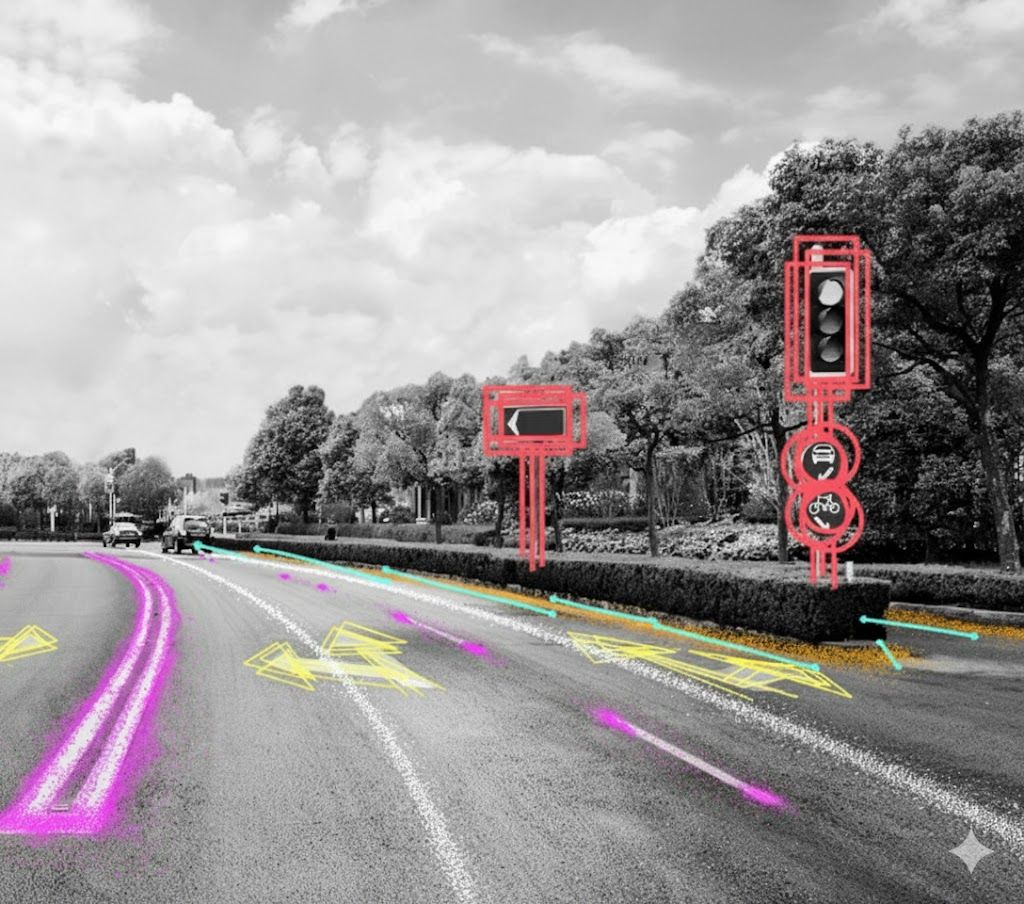
Mobileye, on the other hand, utilizes a ‘smart data’ strategy, transmitting only essential information like lane markings and signs at a ultra-low 10kb per km from over 200 million vehicles worldwide to update high-definition maps in real-time.
GM learned the most expensive lesson in this industry.
Its subsidiary, Cruise, was officially disbanded in December 2024 following a catastrophic malfunction in October 2023 where it struck and dragged a pedestrian for 6 meters. This served as a signal to the entire industry that the costs of scaling L4 robotaxis were unsustainable.
GM pivoted to L3 ’eyes-off’ systems for privately owned vehicles, entering real-road testing in California and Michigan in March 2026. Cumulative mileage for Super Cruise has exceeded 1 billion miles, and plans to equip the 2028 Cadillac Escalade IQ with a system combining LiDAR, radar, and cameras remain on track.
However, the criticism from consumers that Super Cruise is “nowhere near” FSD—not because of expensive LiDAR, but because of AI judgment—remains a valid question.
The very structure of launching a limited ‘highway-only’ function in 2028, even after including expensive hardware, highlights the cost-to-performance paradox GM faces.
There are others quietly eyeing this space.
Amazon’s subsidiary Zoox started with purpose-built vehicles that lack steering wheels and pedals, launching commercial services in the relatively lenient regulatory environment of Las Vegas. If combined with Amazon’s logistics network, they are considered a potential dark horse in this market.
Why Hyundai’s 42dot Dream Was Shaken
When I first wrote this, I noted that 42dot, acquired by Hyundai for roughly $750 million, was aiming for ‘HD map-free’ Tesla-style autonomy, known as ‘Atria AI.’ The problem was the fuel: data.
Tesla collects more data in a few minutes than 42dot had accumulated in its entire shuttle fleet by June 2024 (170,000 km). While it could serve as a sample, it wasn’t a large enough dataset to train a robust AI.
The most painful evidence at the time came from actual user voices.
One Hyundai owner complained, “On a specific section of the I-95 in the US during my commute, the car loses its lane and tries to swerve into the guardrail every single time.” The phrase “every single time” pinpointed the nature of the problem.
Without a pipeline where failure data is collected, analyzed, re-trained, and deployed, the same mistakes are bound to repeat.
They did have research talent. 42dot demonstrated world-class AI research capability by placing 2nd in the 2023 CVPR challenge—but the winner that year was Nvidia. They were an excellent student, but not the one making the rules of the game.
Additionally, Motional, the subsidiary handling L4 robotaxis, was following in the footsteps of GM Cruise with cumulative losses of $1.7 billion, and there was strategic confusion from fighting two wars at once: L4 and L2+.
This gap led to organizational fractures.
The founder who built and led 42dot resigned in December 2025 after poor performance and conflicts over technical development.
In January 2026, Hyundai Motor Group recruited Dr. Minwoo Park, who had previously worked on autonomous perception at Tesla and Nvidia. This looks like a choice to tackle the data deficit head-on by bringing in someone who understands data better than anyone.
The results are beginning to emerge.
Just a few days ago, on September 11, Hyundai Motor Group held an ‘Autonomous Driving Media Day’ at 42dot’s Pangyo headquarters and released a test video of an Ioniq 6 traversing downtown Seoul without driver intervention using only 8 cameras and fisheye lenses.
CEO Minwoo Park made ‘data flywheel’ the core of their competitiveness, stating, “We will reverse our data disadvantage within 5 years.”
A roadmap is in place: a two-track plan to mass-produce Nvidia-based L2+ in the first half of 2028, L2++ in the second half, and their own Atria AI-based L2++ in the second half of 2029.
How should we interpret this announcement?
Coldly put, the primary goal through 2028 is effectively buying and installing Nvidia’s finished solution. The risk of ‘software colonialism’ has become official. However, the fact that they have set a hard deadline for their own technology in 2029 and prioritized the process of gathering real-road data as a central task is a clear departure from a year ago. The distance between creating a plan and making it a reality still stands at three years.
How Will the Autonomous War Unfold After 2026?
The L4 robotaxi market has narrowed to a two-horse race between Waymo and Baidu following GM Cruise’s exit. It’s a fight between those who proved safety and those who hold economies of scale.
The L3 consumer market, conversely, has become the hottest battlefield since GM’s entry. Underlying all this competition remains the principle that whoever holds the data wins.
Tesla has real-time driving data, Waymo has L4 safety data, and Mobileye has lightweight mapping data—they have already built their moats.
Hyundai Motor Group now has a clear deadline.
Survive with Nvidia’s solution until 2028, and use the data accumulated on real roads in the meantime to build their own technology by the second half of 2029. This is no longer a “someday” prospect; it’s a promise with numbers attached.
The key is whether the experiment currently running with a few Ioniq 6s in Pangyo can scale at a speed that catches up to the volume of data Tesla generates from millions of cars worldwide within three years.
Nokia and Kodak missed not the technology, but the timing. Now, it is Hyundai’s turn to prove they can do better.
References
- Waymo Official Safety Report — Waymo Safety Impact
- Swiss Re, New Swiss Re study: Waymo is safer than even the most advanced human-driven vehicles
- Waymo's metric for 2026 success: one million weekly rides — Automotive World(2026.02) — https://www.automotiveworld.com/news/waymos-metric-for-2026-success-one-million-weekly-rides/
- Waymo skyrocketing ridership in one chart — TechCrunch(2026.03.27) — https://techcrunch.com/2026/03/27/waymo-skyrocketing-ridership-in-one-chart/
- Waymo Statistics 2026 Update — Axis Intelligence — https://axis-intelligence.com/waymo-statistics/
- Waymo Profitability Forecast: Rides, Margins, and Losses Through 2027 — FutureSearch — https://futuresearch.ai/waymo-financial-forecast/
- Tesla FSD Beta Status — notateslaapp.com — https://www.notateslaapp.com/fsd-beta/
- FSD V14.3.9 and V14.2 Lite Rolling Out — AutoPilot Review — https://www.autopilotreview.com/full-self-driving-update/
- ORION: A Holistic End-to-End Autonomous Driving Framework
- Apollo Go completes 2.2 million fully driverless rides in Q2 2025 — Gasgoo
- Xiaomi EV recalls over 116,000 SU7 vehicles in China over driver-assist safety risk
- Mobileye REM™ | Road Experience Management — Mobileye
- GM to launch eyes-off driving and conversational AI — GM News — https://news.gm.com/home.detail.html/Pages/news/us/en/2025/oct/1022-AI-GM-launch-eyes-off-driving-conversational-AI.html
- Cadillac Escalade IQ Is Set to Let Drivers Look Away in 2028 — Autoblog(2026.09.13) — https://www.autoblog.com/news/cadillac-escalade-iq-is-set-to-let-drivers-look-away-in-2028
- Hyundai Group, "Mass-producing self-developed autonomous vehicles by 2029" — MoneyToday(2026.09.14) — https://www.mt.co.kr/industry/2026/09/14/2026091320021094497
- Traversing downtown Seoul with 8 cameras... "Autonomous driving data to overtake competitors within 5 years" — Financial News(2026.09.13) — https://www.fnnews.com/news/202609111525570702
- Hyundai Group to mass-produce 'self-developed' autonomous vehicles in 2029
- Hyundai Motor finds successor to Song Chang-hyeon... Recruiting President Minwoo Park from 'Nvidia' and 'Tesla' — Korea Finance News(2026.01.13) — https://www.fntimes.com/html/view.php?ud=2026011316505421097492587736_18
- GM shuts troubled Cruise robotaxi unit — Smart Cities Dive