
A single clinician can supervise thousands of AI therapists. That is the calculation provided by an AI psychotherapy company participating in a U.S. Medicare pilot.
When I first read this sentence, I dismissed it as exaggerated marketing copy.
However, seeing it alongside news that the U.S. Department of Health and Human Services (HHS) is directly developing AI capable of diagnosing and prescribing medication, it became clear that this is part of a broader government plan.
The picture hangs between two blank spaces. One is the doctor-less exam room, and the other is the lack of regulations to assign liability when AI makes a mistake. The U.S. government is accelerating the pace to fill the first gap, but the second remains empty.
The logic for needing AI doctors comes from empty exam rooms
It starts with the numbers. Dr. Haider Warraich, an ARPA-H program manager and cardiologist, stated that because nearly half of all U.S. counties have zero cardiologists, there is a need for software that can handle everything a clinician could do over the phone. The question is not “how smart is the AI?” but rather “what can fill the void where humans are absent?”
The June 25 announcement was not an isolated move by a single agency. Late last year, the HHS solicited public input to accelerate the adoption of clinical AI, receiving over 7,000 comments. It bundled these results into a ‘One HHS’ strategy shared by the FDA, Medicare, and the department headquarters. In mid-September, when The New York Times reported on the internal workings of this initiative, the discussion expanded to include more specific names.
ADVOCATE: The AI doctor experiment from diagnosis to prescription
The most concrete picture is the ‘ADVOCATE’ program from ARPA-H.

The goal is to entrust AI with more than just appointment scheduling or lifestyle advice for cardiovascular patients; it aims to handle diagnosis, triage, medication prescribing, and dosage adjustments. Dr. Warraich explained that this technology aims for a level where it can “close the loop on problems on the spot instead of connecting the patient to a clinician.”
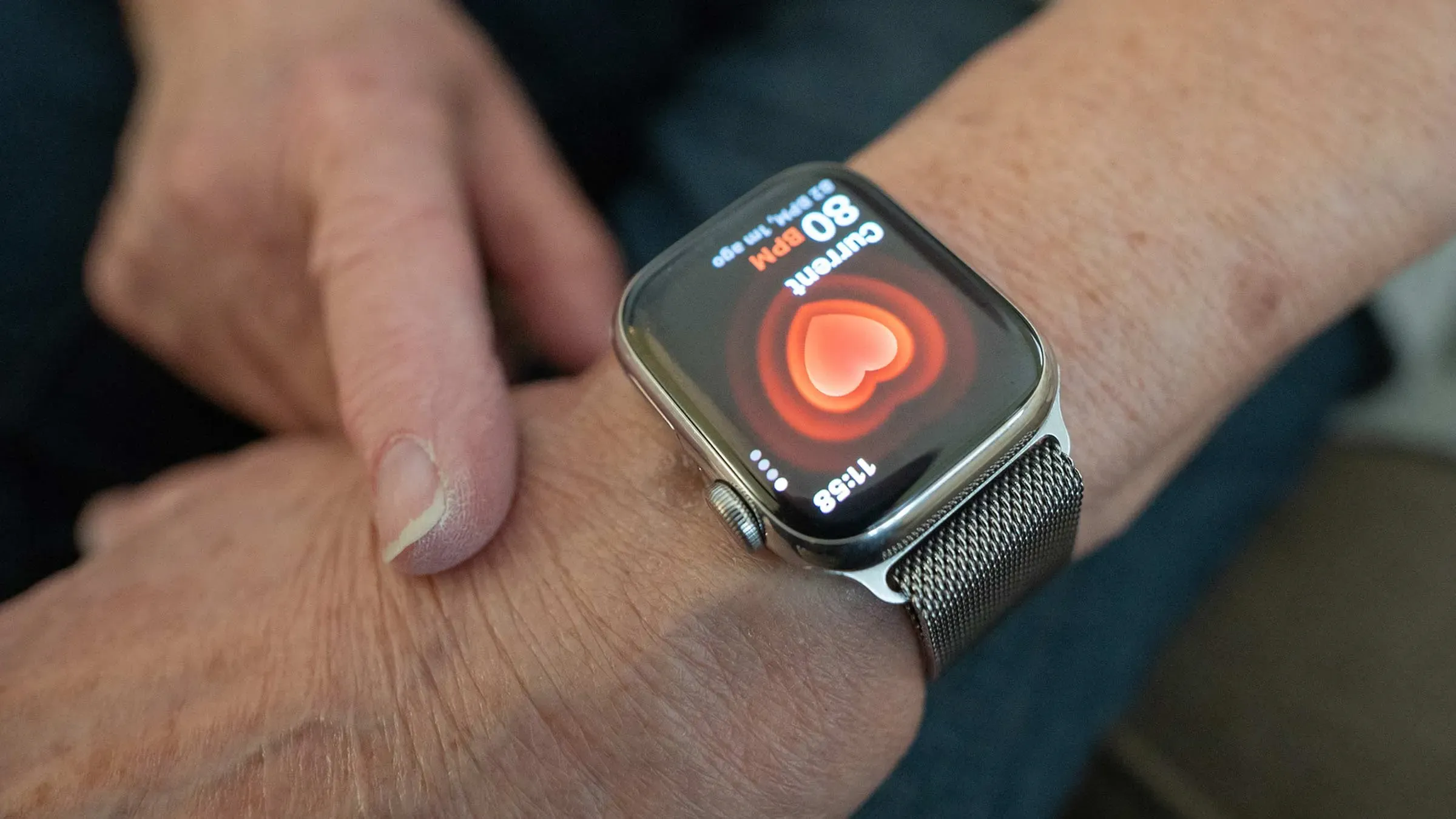
Starting with heart failure and myocardial infarction patients, he calls this work a “template applicable to all patients with chronic diseases.” For it to work, it must integrate, in real-time, Electronic Health Record (EHR) history, heart rate and activity data from wrist-worn wearables, and symptoms entered by the patient on the fly. Since the quality and update cycles of these three data sources vary, this is a complex data integration problem before it is even a medical one.
Interestingly, ADVOCATE is also funding ‘supervisory’ AI to watch over the deployed AI. Since Dr. Warraich himself admitted that “clinicians will have many concerns about such powerful technology,” it shows that even the developers recognize the need for a watchdog.
ARPA-H stated that this program will span several years and undergo multiple filtering stages before clinical trials. There is no product ready for use at the bedside just yet.
Why does the FDA lack regulations to evaluate AI doctors?
It is because the AI imagined by existing regulations is a different beast from the AI now emerging.
According to a Congressional Research Service (CRS) report, the FDA has approved over 1,350 AI-based medical devices as of early 2026. However, these are all tools designed for narrow tasks, such as identifying tumors in images. There is no assessment framework for autonomous AI that diagnoses and modifies prescriptions on its own, and no generative AI product has been approved for therapeutic purposes yet.
The FDA hasn’t been sitting idle. AI medical devices go through one of three approval pathways: 510(k), De Novo, or PMA.
They released a regulatory framework for AI/ML software as a medical device in 2019,
an action plan in 2021, and even created a ‘Predetermined Change Control Plan (PCCP)’ that pre-defines the scope of changes for algorithms that continue to learn after launch. The problem is that all these frameworks are designed on the premise of narrow, assistive tools where a human makes the final decision. Dr. Rick Abramson of the FDA’s Digital Health Center of Excellence stated only that they are creating risk-proportional regulations for AI with “greater autonomy and greater agency” and will unveil related ideas soon.
Post-approval oversight is also loose. A research team analyzed adverse events for about 950 AI/ML medical devices approved between 2010 and 2023 using the FDA’s post-market surveillance database, concluding that it is difficult to properly evaluate safety and efficacy under the current system.
If AI with much greater autonomy passes through these same gaps, risks are more likely to accumulate after approval rather than at the moment of approval. Technology outstripping rules has happened with automobiles and new drugs before, but the longer that delay persists, the greater the accumulated risk.
Medicare AI pilots have already exceeded 200 sites

While waiting for regulations, the field has moved first.
According to New York Times reporting, Medicare has already authorized AI pilots at over 200 locations. One of them is ‘Hope,’ a chatbot that provides conversational psychotherapy to subscribers suffering from anxiety or depression; its operator, Limbic, is the very company that claimed “a single clinician can supervise thousands of AI therapists.”
This ratio is strange because the logic has been inverted. The narrative that we are bringing in AI because we lack humans has shifted from ‘one human for one AI’ to ‘one human for thousands of AIs.’ We must re-examine what ‘supervision’ actually means in that ratio.
Medicare head Dr. Mehmet Oz defended the adoption in a STAT report, arguing that since rural areas have so few counseling personnel, AI avatars are better than having no human at all.
Why Silicon Valley investors appear in AI doctor policy
The other pillar of the New York Times report is the people involved.
According to a Business Report, venture capitalist Vinod Khosla was identified as a person who exerted significant influence in discussions with high-ranking HHS officials, with the fact that his son runs a healthcare AI company also being mentioned.
Advice from industry experts is not a problem in itself.
It is the reality of new industries that the people who know regulated technology best are the ones building it. However, the profits to be reaped by the first company to dominate the AI market for diagnosis and prescriptions could be larger and longer-lasting than any single new drug. In a structure where an advisor can simultaneously be a beneficiary of that market, the fact that concerns about the extent of this influence were raised even within the government is not something to be taken lightly.
State-level AI medical regulations move faster than federal ones
As the federal regulatory vacuum persists, several states have drawn their own lines.
According to a Holland & Knight analysis, Illinois passed the ‘Wellness Opportunity and Professional Regulation (WOPR) Act’ in August 2025, which bans unlicensed AI from making therapeutic judgments or providing psychotherapy. The state legislature passed it nearly unanimously after repeated cases of dangerous advice from AI chatbots. Nevada and Utah also mandated that users be informed they are speaking with an AI.
While this provides an immediate shield for patients, companies must comply with different rules in every state. Above all, this trend demonstrates the gap in speed itself: state legislatures are already enforcing laws while Washington says “soon.”
Who is responsible when an AI doctor makes a mistake?
The issue of accessibility is real. The statistic that half of all counties lack a specialist is not made up.
But the autonomous AI proposed as a solution started before the regulatory framework, and its design process is mixed with voices that stand to profit from the solution.
One question remains.
When an AI that has taken over patient care makes a wrong prescription, does the liability lie with the developer, the FDA that approved it, or the medical institution that decided to use the AI? Regulations to answer this question have not even had a draft released, yet over 200 Medicare pilots are already in operation.
References
- HHS bets on AI agents that diagnose and prescribe on their own
- Which AI-Enabled Applications Are Regulated by FDA?
- Oz says ‘AI-based avatars’ can help rural communities. Some leaders disagree
- AI moves into the doctor’s office
- A general framework for governing marketed AI/ML medical devices
- New Illinois Law Restricts Use of AI in Mental Health Therapy