
We compare and analyze the technological philosophies and strategies of two giants that will determine the future of autonomous driving.
- Understanding the fundamental technological philosophy differences between Waymo and Tesla
- Comparing the actual riding experiences of each robo-taxi
- Analyzing the business strategies and scalability of both companies
Two Philosophies, One Goal
In the near future, the era of robo-taxis summoned by smartphones, without a driver, is unfolding before us. Google’s Waymo and Elon Musk’s Tesla are clashing over the supremacy of this future. Their competition goes beyond a simple technological contest, revealing fundamental philosophical differences in how they perceive the world.
- Waymo’s ‘Sensor Fusion’: Waymo combines multiple sensors such as LiDAR, radar, and cameras to replicate the world in a 3D digital twin with superhuman perception that surpasses humans. This approach prioritizes safety through “being fully prepared”.
- Tesla’s ‘Vision Only’: Tesla pursues a method of interpreting and driving the world like humans, based solely on cameras and AI neural networks, under the belief that “humans see the world with two eyes”.
The winner of this war will not only dominate the market but will also define the future relationship between humanity and artificial intelligence.
Chapter 1: Passenger Diary: Riding Two Futures
The philosophies of the two companies show stark differences in the actual robo-taxi riding experience. Let me share my imagined experience of riding in both vehicles.
Waymo: Comfort from Calculated Perfection
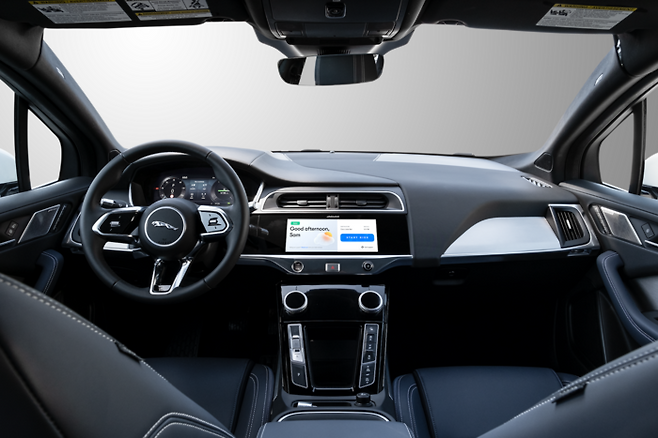
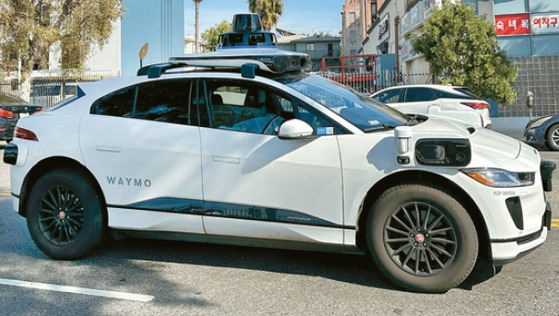
When I summoned a car using the ‘Waymo One’ app, a Jaguar I-PACE electric vehicle arrived at the designated pickup point. The interior was clean, and the ride was surprisingly smooth. The key is ‘stability’ and ’trust’.
The display inside the vehicle shows the surrounding environment in a 3D model in real-time, transparently revealing how it perceives and makes judgments, gaining the trust of passengers. One passenger remarked, “Better than my husband’s driving,” highlighting Waymo’s driving as impeccably skilled and professional.
Tesla: Thrill from Rapid Evolution
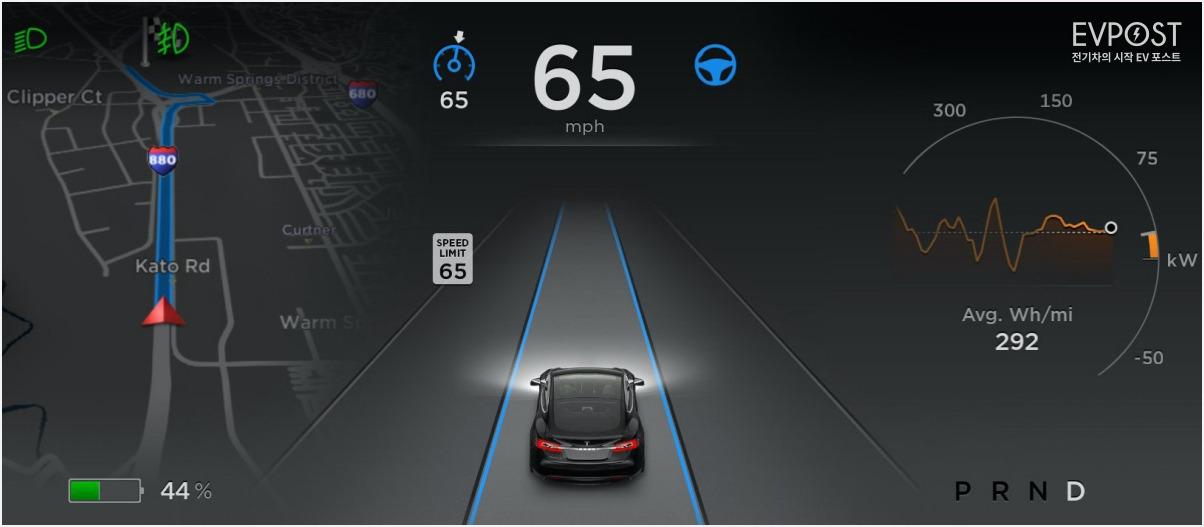
Tesla’s FSD (Full Self-Driving) is a feature of countless privately owned vehicles already on the road, not a separate calling app. This experience is filled with amazing moments of human-like intelligence.
The notorious unprotected left turns executed confidently like a human are impressive. However, this dazzling intelligence sometimes shows awkwardness, such as abruptly stopping or hesitating in complex situations, reflecting a student still in the learning process. ‘Awe-inspiring moments’ and ‘anxious moments’ coexist.
Chapter 2: Trials on the Road to Autonomous Driving
Both giants have experienced failures that reveal the weaknesses of their respective philosophies on the road to perfect autonomous driving.
Waymo’s Achilles’ Heel: Unpredictable Reality
- The Trap of Stationary Objects: Repeated collisions with thin, fixed obstacles like doors or chains led to software recalls.
- The Intersection of Law and Confusion: In Phoenix, Arizona, inconsistent construction signs caused confusion, leading to entering the opposite lane and being stopped by the police.
- The Other Side of Accident Records: Overall safer than humans, but in low-light environments or during turns, the risk of accidents was higher, showing limitations in specific situations.
Tesla’s Growing Pains: Ghosts in the Machine
- Phantom Braking: The phenomenon of ‘phantom braking’ on highways, where the vehicle suddenly brakes for no reason, has terrified many drivers and led to official investigations by regulatory authorities.
- Controversy Over the Name: The term ‘Full Self-Driving (FSD)’ continues to face criticism for misleading consumers, as it is still a Level 2 technology requiring driver supervision.
- An Incomplete Student: Despite advancements in FSD, failure cases are consistently shared, such as hitting curbs or getting confused in complex lane situations.
Chapter 3: Two Paths to World Domination
The ultimate victory will be determined not only by technological prowess but also by economic viability, scalability, and business strategy.
Waymo’s Fortress Strategy: Building Perfect Fortress Cities
Before entering a new city, Waymo scans all streets in 3D to create high-definition (HD) maps. This involves enormous costs and time, slowing down the expansion rate. It is a long-term strategy to build several impregnable ‘fortress cities’ and slowly connect them to create an empire.
Tesla’s Blitzkrieg Strategy: Liberation of the Network
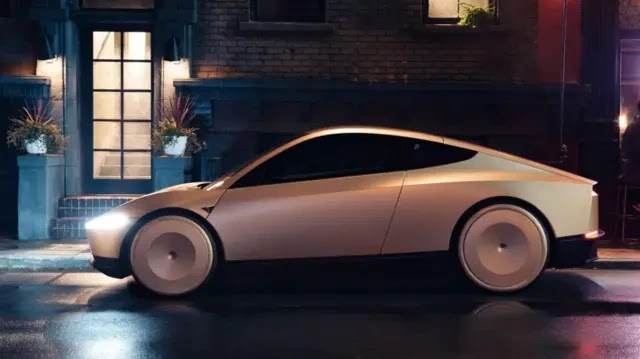
Tesla’s strategy is the opposite. By activating FSD features in millions of already sold customer vehicles, it builds a ‘robo-taxi network’. This offers explosive scalability that can ’turn on’ the network anywhere in the world with just software updates, without massive initial capital.
Tesla envisions a robo-taxi network connecting millions of vehicles worldwide.
The technological and business strategies of the two companies show fundamental differences.
Comparison/Alternatives
| Metric | Waymo | Tesla |
|---|---|---|
| Technological Approach | Sensor Fusion (LiDAR, Radar, Camera) + HD Maps | Vision Only (Camera) + End-to-End AI |
| Vehicle Cost | High (Dedicated Special Vehicles) | Low (Basic Hardware of Consumer Vehicles) |
| Operational Strategy | Direct Ownership and Operation | Utilizing Customer-Owned Vehicles in the Network |
| Expansion Method | Slow (Requires City-Specific Mapping and Approval) | Fast (Software Wireless Updates) |
| Current Stage | Level 4 (Full Autonomy in Restricted Areas) | Level 2 (Requires Driver Supervision) |
Conclusion
The robo-taxi war has just begun. Waymo offers perfect Level 4 autonomy in specific areas but expands slowly, while Tesla has the potential to provide services anywhere in the world but remains at Level 2, requiring driver supervision.
- Key Point 1: Clash of Philosophies - Waymo’s ‘perfect safety’ and Tesla’s ‘human-like learning’ philosophies create differences in technology and experience.
- Key Point 2: Dilemma of Scalability - Waymo employs a slow but certain ‘fortress strategy,’ while Tesla uses a fast but variable ’network strategy.’
- Key Point 3: Race Against Time - Ultimately, this race is a time battle of whether ‘Tesla can perfect itself before Waymo expands globally.’
When the future arrives, two doors will be before you. One leads to a statistically perfect vehicle, and the other promises to take you anywhere, learning like a human.
Which door will you open? Which future robo-taxi will you ride?
References
- Vision-Only Tesla vs. Sensor-Fusion Waymo! YouTube
- Tesla vs Waymo: 2025 Autonomous Driving Technology Analysis and Riding Comparison SPH Info
- [Test Drive] Google Autonomous Robo-Taxi ‘Waymo’ Economy Chosun
- [Column by Kim Heung-sik] ‘Tesla Cybertruck Vs Google Waymo’ Who is the Real Robo-Taxi? Danawa Auto
- [Review] Finally, Self-driving is Possible with Vision Alone Daewoo Kim on Medium
- Waymo UX: 1) Riding Experience pxd story
- Better than Humans? Unmanned Taxi Waymo Test Drive YouTube
- [New Car Drive] Broke Autonomous Driving Prejudice… ‘Waymo’ Robo-Taxi’s Skill Shines Electronic Times
- Autonomous Taxis Roaming San Francisco… The World is Now in the Robo-Taxi Competition Hankyung.com
- Tesla FSD v12 Update Delayed… Additional Testing Underway Car Guy