
Why do you get such a completely different dish when you order Jajangmyeon in China?
The origins of Jajangmyeon and Jjamppong date back to the Zha Jiang Mian and Chaoma Mian brought by immigrants from Shandong after the opening of Incheon Port in 1883. These two dishes evolved into their current forms by becoming sweeter and spicier to suit Korean tastes.
‘Chinese Cuisine’ That Exists Neither in China Nor Japan
Jajangmyeon is so common that it is said over 6 million bowls are sold daily. However, if you go to China or Japan looking for the same taste, you will be disappointed. Although it is called Chinese cuisine, the flavor was perfected in Korea.
The path these two dishes took shows how immigrants adapted their hometown food to survive in a foreign land.
From the Incheon docks at the end of the Joseon Dynasty to the delivery culture of the 1970s, the choices made by Chinese-Korean chefs accumulated step by step.
Jajangmyeon: From Salty Paste to Sweet Sauce
The Original: Shandong-style Zha Jiang Mian (炸醬麵)
Zha Jiang Mian literally means ’noodles (麵) topped with sauce (醬) fried (炸) in oil.’ The Shandong style, the direct ancestor of Korean Jajangmyeon, uses tianmianjiang (sweet flour sauce) made from fermented soybeans and wheat, but the flavor profile is salty and savory, not sweet. The sauce is thick like ssamjang and is served in small portions over noodles.
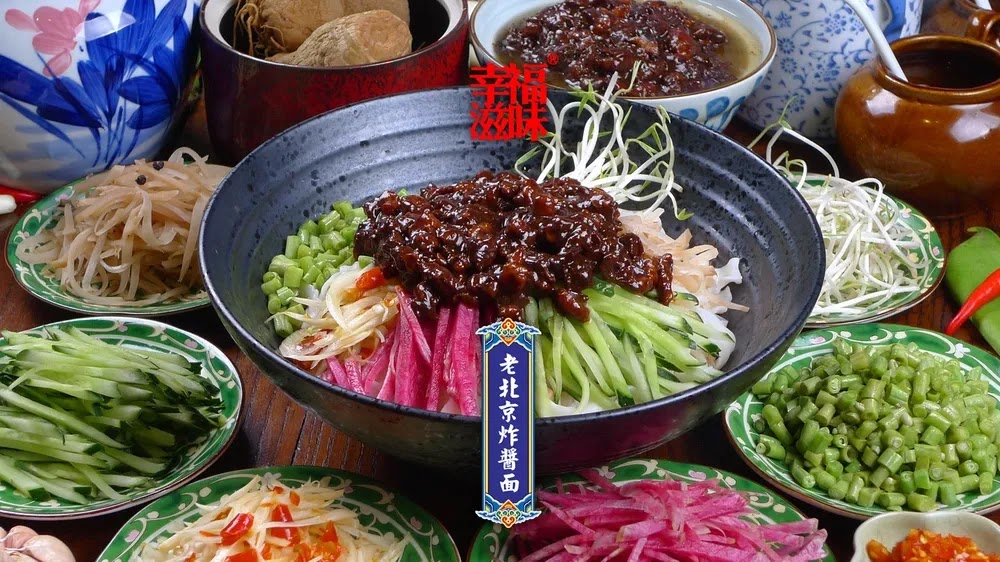
The biggest difference lies in the toppings.
In Zha Jiang Mian, raw vegetables like cucumber and celery are served separately for the diner to mix in.
In Korean Jajangmyeon, even onions are stir-fried into the sauce and poured over the noodles at once. One style opts for a contrast in texture, while the other prioritizes a unified flavor in every bite.
| Features | Korean Jajangmyeon | Chinese Zha Jiang Mian (Shandong style) |
|---|---|---|
| Sauce (Paste) | Caramelized Chunjang | Tianmianjiang (Sweet flour sauce) |
| Color | Black | Dark brown or yellowish-brown |
| Primary Flavor | Sweet and savory | Salty and savory |
| Consistency | Thick and moist (starch) | Paste-like and dry |
| Main Vegetables | Onions (stir-fried) | Cucumber, various raw vegetables (served separately) |
| Serving Method | Sauce poured over noodles | Sauce and toppings served separately |
1883 Incheon Port, a Worker’s Meal
The starting point was the opening of Incheon Port in 1883.
Merchants and dock workers from Shandong, settled in the Qing Dynasty concession, prepared Zha Jiang Mian as they had back home. Initially, it wasn’t a formal dish but an inexpensive meal sold at street stalls, consisting of noodles similar to kalguksu topped with sauce.
Gonghwachun, often cited as the origin of Jajangmyeon, is a restaurant known to have opened around 1905. However, academics view Gonghwachun more as a ‘symbol of popularization’ rather than the ‘original developer.’
The image of it being the original grew as Incheon City developed Chinatown into a tourist destination, and the old Gonghwachun building is now used as the Jajangmyeon Museum.
Three Changes That Captured Korean Tastes
The current taste of Jajangmyeon solidified in the mid-20th century, triggered by three factors.
First, the 1948 caramel chunjang. When Chinese-Korean Wang Song-san introduced ‘Saja-pyo Chunjang,’ which mixed caramel into tianmianjiang, the sauce became black and glossy. The saltiness decreased, while the sweetness and umami increased.
Second, cheap ingredients. In the 1950s, mass quantities of US aid flour arrived, and the government’s campaign to encourage mixed-grain and flour consumption boosted demand for noodles. As onions were mass-produced starting in the 1960s, cheap, sweet onions became the main ingredient in the sauce.
Third, starch water. When starch water was added to the stir-fried sauce, the thick paste transformed into a smooth, thick sauce. This increased the volume, diluted the saltiness, and kept the dish warm longer, making it perfect for delivery.
The Food of Graduation and Moving Day
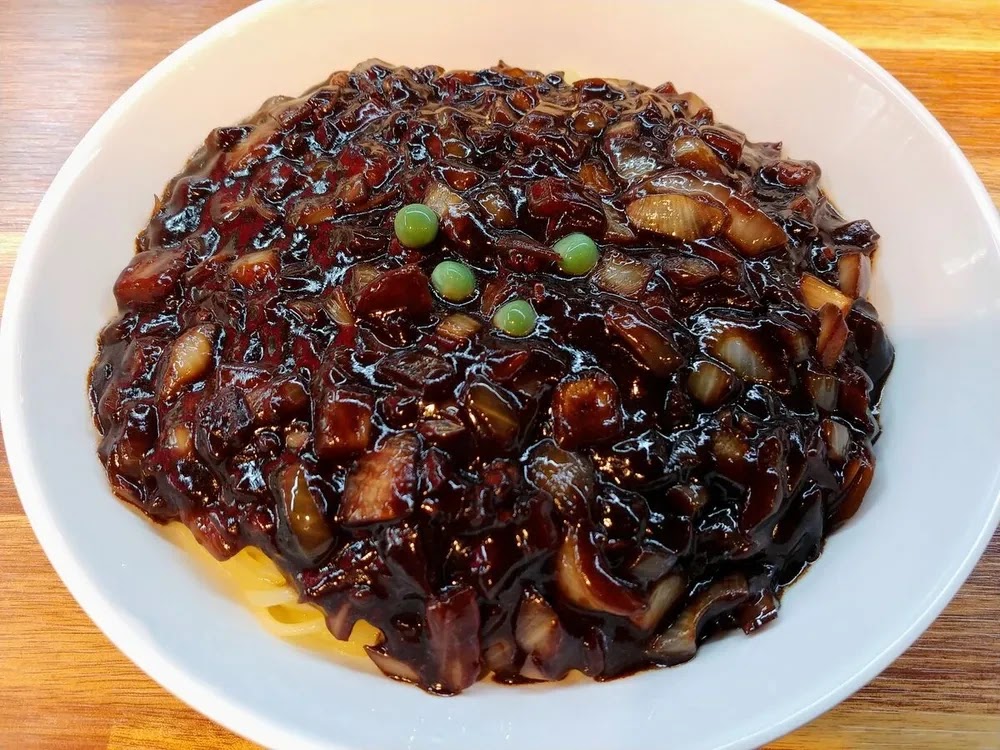
It was an inexpensive meal that still felt like dining out. That is why Jajangmyeon became a celebratory treat parents could provide on graduation day, and the quickest meal on moving days when the kitchen wasn’t yet set up. I still have vivid memories of going to a Chinese restaurant after my own graduation ceremonies.
The tin delivery boxes, known as ‘cheol-ga-bang,’ that spread in the 1960s and 70s, helped solidify this. Jajangmyeon, which retains heat well, was the best menu for delivery and became a dish almost synonymous with specific ‘rituals.’
The story of how flour-based foods changed the dining table during the same period continues in the 60-Year History of the Ramen War.
Jjamppong: From White Broth to Red
The Name is Nagasaki, the Body is Shandong
There are two competing theories regarding the roots of Jjamppong.
- The Japan Transit Theory: The claim that Nagasaki Champon was introduced to Korea. The fact that the name ‘Jjamppong’ comes from the Japanese word ‘Chanpon’ is the strongest evidence.
- The Direct China Theory: The claim that it originated from Chaoma Mian (炒碼麵) brought by Shandong immigrants. It means ’noodles (麵) made by stir-frying (炒) various ingredients (碼),’ and the chewy northern-style noodles in Korean Jjamppong are cited as evidence.
The most plausible explanation is a combination of both. It is presumed that the body of the dish comes from Shandong-style Chaoma Mian, while the name was borrowed from Nagasaki Champon, which became familiar during the Japanese colonial period.
| Features | Korean Jjamppong (Modern) | Nagasaki Champon |
|---|---|---|
| Broth Flavor | Spicy and refreshing | Rich and savory |
| Broth Color | Red | Milky white |
| Broth Base | Seafood, chicken stock, etc. | Pork bone, chicken stock |
| Main Ingredients | Various seafood, vegetables | Pork, cabbage, fish cake |
| Noodle Texture | Chewy and elastic | Soft with less elasticity |
1960s–70s: The Addition of Red Chili Powder
Until the 1960s, Chaoma Mian (Jjamppong) was a non-spicy white broth. The change occurred between the late 1960s and the 1970s. As Chinese-Korean chefs began adding red chili powder and chili oil when stir-frying ingredients, the color and character of the broth changed entirely. The spicy and refreshing red Jjamppong quickly established itself as a hangover cure.
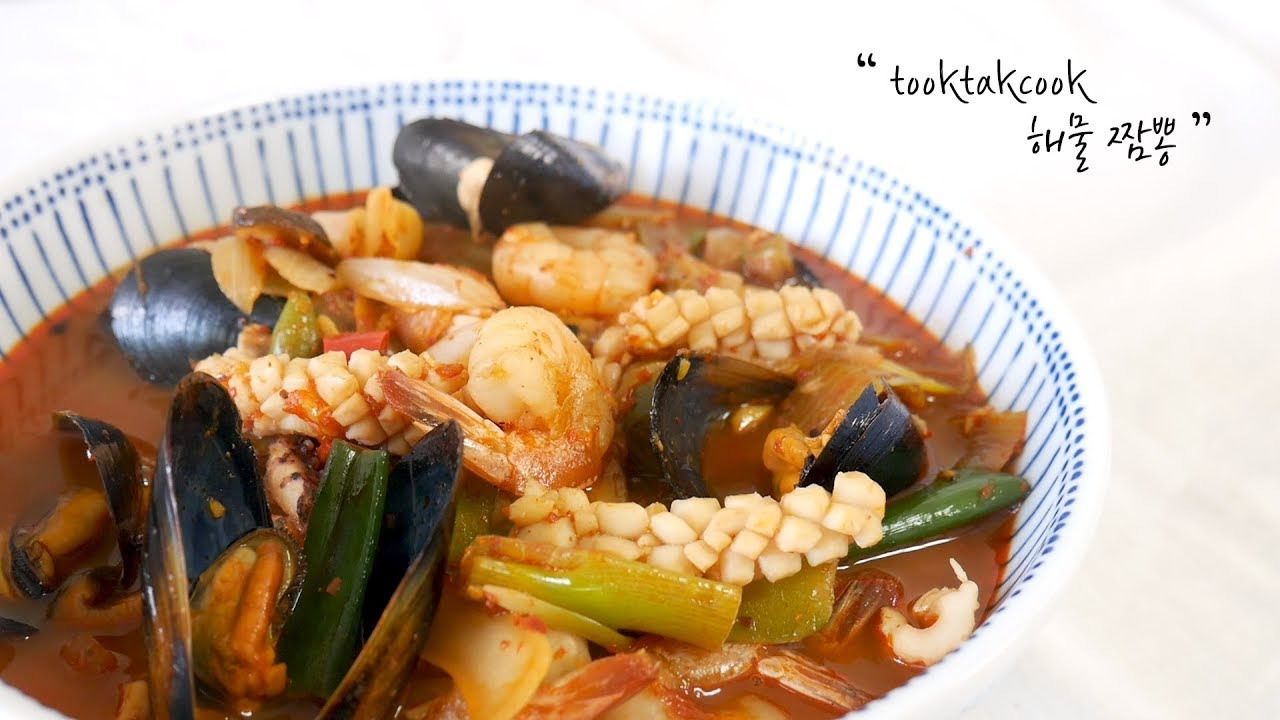
The port city of Gunsan is often mentioned as the birthplace. There is testimony that a Chinese-Korean chef in Gunsan in the early 1970s added chili peppers to reduce the greasiness of Chaoma Mian. While it cannot be confirmed as fact, it aligns with the trend of red Jjamppong growing in popularity in port cities where seafood was abundant.
Samseon Jjamppong and Chili Jjamppong
Modern Jjamppong is defined by its refreshing broth drawn from seafood. As its popularity grew, variations increased.
- Samseon Jjamppong (三鮮짬뽕): Originally meant three precious ingredients from the sky, land, and sea, but now it is used to indicate a ‘premium version’ containing more seafood like shrimp and squid.
- Chili Jjamppong: A menu item that pushes the spiciness to the limit by adding Cheongyang chili peppers, etc.
Sweetness and Spiciness: Localization in Opposite Directions
The two dishes, created by the same Chinese-Korean chefs, entered the Korean market on opposite paths.
| Category | Jajangmyeon | Jjamppong |
|---|---|---|
| Flavor Strategy | Maximizing sweetness with caramel chunjang | Spicy heat with chili powder/chili oil |
| Weapon | Cheap and hearty with aid flour/onions | Refreshing taste of seafood broth |
| Targeted Desire | Hunger-era cravings for sweet, oily food | Hangover relief, preference for ‘spicy, hot’ broth |
Jajangmyeon became an ‘affordable luxury’ as one entrepreneur’s chunjang development met the aid flour policy, while Jjamppong became a ‘comfort broth’ as a product of East Asian exchange met Korea’s preference for spicy flavors. Scenes where a single food item changes the market through product innovation are also repeated in the frozen dumpling market or the competition between Cider and Sprite.
100-Year Evolution Timeline
| Period | Major Events | Evolution of Jajangmyeon/Jjamppong |
|---|---|---|
| Late 19th Century | Opening of Incheon Port, Shandong immigration | Introduction of Zha Jiang Mian, Chaoma Mian (Laborer food) |
| Early 20th Century | Opening of Chinese restaurants like Gonghwachun | Established as restaurant menu (original form maintained) |
| Post-Liberation | Caramel chunjang development, flour aid | Jajangmyeon: Transformed into a sweet, black dish |
| 1960s–70s | Flour promotion, delivery culture spread | Jjamppong: Transformed into a red, spicy dish |
| Modern | Diversification of dining culture | Cultural ritualization, menu segmentation |
Next time you find yourself debating between Jajangmyeon and Jjamppong at a Chinese restaurant, it’s worth remembering that one is a flavor created by 1948 caramel, and the other by 1970s chili powder.
References
- Yonhap News, [New Book] What is the origin of Jajangmyeon?... The birth of Korean-style Chinese cuisine
- Im Hyung-seok's Chinese Character Encyclopedia <824> 炸醬麵
- Seoul Economic Daily, [Books &] Taste of the Continent, accepted through localization
- Center for Korean Studies, Korean Chinese and the Koreanization of Jajangmyeon
- National Folk Museum of Korea, Encyclopedia of Korean Folk Culture, Jajangmyeon
- Pulmuone Official Blog, Blitz Comparison Analysis!! Chinese Zha Jiang Mian vs. Korean Jajangmyeon
- JoongAng Ilbo, [Cooking & Food] Graduation and moving day, why do we naturally think of Jajangmyeon...
- Chosun Biz, [History of Delicious Food] Jjamppong
- Region N Culture, Jjamppong, adding chili powder to white Chaoma Mian