
McLean, Virginia. On one side of the road, there is the CIA headquarters, complete with walls, armed guards, and a massive sign.
Just about two miles away, however, sits a gray building with no sign and small windows. The doors are always locked, and there is no directory. Local residents have long called this building the ‘Kremlin,’ and the joke that it is more secretive than the CIA is not really a joke at all.
This building belongs to Mars, the company that makes M&M’s and Snickers.
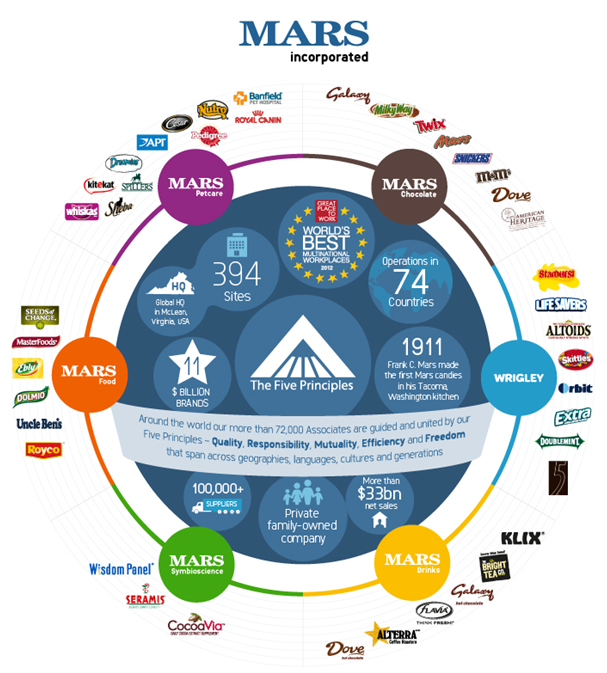
The story of why local residents actually called this building the ‘Kremlin’ is not just an urban legend.
Mars is one of the few massive, private family-owned companies in the world that has never gone public, despite having higher revenue than Coca-Cola.
If you trace the roots of this secrecy, you find a bitter conflict between a father and son from 100 years ago.
Frank and Forrest: A Father-Son Split Created Mars
Born in 1883, Frank C. Mars suffered from polio and spent his time in his mother’s kitchen instead of school. He learned how to make chocolate there, but the businesses he started failed one after another.
It was not the father, but the son, Forrest Mars Sr., who turned things around. An industrial engineering graduate from Yale, this young man was cut from a different cloth than his father.
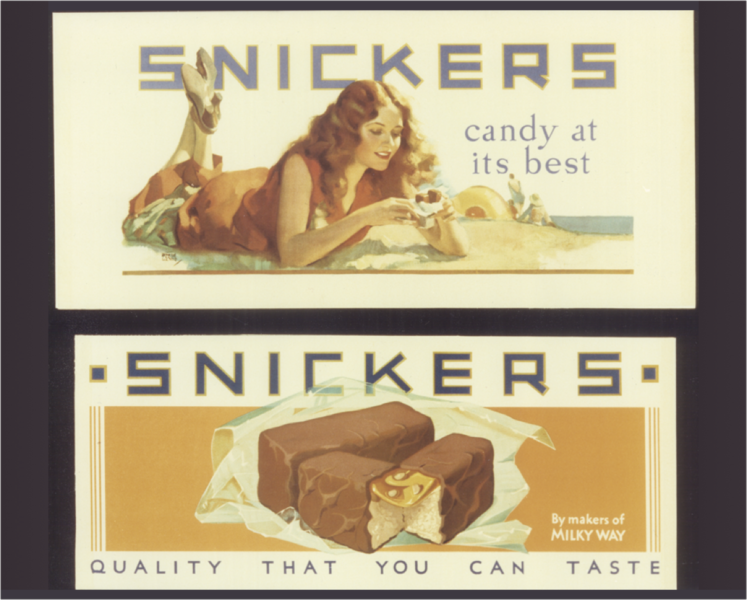
In 1923, the father and son teamed up to introduce the Milky Way to the world with the idea of “malted milk in a candy bar,” and it was a massive hit. The problem started afterward.
There was the father, who was content with small successes, and the son, who had his sights set on the global market. Their collision was inevitable, and in the end, Frank effectively kicked his son out, giving him only a small amount of money and the overseas rights.
This bitter separation is the true founding myth of the Mars empire.
Reacting to his father’s ‘complacency,’ Forrest made cold efficiency and global expansion his personal creeds.
The memory of being stripped of management rights by his father would later become the reason why Mars refuses to go public and insists on private family management—the root of one of their five principles: ‘Freedom.’
Chocolate on the Battlefield Became Mars’ M&M’s
In the late 1930s, while wandering Europe after being cast out by his father, a decisive scene caught Forrest’s eye.
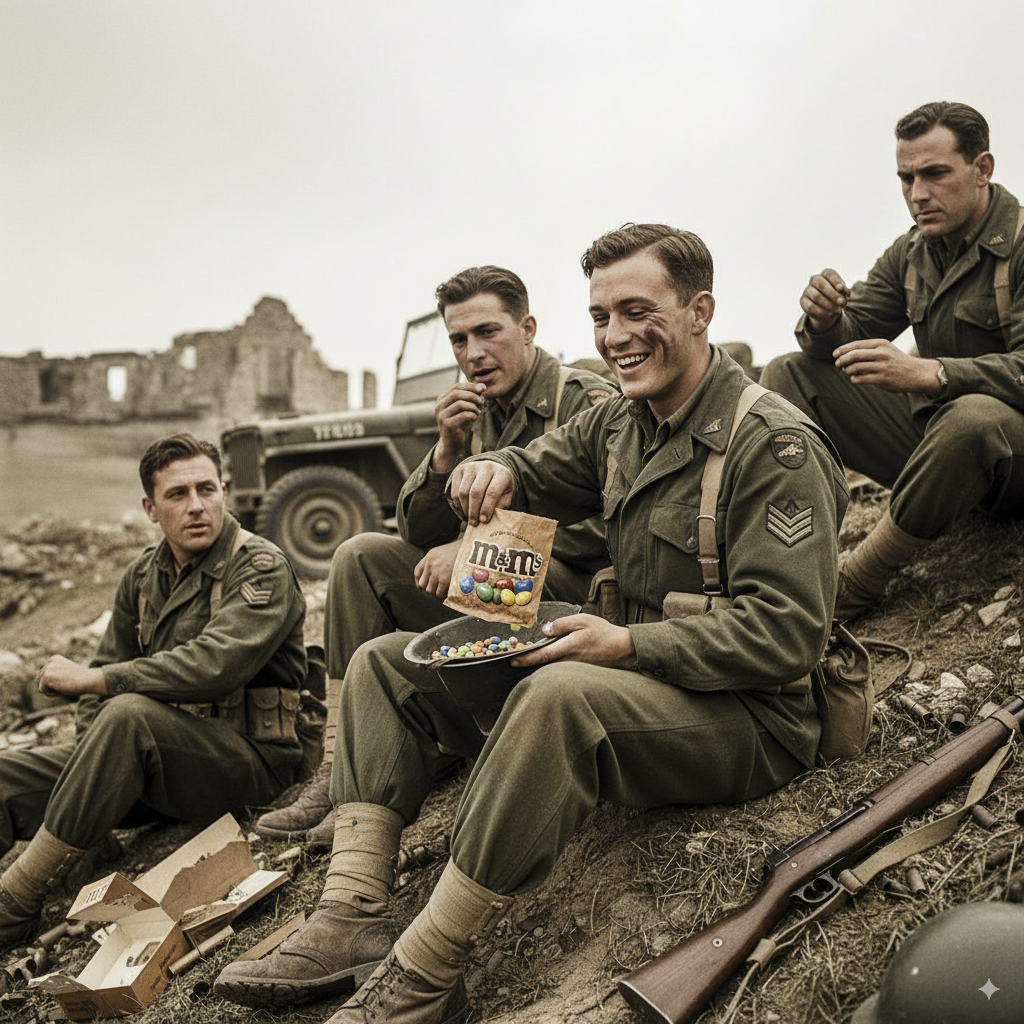
He saw soldiers during the Spanish Civil War eating chocolate coated in sugar so it wouldn’t melt in their hands. As a businessman, his instincts kicked in: a military snack that wouldn’t fall apart even in hot weather.
Upon returning to the US, Forrest teamed up with an unexpected partner.
It was Bruce Murrie, the son of the president of Hershey, his father’s biggest rival. The name M&M’s, derived from the first letters of the family names ‘Mars’ and ‘Murrie,’ was born this way.
With the slogan “Melts in your mouth, not in your hands,” it was sold exclusively to the military throughout the war, and by the end, it had already become a ’national snack’ embedded in the memories of war veterans.
Mars Sold Hunger Using a Candy Bar Named After a Horse
Another pillar of Mars is Snickers.
Launched in 1930, the name of this chocolate bar was actually taken from a horse the Mars family owned, but it was marketing, not the name, that conquered the world.
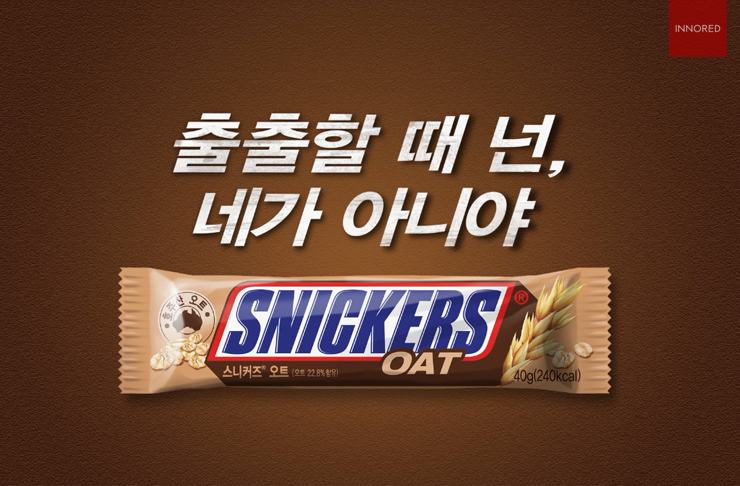
Mars pushed Snickers not as a dessert, but as a ‘meal replacement to satisfy hunger’.
the combination of peanuts, caramel, nougat, and chocolate provided high calories and satiety, which perfectly matched the lifestyle patterns of busy modern people.
The campaign “You’re not you when you’re hungry” was the pinnacle of this.
Because the problem of ‘hunger’ was universally understood in every culture around the world.
The ‘Five Principles’ Have Supported Mars for 100 Years
In 1964, Forrest merged his father’s company with the business he had built, taking full control of Mars.
From this point on, he began to engrave his governing philosophy into the entire company, which continues today as ‘The Five Principles.’
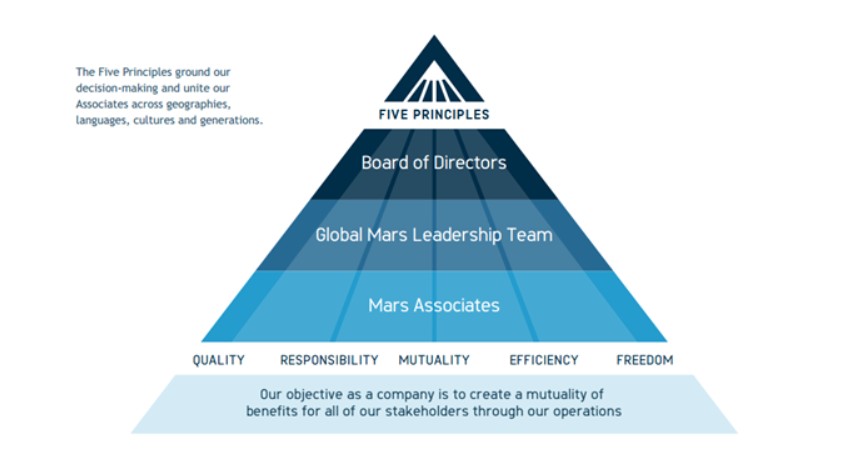
- Quality — The consumer is the boss. The obsession with quality was almost religious.
- Responsibility — Regardless of rank, all employees are called ‘associates,’ and are expected to take ownership.
- Mutuality — The belief that only mutual benefit is a lasting benefit. It is the principle that suppliers, employees, and local communities must grow together.
- Efficiency — Waste is a sin.
- Freedom — The power to decide our future for ourselves. This is exactly why Mars has refused to go public until the end.
When people hear ‘principles,’ they often think of phrases on a plaque on the wall.
But truly formidable companies embed these principles into their actual decision-making structures. Mars was the same.
Mars, the Candy Company, Gets Over Half Its Revenue from Pets
The Mars we know is actually not a company where candy is the main focus.
It is closer to a massive pet care company, with the Mars Petcare division accounting for more than half of its total revenue.
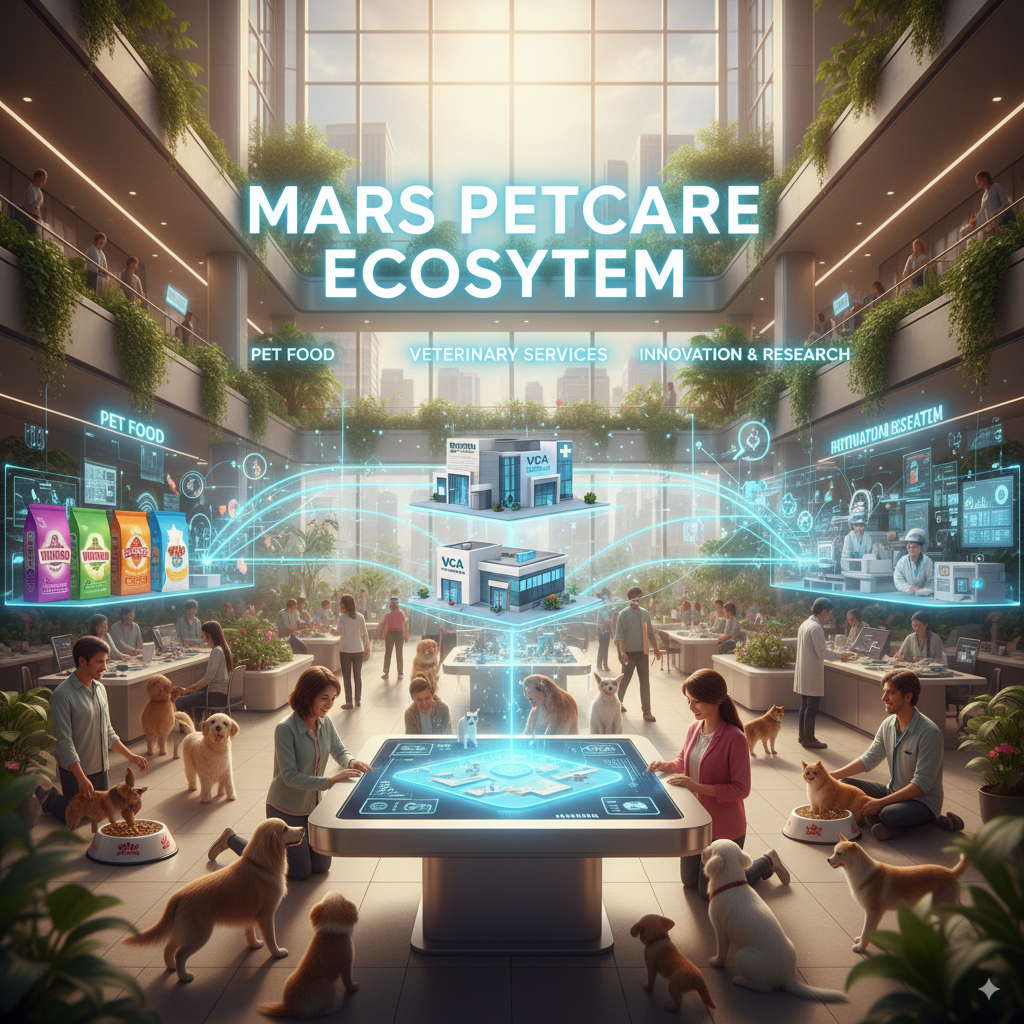
This transition was not an accident, but the result of a long-term strategy based on the ‘Five Principles.’
After acquiring the French premium pet food company Royal Canin in 2002, Mars aggressively bought up thousands of veterinary hospital chains and diagnostic laboratories. Industry estimates suggest that the pet care division’s revenue is larger than the chocolate and snack business, accounting for more than half of Mars’ total revenue. This is where the ‘Mutuality’ principle works in a formidable way: a structure where veterinarians at Mars-owned animal hospitals diagnose and prescribe therapeutic diets made by Mars itself. It is a vertically integrated ecosystem incomparable to the confectionery business, which relies on impulse purchases.
The Mars Empire Expanded Again with the 2025 Kellanova Acquisition
Forrest Mars Sr. retired in 1973, but he remains alive within the company in the form of the ‘Five Principles.’ The Mars family is now into its fifth generation, and the family still holds 100% of the company’s shares.
It is time to add one more recent story to this.
In December 2025, Mars finalized the acquisition of Kellanova, the maker of Pringles and Cheez-It. According to the 115th-anniversary announcement released by Mars itself, the combined revenue of Mars and Kellanova in 2025 exceeded $65 billion. The business structure has been reorganized to include snacks in addition to pet care, confectionery, and food, and this method of expansion has similarities that transcend time.
Capital to take risks and the freedom to bet without the pressure of quarterly earnings. These are choices only possible because they did not go public.
Ultimately, the reason this chocolate company grew larger than Coca-Cola is that it was never just a simple chocolate company to begin with.
Starting from the conflict between a father and son, going through a quiet transition to the pet industry, and now swallowing the snack market, Mars remains a giant that is always right in front of our eyes but barely visible.
References
- Fortune, ["Mars Incorporated: A pretty sweet place to work"]
- Joël Glenn Brenner, *The Emperors of Chocolate: Inside the Secret World of Hershey and Mars*, Broadway Books, 2000
- How the Mars Compass Helps Us Navigate Our Path Forward
- Mars, Incorporated: History in the Making
- Life in Mars: reclusive dynasty behind one of world's most famous brands
- Washingtonian, ["Sweet Secrets: Opening Doors on the Very Private Lives of the Billionaire Mars Family"]
- Mars, Inc.
- Abasto, ["Mars Marks 115 Years as Family-Owned Business"]