
The history of ramen started with Japan’s Chicken Ramen in 1958, arrived in Korea as Samyang Ramen in 1963, and evolved through bowl noodles, Chapagetti, and Chapaguri to become a ‘full meal’ rather than just a ‘snack.’ Interestingly, this transformation wasn’t driven solely by corporations.
The habit of spooning up broth, Sunday lunch scenes, and combinations created by consumers have continuously reshaped ramen into a uniquely Korean style.
1. Noodles Born in Japan, Bowls Changed in Korea
Chicken Ramen from a Backyard Shed
It all began with Taiwanese-Japanese businessman Momofuku Ando.
Seeing food distribution lines in post-war Japan, he was determined to create noodles that could be stored for a long time and eaten just by adding hot water.
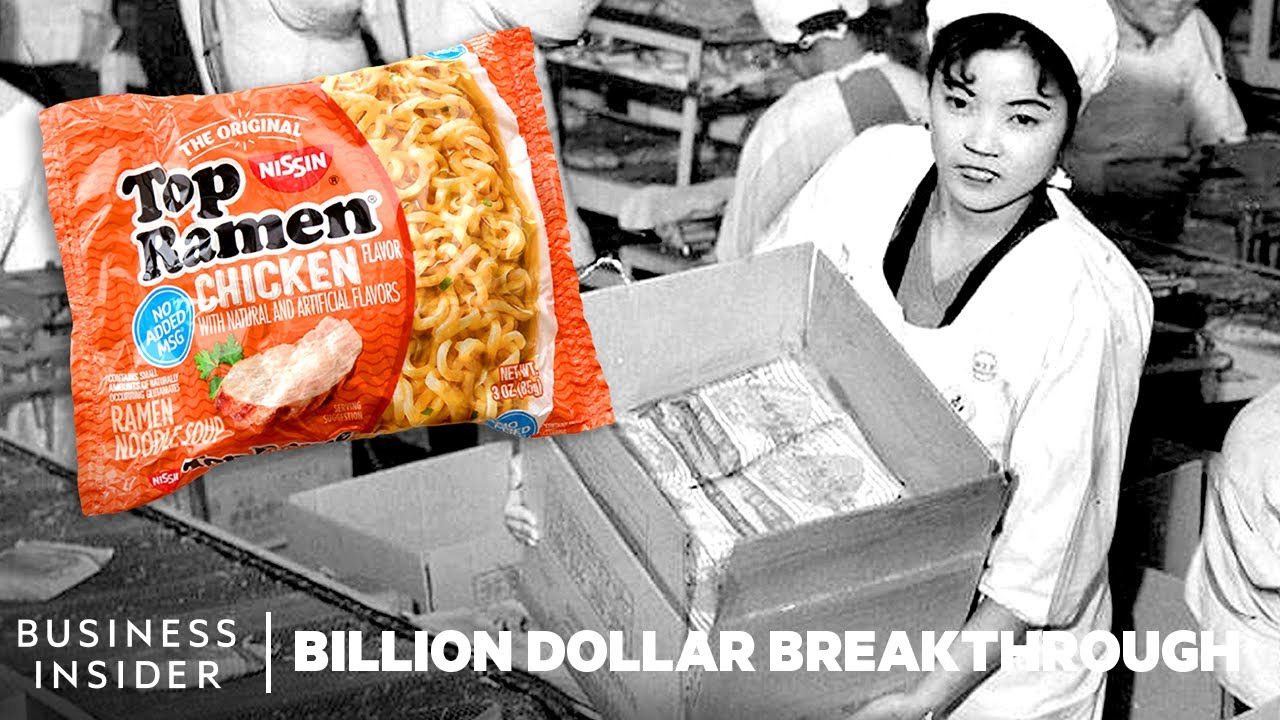
After working alone for nearly a year in a shed in his backyard, the answer came from his kitchen. Inspired by his wife frying tempura, he developed the instant flash-frying method—the principle that frying noodles creates microscopic pores, allowing hot water to penetrate quickly. Thus, the world’s first instant ramen, ‘Chicken Ramen,’ was born in 1958. His words, “Peace will come to the world when there is enough food," show that ramen was born to satisfy hunger.
The Paper Cup That Opened the Global Market
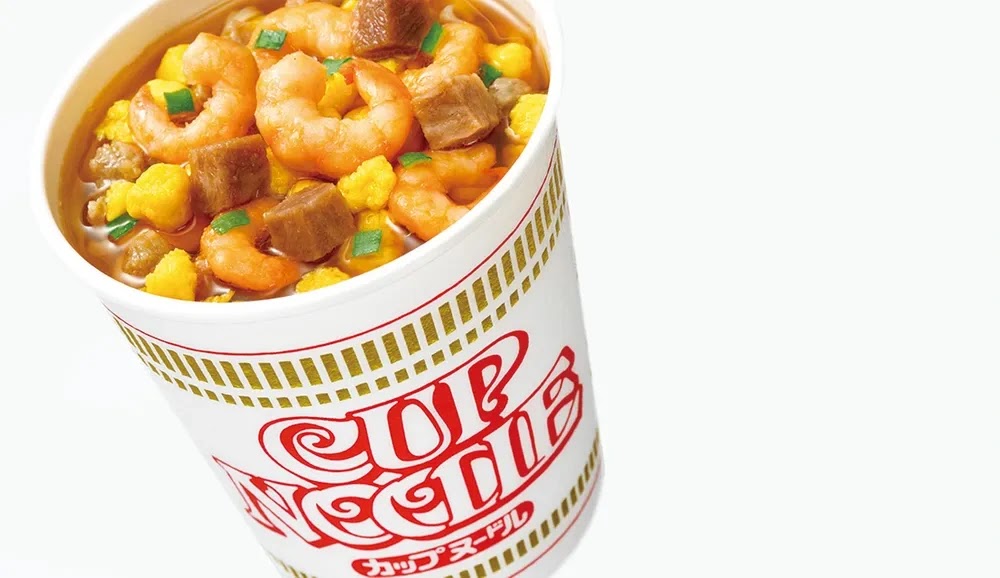
The second turning point was a business trip to the U.S. in 1966. He saw local buyers crushing Chicken Ramen into paper cups, adding water, and eating it with forks. This led to the conclusion that for ramen to go global, it had to overcome the barrier of bowls and chopsticks.
Released in 1971, the Cup Noodle was both the packaging and the eating utensil. It didn’t sell well at first, but after scenes of riot police eating Cup Noodles in the cold during the live broadcast of the ‘Asama-Sanso incident’ in 1972 were aired, it solidified the image of “a meal you can eat anywhere.”
1963 Samyang Ramen, and the ‘Sabal’ (Bowl)
The path to introducing the technology to Korea wasn’t smooth.
After being rejected by Nissin, Samyang Foods approached its competitor, Myojo Foods, which is said to have handed over the technology for free after hearing about Korea’s difficult post-war situation. That is how Samyang Ramen, Korea’s first ramen, was released in 1963.
Its true heyday came in the 1980s, coinciding with economic growth and the Olympic atmosphere.
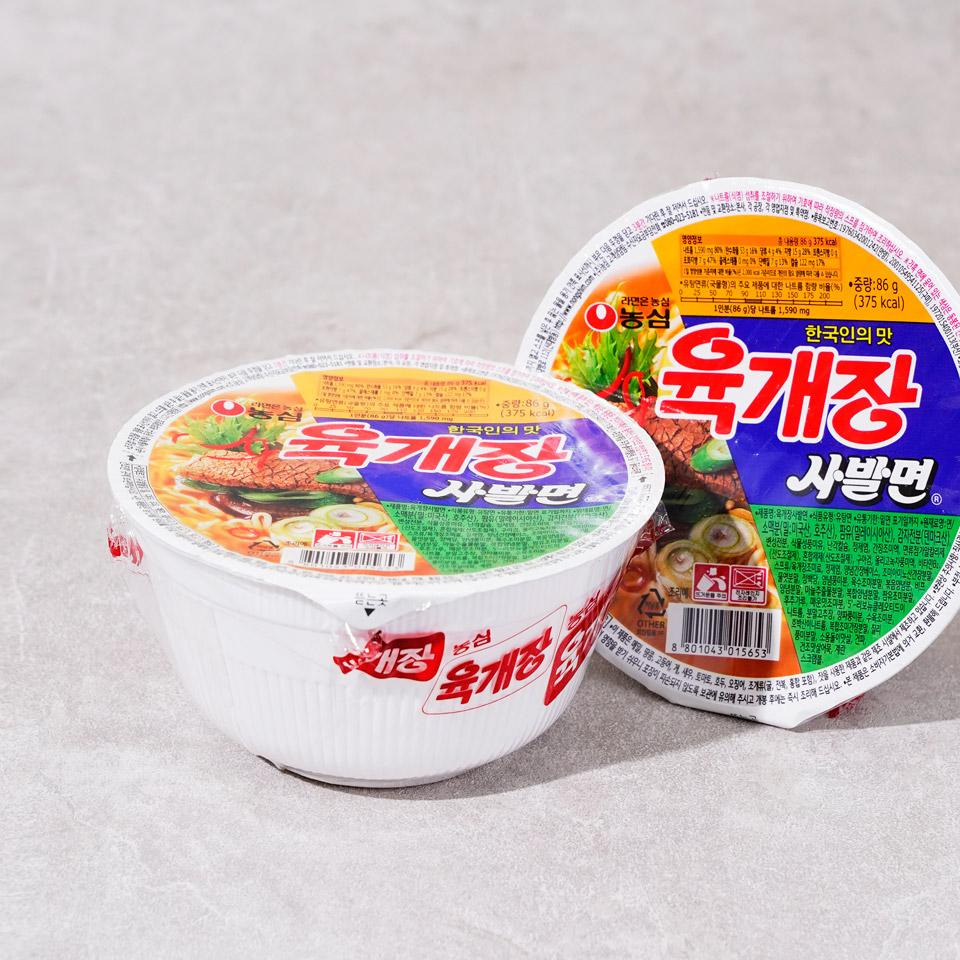
A symbolic product is Nongshim’s Yukgaejang Bowl Noodle from 1982. Instead of the narrow, tall cups of Japanese Cup Noodles, they chose a wide ‘sabal’ (bowl) shape to accommodate the Korean habit of spooning up broth. This is a textbook case of ‘glocalization’—adapting a product to local culture—and thanks to this, Yukgaejang Bowl Noodle was embraced from the start as our own food rather than something foreign.
I have summarized the competition between ramen companies during this period in A 60-Year History of the Ramen War: Samyang, Nongshim, and Ottogi.
2. The Jajang Ramen War: Powder vs. Liquid
Chapagetti Changes the Game
In the early 1970s, instant jajangmyeon was criticized for being far from the taste of Chinese restaurants.
What changed the game was Nongshim’s Chapagetti in 1984. In my view, the secret to its success is summarized in three points:
- Name: The combination of ‘Jajangmyeon’ and ‘Spaghetti’ piqued children’s curiosity.
- Soup: Inspired by instant coffee, the fine granulated soup mixed evenly into the noodles.
- Taste: Rather than imitating Chinese restaurant jajang, it created a separate category called ‘Chapagetti taste.’
How jajangmyeon itself became a Korean dish continues in The Origin of Jajangmyeon and Jjamppong: 100 Years of History in One Bowl.
Jjajaroni’s Counterattack
In 1985, Samyang countered with Jjajaroni, a combination of ‘Jajangmyeon’ and ‘Macaroni.’
The weapon was liquid soup. They claimed it was closer to the taste of stir-fried chunjang (black bean paste), and the ‘powder faction’ and ’liquid faction’ that emerged then remain the two lineages of instant jajang today.
“On Sundays, I’m the Chapagetti Chef”
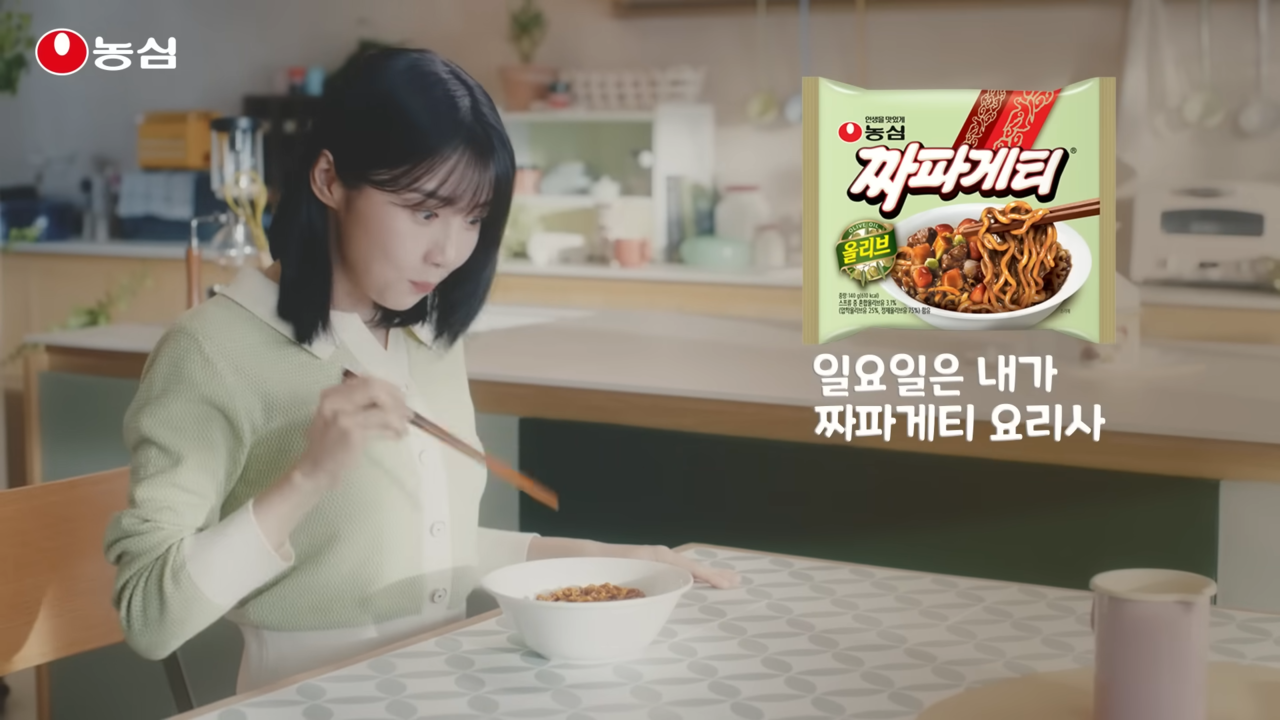
What turned Chapagetti into a culture was its advertising. The single line, “On Sundays, I’m the Chapagetti Chef,” turned cooking ramen into a weekend event that even family members who didn’t usually stand in the kitchen would take on.
2015 Premium Jajang Ramen Three-Way Battle
30 years later, Nongshim challenged itself.
When Jawang, which boasted thick, udon-like noodles and a deep flavor, became a sensation in 2015, Ottogi followed with Jin Jajang (emphasizing a smoky flavor), and Paldo followed with Paldo Jajangmyeon, utilizing celebrity chef Lee Yeon-bok.
| Feature | Nongshim Jawang | Ottogi Jin Jajang | Paldo Jajangmyeon |
|---|---|---|---|
| Noodles | Thick, chewy ~3mm noodles | Thick, flat noodles | Relatively thin noodles |
| Soup | Powder (rich and sweet) | Liquid (smoky, fire-grilled) | Liquid (balanced taste) |
| Taste | Sweet and rich | Smoky and savory | Less stimulating |
| Differentiation | Noodle texture and richness | Fire-grilled flavor | Star chef marketing |
3. Chapaguri: A Recipe Created by Consumers
The Rise of Modisumers
Truly interesting changes happened outside the factory. ‘Modisumers’—a portmanteau of ‘modify’ and ‘consumer’—are consumers who mix and customize products at their own will. The masterpiece is Chapaguri.
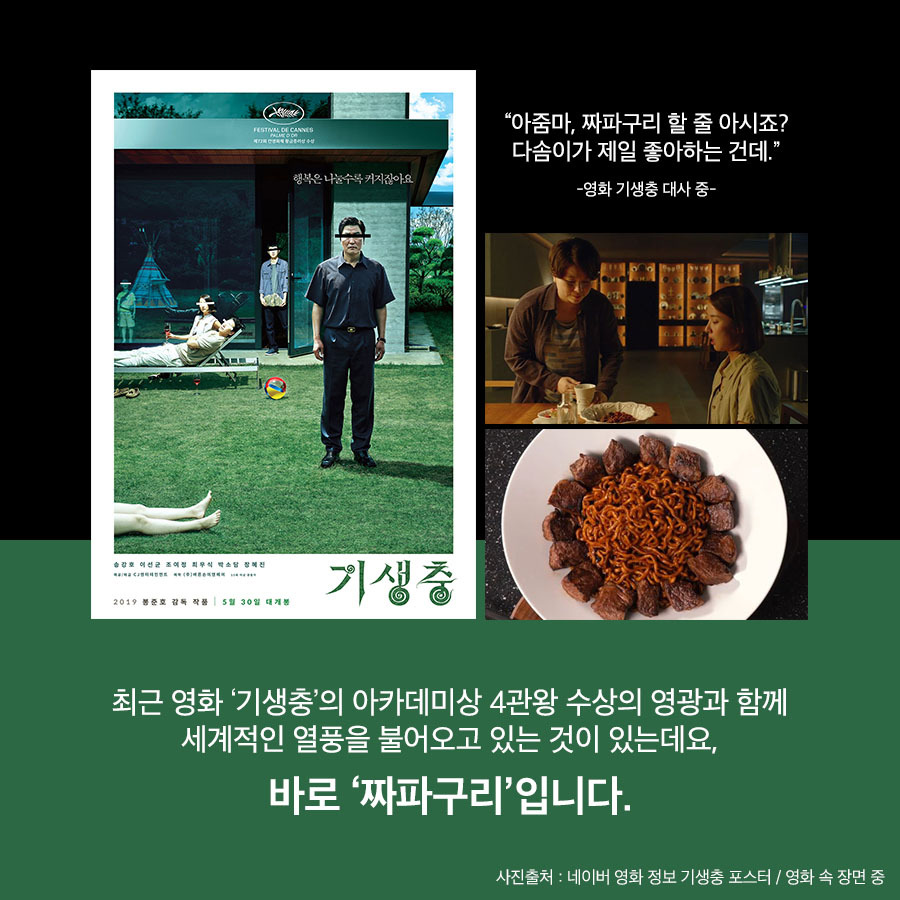
This combination of mixing Chapagetti with Neoguri circulated in online communities before spreading nationwide after appearing on variety shows. Then, in 2019, it appeared in Director Bong Joon-ho’s film ‘Parasite’ topped with Korean beef sirloin, becoming a metaphor for class disparity where working-class food and a symbol of wealth collided in one bowl, gaining global attention. How this scene was interpreted abroad is discussed further in Food Culture in K-Dramas and Films Seen Through Chapaguri.
An Era Where Companies Follow Consumers
Since Chapaguri, the order has been reversed. Consumers mix it first, and companies release it as a product. Spicy, rosé, and mala flavors entered the market that way. Modisumers have effectively become the industry’s unpaid R&D department.
4. Technology in a Cup, and Space
The Design of 3 Minutes
The convenience of cup ramen is no accident.
- Middle-suspension technology: Noodles are placed in the middle of the container so hot water and steam circulate above and below to cook them evenly.
- Container design: Paper containers and microwave-safe containers were developed, and even the small structure to hold the lid down has become subject to patents.
PC Bangs, Single-Person Households, and Recession
Instant ramen is the staple for PC Bang gamers and the most common meal for single-person households. It is also read as an economic indicator, as it is a recession-proof food that sees sales increase when dining-out costs rise.
Space Ramen Cooked with 70°C Water
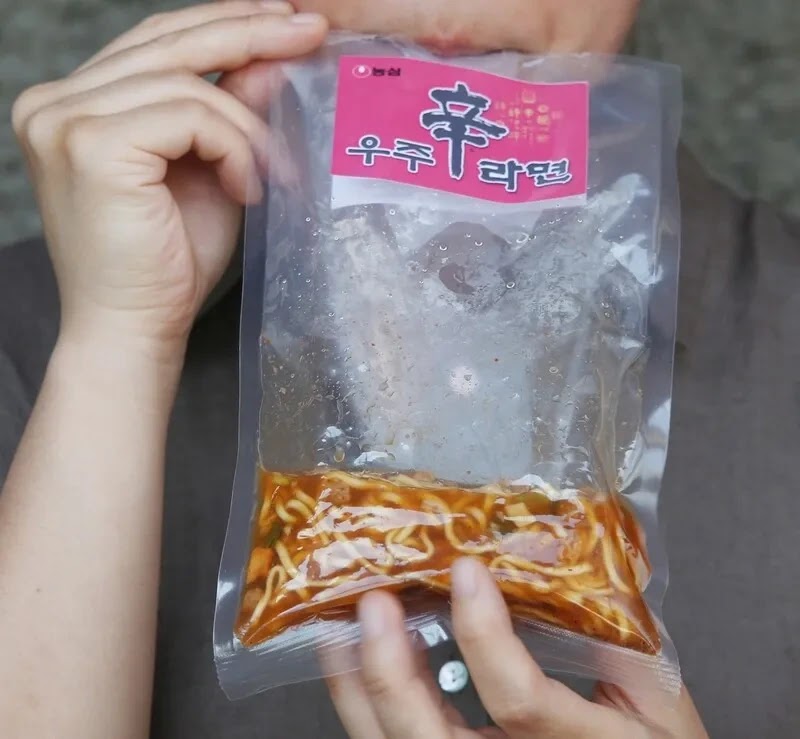
The peak of adaptability is space. Since boiling water cannot be used in zero gravity, space ramen is made to cook in about 70°C water, and the viscosity of the broth is increased so it doesn’t float away. The ‘Space Ram’ created by Momofuku Ando’s Nissin for Japanese astronauts in 2005 is a prime example.
Conclusion: Three Reasons Ramen Became ‘Bapsim’ (Meal Power)
- Started from problem-solving: Technology born from the problem of post-war food shortages overcame the barriers of eating habits with cups and bowls.
- Continuously adapted to the Korean style: The bowl for spooning up broth, Sunday Chapagetti, and consumer-created Chapaguri made ramen our own food.
- Adapted to every place in life: From PC Bangs to single-person kitchens to space stations, ramen has changed its shape whenever the environment changed.
After being refined on Korean tables for over 60 years, noodles born in Japan have now become another source of ‘Bapsim’ that provides strength instead of rice.
References
- Human Management Research Institute, The Story of a Leader Crazy About Ramen: Think and Think Again
- Ilyo Shinmun, Bankrupt at 47... The Man Who Rose Again with a Single Ramen
- Jaenung.net, The Birth of the First Instant Ramen! The Innovative Invention Story of Momofuku Ando in 1958
- Hankyoreh, [I Am History] Cup Ramen Inventor Momofuku Ando (1910~2007)
- Art Letter VOL.98, The Most Delicious Museum in the World, Yokohama Cup Noodles Museum
- CUPNOODLES MUSEUM, General Producer | Cup Noodles Museum Yokohama
- CUPNOODLES MUSEUM, Momofuku's Work Shed | Cup Noodles Museum Yokohama