
One day in 1882, Joseon’s old-style soldiers, finally receiving their wages after 13 months of arrears, opened their rice bags. Inside, there was more sand and chaff than rice. The rage of the soldiers, expressed through their cudgels, escalated directly into the Imo Incident.
Periods when compensation for soldiers was delayed, insufficient, or non-existent have appeared in our history more frequently and for longer than one might think.
And in 2025, news that a sergeant’s take-home pay was set at 2.05 million won caused a stir in online communities once again. Faced with this figure, which closely approaches the minimum wage, one cannot help but wonder: before numbers were deposited into bank accounts, what did soldiers actually receive to defend their country?
From land and villages to rice, fabric, and even faith—looking at what and how much was paid to soldiers reveals what the nation looked like during those times.
Why a General’s Salary in Silla Was an ‘Entire Village’ — Nogeup and Sigeup
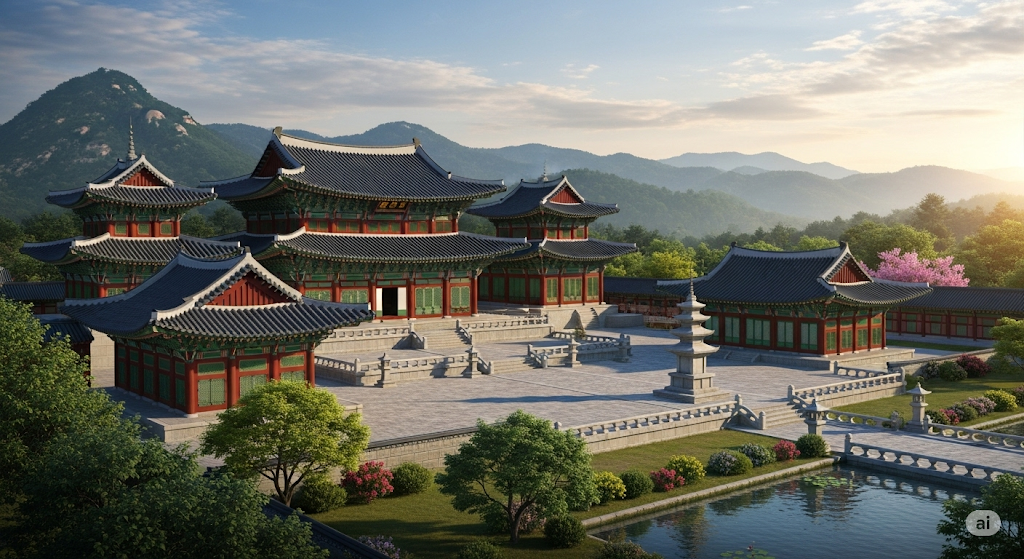
During the Three Kingdoms period, Silla did not pay nobles and generals who achieved military success in money; instead, it granted them total control over specific regions. This was known as Nogeup (祿邑). They could collect taxes, mobilize labor, and keep local specialties from these areas, essentially receiving an entire business entity instead of a salary.
Sigeup (食邑), which could be inherited by descendants, was an even greater reward. It was granted only to those who had rendered extraordinary service, such as General Kim Yu-sin. The problem was that this power was too great. Nobles and generals who held land and people naturally grew into entities that threatened the royal authority.
Military Land in Goryeo and the Military Coup Triggered by Land-Based Pay
In Goryeo, the compensation system was refined by granting professional central soldiers hereditary land called Gunjinjeon (Military Land). A soldier’s son had to inherit the duty of service, and in return, he received land amounting to about 90,000 pyeong.
They were not just soldiers; they were a warrior class and small-to-medium landowners. However, this system, created to protect the state, eventually became a blade that threatened the dynasty. Soldiers with economic foundations, dissatisfied with the discrimination against them by civil officials, staged a military coup and seized power.
Starting with Four Doe of Rice — Joseon’s Experiment with the Training Command
Having experienced the harm caused by land-owning warrior factions at the end of Goryeo, Joseon, in principle, did not grant land to soldiers. Instead, after the Imjin War, they created the ‘Training Command’ (Hullyeondogam), the first standing army with a salary system. From this point on, soldiers began to transition from land-owning power players to ’employees’ receiving wages from the national treasury.
Soldier Salary Statement: Rice and Fabric for Foot Soldiers of the Late Joseon Dynasty Training Command
| Category | Payment Amount | Currency Value (at the time) | Modern Value Equivalent |
|---|---|---|---|
| Salary (Rice) | 4 mal, approx. 57.6kg | Approx. 2 nyang (per month) | Approx. 150,000 won (per month) |
| Annual Bonus (Fabric) | 9 rolls of cotton | — | — |
the amount was not large. While it covered the minimum food requirements for a family, it was far below the salary of a servant at the time (about 7 nyang). Nevertheless, this was a significant turning point where a system for the state to directly hire and manage soldiers was established.
A Country Shaken by Rice Bags Mixed with Sand: The Imo Incident Caused by Unpaid Wages
In 1882, Joseon experienced firsthand what price a nation pays when it fails to keep its promise regarding wages.
Old-style soldiers, who faced extreme discrimination compared to the new ‘Byeolgigun’ army, had their wages delayed for a staggering 13 months.
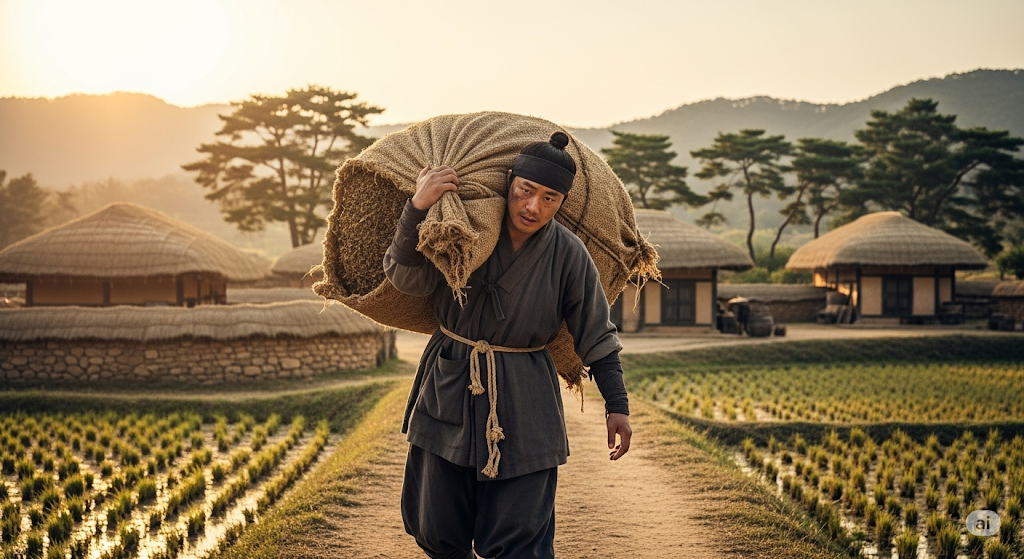
After a long wait, the rice bags they received contained more sand and chaff than rice grains.
The protest of soldiers, enraged by the corruption of officials, turned into violence, which became the spark for the Imo Incident (壬午軍亂). It was not merely a riot.
It was an event that showed how the entire society shakes when the most fundamental promise of a nation—a soldier’s salary—collapses.
People Who Chose Conviction Over Salary: The Independence Army’s Calculation
During the Japanese colonial period, there was no government to pay soldiers who had lost their country. The ‘salary’ of the Independence Army consisted of donations collected bit by bit by compatriots in Manchuria, Primorsky Krai, and America, as well as independence government bonds issued by the Provisional Government of the Republic of Korea.

A handful of corn, a worn-out uniform, and the hope for the independence of the motherland were effectively the only compensation.
As recorded in court rulings related to independence movements, the shift in the pay system from the state to the people, and from material compensation to ideological conviction, was the most unique period in our history.
From 900 Won for Cigarettes to 2.05 Million Won: What Soldier Salaries Tell Us
In 1970, a sergeant’s monthly salary was 900 won, which rose to a take-home pay of 2.05 million won in 2025, and this level is being maintained in 2026. This figure combines a base pay of 1.5 million won with the government-matching fund for the ‘Soldier Tomorrow Preparation Savings’ of 550,000 won.
Evolution of Soldier Salaries Based on Purchasing Power for Jajangmyeon (1970~2026)
| Year | Sergeant Salary | Jajangmyeon Price | Jajangmyeon Affordable with Salary |
|---|---|---|---|
| 1970 | 900 won | 100 won | 9 bowls |
| 1980 | 3,900 won | 500 won | Approx. 8 bowls |
| 1991 | 10,000 won | 1,200 won | Approx. 8 bowls |
| 2011 | 103,800 won | 4,500 won | Approx. 23 bowls |
| 2024 | 1,250,000 won | 8,000 won | Approx. 156 bowls |
| 2025 | 2,050,000 won | 8,500 won | Approx. 241 bowls |
| 2026 | 2,050,000 won (Frozen) | 8,500 won | Approx. 241 bowls |
Looking only at the numbers, the purchasing power of a sergeant’s salary has increased from 9 bowls to over 240 bowls in 55 years.
However, a paradox has also grown. As the take-home pay of a sergeant became higher than that of a junior non-commissioned officer (approx. 1.93 million won), a salary inversion occurred, leading to reports of declining application rates for junior officers and many Korea Military Academy cadets considering dropping out or refusing commissioning.
A YouTube video pointed out this issue with the provocative title, “I’m not going to the army until ‘25.”
Ultimately, the Ministry of National Defense chose not to raise the basic pay for soldiers at all in 2026, opting instead to freeze it and raise the salaries of officers by an average of 3.5%.
The next stop on this journey—from land to rice, and from rice to cash—will likely not be about the amount itself, but about equity.
Just as Nogeup threatened royal power and Gunjinjeon gave rise to the military coup, the form of compensation has always foreshadowed the conflicts of the next era.
The current inversion, where a sergeant receives more than a junior officer, may be a signal that the form of compensation is once again changing the face of this nation.
References
- KBS News: Soldier salary increases from 820,000 won to 2.05 million won in 3 years
- Korea Economic Daily: Next year's sergeant salary 2.05 million won... 1-person-1-room for military officers by 2026, 2025 budget plan
- National Archives of Korea: Major Independence Activities - Court Rulings Related to Independence Movements
- YouTube: Side effects of 2.05 million won sergeant salary.. "Not going to the army until '25"??