
From the time when generals in the Three Kingdoms received villages as salaries to the modern era where soldiers earn 2 million won, military salaries have reflected the times.
- The evolution of military salary (compensation) systems from the Three Kingdoms to modern times
- The significance of military salaries in our history and society
- The value of modern military salaries and their historical background
Recently, news that the salary for a sergeant will exceed 2 million won starting in 2025 has sparked significant interest. Observing military salaries approaching minimum wage, one might wonder how it was in the past. Unlike today, where numbers appear in bank accounts, in the past, land deeds or bags of rice replaced salary envelopes. Following the thousand-year history contained within a soldier’s salary envelope reveals the vast historical currents of our nation.
Is a salary envelope equivalent to a village? (Three Kingdoms & Goryeo Period)
Rewards for Silla generals: Nok-eup (祿邑) and Sik-eup (食邑)
If you were a brave general of Silla during the Three Kingdoms, what would you receive as a reward for your victory in battle? The greatest reward was not gold or jewels, but ‘Nok-eup (祿邑)’.
Nok-eup is a system where the king grants a noble or general who has made contributions the right to govern a specific area and its people. They could collect taxes, mobilize labor, and possess local specialties. It was akin to receiving a company instead of money as salary. This was such immense power that it sometimes threatened royal authority.
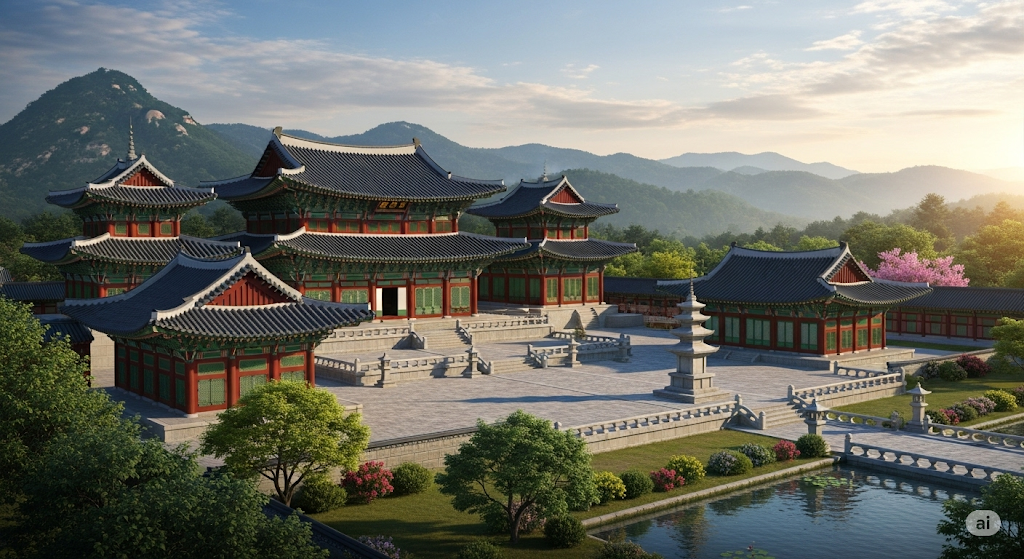
- Nok-eup (祿邑): Holds the rights to collect taxes, tributes, and mobilize labor in a specific area.
- Sik-eup (食邑): Similar to Nok-eup but can be inherited by descendants. It is the highest reward given only to those who have made exceptional contributions, like General Kim Yu-sin.
In this way, early state compensation for soldiers was not just a salary but the very source of power and wealth.
Inherited property for professional soldiers in Goryeo: Military Land (軍人田)
During the Goryeo period, the military salary system became more structured. Professional soldiers belonging to the central army were granted ‘Military Land (軍人田)’.
Military Land was land granted by the state in exchange for military service, which could be inherited. The sons of soldiers were required to serve in the military and, in return, inherited economic foundations in the form of land. They were part of the ‘warrior class’ owning approximately 90,000 pyeong of land, serving as the core of the national military power rather than just simple soldiers.
Ironically, however, the Military Land system created to protect the state eventually became a blade threatening the dynasty. Soldiers who achieved economic independence based on land grew dissatisfied with discrimination against civil officials and instigated the ‘Mushin Coup’ to seize power.
Salaries received in rice and fabric (Joseon Dynasty)
Experiencing the negative effects of land ownership by powerful factions at the end of Goryeo, Joseon fundamentally did not grant land to soldiers. Instead, after the Imjin War, they recognized the need for professional soldiers and established the first ‘salary system’ for standing soldiers, the Training Army (훈련도감). From this point, soldiers began to transform from land-owning power holders to ’employees’ receiving salaries from the national treasury.
- Training Army infantry salary: 4 mal (斗) of rice per month + annual bonus of 9 pieces of cotton fabric (匹)
Salary statement for Training Army soldiers in late Joseon
| Category | Salary (Rice) | Annual Bonus (Fabric) |
|---|---|---|
| Infantry (Initial) | 4 mal (approximately 57.6 kg) | 9 pieces of cotton |
| Value of currency at the time (monthly): Approximately 2 nyang (兩) | | Modern value conversion (monthly): Approximately 150,000 won | | Purchasing power analysis: Sufficient for a family’s minimum food needs, but significantly less than the salary of a servant (approximately 70 nyang). |
Although the amount was not large, it marked a significant historical turning point where the state directly employed and controlled soldiers.
The rice bag of anger that sparked the Imo Incident
What happens when the state fails to provide even the promised salary? In 1882, Joseon painfully experienced the answer. Old soldiers, who faced severe discrimination compared to the new army ‘Byeolgi-gun’, were 13 months behind in salary.
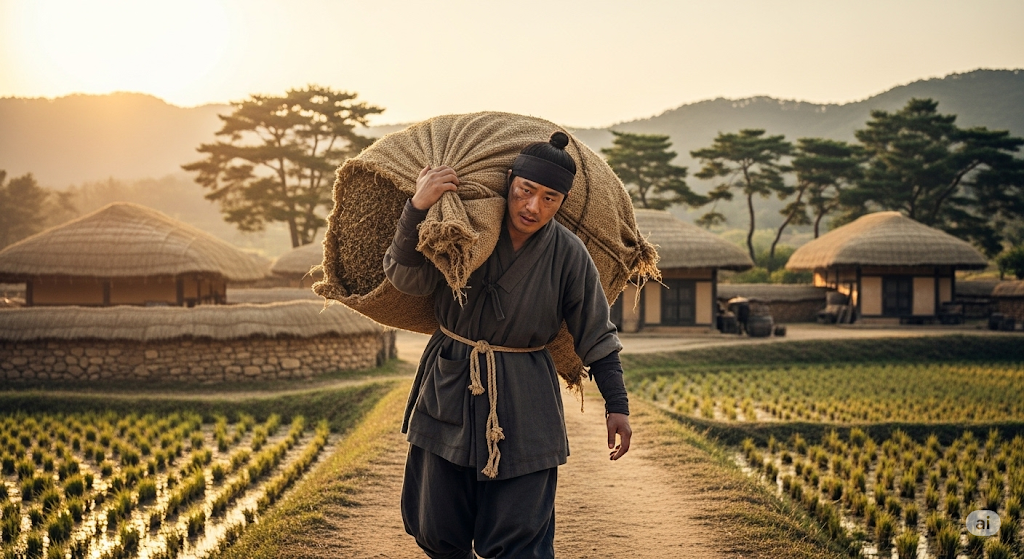
The rice bag received after a long wait contained more sand and chaff than rice grains. The protests of soldiers enraged by the corruption of officials were met with violence, ultimately becoming the catalyst for the ‘Imo Incident (壬午軍亂)’. This event was not merely a riot; it symbolized how society collapses when the state’s most fundamental promise of military salaries is broken, and it was a resistance against an incompetent and corrupt government.
Those who fought not for salary but for their homeland (Independence Fighters)
During the Japanese occupation, there was no government to pay salaries to soldiers who had lost their country. Independence fighters dedicated everything not for money but for the belief of regaining their lost nation.

Their ‘salary’ came from the donations collected from compatriots in Manchuria, Primorsky Krai, and the United States, as well as ‘independence bonds’ issued by the Provisional Government of the Republic of Korea. A handful of corn, worn-out military uniforms, and the hope of ’national independence’ were their only rewards. This was the most unique period in our history, where the salary system transformed from state to people, and from material compensation to ideological belief.
From cigarette prices to living wages (Republic of Korea Armed Forces)
After liberation, the salaries of the Republic of Korea Armed Forces were so poor they were called ‘patriotic pay’. In the 1970s, the salary for a sergeant was 900 won, equivalent to the price of nine bowls of jjajangmyeon. After decades of slow increases, military salaries have seen rapid changes in recent years.
This reflects a societal shift in perception that military service should no longer be viewed solely as ‘sacrifice’ but as ‘just compensation’ for the time of youth, coinciding with the economic growth of South Korea.
Sergeant salaries and jjajangmyeon: A historical overview of military salary purchasing power
| Year | Sergeant Salary (won) | Purchasing Power (how many bowls of jjajangmyeon?) |
|---|---|---|
| 1970 | 900 | 9 bowls (jjajangmyeon: 100 won) |
| 1980 | 3,900 | About 8 bowls (jjajangmyeon: 500 won) |
| 1991 | 10,000 | About 8 bowls (jjajangmyeon: 1,200 won) |
| 2011 | 103,800 | About 23 bowls (jjajangmyeon: 4,500 won) |
| 2024 | 1,250,000 | About 156 bowls (jjajangmyeon: 8,000 won) |
| 2025 (planned) | 2,050,000 | About 241 bowls (jjajangmyeon: 8,500 won) |
From a time when one could buy nine bowls of jjajangmyeon with a month’s salary in the 1970s, by 2025, one will be able to buy over 240 bowls. This table illustrates not just a change in numbers but how dramatically the state’s attitude toward soldiers has shifted.
Conclusion
The evolution of military salaries is a condensed version of the history of South Korea. Through this, we can glean several important facts.
- Forms of compensation reflect the times: Compensation for soldiers has changed from land (power) to goods (livelihood) and then to cash (just compensation), showcasing the political, economic, and social values of each era.
- Treatment is a measure of national power and perception: How much a nation values the dedication of its young people protecting it is a crucial indicator of its national power and social maturity.
- Just compensation is the cornerstone of national security: As the lesson from the Imo Incident shows, when the state’s basic promises and fair treatment of soldiers collapse, national security can also be shaken.
Behind the figure of 2 million won lies a history intertwined with land, rice, and the sweat, tears, and hopes of countless individuals. Remembering the dedication of soldiers behind the peace we enjoy and maintaining social interest in their deserved treatment is what a healthy society should embody.