
How did the silver empire of the sea, tuna, come to possess two faces: that of an ordinary canned food and that of a luxury item?
- Explore the deep connection between tuna and humanity that began in the Neolithic era.
- Examine the backstory of the invention of canned tuna, born from war and technology.
- Compare the success myths of two giants, Dongwon and Sajo, who wrote the history of tuna in South Korea.
- Discuss the current state and challenges of tuna aquaculture technology for a sustainable future.
A Can of Canned Tuna and a Slice of O-toro: The Two Faces of a Fish
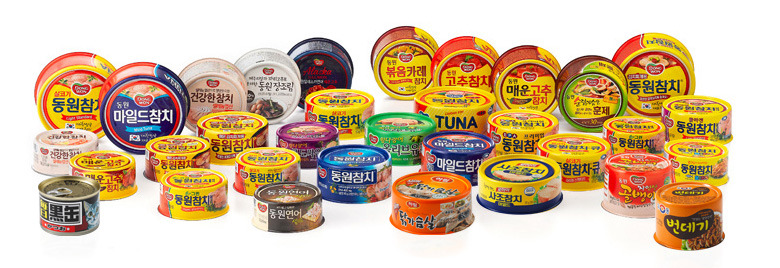
How do we remember tuna? Many might think of the yellow cans of ‘Dongwon Tuna’ or ‘Sajo Tuna’ that securely guard a corner of the pantry. It is a humble ingredient deeply embedded in our daily lives, often mixed with rice when hungry or added to spicy kimchi stew for extra flavor.
However, there is another face of tuna. On New Year’s Day, before dawn, the Toyosu Fish Market in Tokyo is filled with excitement. Amidst the flashes of numerous reporters, a giant bluefin tuna goes up for auction. After the auctioneer’s booming call, the final bid is announced: a staggering 270 million yen, nearly 2 billion won, an unimaginable amount. This is tuna as a luxury item, priced at hundreds of thousands of won per piece, standing at the pinnacle of gourmet cuisine.
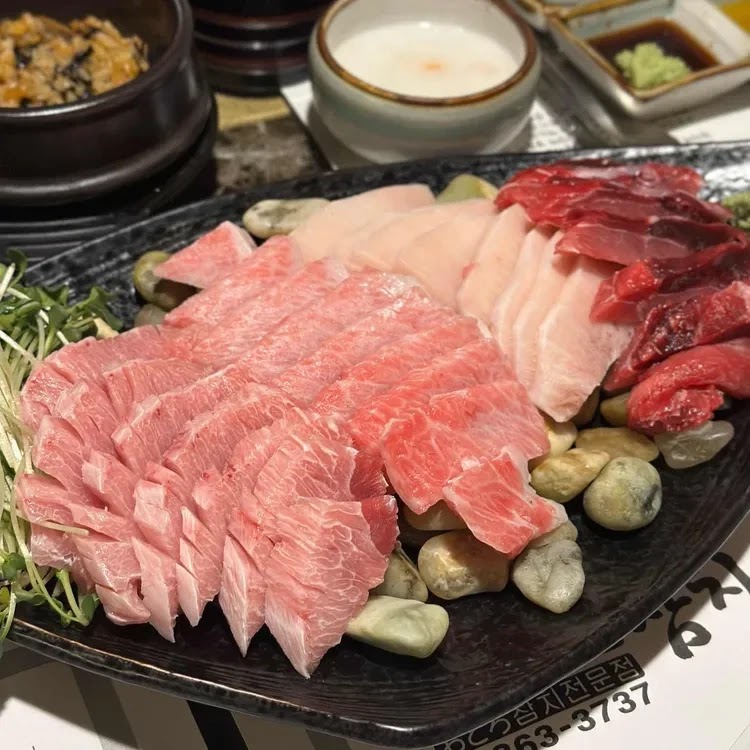
How can a single fish have such extreme duality? From affordable canned varieties to sashimi worth billions, how has tuna come to dominate both extremes of humanity’s table? The journey to find the answer reflects not just the history of a fish, but also a mirror of the development of human civilization, technological innovation, and changing desires. Let us begin the great epic of tuna, the silver empire of the sea.
| Era | Major Events |
|---|---|
| Neolithic Era | Discovery of tuna bones at the Dongsam-dong shell mound in Busan, suggesting tuna consumption since prehistoric times |
| Ancient Rome | Organized tuna fishing and processing along the Mediterranean coast, trade of ‘Garum’ sauce |
| 1804 | Nicolas Appert in France invents canning technology in response to Napoleon’s prize competition |
| 1903 | California, USA, produces the world’s first canned tuna using tuna caught instead of sardines |
| 1957 | Korea’s first deep-sea fishing vessel, the Jinhamho, successfully catches tuna, giving rise to the name ’tuna’ |
| 1969 | ‘Captain Kim’ Kim Jae-cheol founds Dongwon Industries |
| 1970 | Kinki University in Japan begins research on bluefin tuna aquaculture |
| 1971 | Joo In-yong establishes Sajo Industries (renamed from Sijunsa) |
| 1982 | Dongwon Industries launches Korea’s first canned tuna, ‘Dongwon Tuna’ |
| 2002 | Kinki University successfully achieves the world’s first bluefin tuna aquaculture after 32 years of research |
| 2019 | A bluefin tuna at the Toyosu market sets a record high bid of 336.6 million yen at the New Year’s first auction |
Chapter 1: The Emperor of the Sea Takes Its Place on Humanity’s Table: From Ancient Rome to Neolithic Korea
The bond between tuna and humanity runs much deeper and longer than we might think. Bringing this massive predator of the sea to the table signifies not just securing food, but also a measure of the society’s technological prowess and organizational ability.
Ancient Rome could well be called the ‘Empire of Tuna.’ Roman fishermen ventured into the Mediterranean to hunt tuna, and processing plants built along the coast salted the caught tuna and sent it throughout the empire. In particular, the fermented fish sauce made from tuna’s innards, ‘Garum,’ was an essential condiment on Roman tables. Garum jars have even been discovered in the volcanic ash of Pompeii, indicating tuna’s deep-rooted presence in Roman culinary culture and economy.
Surprisingly, the history of taming this great predator of the sea dates back far earlier than Rome. Let us turn our gaze to the Korean Peninsula. At the Dongsam-dong shell mound on the coast of Yeongdo in Busan, archaeologists discovered ’tuna bones’ among Neolithic artifacts. This suggests that our ancestors already possessed the navigation and fishing techniques to venture into the rough seas to hunt tuna.
Chapter 2: The Invention Born from War and Innovation: The Birth of Canned Tuna
Today, our ability to enjoy tuna anytime and anywhere is ironically thanks to an invention that emerged amidst the ravages of war. The story begins with Napoleon Bonaparte in the early 19th century. Desperate to find a way to supply fresh food to soldiers for extended periods, he offered a large prize for the invention of food preservation technology.
At this time, Nicolas Appert, a pastry chef in Paris, discovered that sealing food in glass jars and heating them in boiling water would prevent spoilage, leading to the invention of ‘canning’ technology. In an era unaware of bacteria, he learned the principles of sterilization and sealing through experience.

As time passed, in 1903, a sardine canning factory in California faced a crisis. They decided to can the bluefin tuna caught instead of sardines, and the well-cooked tuna meat turned out to be as lean and tender as chicken. This led to the brilliant marketing phrase “Chicken of the Sea,” and canned tuna began to fly off the shelves.
When World War I broke out, canned tuna became a popular source of affordable and nutritious protein for soldiers in the trenches, with massive quantities supplied to the military. After the war, canned tuna transcended military rations to become a soul food for Americans. It was truly a revolution in food culture.
Chapter 3: The Captains Who Ruled the Vast Ocean: Dongwon and Sajo, the Dawn of K-Tuna Mythology
The wave of canned tuna that began in the United States crossed the Pacific and landed in South Korea, where two remarkable figures would write our own mythology. They are Kim Jae-cheol of Dongwon and Joo Jin-woo of Sajo, two giants who built their kingdoms on the stage of the sea in different ways.
3.1. The Great Voyage of ‘Captain Kim,’ Kim Jae-cheol of Dongwon
The history of Dongwon is the very story of the sea of ‘Captain Kim,’ Kim Jae-cheol. Renowned as a deep-sea fishing vessel captain, he founded Dongwon Industries in 1969 at the age of 35. The story of how he borrowed two boats from Japan based solely on the credit of ‘Captain Kim’ without any collateral is well-known.
His turning point came during a CEO program at Harvard University. Upon encountering the theory that “tuna becomes popular in countries with a national income exceeding $2,000," he thought of the South Korean market, which had just crossed the $2,000 threshold. He decided to turn the tuna, which was entirely exported, into canned products for domestic consumption. Thus, in 1982, Korea’s first canned tuna, ‘Dongwon Tuna,’ was born.
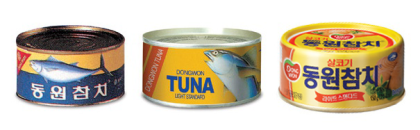
After facing initial sales difficulties, all employees dedicated themselves to tasting events. They actively promoted recipes for ’tuna kimchi stew,’ successfully establishing canned tuna on Korean tables. This success story was the result of a captain-turned-businessman’s determination to find answers on the ground. I too cannot forget the taste of the tuna kimchi stew my mother made during my childhood, and it is astonishing to realize that this dish originated from the insight of a businessman.
3.2. The Political Science Student Who Became a Deep-Sea Fishing Tycoon, Joo Jin-woo of Sajo
If Kim Jae-cheol of Dongwon was the ‘field commander,’ Joo Jin-woo of Sajo was the ‘strategist.’ Studying political science in the United States and dreaming of becoming president, he inherited the company at the age of 29 after his father’s sudden passing in 1979.
Though he was a novice to the sea, he adeptly managed the crisis with his exceptional business acumen. He chose a strategy of acquiring struggling companies, expanding his scale through mergers and acquisitions (M&A). He successively acquired major food companies such as Sajo Haepyo, Sajo Daelim, and Oyang Fisheries, growing the Sajo Group into a comprehensive food group.
Chapter 4: The Belly That Even Cats Ignored Becomes the Pinnacle of Gourmet: The Premiumization of Tuna Sashimi
While canned tuna dominated the public’s table, in Japan, the fatty belly of tuna, ‘Toro,’ faced a completely different fate. Now synonymous with the highest quality cuts, just over a century ago in the Edo period, Toro was considered so fatty that it spoiled easily and had a fishy smell, earning the nickname ‘Nekomatagi (猫またぎ),’ meaning ‘a part that even cats would ignore.’
How did this despised belly rise to become the emperor of gourmet cuisine? The answer lies not in changing tastes but in technological advancements. The rapid development of freezing technology and a nationwide cold chain distribution system after World War II changed everything. By rapidly freezing tuna caught on deep-sea fishing vessels at -60 degrees Celsius, the fat, which had previously been a cause of spoilage, instead perfectly preserved its flavor. This moment marked the transformation of a past disadvantage into the ultimate advantage of melting tenderness and rich flavor thanks to technology.
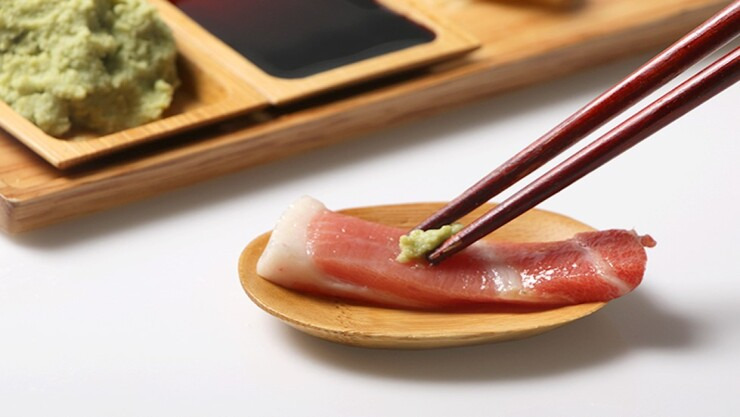
Japan’s remarkable economic revival further fueled this trend. As people gained economic freedom, they began seeking more expensive and delicious foods, and Toro, boasting beautiful marbling, emerged as a symbol of wealth and gourmet dining. The record-breaking auction prices at the New Year’s first tuna auction held annually at Tokyo’s Toyosu Fish Market are a testament to this background.
Chapter 5: Taming the ‘Porsche of the Sea’: The Advancement of Tuna Farming Technology
With the explosive increase in global demand for tuna, the issue of resource depletion due to overfishing became serious. Humanity now had to transition from ‘hunters’ to ‘farmers.’
The first to take on this seemingly impossible challenge was Kinki University in Japan. In 1970, the university’s Fisheries Research Institute embarked on research into the ‘complete aquaculture’ of bluefin tuna. Complete aquaculture refers to a technology that creates a perfect cycle without relying on wild resources, by artificially hatching fry, growing them to adulthood, and allowing them to spawn, thus producing the next generation.
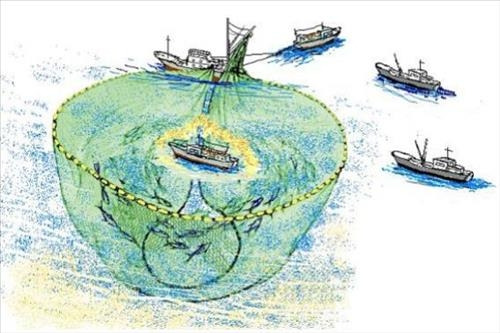
The research faced numerous failures, but after 32 years, in 2002, the first generation of artificially hatched tuna successfully spawned, achieving the world’s first complete aquaculture of bluefin tuna. This was a miraculous success with a survival rate of only 0.0006%.
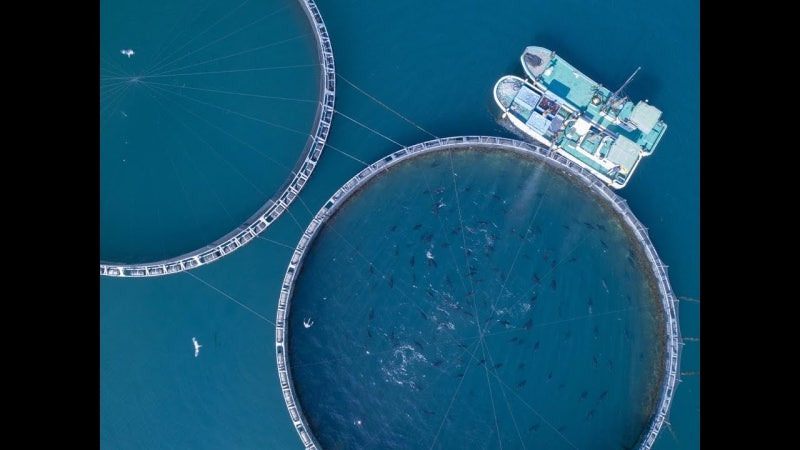
South Korea has also jumped into securing bluefin tuna farming technology, achieving its first commercial shipment in 2018, but there is still a long way to go before mass production. The hunting of tuna in the Neolithic era has now entered a new phase of ‘marine livestock farming,’ raising the sea’s predator like livestock.
Comparison/Alternatives
Dongwon vs Sajo: Two Growth Models of K-Tuna Mythology
The histories of Dongwon and Sajo illustrate two typical growth models of South Korea’s economic development. While Chairman Kim Jae-cheol symbolizes the entrepreneurial spirit of the first generation, creating something from nothing through field experience and innovation, Chairman Joo Jin-woo represents the second-generation manager who inherited a family business during a crisis and expanded it using modern management techniques like M&A.
| Category | Dongwon Group (Kim Jae-cheol) | Sajo Group (Joo Jin-woo) |
|---|---|---|
| Founder Background | Former deep-sea fishing vessel captain (‘Captain Kim’) | Scholar with a background in political science, second-generation manager |
| Founding Philosophy | Market development and innovation based on field experience | Inheriting and stabilizing the family business left by his father |
| Core Growth Strategy | Creation of the domestic canned tuna market | Expansion through active mergers and acquisitions (M&A) |
| Leadership Style | Field expert leader with deep sea knowledge | Strategic manager with cold judgment |
Conclusion
From a hunting target in the Neolithic era to an industrial resource in Rome, from Napoleon’s military rations to a modern side dish, and finally becoming a subject of advanced biotechnology, the journey of tuna parallels the development of human civilization.
- Key Point 1: Technology Creates Value
Canning technology popularized tuna, and rapid freezing technology transformed discarded belly into high-end gourmet. We can see how technological advancements changed the fate of tuna. - Key Point 2: Leadership Shapes Markets
The different strategies of Kim Jae-cheol of Dongwon and Joo Jin-woo of Sajo led the South Korean tuna industry to a global level. This is a vivid example of how a leader’s vision can reshape an industry. - Key Point 3: Questions of Sustainability
The complete aquaculture technology that emerged amidst explosive demand and overfishing issues is a new hope and challenge for humanity. The future of tuna will be a test of whether we can find wisdom to coexist with nature.
Doesn’t the can of tuna on your table look different now? This small can contains the great history of humanity, technology, and reflections on the future.