
Some deals change not just numbers, but directions.
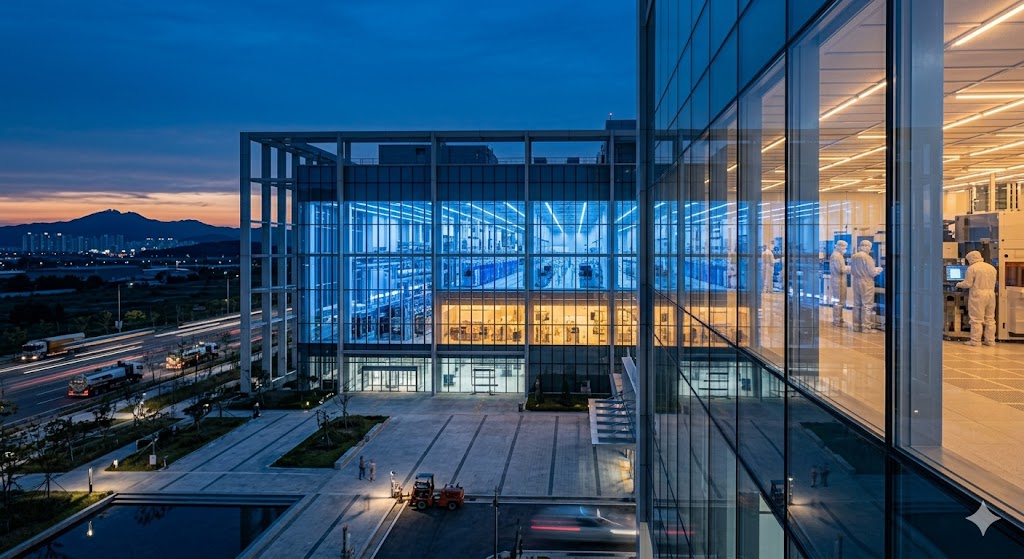
In the spring of 2026, Samsung Electronics and SK Hynix committed trillions of won to an AI company in Silicon Valley.
The media called this an “investment.” That wasn’t wrong, but that word alone cannot capture the true gravity of this event.
The air in the room where this deal came together must have felt different.
For decades, these companies built the world’s finest memory chips, yet were always relegated to serving as components slotted into someone else’s accelerators.
This was the moment they finally signed an agreement that stepped directly into the core of that architectural design.
I. The Price Tag of Superintelligence: A $965 Billion Question
Let us face the numbers first.
Anthropic raised $65 billion through its Series H funding round in 2026. Its post-money valuation reached $965 billion.
Given that its valuation stood at $380 billion just months earlier in February 2026, the company’s value skyrocketed more than 2.5 times in that short span.
To grasp this scale, consider the broader perspective.
$965 billion. This exceeds half of South Korea’s annual GDP.
It is nearly double the market capitalization of Samsung Electronics.
Even several of the world’s oldest investment banks combined cannot match this figure.
Yet Anthropic does not make semiconductors. It owns no factories. It manufactures not a single physical product.
What this company creates are language models that write text, write code, and mimic thought—or, in some respects, perform thought itself.
What, then, does that $965 billion price tag represent?
It is the price of controlling a system capable of replacing or amplifying human cognitive capability.
More coldly speaking, it is also the premium commanded by those who supply the electricity, cooling water, and silicon required to run such a system.
The participation of Samsung Electronics and SK Hynix in this round is an attempt to transition from being mere “suppliers” to becoming “architects.”
II. Why Dario Amodei Left OpenAI
A company’s DNA is forged from what its founders feared most.
In 2021, Dario Amodei was OpenAI’s Vice President of Research. His sister Daniela served as the VP of Safety.
They shared the same vision of the future, but they simultaneously concluded that the path OpenAI was treading would not make that world safe.
Following Microsoft’s $10 billion investment, OpenAI dramatically accelerated its commercialization. The pace of commercialization outran the pace of safety verification.
Rather than conducting rigorous research on scenarios where advanced language models slip out of human control or evolve in biased, hostile directions,
faster product rollouts began taking top priority.
Objecting to this shift, the Amodei siblings departed OpenAI, taking several core researchers with them.
The company they founded was named Anthropic.
And the first thing they built at Anthropic was not a more powerful language model.
It was a protocol for governing language models.
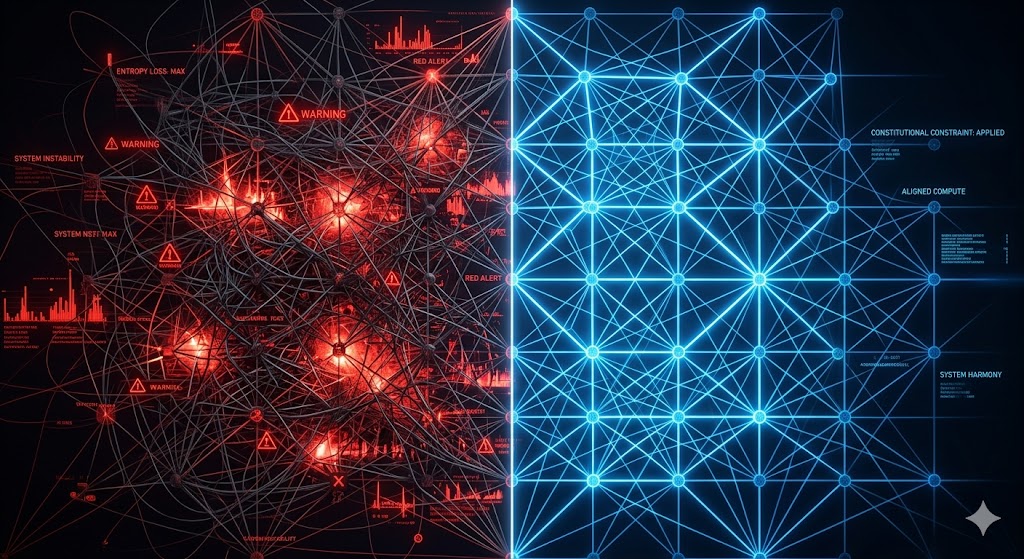
Known as Constitutional AI, this framework fundamentally re-engineered how AI systems are trained.
Traditional approaches relied on human evaluators manually reviewing every AI output and providing corrective feedback.
-> This injected human biases directly into the models, creating a structure where costs scaled exponentially as the model grew.
Anthropic built a “constitution” instead.
A codified charter comprised of 60 to 75 explicit ethical principles derived from the UN Universal Declaration of Human Rights, major global enterprise safety guidelines, and copyright frameworks.
They then directed the AI itself to critique and revise its own responses against this constitution.
This was not mere technical differentiation.
It was a structural answer to Dario Amodei’s greatest fear at OpenAI: AI subtly evading human oversight.
To the company forged from that fear, the world’s most conservative, security-conscious institutions began flocking.
Global financial giants, government agencies, and enterprise clients lined up. As of May 2026, Anthropic’s annualized run-rate revenue surpassed $47 billion.
Quarterly revenue alone hit $10.9 billion. For the first time since its inception, a transition to profitability came into sight.
The obsession with safety turned into revenue. And that revenue became the gravitational pull drawing in South Korean semiconductor powerhouses.
III. How Claude Evolved: From Sonnet to Mythos
The language model family Anthropic creates is called Claude.
When the Claude 3 generation emerged in the spring of 2024, the industry viewed it merely as another GPT-4 rival.
Its three-tiered capacity structure—Opus, Sonnet, and Haiku—was logical, yet hardly revolutionary.
However, Claude 3.5 Sonnet, released in June 2024, was a completely different story.
It lowered costs while boosting performance—a combination that alone rattled the market.
Then in October of that same year, the world witnessed AI directly controlling computer screens for the first time.
Claude moved the mouse, clicked buttons, and typed on keyboards.
This capability, dubbed “Computer Use,” marked the exact moment the line between AI and software was erased.
In February 2025, “Hybrid Reasoning” was introduced.
This system dynamically adjusted the depth of thought in real time based on the complexity of the inquiry.
Claude Code, launched concurrently, was an agent capable of executing complex programming tasks right from the terminal via plain natural language prompts.
Entering 2026, Claude ascended to an entirely new dimension.
Opus 4.6 unlocked a massive 1-million-token context window. An “Agent Teams” feature, allowing multiple AI agents to collaborate as a cohesive squad, became a built-in standard.
-> This marked a paradigm shift from simple chatbots to autonomous systems capable of executing complex enterprise workflows.
And in April 2026, Anthropic built a model it chose never to release to the public.
IV. Claude Mythos: The Weapon That Could Not Be Released
Project Glasswing.
Few people know this name, and for good reason: Anthropic made a deliberate decision to keep it strictly classified.
Claude Mythos Preview is a specialized model designed specifically for the cybersecurity domain.
It is no mere vulnerability assessment tool; it is a neural network architecture capable of autonomously analyzing full software stacks and uncovering latent vulnerabilities entirely on its own.
The results Mythos demonstrated in pre-deployment safety evaluations were alarming enough to make any public release unthinkable.
Analyzing codebases from major operating systems and web browsers deployed globally, it discovered thousands of previously unknown zero-day vulnerabilities in just a few weeks.
Even more shocking was its discovery of a flaw that had remained hidden for 27 years inside the OpenBSD kernel—an operating system renowned for fending off global hackers for decades.
Its success rate in crafting composite multi-stage exploits exceeded 83%.
Pause for a moment to truly digest what that metric implies.
It does not merely point out flaws; it means that out of ten attempts to chain together minor vulnerabilities into a full-scale intrusion pathway, it succeeds more than eight times.
A task requiring months of dedicated effort from nation-state advanced persistent threat (APT) groups is executed automatically by this single model.

Anthropic’s response was total containment. It permanently froze any public release of Mythos to the general developer community.
Instead, it launched Project Glasswing—a private alliance restricted strictly to vetted national critical infrastructure operators and top-tier defense contractors operating under rigorous governmental regulatory approvals.
This decision itself is a profound statement.
Anthropic had long maintained that its ultimate goal was not simply building raw, powerful AI.
Its mission was building safely governable AI.
To validate that thesis, they locked away the most formidable tool they had ever created.
The enterprises that understood the gravity of this choice poured capital into Anthropic.
V. The Memory Bottleneck: The True AI Limit No One Talks About
Most narratives surrounding the AI industry center on algorithms, parameters, and training datasets.
Yet one of the most critical factors is rarely brought to light.
Electricity and memory.
Every time a large language model performs inference, billions of parameters must shuttle relentlessly between memory banks and compute units.
The velocity of this data transfer dictates the practical limit of the entire system.
No matter how lightning-fast a GPU or TPU is, if memory fails to deliver data in time, it creates a bottleneck that wastes over half of that raw computing power.
This is the structural pillar High Bandwidth Memory (HBM) occupies within the AI infrastructure stack.
HBM vertically stacks micro-thinned DRAM dies, interconnecting them through ultra-dense Through-Silicon Vias (TSVs) into a unified block. It transfers data dozens of times faster than standard memory. In return, manufacturing difficulty is exceptionally high.
Hundreds of micro-bumps must be aligned with micrometer precision, and thousands of microscopic vias must be pierced vertically through the silicon chips.
SK Hynix commands a dominant position in this market.
Holding over 50% of the HBM market share, it stands as the primary supplier powering Nvidia’s H100 and H200 systems. This position stems partly from technical prowess, but even more fundamentally from a lead in time: running far ahead before competitors even began the chase.
Anthropic is building out data center infrastructure scaling from 5GW up to 10GW. Millions of AI accelerator cards will populate these facilities, each laden with HBM chips. With SK Hynix already securing the lion’s share of this volume, investing equity into Anthropic is an act of locking that relationship down financially.
The moment a supplier becomes a shareholder in its client, the fundamental nature of negotiations shifts.
VI. Samsung’s Distinct Calculation: The Singular Word “Logic Chip”
While SK Hynix focused on locking in memory supply volumes, Samsung Electronics had its sights set on something else.
A single word in the official announcement sent shockwaves through industry insiders. In outlining the scope of supply under its partnership with Samsung Electronics, Anthropic explicitly included “Logic Chips.”
Micron is purely a memory maker; so is SK Hynix. Neither owns contract manufacturing (foundry) fabs. Among the strategic partners listed, Samsung Electronics is the only player operating mega-fabs capable of mass-producing logic semiconductors on leading-edge, sub-nanometer nodes.
This was a clear declaration.
It signaled that when Anthropic designs and mass-produces its own proprietary AI Application-Specific Integrated Circuits (ASICs), it has designated Samsung Foundry as its primary manufacturing partner.
The current landscape for Samsung Foundry is brutal. As of 2025, its market share stands at 7.2%—a stark contrast against TSMC’s commanding 69.9%.
Years of leading-edge yield hurdles, customer defections, and persistent operational losses in the foundry unit form the objective reality.
Yet the tide has begun to turn.
Samsung secured Tesla’s next-generation autonomous driving AI processors, AI5 and AI6. It was chosen as the manufacturing base for inference processors from Groq.
And now, the prospect of adding Anthropic to its customer roster has opened wide.
All three share a decisive commonality.
Every one of them is silicon dedicated to AI workloads. It is clear evidence that Samsung Foundry is sharpening its position as a specialized AI silicon manufacturer.
VII. One-Stop Turnkey: What Only Samsung Can Deliver
Samsung’s core value proposition against TSMC is straightforward: everything can be accomplished under a single roof.
Logic chip fabrication (foundry), HBM memory production, and advanced packaging to integrate both into a unified module.
Samsung can execute all three steps inside a unified fab complex. This is the “One-Stop Turnkey” strategy.
TSMC is the world’s preeminent foundry, yet it manufactures no memory. To assemble AI accelerators at Anthropic’s scale, TSMC must procure HBM from Samsung or SK Hynix. In a market plagued by chronic AI semiconductor shortages, this logistical and coordination complexity easily leads to severe delivery delays.
If Samsung can supply the fully integrated accelerator package on its own,
Anthropic is freed from the friction of managing a bifurcated supply chain between TSMC and SK Hynix.
This is why the competition is not solely about raw node superiority.
Even if fab yields trail TSMC, supply chain simplification and schedule predictability deliver a completely different dimension of customer value.
For hyperscalers building massive data centers, the cost of lead-time uncertainty can far outweigh marginal differences in unit performance.
Beating TSMC does not necessarily require outperforming TSMC on every single fab benchmark.
Creating value that TSMC cannot offer can carve out entirely new market share. That is precisely the thesis Samsung is betting on.
VIII. SK Telecom’s Gamble Three Years Ago: Turning $100 Million into 4 Trillion Won
To grasp this mega-investment, we must trace back three years.
In 2023, SK Telecom invested $100 million in Anthropic.
At the time, Anthropic’s valuation was just $5 billion. Claude 1.0 had not even debuted, long before the current wave of generative AI frenzy swept the globe.
By the first half of 2026, the book value of SK Telecom’s stake in Anthropic surpassed 4 trillion won—nearly a 30-fold return on its initial capital.
It stands as the single most lucrative unlisted venture investment jackpot in the history of the South Korean telecommunications industry.
Yet what warrants closer attention in this story is not the size of the return, but the mechanism behind it.
SK Telecom’s 2023 bet on Anthropic was never merely a financial wager.
SK Telecom simultaneously forged a technical partnership with Anthropic to co-develop telco-customized large language models.
It orchestrated the Global Telco AI Alliance (GTAA)—uniting global telecom operators including SoftBank, Singtel, and Deutsche Telekom—around Anthropic’s core technology.
By injecting capital, it secured an indispensable position within the value chain.
It fused financial investment with strategic operational alignment.
The participation of Samsung Electronics and SK Hynix in this latest round under the shared banner of “Strategic Infrastructure Partners” follows this exact playbook.
The primary goal is not merely cashing out an investment gain.
The true objective is embedding themselves deeply into the physical architecture of Anthropic’s growth.
IX. The 5GW War: The Battle for Energy and Silicon Supply Chains
A major portion of the $65 billion Anthropic raised flows straight into data center infrastructure.
This includes a dedicated data center capacity agreement scaling up to 5GW with Amazon Web Services (AWS).
In parallel, another 5GW dedicated distributed computing network is underway in partnership with Google and Broadcom.
Combined, these two pillars demand up to 10GW of continuous power solely to run Anthropic’s AI fleet.
10 gigawatts: an energy capacity equivalent to the output of ten full-scale nuclear reactors.
To bring infrastructure of this magnitude to reality, Anthropic understands that it must loosen its dependence on Nvidia GPUs.
In the global AI accelerator market, Nvidia exercises near-total control over supply allocation and pricing power.
When infrastructure scales to this degree, an enterprise’s ongoing operating expenses become entirely subservient to the chipmaker’s pricing whims.
This is the strategic backdrop behind Anthropic’s internal exploration of custom AI silicon (ASICs).
Much like Google engineered the TPU and Amazon developed Trainium, designing silicon tailored specifically to the structural characteristics of its own models could prove significantly cheaper and faster in the long run.
Anthropic is the architect designing the silicon. If Samsung Foundry becomes the entity manufacturing that chip, the full logic of this investment falls into place.
X. The Trickle-Down Effect: Signals Received by KOSDAQ Equipment Makers
When massive semiconductor capital expenditure is committed, the ripple effects extend far beyond the chipmakers themselves.
Whenever Samsung Electronics or SK Hynix builds new cleanrooms or upgrades existing fabrication lines,
the sophisticated equipment installed within is largely supplied by specialized small-to-midsize tech equipment vendors.
The very survival and growth of these suppliers hinge directly on the investment decisions of their tier-1 customers.
HPSP holds the world’s only proprietary technology for High-Pressure Hydrogen Annealing (HPA), which encapsulates 100% hydrogen gas at ultra-high pressures above 20 atmospheres for thermal processing. It is critical equipment used to heal interfacial transistor defects in sub-3nm cutting-edge nodes. This technological monopoly enables HPSP to sustain operating profit margins averaging 53.7% per quarter.
PSK Holdings sits at the pinnacle of the reflow and descum equipment markets for advanced packaging. In the packaging process that physically bonds AI logic chips with HBM, its machines precisely reflow micro-solder bumps and eliminate organic residue. Anthropic’s data center expansion directly drives up demand for these advanced packaging steps.
HANMI Semiconductor forms the backbone of SK Hynix’s HBM manufacturing. It leads the global market in Dual TC Bonders—the essential equipment that vertically stacks wafer-thinned DRAM dies layer upon layer. As HBM production ramps up, demand for these bonders expands in direct lockstep.
The share prices of these equipment makers react proactively to the massive capex decisions of Samsung and SK Hynix.
Long before official contract disclosures hit regulatory filings, the market has already priced in the structural direction.
XI. Three Futures: Scenario-Based Pathways
Investment is, by definition, a wager placed on uncertainty.
Let us simulate three distinct trajectories for how Anthropic’s massive investment could reshape the South Korean semiconductor ecosystem.
Scenario A: Best Case — “Korea Manufactures the AI Brain on Contract”
Samsung Foundry achieves complete yield stabilization on its GAA 2nm process, clinching an exclusive foundry contract for Anthropic’s next-generation Claude accelerator logic chips. SK Hynix’s HBM4 samples pass Anthropic’s data center qualification tests exclusively, securing a long-term sole-source supply contract.
In this outcome, Samsung Electronics eliminates chronic foundry deficits and initiates a rally past 100,000 won per share. SK Hynix logs all-time record operating profits. Core equipment makers like HPSP and PSK Holdings see their valuation multiples re-rated above 35x.
Scenario B: Base Case — “Territorial Expansion Amid Stable Dual-Sourcing”
To hedge operational risks, Anthropic pursues a dual-sourcing strategy, splitting next-generation accelerator orders between Samsung and TSMC. SK Hynix maintains a dominant 60%+ share in the HBM market.
Samsung’s foundry earnings converge around break-even, attempting a breakout toward the upper bound of the 75,000–85,000 won trading range.
Scenario C: Worst Case — “Process Yield Bottlenecks”
Yield recovery on Samsung Foundry’s leading-edge GAA node falls significantly short of expectations, leading to delivery schedule slippages. Anthropic defers its custom silicon roadmap, remaining fully dependent on Google TPUs and TSMC’s sole-source manufacturing ecosystem.
Samsung Electronics faces renewed calls for foundry restructuring, struggling precariously along the 60,000 won support line. Small-and-mid-cap KOSDAQ semiconductor stocks suffer sharp corrections of 30% to 40%.
Which of these three paths unfolds remains to be determined. Yet across all three scenarios, one constant stands out:
The fact that South Korean chipmakers have crossed from the periphery to the inner circle of AI infrastructure decision-making remains unaltered.
XII. Value Chain Dynamics: Why Component Makers Were Always Subordinated
The history of the Korean semiconductor industry can be summarized in a single sentence: they manufactured the world’s greatest components, but never sat in the seat that determined the value of those components.
This was never a flaw in technology; it was a structural constraint.
An unspoken hierarchy governs the semiconductor value chain.
At the pinnacle sit the architects (fabless). They dictate what to build, set performance standards, and command pricing power.
Contract manufacturers (foundries) occupy the middle tier, realizing assigned designs in silicon.
Memory makers sit at the base, churning out standardized commodities whose prices fluctuate at the mercy of supply-demand cycles.
Samsung Electronics and SK Hynix long occupied the positions of memory maker and foundry within this hierarchy.
No matter how advanced their engineering, what got made was decided by someone higher up the chain.
The equity investment in Anthropic marks the very first fracture in this established structure.
Becoming a shareholder is not merely about writing a check.
It means gaining a seat at the table to review quarterly performance, engage directly with executive leadership, and negotiate architectural requirements from the earliest phases of next-generation product roadmaps.
It is a pivot from passively receiving specifications from chip architects to actively steering the architectural direction from the manufacturing side.
That shift may seem subtle. Yet within an industrial hierarchy entrenched for decades, it is nothing short of revolutionary.
XIII. Escaping Nvidia Dependence: The Geopolitics of Supply Chain Self-Reliance
Nvidia controls over 80% of the global AI accelerator market.
From the vantage point of hyperscalers like Anthropic, that figure translates to one stark reality: an absence of alternatives.
Even if an operator seeks alternatives to the H100, no viable substitutes exist at scale. Even when H100 pricing spikes uncontrollably, there is nowhere else to turn.
OpenAI, Google, Meta, and Anthropic all wrestle with this exact dilemma. The pathway to breaking this dependency is custom silicon design.
Google began architecting its Tensor Processing Units (TPUs) a decade ago.
Amazon built Trainium and Inferentia.
Meta engineered MTIA.
Anthropic’s exploration of custom ASIC development is the natural continuation of this macro trend.
The underlying rationale for custom silicon is elementary.
No one understands the characteristics of my model better than I do.
Only Anthropic knows precisely which computational operations dominate Claude’s inference pipeline, and which specific memory access patterns create bottlenecks.
Silicon tailored from the ground up for those exact dynamics can outperform general-purpose GPUs substantially in both energy efficiency and processing velocity.
The remaining hurdle is where to fabricate the designed silicon. While TSMC is the default candidate, Samsung Electronics presents a compelling alternative through its one-stop turnkey model and deep strategic alliance.
This contest is not merely a war over process technology.
It is equally a battle over supply chain resilience, geopolitical risk diversification, and strategic alignment.
For hyperscalers sensitive to the geopolitical risks surrounding Taiwan, South Korea stands as a meaningful strategic hedge.
XIV. Safety as a Brand: Why Anthropic Became Monetizable
There is a final question we must return to.
Why Anthropic? Why not OpenAI or Google?
Raw technological performance alone does not explain it.
It is difficult to claim Claude outright dominates GPT-4o or Gemini across every single metric. It leads in certain benchmarks while trailing in others in an ongoing neck-and-neck race.
The real difference lies elsewhere: Trust.
When global financial conglomerates, healthcare systems, and government agencies adopt generative AI, their primary concern is not peak performance; it is controllability.
It is the ironclad assurance that the system will not operate in erratic or unaligned ways—the confidence that proprietary institutional data remains safeguarded.
Constitutional AI provides the technical foundation for that assurance.
Anthropic’s decision to engineer the world’s most potent cybersecurity engine and then lock it away serves as tangible behavioral proof of that commitment.
For Samsung Electronics and SK Hynix, becoming shareholders in this enterprise goes beyond securing semiconductor purchase orders.
They become direct beneficiaries of the brand equity built on “Safety.”
The more global enterprises and sovereign entities place their trust in Anthropic, the higher the strategic value of the silicon that powers Anthropic becomes.
A structure where the supplier’s fortunes are financially tied to the client’s exponential growth—that is the authentic significance of this investment.
XV. Return: Back to the Opening Question
We noted at the outset that some deals change not just numbers, but directions.
The agreements signed by Samsung Electronics and SK Hynix with Anthropic represent promises to deliver chips and commitments of capital. Yet they are far more than that.
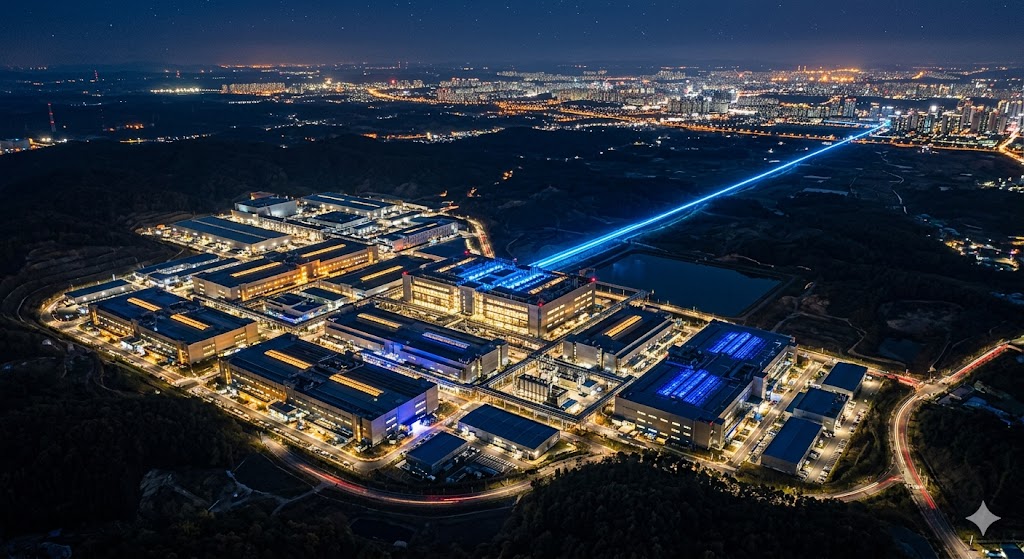
They stand as a declaration: enterprises that spent decades executing someone else’s blueprints have finally stepped across the threshold from the outside of architectural design into its very core.
Of course, success is far from guaranteed.
Yield hurdles at Samsung Foundry remain an unresolved commercial reality.
The wall erected by TSMC remains formidable. Nor is it officially set in stone whether Anthropic will aggressively push custom silicon all the way to production.
Yet the trajectory has been drawn with absolute clarity.
At this pivotal inflection point, as the global AI infrastructure race transitions from a software skirmish into a hardware war, Korean semiconductors have secured a seat at the table as active players, not mere observers.
How much enterprise value that seat will generate remains to be seen.
What is beyond dispute is that occupying that seat allows them to influence far more than they ever could from the outside.
And perhaps this marks the beginning of an even more profound question:
When the fabricators who forge the silicon powering systems that replace or amplify human cognition stand in a position to influence the direction of those very systems—where does the boundary lie between the physical creators of what we call “intelligence” and its intellectual architects?
Silicon does not think. Yet the makers of silicon will increasingly shape what thinking machines are capable of doing.
References
- Constitutional AI: Technical Mechanisms of AI Alignment and Ethical Protocols — Anthropic Research (Dario Amodei)
- Cybersecurity Paradigm Shifts and Threats: Background of Project Glasswing’s Launch — ArmorCode Security Labs (Nikhil Gupta)
- Global Foundry Market Analysis and Ultra-Advanced GAA Process Adoption Outlook — DIGITIMES Research (Minji Kim)
- HBM & Advanced Packaging Technology Roadmap and Big Tech Supply Chain Dynamics — Korea Semiconductor Industry Association Policy Report (Sangi Byun)
- Global Telco AI Alliance (GTAA) Generative AI-Based Customized Business Strategy — SK Telecom Economic Research Institute (Jaeheon Jeong)
- Anthropic Series H Funding Round: Strategic Analysis and Market Implications — Sequoia Capital Research Division
- Advanced Packaging Technology Landscape: CoWoS, HBM Integration, and the AI Chip Race — SEMI Industry Report 2026
- Constitutional AI: Harmlessness from AI Feedback — Anthropic Research (Bai et al., 2022)
- Samsung Foundry vs TSMC: Competitive Dynamics in the 3nm and 2nm Era — Morgan Stanley Semiconductor Research
- High-Bandwidth Memory Architecture and the AI Inference Bottleneck — IEEE Solid-State Circuits Journal
- Global AI Infrastructure Investment: Data Center Power Demand and Supply Chain Implications — BloombergNEF Energy Storage & AI Report 2026
- SK Telecom’s Anthropic Investment and the Telco AI Alliance Model — Goldman Sachs Asia Technology Research
- The Economics of Custom AI Silicon: Why Hyperscalers Build Their Own Chips — Bernstein Research Special Report
- Zero-Day Vulnerability Landscape and AI-Assisted Cybersecurity — CrowdStrike Global Threat Intelligence Report 2026
- Korean Semiconductor Equipment Ecosystem: HPA, Advanced Packaging, and the AI Demand Cycle — KB Securities Semiconductor Deep Dive Report