
If you encountered bandits on a dark road at night, you were risking your life. Wild animals were terrifying, and if you couldn’t find a place to stay, you simply slept out in the open.
Yet, there were people who would pack their bags and head out precisely when the sun went down. They had to walk all night to ensure they didn’t miss a market that opened every five days. These were the Bobusang.
It would be a mistake to dismiss them as mere ‘door-to-door salesmen of the past.’
If they were just individual merchants, there would be no reason for them to set up offices across the eight provinces, establish their own internal laws, or even secure exclusive sales rights for specific goods from the state. By the late Joseon Dynasty, the Bobusang had evolved into professional merchant organizations equipped with commercial groups (Sangdan). They transported more than just goods.
Were the Bobusang Really Just Wandering Peddlers?
‘Bobusang’ is a compound term for ‘Bosang’ and ‘Busang.’ The two were originally separate organizations.
Bosang, or peddlers who carried goods in bundles, traveled with high-value, lightweight items like stationery or gold, silver, and copper crafts wrapped in cloth.
Busang, or pack-peddlers, carried bulky, heavy daily necessities like salt, fish, pottery, and woodenware on A-frame carriers (jige).
These two groups, which differed in both the items they handled and how they traveled, were merged in 1883 when the government established the Hyesang-gongguk (Bureau of Commercial Affairs) and brought them under its jurisdiction.
It is estimated that this organization began to take on a nationwide scale around the 17th century, when Jangsi (local markets) were firmly established across the country.
Crucially, this was not an organization created by the state from the start, but an autonomous one built by the merchants themselves. The state only recognized it later and brought it into its management system.
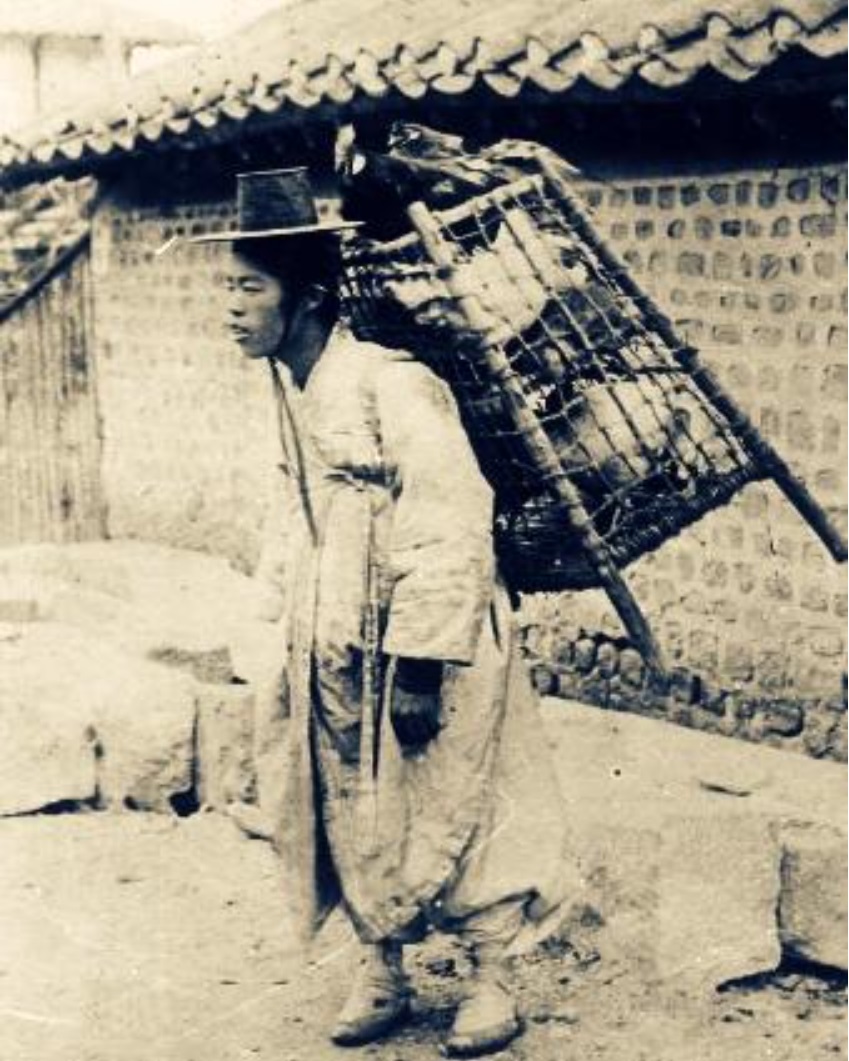
Imbang and Dobang: How Did the Organization Run Without the State?
The backbone of the Bobusang organization consisted of Imbang (administrative offices) and Dobang (lodging facilities).
The ‘Chak-imbang,’ the headquarters, was located in Gaeseong, Gyeonggi-do, while the ‘Cha-imbang,’ a sub-headquarters, was in Kimnyangjang, Yongin. Each province and county had its own ‘Do-imbang’ and ‘Gun-imbang’. The Dobang served as a kind of inn located near the markets. The internal hierarchy was tightly structured with positions like ‘Dobansu,’ ‘Bansu,’ ‘Yeongsu,’ ‘Jeopjang,’ ‘Yusa,’ and ‘Gongwon,’ rivaling the complexity of government offices.
They also managed their own operating expenses.
In the spring, they collected ‘Chunsujeon’ (spring dues) to cover medical costs for ill members, and in the fall, they collected ‘Chubojeon’ (autumn dues) to cover funeral expenses for members who lost family. They even issued stamped receipts for the money collected.
If someone broke the rules, they were punished via ‘Jangmun.’ Two sticks were placed like a gate, and no one was allowed to pass in front of it. This meant that, independent of the state’s penal system, a self-created system of punishment and welfare operated in parallel. Why was it so meticulously structured? The answer is simple: for those walking alone at night, neither the state’s public security nor its welfare reached them. They could only rely on colleagues in the same situation, and the Imbang was the institutionalization of that trust.
What surprised me when I first read about this was that it wasn’t charity—it was membership dues. The structure of paying money in the spring and autumn and receiving a receipt is not significantly different from modern mutual aid associations. In an era when the state did not provide a social safety net, those living on the road designed their own insurance.
The Bobusang Information Network Connecting a Thousand Markets
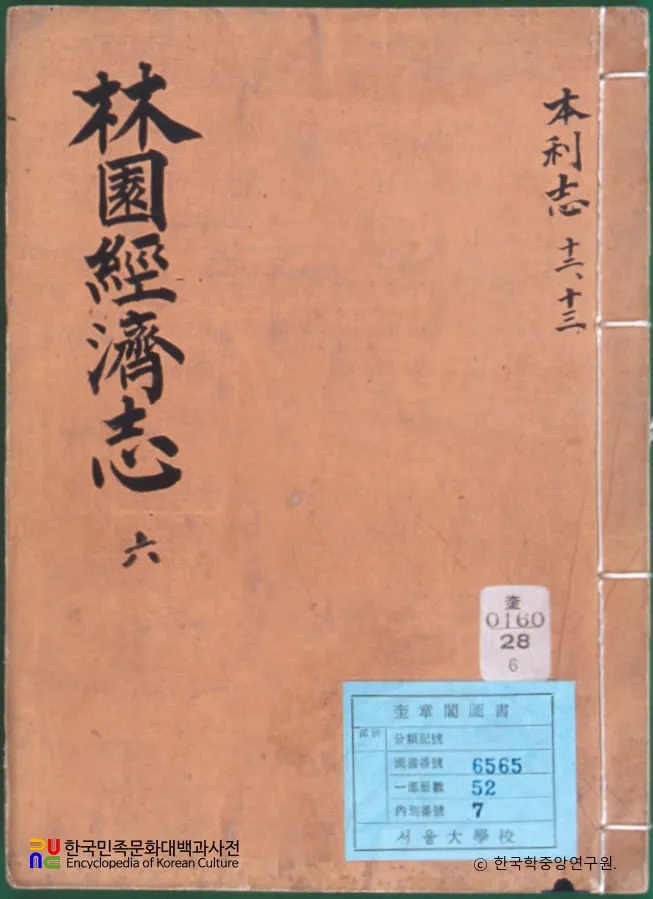
According to the 『Imwon Gyeongjeji』 (Treatise on Rural Economy), there were 1,052 markets nationwide in 1830 (the 30th year of King Sunjo’s reign). Most were periodic markets that opened every five days, and even within a single region, different villages held them on different days. The Bobusang utilized these date differences to travel from market to market within a day’s distance, continuing their trade.
This circuit structure created more than just a distribution network.
Information flowed as they took news heard in one region to the next market, and then carried stories from that market to the next. There are even records of them acting as matchmakers for marriages. Goods, information, and relationships all moved along the same path. It wasn’t a road or postal system laid out by the state; it was a communication network naturally created by the footsteps of people searching for places to trade.
Why Did the State Grant the Bobusang Exclusive Sales Rights?
The Bobusang were useful during times of national crisis. During the Imjin War and the Manchu invasions, they transported food and supplies, and they were also tasked with procuring materials when building castles or fortresses. In return, the state granted them exclusive sales rights for specific goods.
The Busang were granted monopoly rights for five types of items, including salt, fish, woodenware, and iron. By seizing the authority to manage markets and collect market taxes, the Bobusang guilds effectively occupied a monopolistic position as distribution agencies.
This was not a one-sided favor, but a transaction.
In exchange for exclusive rights, the state outsourced the management of nationwide distribution—which was cumbersome to handle—and the transport of supplies during crises to a private organization. From the Bobusang’s perspective, state authorization meant a competitive advantage over other merchants. It was a structure where both sides needed each other.
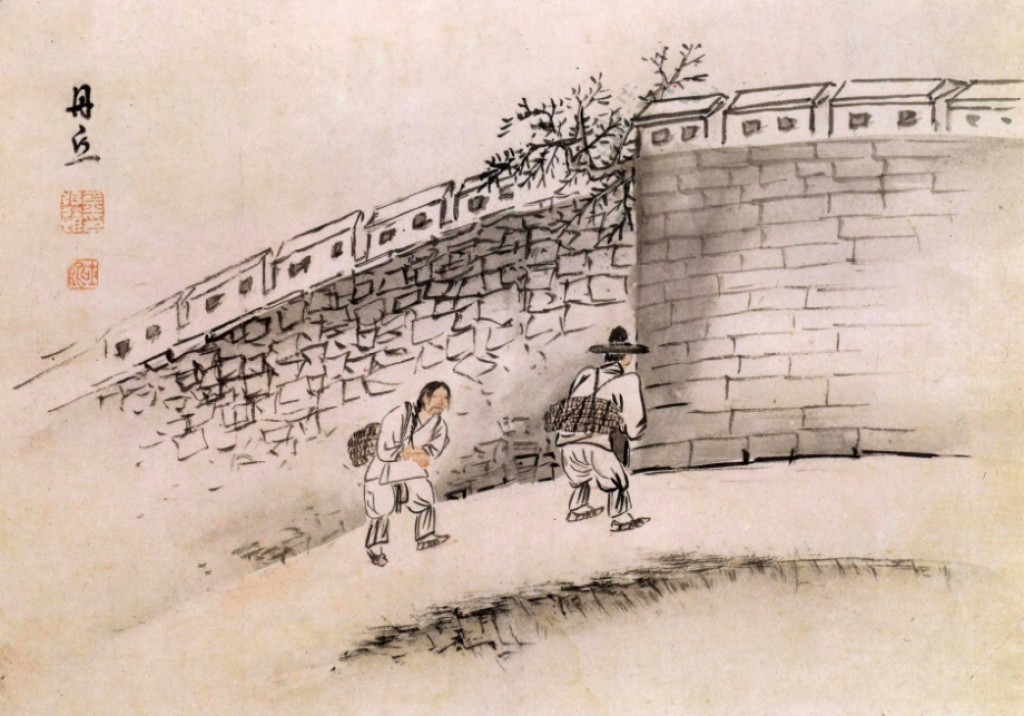
Why Were the Bobusang Caught Up in Politics After the Opening of Ports?
This balance was shaken after the ports were opened.
After the Bosang and Busang were merged with the establishment of the Hyesang-gongguk in 1883, the governing body shifted chaotically: Sangliguk (1885) → Nongsang-amun (1894) → Hwang-guk Hyeophoe (1897) → Sangmusa (1899).
After the port opening, the Bobusang constantly sought official recognition and the guarantee of exclusive business rights from the government, and to achieve this, they sometimes stood on the side of power against the common people. Government officials and even righteous army leaders participated as promoters in the Hwang-guk Hyeophoe (Imperial Association).
the logic of the organization’s survival was clear. Without the state’s recognition, they could not maintain their monopoly or organizational power. However, by following that logic, the Bobusang gradually became a tool for political mobilization. An organization that had originally functioned by building trust in the market saw the nature of that trust change the moment it took the side of political power. This was the point where their relationship—which began as an autonomous organization trading with the state—flipped into one of subordination to the state.
Where Did the Bobusang’s Trust Network Lead Today?
They made it a rule to deliver ordered goods in the promised condition and by the promised date, and they strove not to be seen as merchants chasing only profit. This trust served as the basis for attracting state support.
In that they operated a nationwide delivery network secured by trust and maintained that trust through organizational discipline, the Bobusang’s structure bears a strange resemblance to today’s delivery systems. Of course, since the organization disbanded along with the loss of the nation, one cannot say it continued directly. However, the way private individuals filled the void where the state’s dense systems were absent, using trust as collateral, is worth noting once again today.
Next time you see a delivery box at your door, it might be worth remembering that the roots of that trust are older than you think. What arrived before the goods was always the trust.