
The refreshing sound of “pop-” and the coolness that bursts forth encapsulates 200 years of innovation in a single beverage can.
- Discover how military needs led to the birth of canning.
- Examine the evolution from heavy steel cans to lightweight aluminum cans.
- Learn how everyday inconveniences inspired great inventions like the ‘pull-tab’.
1. Invention Born from War: The Prelude to ‘Cans’
The sound of “pop-”. This familiar and satisfying moment occurs when we open a cold beverage can just taken from the fridge. The journey of this small beverage can began with the concerns of Napoleon, the tragedy of Arctic explorers, and the discomfort of a father, culminating in 200 years of innovative history.
The story traces back to the early 19th century with Napoleon Bonaparte, who believed that “an army marches on its stomach” and was desperately searching for ways to feed his troops as they expanded across Europe. Preserving food for long campaigns was as crucial a strategic challenge as artillery. In 1804, Napoleon offered a hefty prize of 12,000 francs for a revolutionary method to preserve food for extended periods.
After nearly a decade of research, the prize was awarded to French chef Nicolas Appert. His method involved placing food in thick glass jars, sealing them with cork, and heating them in boiling water. This marked the beginning of canning, specifically ‘jar canning’. Although a revolutionary idea, the heavy and fragile glass was impractical for use on the battlefield.
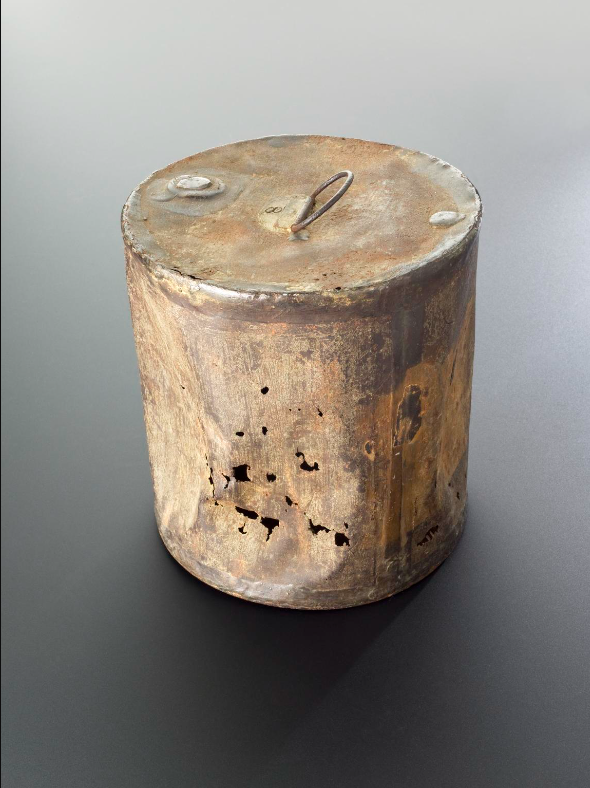
The solution came from across the sea in competitor Britain. In 1810, British merchant Peter Durand patented a container made of iron coated with tin instead of glass. He called this container a ’tin canister’, which is the direct ancestor of modern cans. This sturdy, lightweight container perfectly blocked out light and soon became the official supply of the British Navy.
The origin of the name is also interesting. In Britain, cans are still often referred to as ’tin’, derived from Durand’s terminology. Conversely, as this technology crossed over to America, Americans began calling it ‘can’, taking the first three letters from ‘canister’. The term ‘can’ we commonly use also traces back to the Dutch word ‘kan’, which passed through Japan, linking all these roots together.
Case Study: A Tragedy Born from Perfect Preservation
Early cans were incredibly sturdy. Focused solely on protecting their contents, an empty can weighed nearly 500g, requiring a hammer and chisel to open. It took another 50 years for the can opener to be invented.
This obsession with perfect preservation sometimes led to horrific tragedies. A notable example is the story of the John Franklin Expedition, which set out to find the Northwest Passage in 1845. They departed with numerous canned goods but were later found missing, all having perished. Scientists who analyzed their remains discovered lethal levels of lead. The cause was the cans, which were sealed with lead solder, allowing the lead to leach into the food and poison the crew. The preservation containers created to save them paradoxically took their lives. This incident left an important lesson in the history of packaging technology: the balance between ‘preservation’ that perfectly contains the contents and ‘accessibility’ that allows for safe and convenient consumption is crucial.
2. The Challenge of Steel: Containing Carbonation in Cans
Having solved the food preservation challenge, can technology soon faced a new challenge: containing carbonated beverages, especially beer. The internal pressure created by carbonation in beer was incredibly strong. Even leading companies of the time, such as ‘American Can’, faced repeated explosions while attempting to can beer.
Case Study: The Boom of Krueger Following Prohibition Repeal
The decisive breakthrough came not from technology but from social change. In 1933, the repeal of Prohibition in the United States opened a massive beer consumption market overnight. Alcohol companies and metal engineers seized this opportunity to accelerate the development of canned beer. Finally, in 1935, Krueger Brewing Company from New Jersey succeeded in launching the world’s first canned beer.
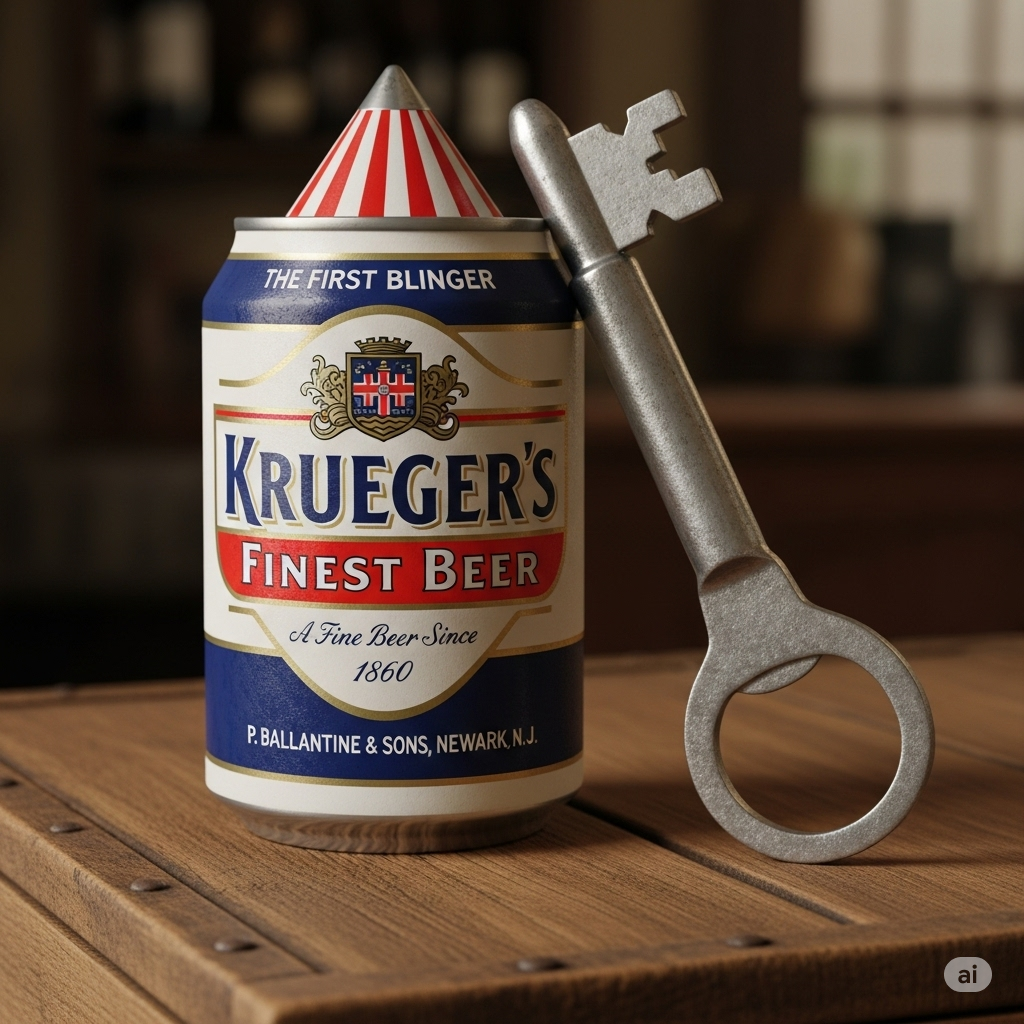
This first canned beer was made of steel. It was primarily a ’three-piece’ can, consisting of a cylindrical body, a bottom, and a lid, each made separately and then assembled. Steel was strong enough to withstand the pressure of carbonation and perfectly blocked out light, which is the biggest enemy of beer. Ultraviolet light in sunlight reacts with the hop components in beer, creating an unpleasant odor known as ‘skunky smell’, which is often described as beer being ‘spoiled’. Steel cans were far superior in light-blocking effectiveness compared to brown bottles.
However, there were clear downsides. They were still heavy, and there were occasional complaints about a metallic taste leaching into the beer. Most importantly, a ‘church key’, a pointed opener, was necessary to open the can. Nevertheless, consumer response was explosive. They were thrilled by the portability of being able to carry them easily and the elimination of the hassle of returning heavy glass bottles to the store for a deposit refund.
3. A Father’s Inconvenience Changes the World
While canned beer became popular, a significant inconvenience remained: “without an opener, it’s useless”. The hero who solved this minor yet critical problem emerged from an unexpected place. In 1959, engineer Ermal “Ernie” Fraze, who ran a machine tool company in Dayton, Ohio, found himself enjoying a picnic with his family when he realized he had left the opener at home. He ended up having to force a hole in the can against his car bumper, spilling the drink and making a mess. At that moment, Fraze thought, “There must be a better way!”
Innovation 1: The Pull-Tab
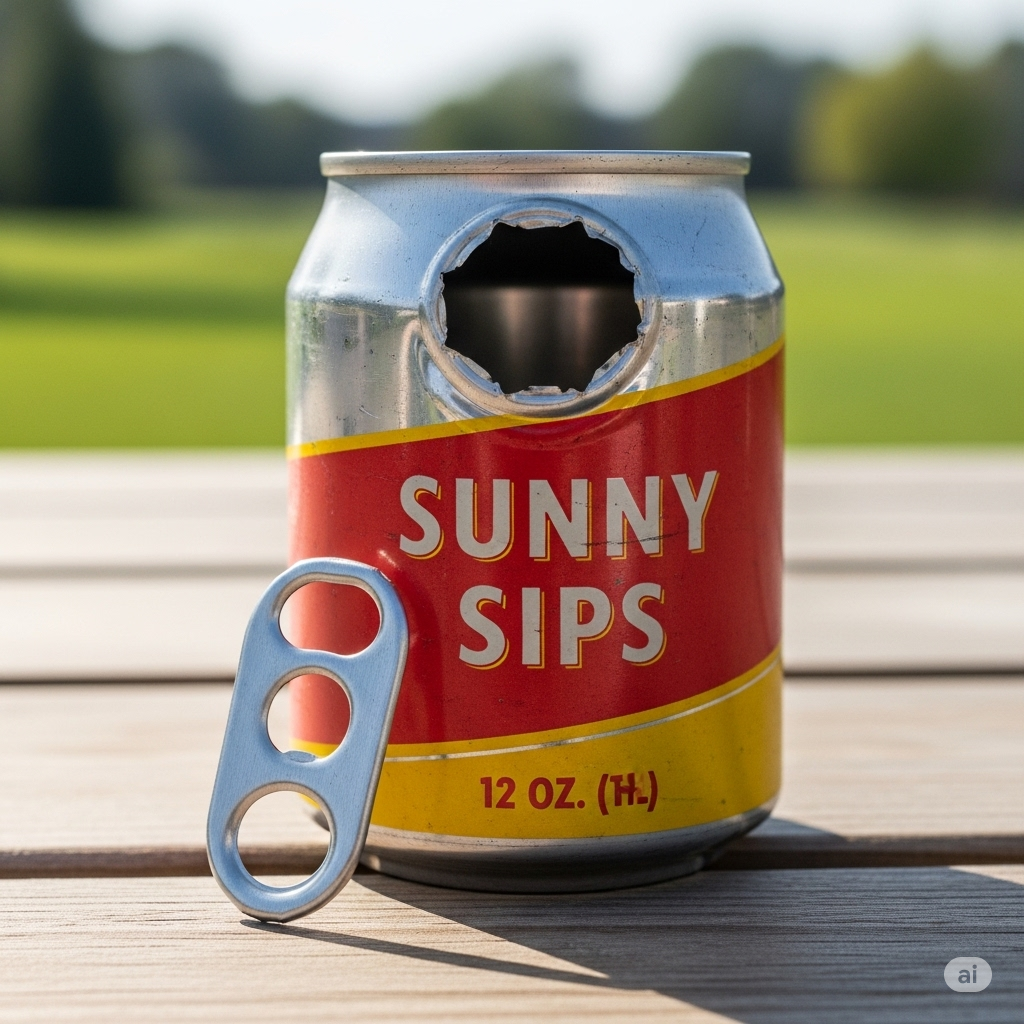
Upon returning from the picnic, Fraze immediately got to work. His idea was simple: to pre-score the can lid and rivet a ring-shaped handle on top. This design allowed the ring to act as a lever to pull off the scored part. Thus, the ‘pull-tab’ was born, the first can that could be opened by hand without tools. I remember playing with the pull-tab ring as a child, and it’s astonishing to realize what a significant innovation this small invention was.
Innovation 2: Another Solution, the Stay-On-Tab
However, this great invention led to a new problem. People began discarding the removed rings anywhere. Beaches and parks became littered with sharp metal waste, leading to safety issues as children got hurt or wildlife ingested them. Fraze once again put his thinking cap on to solve the problem created by his invention. In 1975, he introduced a more elegant and perfect solution: the ‘stay-on-tab’, which is the ‘pop-top’ method we use today. This design allows the ring to remain attached to the lid instead of falling off, solving both the litter and safety issues, completing the ‘innovation of innovation’.
4. The Aluminum Revolution: Lighter and Cooler
While Ermal Fraze was innovating how to open cans, a massive change was also occurring in the material of the cans themselves. The era of heavy steel was coming to an end, and the age of lightweight aluminum was beginning. At the center of this was the Colorado beer company, Adolph Coors Company. In the 1950s, manager Bill Coors could not tolerate that steel cans were ruining the natural taste of beer and that discarded cans were rusting and polluting the environment. He envisioned a seamless, lightweight, and perfectly recyclable can. After investing millions in research, he finally introduced the world’s first seamless ’two-piece’ recyclable aluminum can in 1959.
From Three-Piece to Two-Piece: A Leap in Manufacturing Process
The introduction of aluminum fundamentally changed the can manufacturing process.
- Three-Piece Steel Can: Made by welding three pieces: body, lid, and bottom. The seams were potential leakage points and weak spots prone to rust.
- Two-Piece Aluminum Can: Made by pressing a single sheet of aluminum into a cup shape where the body and bottom are one piece, then simply covering it with a lid (DWI method). The absence of seams makes it much stronger and perfectly sealed.

5. Beverage Cans in Korea: From Vending Machines to Convenience Stores
The beverage can, which had developed over decades in the West, began to gain popularity in Korea in the 1980s. At the center of this was the ‘vending machine’. With rapid urbanization at the time, vending machines for beverages appeared on streets everywhere, making them the perfect partner for sturdy, standardized aluminum cans.
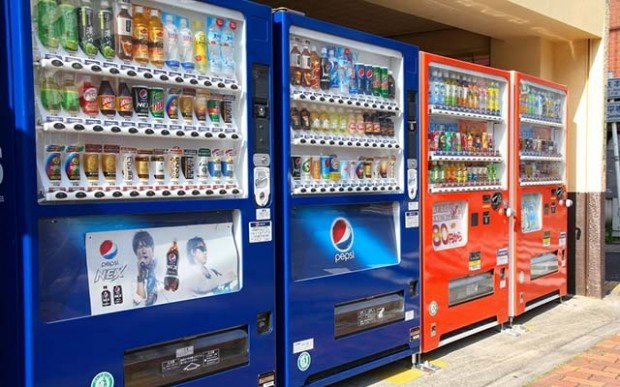
In line with this market growth, domestic companies such as Hanjin Metal and Lotte Aluminum laid the foundation for the can manufacturing industry. Notably, Lotte Chilsung’s canned coffee ‘Let’s be’ became a symbol of vending machines and convenience stores, deeply embedding itself into the daily lives and culture of Koreans. What is your favorite canned beverage?
6. After the Last Sip: The Endless Journey of Cans
The true superpower of beverage cans is revealed after we take our last sip: their almost perfect recyclability. Aluminum cans that are separated for recycling can be turned into new cans on store shelves in just 60 days.
The energy used to make cans from recycled aluminum is only 5% of the energy required to produce new ones from raw materials, and they can be infinitely recycled without quality degradation.
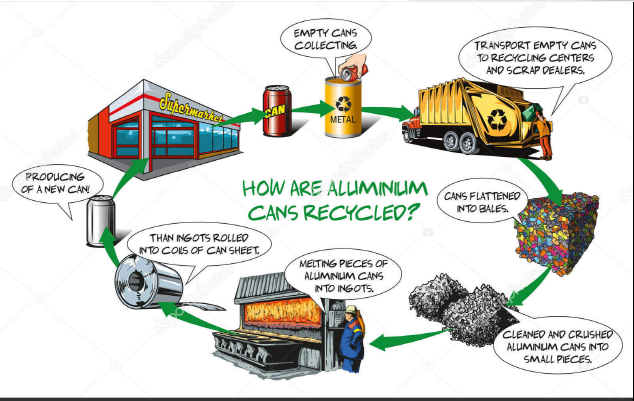
Case Study: The Paradox of Recycling in Korea
However, even this seemingly perfect system has its shadows. Korea’s aluminum can recycling rate is 96%, one of the highest in the world, but only 37% of this is recycled back into cans. This is often due to contamination from leftover contents or foreign materials like cigarette butts, and economic logic leads to many being downcycled into lower-quality cast products. This highlights the importance of proper separation and disposal once again.
Comparison/Alternatives
Steel Can vs. Aluminum Can: The Century’s Showdown
Aluminum cans have overwhelmingly surpassed steel cans in almost every aspect. The necessity of this change can be seen at a glance in the table below.
| Feature | Steel Can | Aluminum Can |
|---|---|---|
| Weight | Heavy and dense. High transportation costs and inconvenient to carry. | Very lightweight at about 1/3 the weight of steel. Dramatically reduces transportation costs. |
| Manufacturing Method | Three-piece (body, lid, bottom). Vulnerable to leaks and corrosion due to seams. | Two-piece (integrated body/bottom + lid). Structurally strong and excellent carbonation preservation. |
| Corrosion and Taste | Prone to rust, requiring tin plating. Perception of a ‘metallic taste’. | Resistant to rust due to a natural oxide layer. Preserves the original taste of contents well. |
| Thermal Conductivity | Relatively low. | High, cooling down much faster. A strong advantage for consumers. |
| Recyclability | Possible but low scrap value. | High economic value, strong motivation for collection, and can be infinitely recycled without quality loss. |
Conclusion
Starting from heavy iron boxes that had to be opened with a hammer and chisel, the beverage can’s 200-year journey has been a history of innovation intertwined with human creativity, technological advancement, and environmental responsibility.
- Key Point 1: Cans were born from military needs for food preservation.
- Key Point 2: Efforts to solve consumer inconveniences (pull-tab) and material innovations (aluminum) completed the modern can.
- Key Point 3: Aluminum cans symbolize a sustainable circular economy with infinite recyclability.
The evolution of cans continues today. From resealable cans to self-cooling cans and smart cans, the future is already inside the can. Next time you pop open a beverage can, consider the 200 years of innovation behind that “pop-” sound and remember to properly dispose of the contents for recycling.