
If you only look at the headlines, the phrase “first airstrike in a month” makes it sound like a sudden flare-up in a previously quiet area. However, reading through the original reports paints a different picture. This war never actually stopped; the U.S. simply hadn’t conducted a direct strike for the past month.
On Sunday, August 30, U.S. forces detected the Iranian Revolutionary Guard Corps (IRGC) attempting to launch rockets equipped with sea mines from Larak Island in the Strait of Hormuz and struck two launch sites. Through Iranian state media, the IRGC stated that there were “casualties and injuries” and immediately warned of “retaliatory measures.” U.S. Central Command (CENTCOM) spokesperson Tim Hawkins emphasized that this strike was the “first military action of the month.”
When Did This War Begin?
To understand this one-day news cycle, we need to look back in time. According to the timeline on Wikipedia, the war began on February 28, 2026, when the U.S. and Israel struck several Iranian military targets. During this process, Supreme Leader Khamenei was assassinated, and Iran responded by completely blockading the Strait of Hormuz. The IRGC warned via VHF radio that “no vessel can pass through the Strait of Hormuz,” and the British Royal Navy issued a statement that the blockade was “legally unenforceable but safety cannot be guaranteed.” From March 19, the U.S. began air operations like ‘Project Freedom’ to reopen the strait, and starting April 13, a naval blockade of Iran was implemented. This means we have been seeing a recurring cycle of escalation and lulls for nearly six months now.
What surprised me while organizing this timeline is that this is not a series of isolated skirmishes, but a highly systematic military operation with distinct phases. The fact that each stage—air operations, naval blockades, mine clearance, and targeted strikes like this one—has a specific name shows how long and how organizationally this war is being managed.
In short, the August 30 airstrike is not the start of a new war, but a continuation of the U.S.-Iran war that has been ongoing since late February, merely breaking a one-month lull. I am even cautious about using the term “lull.” During that time, the U.S. military continued mine-clearing operations in the strait, and only announced they were “complete” just last week. In other words, while it appeared quiet on the surface, they were actively working the whole time.
Why Daily Traffic Dropped from 130 to 24 Ships
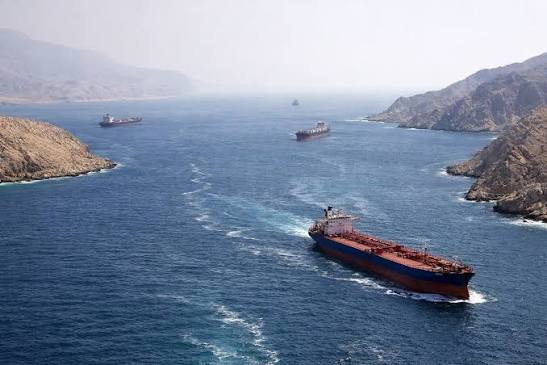
The Strait of Hormuz is a chokepoint through which about one-quarter of the world’s seaborne oil trade passes—more specifically, 20% of the world’s oil. Before the war, an average of 130 ships passed through this strait daily. However, an AP report from August 30 notes that the number has dropped to around 24. Even a simple calculation shows this is less than one-fifth of pre-war traffic. Although President Trump has repeatedly stated that “Hormuz is open,” these numbers show a significant gap between rhetoric and reality.
Iran is not completely backed into a corner, either. Analysts suggest that the situation, in which oil tankers and LNG carriers are extremely reluctant to transit, acts as a form of leverage for Iran. As long as they maintain drone and missile capabilities, they can suppress traffic simply by threatening that they can “fire at any time,” without needing to sink a single ship.
Oil prices reacted that day as well. West Texas Intermediate (WTI) rose 1.8% to $84.94 per barrel, and the international benchmark, Brent crude, rose 1.9% to $89.79, reported by Bloomberg and others. The market’s immediate reaction to a single airstrike suggests that the strait is still priced with a “risk premium.” The fact that oil prices react this way even after six months of war indicates that the market does not view this as a “resolved risk” but as a “variable that could flare up at any moment.”
Why Now, and Why Larak Island?
Larak Island is a small island located inside the Strait of Hormuz, hugging the southern coast of Iran. The U.S. military reportedly struck it because they detected movements by the IRGC to fire rockets equipped with sea mines into the strait from there. The interesting point is that this attempted deployment occurred just days after the U.S. military announced they had “cleared the mines.” It was an attempt to re-contaminate the waters immediately after they were cleaned; at this point, it is difficult to determine whether this is an organized strategy by Iran or a localized provocation.
Larak Island itself is also worth noting. It is a small, sparsely populated island, but its location near the center of the strait makes it advantageous terrain for secretly deploying small craft loaded with mines or rockets. The very structure of these islands becoming military strongpoints illustrates why conflict in this narrow strait is so difficult to resolve completely. If it were the open ocean, detours or surveillance would be much easier, but with large and small islands densely packed within a narrow strait, the environment is structurally favorable for ambushes and surprise attacks.
Ultimately, the reason this one narrow waterway shakes the global economy lies in its geography. The Strait of Hormuz is only about 33km wide at its narrowest point, and the actual navigable width is even smaller. With virtually no alternative routes, if this single section is blocked, ships from Saudi Arabia, Qatar, or the UAE are all stranded. Compared to other chokepoints like the Panama Canal or the Suez Canal, which have bypasses, the fact that Hormuz is truly irreplaceable struck me once again.
Of course, it is not entirely without alternatives. Saudi Arabia has the ‘East-West Pipeline’ running from its eastern oil fields to the Red Sea port of Yanbu, and the UAE operates a bypass pipeline to Fujairah. However, it is known that the capacity of these pipelines represents only a portion of normal strait traffic. In other words, while there are land-based bypasses, they cannot replace the total volume of trade. I have reserved judgment on the exact capacity of these routes, as I could not find definitive, up-to-date figures within the scope of my search.
Oman: Another Variable
It is easy to lose sight of this while focusing on the war, but Iran is reportedly negotiating strait management plans with Oman simultaneously. Oman sits on the opposite side of the Strait of Hormuz—the southern coast—making it, along with Iran, the de facto co-manager of this waterway. Iran maintains that the strait cannot be used until the U.S. fulfills its obligations under the Memorandum of Understanding (MOU) signed in June. This reveals that military pressure and diplomatic conditionalities are proceeding simultaneously. While airstrikes and negotiations may look like separate tracks, they are likely being used as leverage on the same negotiating table.
How Should We Read the Current Situation?
At the time of writing, two things are certain: the U.S. military conducted an airstrike on August 30, and the reason, according to the U.S., was to prevent a new attempt to deploy sea mines. Whether Iran will actually retaliate, and whether that retaliation will lead to further escalation, remains an open question. A multinational naval coalition stated that commercial traffic remains at “low levels” on that day, and an observation body operated by the British military mentioned reports of an “unidentified projectile hitting a tanker,” though this requires further verification.
Looking back at the flow from February 28, when this war began, to now, I get the impression that escalation and lulls are repeating almost rhythmically. Seeing this pattern of Air Operations → Blockade → Mine Clearance → Lull → Re-strike repeat for months suggests we have entered a war of attrition where neither side has gained a total victory and both are testing each other’s patience. Disputes of this type often either fizzle out without a dramatic end-of-war declaration or, conversely, escalate again due to a minor incident. At this point, I cannot judge which way it will tilt.
I have the impression that for a war that has lasted nearly six months, this issue has been covered relatively quietly in domestic news. Perhaps it is because once the word “ceasefire” appears, people stop paying attention, but in reality, it looks more like a war of attrition characterized by repeated mine clearance, re-laying, and sporadic airstrikes. Honestly, I do not know when this will end completely.
References
- https://www.washingtonpost.com/national-security/2026/08/30/us-strikes-iran-missile-sites-larak-island/
- https://www.cnn.com/2026/08/30/politics/us-iran-strikes-larak-island
- https://www.nbcnews.com/politics/national-security/us-forces-strike-iranian-rocket-launchers-strait-hormuz-first-military-rcna595194
- https://www.bloomberg.com/news/articles/2026-08-30/us-strikes-iranian-rocket-launchers-in-first-attack-in-weeks
- https://www.euronews.com/2026/08/30/us-forces-strike-iranian-rocket-launchers-in-strait-of-hormuz-as-irgc-warns-of-retaliatory
- https://en.wikipedia.org/wiki/2026_Strait_of_Hormuz_campaign
- https://en.wikipedia.org/wiki/2026_Iran_war
- https://www.inquirer.com/news/nation-world/iran-war-us-strike-rocket-launchers-strait-hormuz-trump-20260830.html
- https://www.local10.com/news/2026/08/30/us-strikes-iranian-rocket-launchers-on-the-strait-of-hormuz-in-first-military-action-in-weeks/