
Last Friday, the US 10-year Treasury yield hit 4.74%.
It was the highest level in 20 months. The S&P 500 fell 1.4% over the week.
Yet curiously, looking across this week’s calendar, the news that could pull those yields down and the news that could push them even higher are stacked on the exact same days and time slots. Across five days, from August 24 to 28.
Usually, articles like this carry titles such as “This Week’s Event Roundup” and list items chronologically date by date.
I initially planned to organize it that way too. But as I went through the data piece by piece, I stopped.
This week was not a list of isolated events, but overlapping, interconnected events.
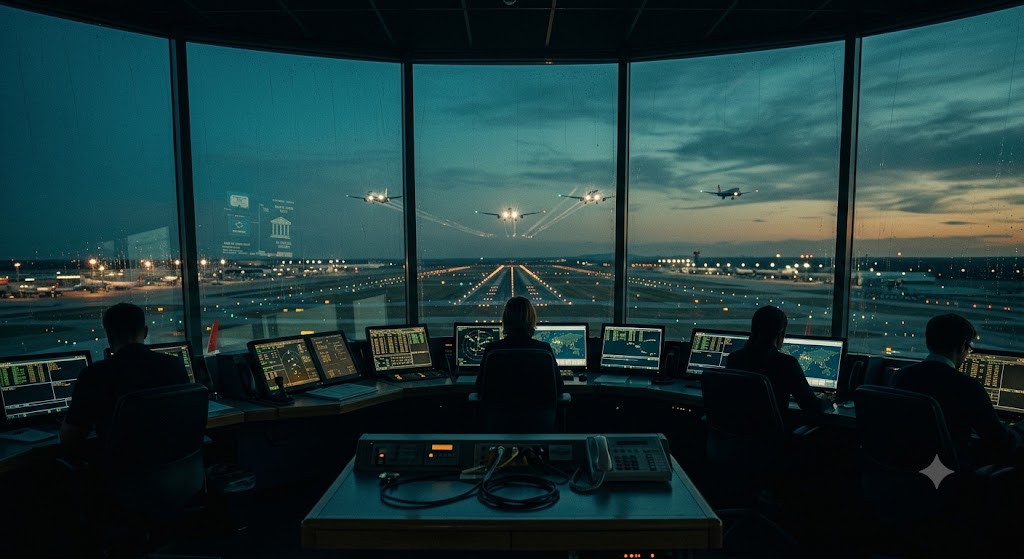
Five Runways, One Air Traffic Controller
It is easiest to understand if you picture an airport control tower.
If there is only one runway, no matter how many planes arrive, you simply land them in order.
Problems arise when planes approach multiple runways simultaneously.
An air traffic controller does not have the luxury to assess each plane one at a time. They must view the entire layout at once.
Global financial markets this week are in that exact situation.
There are five runways: monetary policy, semiconductor earnings, inflation indicators, Middle East geopolitics, and the Bank of Korea’s independent policy decision.
Viewed separately, each is familiar news.
However, what makes this week uniquely dangerous is that these five events are concentrated across just two days: Thursday and Friday.
Let’s break them down one by one.
Chair Warsh’s Jackson Hole Debut, and the Weight of Silence
Federal Reserve Chair Kevin Warsh will deliver his first keynote address since taking office at the Jackson Hole Economic Symposium, held from August 27 to 29.
Jackson Hole was originally an academic venue where monetary policymakers gathered to present economic papers.
Yet at some point, the market transformed it into “the stage for clues on the next interest rate move.”
This happened even though the venue was never actually designed for that purpose.
Chair Warsh held the benchmark rate steady at 3.50–3.75% for the fourth consecutive time at the June FOMC.
The market wants to know just one thing:
“Will the Fed pivot toward a rate cut at the next FOMC on September 16, or keep holding at this level?”
Yet the answer to this question is not something Chair Warsh can decide alone.
On Friday morning of the same week, at the very time he is speaking, the July Core PCE Price Index will be released.
The PCE is the Fed’s most trusted inflation metric.
Chair Warsh will not know this exact figure when drafting his speech.
The release sequence itself is exquisitely intertwined.
It is rare for a major keynote address and top-tier data to collide on the exact same morning.
Nvidia Earnings: The Thermometer for AI Investment Fervor
After market close on Wednesday, Nvidia reports earnings.
These are the results for its fiscal 2026 second quarter.
With the S&P 500 experiencing a slight pullback after hitting an all-time high of 7,816.70 earlier this month, these earnings carry weight far beyond the numbers of a single company.
Markets are seeking a decisive signal from this single earnings release: Is the astronomical capital poured into AI infrastructure still “early in its runway,” or has the time arrived to “worry about overinvestment”?
After the close on Thursday of the same week, Marvell Technology also reports.
It is no exaggeration to say that valuations across the entire semiconductor and AI infrastructure ecosystem hinge on these two corporate results.
There is a specific reason markets are watching these results with extreme sensitivity.
Over the past few years, debates surrounding AI infrastructure capex have repeated the same fundamental dynamic: “Does real demand actually exist at this scale, or is the entire supply chain running on mutual inflation of expectations?”
Nvidia’s earnings are treated as the most direct evidence in this debate.
A single data point—the data center revenue growth rate—is consumed as a proxy representing the aggregate capex plans of cloud hyperscalers worldwide.
The complication is that while this metric is a verifiable figure, it also acts as a narrative amplifier.
If earnings beat expectations, the narrative that “AI investment is still in its infancy” is reinforced; if they miss, the thesis that “valuations have detached from reality” gains traction.
Either way, it is an enormous burden for a single quarterly report to shoulder.
There is an intriguing dynamic at play here.
AI infrastructure investment is currently virtually the only expenditure globally that “does not buckle under high interest rates.”
This phrase appeared directly in the Bank of Korea’s policy statement when it raised its benchmark rate from 2.50% to 2.75% on July 16—its first hike in three years and six months.
The BOK stated that the global economy would sustain moderate growth backed by “solid AI investment,” despite Middle East geopolitical uncertainties.
Essentially, the brake of rate hikes and the accelerator of AI spending are being pressed simultaneously.
“Economic D-Day” Targeting Iran
The most unpredictable variable on this week’s calendar arrives on Monday.
US Treasury Secretary Scott Bessent will hold a press conference announcing “unprecedented economic isolation” measures against Iran.
In an interview last week, Secretary Bessent characterized the move in this way:
Economic isolation measures of a scale never before imposed on any nation in history, combined with the continued blockade of Iranian ports, will function together as a “one-two punch.”
President Trump also backed the initiative, calling it an “economic D-Day.”
The United Arab Emirates (UAE) has already announced a total severing of all trade and financial ties with Iran, following Iran’s firing of two missiles toward the UAE.
The transmission channel from this measure to financial markets is straightforward.
The Strait of Hormuz is a chokepoint through which one-fifth of global crude oil and liquefied natural gas flows.
Both Iran and the US claim control over this waterway, and neither shows any sign of backing down.
As economic isolation intensifies, Iran’s available options in the strait narrow, and that constriction itself becomes a catalyst for oil price volatility.
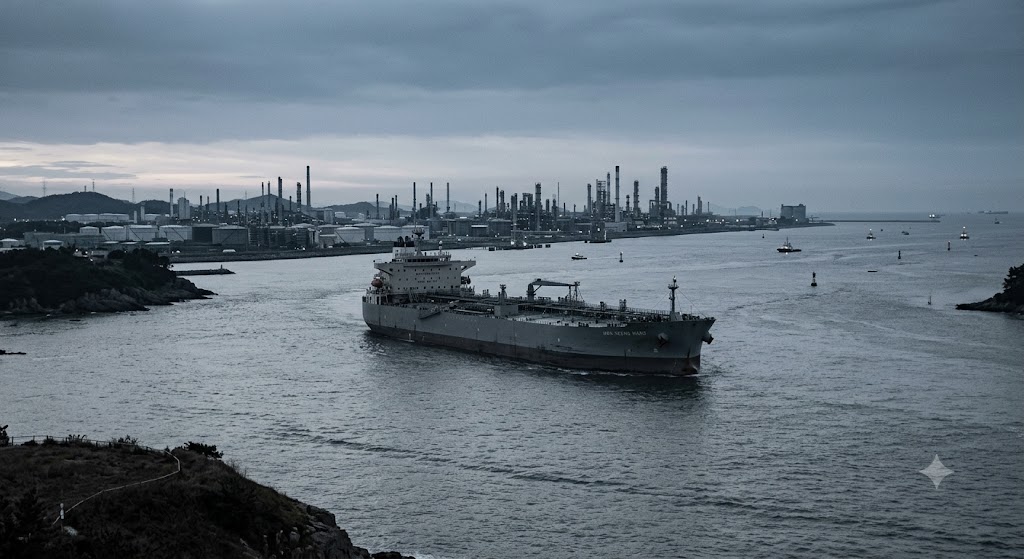
For South Korea, this is not an overseas abstraction.
Korea depends on imports for the vast majority of its crude oil.
When oil prices rise, import costs surge, and that inflationary pressure lands squarely on the Bank of Korea’s rate-setting table.
A Second BOK Rate Hike: Is It Coming?
On Thursday, August 27, the Bank of Korea’s Monetary Policy Committee (MPC) will also convene.
It is the exact day the Jackson Hole Symposium gets underway.
At the July 16 meeting, the BOK raised its policy rate from 2.50% to 2.75%.
It was a unanimous decision supported by all seven committee members.
In its statement, the BOK outlined three reasons behind the hike:
Strengthening growth momentum driven by exports and facility investment, inflation projected to remain above target for a considerable period, and financial stability risks stemming from rising household debt and capital-area housing prices.
Some corners of the market now project that the MPC could deliver a consecutive “back-to-back” hike on August 27, lifting the rate from 2.75% to 3.00%.
Let’s pause here for a moment.
A single rate hike is news. Two consecutive hikes constitute a trend.
Why this distinction matters comes down to a sentence the BOK included in its statement immediately following the first hike.
It noted that “the timing and pace of further hikes will be judged while examining the degree of inflationary pressure, the trajectory of economic recovery, and financial stability conditions.”
Yet one of those key inputs—international crude oil—risks being jolted this very week by the US measures on Iran.
The BOK’s monetary policy trajectory finds itself tethered to geopolitical decisions in Washington.
The Real Question Lies in the Arrangement, Not the Calendar
Reading up to this point, it might sound like simply “a week packed with lots of events.”
Yet that is not the real issue this week.
The crux is the sequence.
***If Monday’s Iran measures shake crude oil prices, ***
***those oil prices can overturn the economic assumptions underpinning the Jackson Hole speech Chair Warsh is preparing for Wednesday. ***
***If Nvidia’s earnings miss market expectations on Wednesday, ***
***the foundational premise that “AI investment remains solid,” which the BOK relies on for Thursday’s MPC, could be destabilized. ***
And before all of that can settle, Friday morning hits the market with the Core PCE and Chair Warsh’s keynote simultaneously.
Each event appears to be an independent runway, but in reality, all exist within a single air traffic control system where each landing alters the approach conditions of the next.
Forecasting individual events in isolation carries little meaning.
What truly demands attention is the sequence and flow through which these events cascade into one another.
Tuesday Morning: The Consumer Speaks First
Before viewing the entire system, an early signal arrives.
It is the US August Conference Board Consumer Confidence Index, released on Tuesday.
While typically a secondary indicator, this week is different.
With tariffs, elevated interest rates, and geopolitical uncertainty weighing on consumer sentiment simultaneously, an unexpectedly weak reading would alter how markets interpret Thursday’s BOK decision and Friday’s Warsh address. The consumer effectively reveals “how much strain the economy can endure” ahead of the main events.
The June Case-Shiller Home Price Index, released the same day, also warrants attention.
While operating in a different context from Korea’s capital-area property debate, the temperature of the US housing market serves as one of the Fed’s evaluation inputs, making it far from irrelevant.
The Burden the Korean Won Must Absorb
At the end of this entire chain reaction, the Korean won exchange rate ultimately absorbs the outcome.
**If the BOK delivers a second consecutive rate hike, that acts as a driver for won appreciation; **
**simultaneously, if US Treasury yields push higher from their 20-month peaks, dollar strength will neutralize that effect. **
If an oil price shock from Iran is added on top, the won will find itself caught in the middle of a three-way tug-of-war.
Recent remarks by the BOK Governor noting considerable room for the won to pivot toward strength were made in this context.
However, whether that window actually opens depends on the order and angle at which this week’s five runways land their flights.
For exporters, this tug-of-war is a double-edged sword.
A stronger won lowers imported raw material costs but dampens export profitability.
Conversely, continued won depreciation benefits exporters but exacerbates energy import bills and domestic inflation burdens.
Whichever path the BOK chooses at the August meeting, that decision will inevitably place a burden on one side of the domestic economy.
A perfect equilibrium point never existed in the first place.
Control Towers Are Supposed to Be Quiet
The moment a control tower becomes loud, an accident has already occurred.
A truly skilled controller lands five aircraft in smooth sequence as if nothing unusual happened at all.
Those moving global markets this week—Chair Warsh, Secretary Bessent, and the BOK MPC—will outwardly appear to simply execute their respective schedules.
There will be no dramatic declarations.
Yet silence in the control tower does not mean the tension on the runways has vanished.
When this week concludes, the question we will likely look back on is this:
At the very moment five planes made their simultaneous approach, was the control tower genuinely seeing the entire picture? Or were we simply watching, hoping everything would touch down safely?
This article does not constitute a recommendation to buy or sell specific assets, nor does it guarantee investment performance. Please consult a qualified professional to make investment decisions tailored to your individual circumstances.
References (in order of citation frequency)
- Capital Street FX, “Week Ahead - US, 24–29 August 2026: Nvidia Earnings, Jackson Hole, And July PCE Headline A Pivotal US Week For Fed Chair Warsh”
- Bloomberg, “Bessent to Detail US Plans to Isolate Iran’s Economy on Monday” (2026.08.20)
- Newsis, “Bank of Korea Raises Base Rate for First Time in 3 Years and 6 Months… to 2.75% Annually” (2026.07.16)
- TradingKey, “The Week Ahead: Warsh Makes Jackson Hole Debut as Nvidia and Marvell Earnings Test AI Investment Demand”
- LiteFinance, “Forex Economic Calendar Overview: Key Events for the Next Trading Week (24.08.2026–30.08.2026)”
- Newsquawk, “Weekly Economic Calendar - 24th-28th August 2026”
- The National, “Bessent vows to isolate Iran’s economy as US increases pressure on allies” (2026.08.20)
- RFE/RL, “US Promises ‘Unprecedented’ Economic Isolation Of Iran. What Could That Mean?” (2026.08.15)
- Bloomberg, “US Readies Unprecedented ‘Economic Isolation’ Plan for Iran” (2026.08.14)
- Investrade, “Weekly Event Calendar: 08/24/2026 - 08/28/2026”
- CNBC, “Big week coming up with PCE, Nvidia earnings and then Jackson Hole” (2026.08.21)
- TradingEconomics, “Week Ahead - Aug 24th”
- Korea Financial News, “Today (16th) Bank of Korea July MPC… Rate Hike Outlook Dominant” (2026.07.16)
- EBC Financial Group, “Bank of Korea Rate Hike to 2.75% Base Rate… What Is the Impact on the Stock Market?”
- Bank of Korea, Schedule of Monetary Policy Decision Meetings and Full Text of July 2026 Monetary Policy Statement