
The Roman Space Telescope has successfully launched. While searching for related articles shortly after, I clicked on a ‘dark matter’ keyword without much thought. However, the two news stories beneath it pointed in opposite directions. One was “142 Candidates for Starless Galaxies Discovered,” and the other was “NASA Launches Space Telescope with 100x Wider Field of View than Hubble.” Wondering if something without stars could even be called a galaxy, I opened the source text and encountered a third galaxy story there. This time, it was the opposite: a galaxy with stars, but almost no dark matter.
On one side, galaxies without stars; on the other, galaxies without dark matter. And on that same day, August 30, a telescope designed to dig directly into this contradiction was launched. It felt too coincidental that these three things were clustered together, so I dug a little deeper.
The Launch Itself Was Smooth
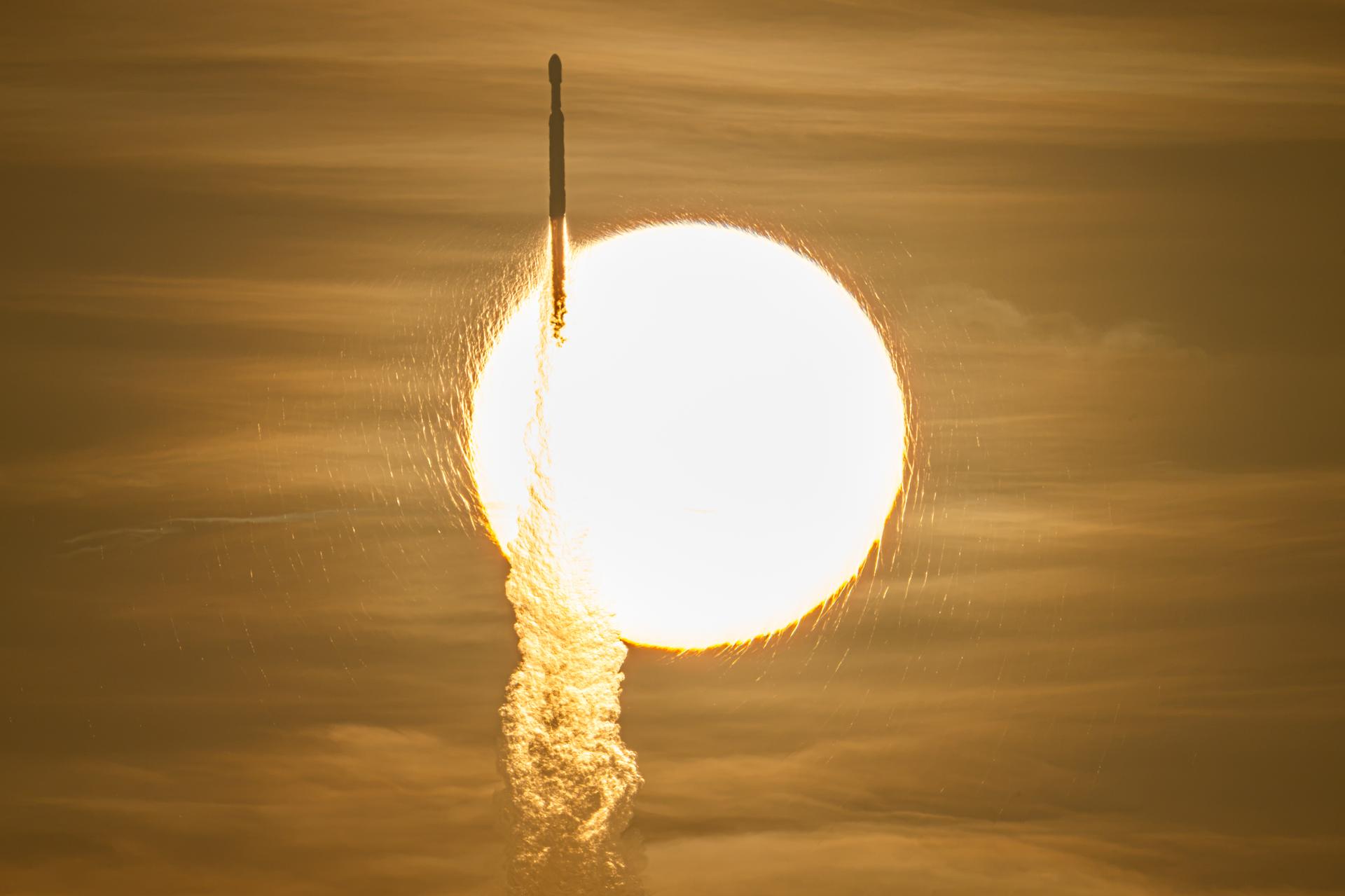
On the morning of August 30 (7:26 AM US Eastern Time), the Nancy Grace Roman Space Telescope lifted off from Kennedy Space Center Launch Complex 39A aboard a SpaceX Falcon Heavy rocket. Its destination is the Sun-Earth Lagrange point 2 (L2), about 1.5 million kilometers from Earth. According to the official NASA announcement, the first telemetry signal was captured 7 minutes after launch, and separation from the rocket occurred at 31 minutes. One hour and 23 minutes later, the deployment of the solar arrays and the lower sunshade was confirmed.
It takes three months to reach L2. The James Webb Space Telescope is also in the vicinity of L2, but the two telescopes orbit in different paths. The Planetary Society explains that after arrival, it will undergo about 90 days of commissioning to calibrate its instruments, with the first images expected to be released in early 2027. The initial mission duration is 5 years, with talk that it could be extended to more than double that if the telescope remains in good condition. NASA Administrator Jared Isaacman reportedly described the launch as “a success story delivered ahead of schedule and under budget,” noting that the telescope was actually completed earlier than planned, allowing the launch schedule to be moved up.
The Mirror Is the Same Size as Hubble’s, So Why Is the Field of View 100x Wider?
Let’s return to the sentence that first caught my attention. The diameter of Roman’s primary mirror is 2.4 meters, exactly the same as Hubble’s. Yet, a single image captured by Roman covers an area of the sky equivalent to 100 Hubble images stitched together. I wondered if the same mirror size should result in a similar field of view, so I looked it up. The answer wasn’t the mirror, but the camera attached behind it: the Wide Field Instrument (WFI).
It’s easier to understand if you compare it to a camera. Even with the same lens, the larger the film or sensor behind it, the wider the field of view captured at once. NASA explains that Roman’s WFI is a 300-megapixel infrared camera consisting of 18 4K detectors, each the size of a saltine cracker. Because this large sensor array simultaneously receives the light gathered by the mirror, it can record a much wider expanse of the sky at once with the same mirror size. However, because the area of sky covered by a single pixel increases, it cannot replace the narrow-field, high-precision imaging of Webb or Hubble for capturing minute details. Additionally, Roman is mechanically stable, requiring almost no wait time between shots, which is why some reports claim its sky-surveying speed is 1,000 times faster than Hubble’s.
Roman, which scans wide and fast, and Webb, which digs narrow and deep—the fact that these two are not competitors but complementary tools sharing roles aligns with the explanation provided in NASA SVS materials. While Webb’s role is to peer deep into the early universe, Roman is tasked with mapping how that universe has evolved to the present day across a wide field of view.
The Weight of the Name ‘Roman’
This telescope is named after a real person, Nancy Grace Roman. She worked at NASA from 1959 to 1979 and was the agency’s first chief astronomer and first female executive. As she led the Hubble Space Telescope project from its early days, she is often called the “Mother of Hubble.” Originally, this telescope was called WFIRST (Wide Field Infrared Survey Telescope), but it was renamed in her honor ahead of its launch.
Personally, this part of the launch news stayed with me the most. Usually, space telescopes are named after physicists or astronomers famous for their observations, but Roman was a figure whose contribution was greater as a manager who organized and led projects. The fact that her name is attached to this telescope, which scans widely and draws the map for the next generation of observations, feels strangely fitting.
95% of the Universe Is Invisible to Our Eyes
One of Roman’s core missions is to uncover the nature of dark energy and dark matter, and it’s worth noting why this is such a critical question.
Simplified, standard galaxy formation theory goes like this: Dark matter clumps together via gravity, creating a ‘framework.’ Gas is then drawn into that gravity, and the gas clumps further to form stars. Dark matter → Gas → Stars—this is the standard picture. Dark matter does not interact with light, so we cannot see it directly. We are certain of its existence, however, because of the orbital speeds of stars within galaxies. Gravity at levels that cannot be explained by the mass of visible stars and gas alone is repeatedly observed in galaxies, and we conveniently call this ‘remaining invisible mass’ dark matter.
According to the standard cosmological model, the universe is composed of 68.3% dark energy, 26.8% dark matter, and 4.9% ordinary matter. This means everything we see—stars, planets, people, Earth—accounts for less than 5% of the universe’s total mass-energy.
Galaxies Without Stars, But With Dark Matter
However, galaxies that don’t fit this framework have been reported one after another recently. First, the ‘starless galaxy’ side. According to research materials released by Seoul National University, a research team led by Professor Ho Seong Hwang, in collaboration with Dr. Il-Seok Yoon and Dr. Brian Kent of the National Radio Astronomy Observatory (NRAO), discovered 142 new candidates for ‘dark galaxies’—galaxies presumed to consist only of dark matter and gas without stars. They used data from the Arecibo Legacy Fast ALFA (ALFALFA) survey and the DESI Legacy Imaging Surveys to track gas movement. Considering that only about 10 such candidates were known globally, this discovery increased the number by more than 10 times at once. This achievement was published in The Astrophysical Journal Supplement Series.
Why is this discovery important? It addresses a long-standing puzzle called the ‘missing satellite problem.’ The standard cosmological model predicts that there should be a much larger number of small satellite galaxies around large galaxies, but the number actually observed was far smaller. Dark galaxies that have gone unnoticed because they lack stars are candidates to fill those gaps.
To put it simply: Dark matter created a gravitational framework and gas gathered within it, but the gas stopped without clumping enough to form stars. It can be seen as a case that progressed through the first two steps of the standard scenario (Dark matter → Gas) but stalled at the final step (Gas → Stars). The Seoul National University research team also stated that “it still falls short of the number of dark galaxies predicted theoretically” and that further exploration is needed.
Conversely, Galaxies With Almost No Dark Matter
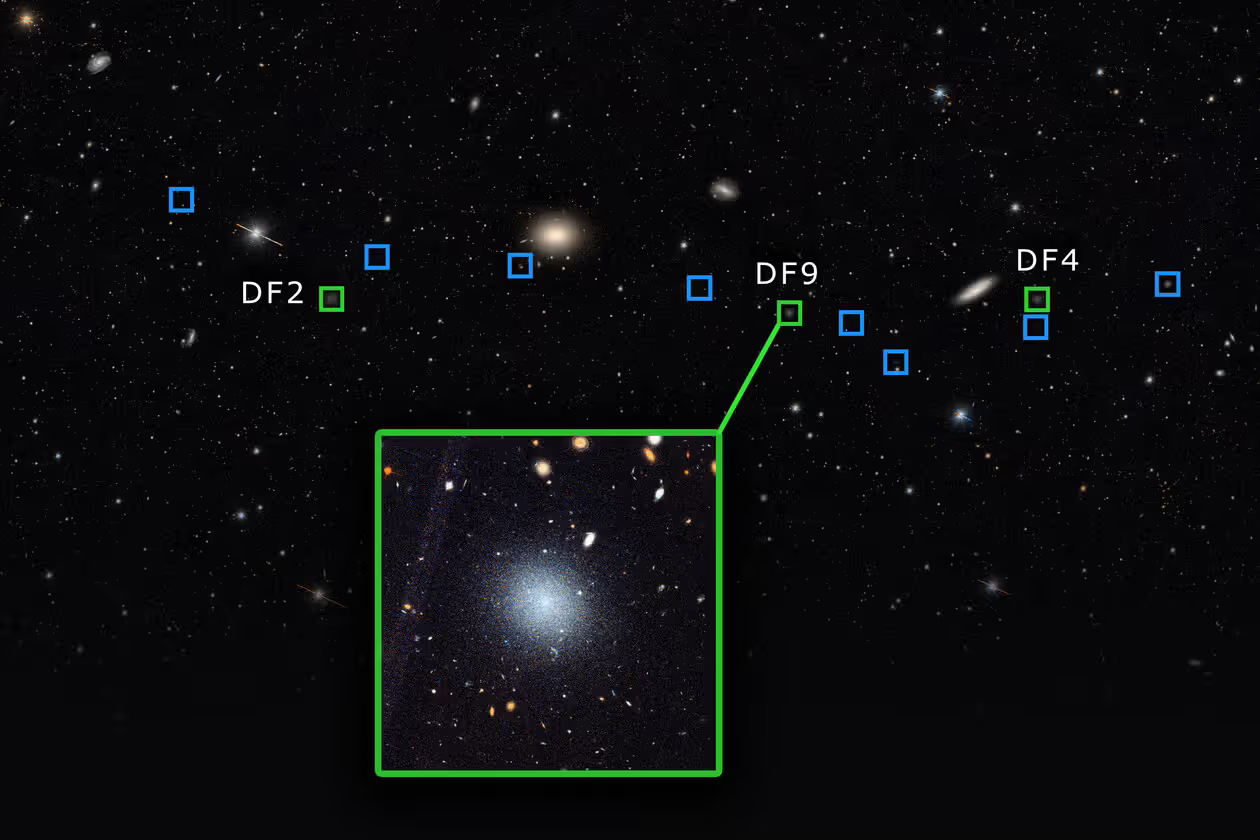
There is also a discovery in the opposite direction of this news. According to a Yale Newsroom report, a research team at Yale announced that the dwarf galaxy ‘NGC 1052-DF9’ contains stars and gas but almost no dark matter. This is the third confirmed case of such a type, following the previously discovered DF2 and DF4. All three galaxies are located near the NGC 1052 galaxy group, about 67 million light-years from Earth, and appear to form a trace as if lined up in a straight line with nine other galaxies.
Michael Keim, a Ph.D. student at Yale who led the research, proposed re-examining this object, which was originally mistaken for a supermassive black hole, and conducted precise observations using an instrument called the Cosmic Web Imager (CWI) at the Keck Observatory in Hawaii. By measuring the orbital speeds of stars to calculate the total mass of the galaxy, they found that the mass of DF9 was about 100 million solar masses—a level explainable by visible stars and gas alone. If this galaxy had dark matter like a normal galaxy, its mass would have had to exceed 10 billion solar masses. That’s a difference of over 100 times.
Keim stated, “Almost every galaxy in the universe has dark matter accounting for most of its mass,” adding that “DF2, DF4, and DF9 are very exceptional galaxies.” The scenario proposed by the research team is as follows: in the past, two galaxies collided at high speed, causing ordinary matter (gas) and dark matter to separate from each other, and the separated gas gathered on its own to form these peculiar galaxies. The fact that the three galaxies are arranged side-by-side on the same straight trajectory lends weight to this collision hypothesis.
Putting the Two Discoveries Side-by-Side
When you look at these two discoveries together, an interesting picture emerges. On one side, a galaxy that has dark matter but couldn’t form stars. On the other, a galaxy that has stars but has lost its dark matter. These are cases showing that in the single process of galaxy formation, the two elements—dark matter and stars—can exist separately without being fully combined.
Why is this important? If galaxy formation theory stood on the premise that “dark matter and stars are always bundled as a set,” these exceptional cases force a re-examination of that premise itself. It doesn’t mean the standard model is entirely wrong. It’s closer to confirming through actual observation that dark matter and ordinary matter can separate under certain conditions (such as gas stagnation during the reionization period or high-speed intergalactic collisions). However, it is not yet clear how common these exceptional cases are—whether they are just a few coincidental findings or a much more universal phenomenon than we thought.
Most of these exceptional cases found so far were discovered by chance with a narrow field of view. The 142 dark galaxies from the Seoul National University team were found by sifting through radio telescope survey data, and DF2, DF4, and DF9 were discovered while precisely tracking a specific galaxy group. Since the samples themselves rely heavily on chance, no one can yet definitively answer the question, “Are these galaxies really rare, or do they just seem rare because we can’t find them?” This is exactly where the Roman telescope, with its 100x wider field of view, comes into play.
Where Roman Enters This Contradiction
One of Roman’s main missions is to uncover the nature of dark energy. The plan is to observe billions of galaxies to map how the universe’s large-scale structure has evolved over time, and through this, to constrain the properties of dark energy. Christine McEntee, Roman Mission Office Manager at the Space Telescope Science Institute, reportedly said before the launch, “There may be something fundamentally missing from the physics we understand, and the Roman telescope has the potential to uncover it.”
A wide field of view is also expected to be advantageous for finding the kinds of exceptional galaxies we’ve seen earlier. If discoveries until now were close to coincidental cases found with a narrow field of view, things change when we can statistically scan far more galaxies at once with a wide field of view like Roman’s. I suspect there might be a possibility that it will become clearer through much more distinct numbers whether starless dark galaxies or dark matter-free galaxies are rare coincidences or common branches inherent in the galaxy formation process from the start. This means the results will likely be closer to a galaxy formation map created as thousands or tens of thousands of data points accumulate, rather than the dramatic narrative of individual discoveries. Such results might actually be a bit mundane to use as news headlines.
The numbers regarding exoplanets also stood out. Over the past few decades, humanity has confirmed about 6,000 exoplanets, but there are projections that Roman alone could find around 100,000—far more than this—using the gravitational microlensing method. This figure is only a preliminary estimate, and actual verification will only be possible after early 2027. Roman is also equipped with a coronagraph instrument, a technology that blocks starlight to directly photograph nearby planets. It is also tasked with serving as a technology demonstrator for the ‘Habitable Worlds Observatory’ concept, which aims to directly photograph Earth-like planets in the future.
Questions That Are Still Open
Honestly, even while summarizing this, I don’t feel confident that I fully understand it. Since dark matter has never been directly observed and is a concept inferred by its gravitational effects, even the expression “galaxy without dark matter” is closer to a different way of calling it a “galaxy where gravitational anomalies are not observed.” Perhaps because we don’t yet fully know the nature of what we call dark matter, these cases that look like exceptions could actually be clues to fill the gaps in the theory.
What is certain at this point is that the launch was successful. Only after it safely passes the 90-day adjustment period and starts actual surveys in early 2027 will we know if this telescope truly contributes to uncovering the nature of dark energy and dark matter. For large-scale missions like this, real results often come only after survey data spanning several years have accumulated. Whether the 142 starless galaxies and the 3 dark matter-free galaxies are common phenomena supported by statistics, or whether they will remain as coincidental, peculiar cases—we will likely have to wait quite a while to see these pieces come together.
References
- NASA, NASA's Dark Universe-Seeking Nancy Grace Roman Space Telescope Launches
- The Planetary Society, The Nancy Grace Roman Space Telescope launch: what to expect
- EarthSky, Nancy Grace Roman Space Telescope
- Popular Science, NASA's Nancy Grace Roman space telescope launches
- CNN, Nancy Grace Roman Space Telescope will illuminate unseen universe
- NASA Science, Nancy Grace Roman Space Telescope
- Wikipedia, Nancy Grace Roman Space Telescope
- NASA SVS, Far and Wide — Differences between Hubble, Webb, Roman
- Kyunghyang Shinmun, 'Roman Space Telescope' Launch Success
- Daum News (Yonhap News Affiliate), Starless galaxies, dark matter-free galaxies... how are galaxies made?
- Seoul National University, Massive discovery of galaxies with only dark matter
- Yale News, Third time's the charm for a row of faint galaxies without dark matter
- Scientific American, Astronomers discover another galaxy seemingly devoid of dark matter
- Universe Today, Astronomers Discover Another Galaxy With No Dark Matter
- Keim, M. A. et al., A Third Galaxy Missing Dark Matter along a Trail of Galaxies in the NGC 1052 Field, The Astrophysical Journal (2026)