
The Ghost That Rules Your Morning
How did you start your day this morning? Perhaps you brushed your teeth with a plastic toothbrush and wore clothes made of synthetic fibers. You might have driven your car on asphalt, enjoying a cup of coffee in a plastic cup.
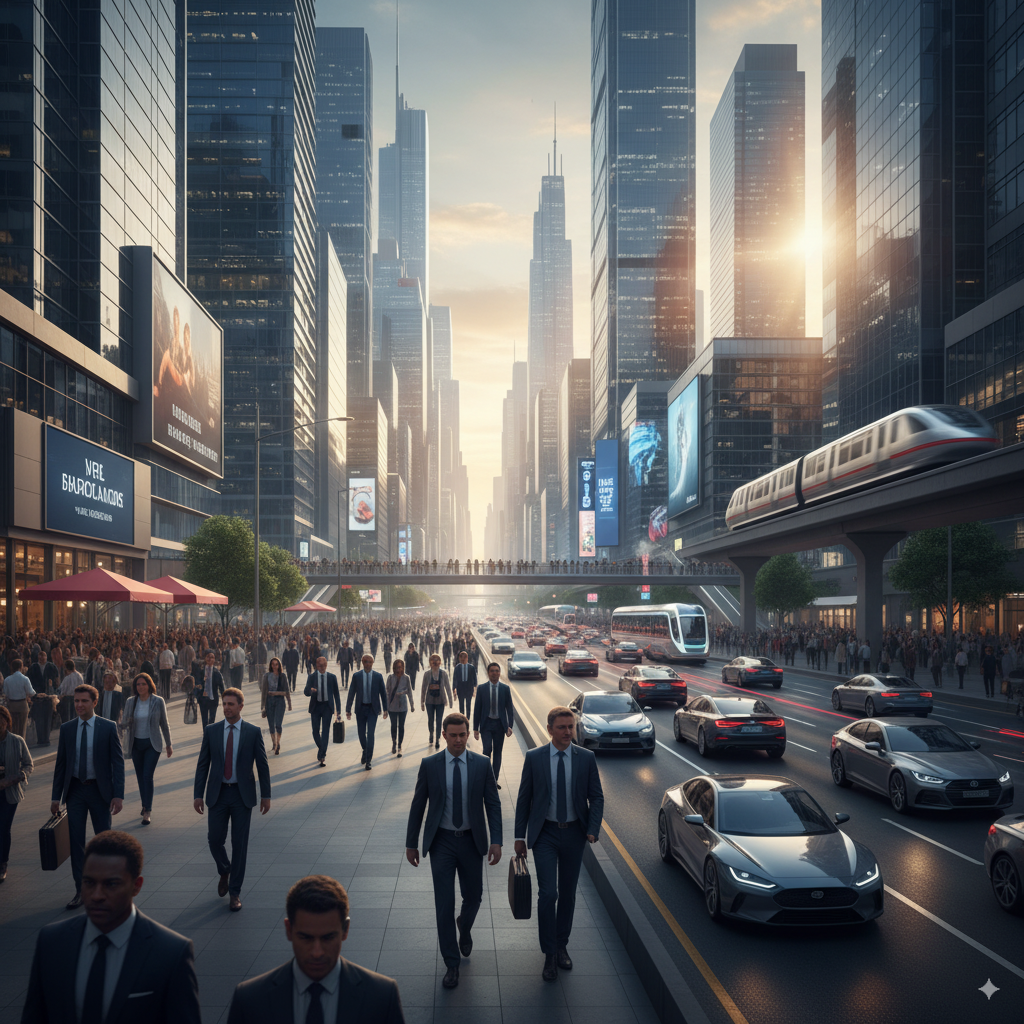
Did you notice that our entire daily life, indeed this whole civilization, is actually in the grip of a black, sticky liquid known as ‘oil’? We often regard oil merely as fuel for cars, but that is just the tip of a massive iceberg.
The past 150 years have been a bloody struggle for oil, and the prosperity we enjoy is a mirage built on oil. Oil has been the rice that nourishes industries, the blood that drives wars, and the black pillar supporting the only empire in the world, the United States.
Let’s trace the path where money and power flow along oil fields and pipelines, and examine the human greed and shadows of civilization hidden behind that cold data. This story begins where those two perspectives meet. It is a grand exploration of how oil, once called ’the devil’s tears,’ became ‘black gold’ that ruled the world, and what fate humanity will face at the threshold of ‘Zero Barrel’ as we attempt to end that golden age.
This is not just a story about changing energy. It is a tale of shifting power, restructured wealth, and the end of the world as we know it. Now, it is time to confront the familiar ghost that rules your daily life.
Chapter 1: The Birth of the Octopus - Rockefeller and the Woman Who Opposed Him
In 1872, a harsh winter enveloped the ‘Oil Creek’ valley in Pennsylvania. A 14-year-old girl, Ida Tarbell, had to watch helplessly as her father’s small oil refinery closed its doors. Her father was in despair, and his partner ended his life with a gun. It was not the bitter cold that destroyed their lives, but a giant octopus named ‘Standard Oil’ that emerged from Cleveland.
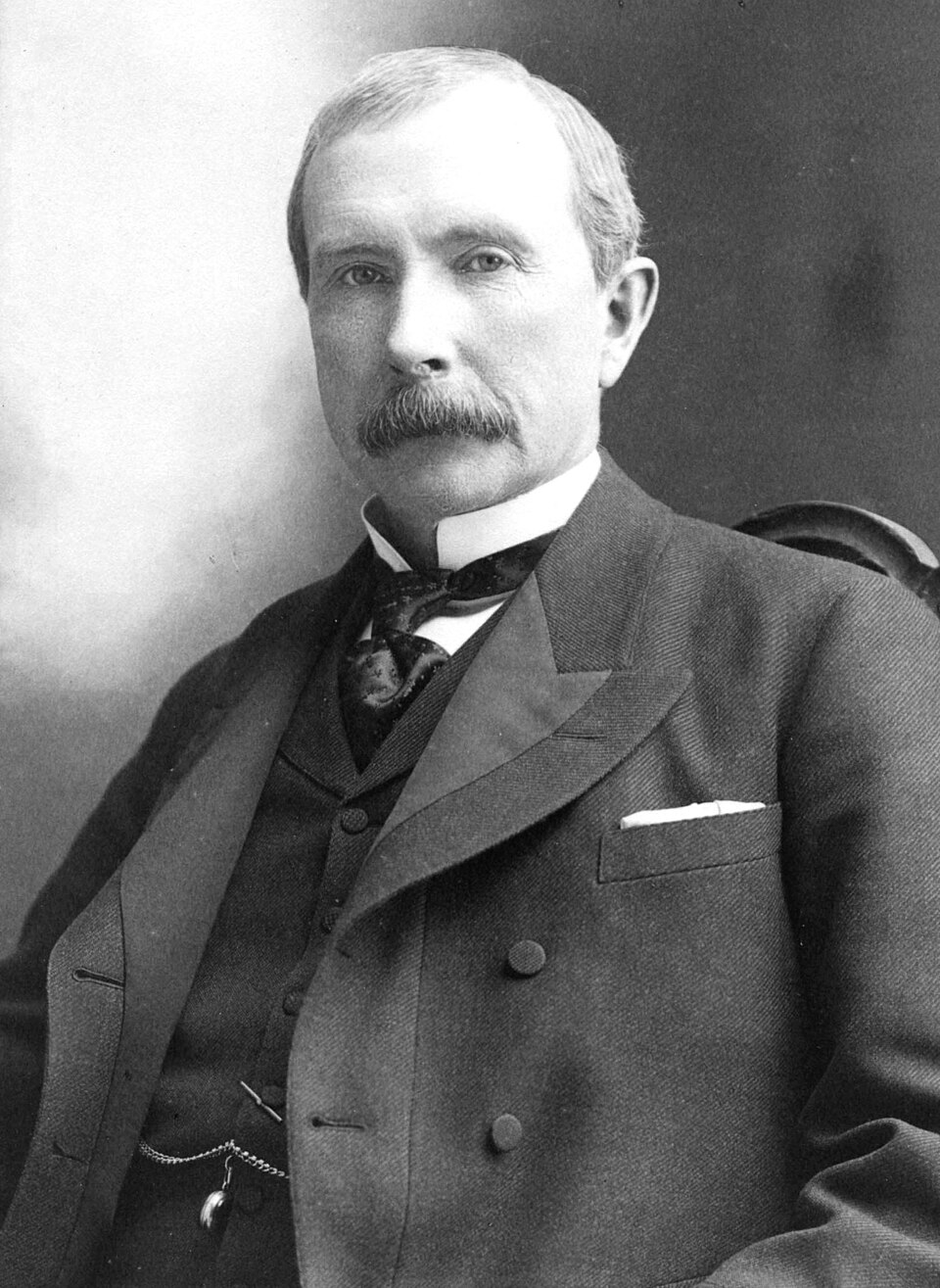
The head of this octopus was the ruthless businessman, John D. Rockefeller. He had no interest in the dirty work of extracting oil. Instead, he understood that the one who controls the ‘flow’ of oil being refined, transported, and sold would have everything. He secretly allied with railroad companies to secure transportation costs far cheaper than his competitors. He then approached other refiners and whispered, “You either hand over your company to us, or you will wither away.”
Those who resisted, like Ida’s father, were ruthlessly crushed. In just six weeks, known as the ‘Cleveland Massacre,’ 22 out of 26 competitors fell into Rockefeller’s grasp. He became the first oil emperor by seizing not the oil itself, but the ‘veins’ through which oil flowed.
While everyone spoke of the end of the kerosene era and the decline of oil, Karl Benz in Germany invented the internal combustion engine powered by oil, namely the automobile. The gasoline that was once discarded became the heartbeat of a new era. Rockefeller’s empire thus sprouted new wings.
Years later, the girl who had not forgotten the octopus that destroyed her father became the leading investigative journalist of her time. From 1902 to 1904, she published 19 articles exposing the ugly secrets of the Rockefeller empire. Her writings shook American society, and finally, in 1911, the Supreme Court ordered the breakup of Standard Oil into 34 companies.
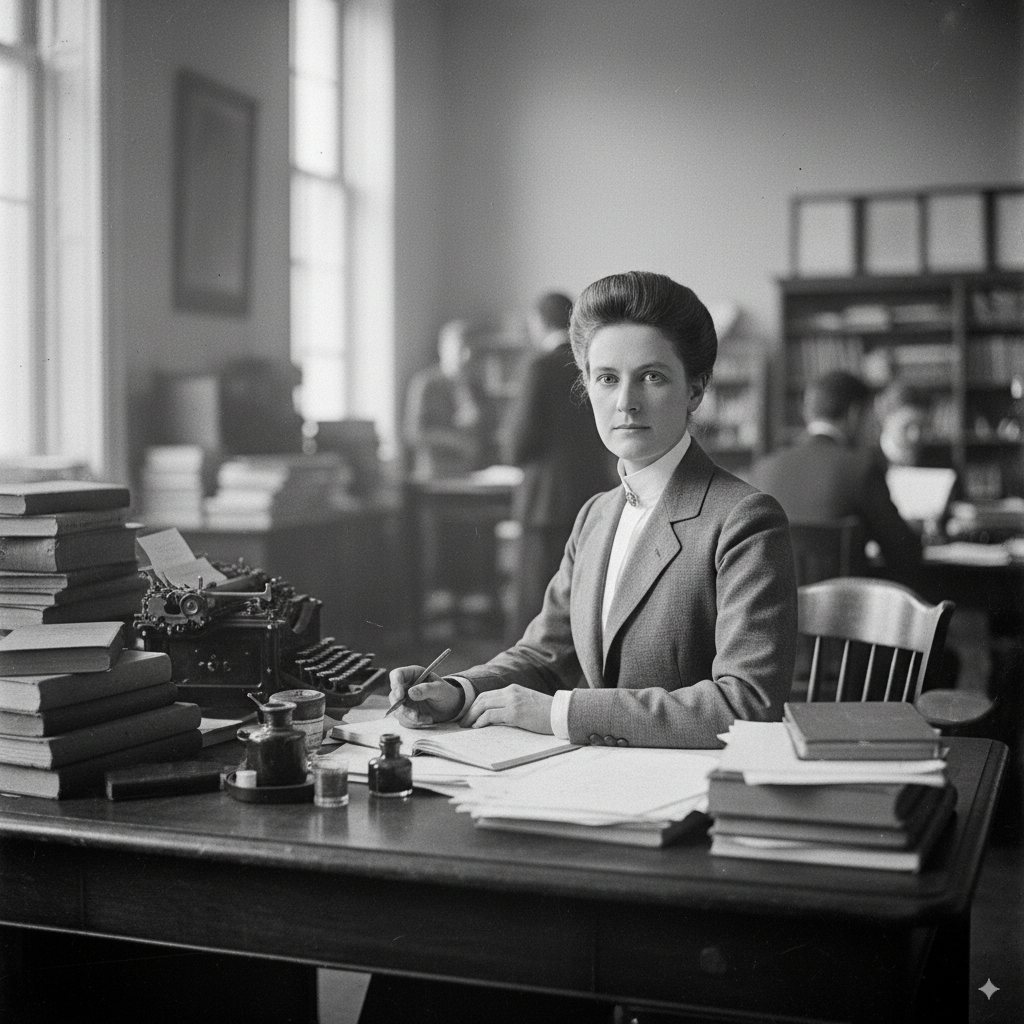
The revenge of one girl became the slingshot that toppled a giant monster. But the octopus did not die. It survived, merely changing its name to Exxon, Mobil, Chevron, and others. The era of oil was just beginning.
Chapter 2: The Blood Contract - ‘Mr. 5%’ and the Birth of the Middle East
Now, oil moved beyond the battlefield of business and into the heart of real wars. Amid the chaos of World War I, British Naval Minister Winston Churchill took a huge gamble by switching the fleet’s fuel from coal to oil. The result was a great success, but a critical weakness was revealed: there was not a drop of oil in Britain. As the saying goes, “Victory floated on the waves of oil,” oil became a strategic asset that determined the fate of nations.
After the war, the victorious nations turned their eyes to the ruins of the Ottoman Empire in the Middle East. It was here that secret deals began, giving birth to the modern tragedies of the Middle East. At the center was an enigmatic Armenian businessman named Calouste Gulbenkian. He belonged to no country but shared the secrets of all the powers.
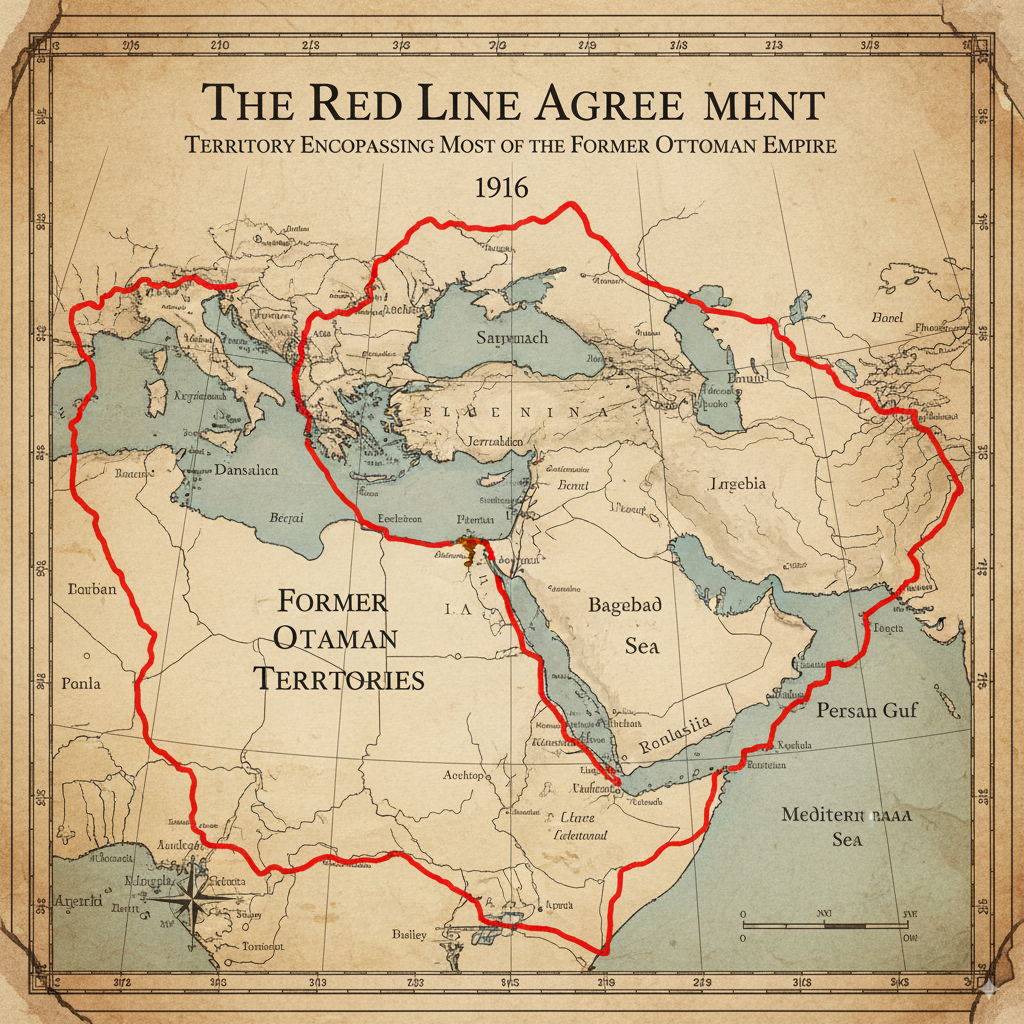
In 1928, he gathered the major oil companies of Britain, France, and the United States at one table and drew a line on the map with a red pen. It was a line surrounding most of the former Ottoman Empire’s territory. He declared, “Within this ‘Red Line,’ no one can develop oil alone without the consent of all of us.”
Following this red line, the borders of the Middle East were drawn arbitrarily, regardless of ethnicity or religion. Gulbenkian, as the broker of this massive cartel, took 5% of all oil produced in the region as his share. He became known as ‘Mr. 5%’ and amassed immense wealth, and his red pen became the seed of the ongoing conflicts in the Middle East.
World War II further solidified this blood contract. The United States, which had more oil, ultimately won the war. Through a baptism of blood, oil ascended to the position of the ‘black god’ that determined the fate of nations, and the altar that worshiped that god was erected in the Middle East.
Chapter 3: The Empire’s Gamble - Kissinger and the Birth of Petrodollars
After the war, the United States stood tall as the world’s superpower. The source of that power was the dollar fixed to gold, known as the Bretton Woods system. However, the prolonged Vietnam War led to rampant printing of dollars, revealing the emptiness of America’s coffers.
On August 15, 1971, President Nixon appeared on TV and announced the severing of the link between gold and the dollar. It was the ‘Nixon Shock.’ The dollar, having lost its solid anchor in gold, was on the verge of becoming worthless, and America’s hegemony was shaking like a sandcastle.
At that moment, Secretary of State Henry Kissinger planned the boldest gamble in history. In 1974, he secretly flew to Saudi Arabia to meet King Faisal. Kissinger made an irresistible offer.
“The United States will guarantee the security of the Saudi royal family. In return, please lead OPEC to ensure that all oil transactions are conducted only in U.S. dollars.”
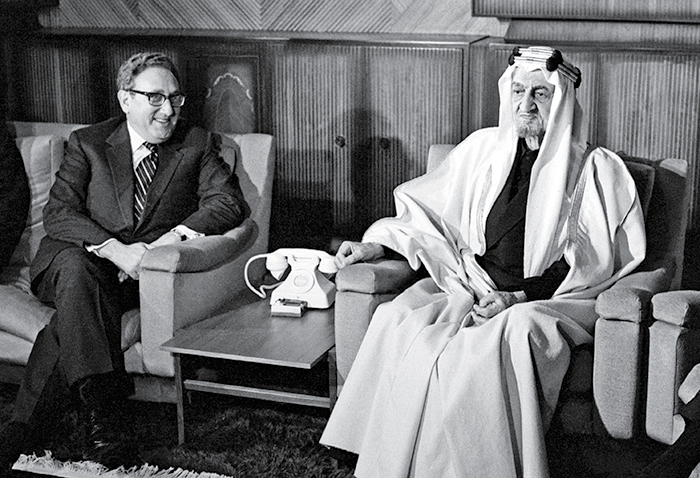
This was the moment the ‘Petrodollar’ system was born. Now, the dollar was tied not to gold, but to oil, the most important commodity in the world. To buy oil, one needed dollars, and the vast oil money earned by oil-producing countries flowed back to the U.S., fueling the American economy. The U.S. could now acquire the wealth of the world simply by printing paper.
America’s true power was not in aircraft carriers or nuclear weapons. It was in this Petrodollar system. Consider what fate befell Hussein of Iraq or Gaddafi of Libya when they attempted to receive oil payments in currencies other than dollars. Kissinger’s gamble was a resounding success, and oil became the black blood flowing through the arteries of the empire.
Chapter 4: The Flames of Revolution - The Oil Shock and ‘The Billionaires of Tehran’
Cracks began to appear in the seemingly eternal empire. In 1973, the ‘Oil Shock’ erupted when Arab oil-producing countries attacked the West with oil as a weapon. Oil prices skyrocketed fourfold, and the global economy came to a halt. This event made oil-producing countries realize how powerful the weapon they held, ‘oil,’ truly was.
One of the countries that made the most money was Iran. At that time, the Shah of Iran was a loyal ally of the United States. Overnight, he became a billionaire, purchasing the latest weapons from the U.S. and claiming to be the ‘police of the Middle East,’ while the capital, Tehran, transformed into a lavish ‘Paris of the Middle East.’
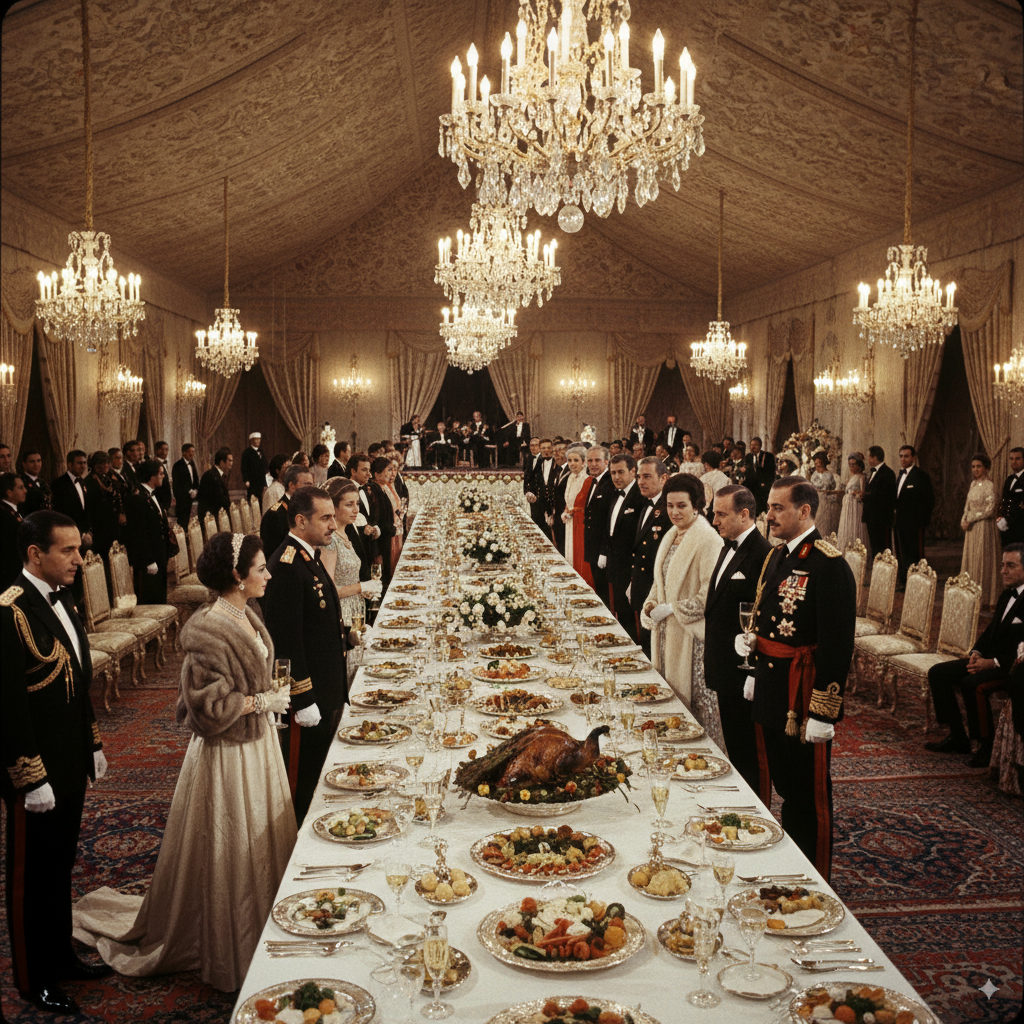
But beneath the dazzling lights, shadows grew darker. The corrupt feasts of the Shah and his inner circle sparked the anger of the impoverished populace, and traditional religious leaders vehemently opposed the Westernization policies. The overflowing oil dollars instead divided society and fueled the flames of revolution.
Ultimately, in 1979, the Islamic Revolution occurred, toppling the Pahlavi dynasty. A humiliating incident unfolded when the U.S. embassy in Tehran was seized, and the U.S. lost its most important ally in the Middle East. The fall of ‘The Billionaires of Tehran’ symbolized how precarious the peace built on oil was. The empire sought to control oil, but the flames of greed emitted by oil dragged the empire into an endless quagmire.
Chapter 5: The Counterattack of Land and Sky - The Shale Revolution and Climate Warnings
Entering the 21st century, two massive waves began to shake the foundations of oil hegemony. One rose from deep within the earth, while the other descended from the high skies.
The first wave was caused by a stubborn oilman named George Mitchell. To extract oil and gas trapped in shale formations that everyone had given up on, he poured hundreds of millions of dollars over 20 years. Amidst ridicule as a ‘madman,’ he ultimately succeeded in fracturing rocks with hydraulic pressure to extract gas.
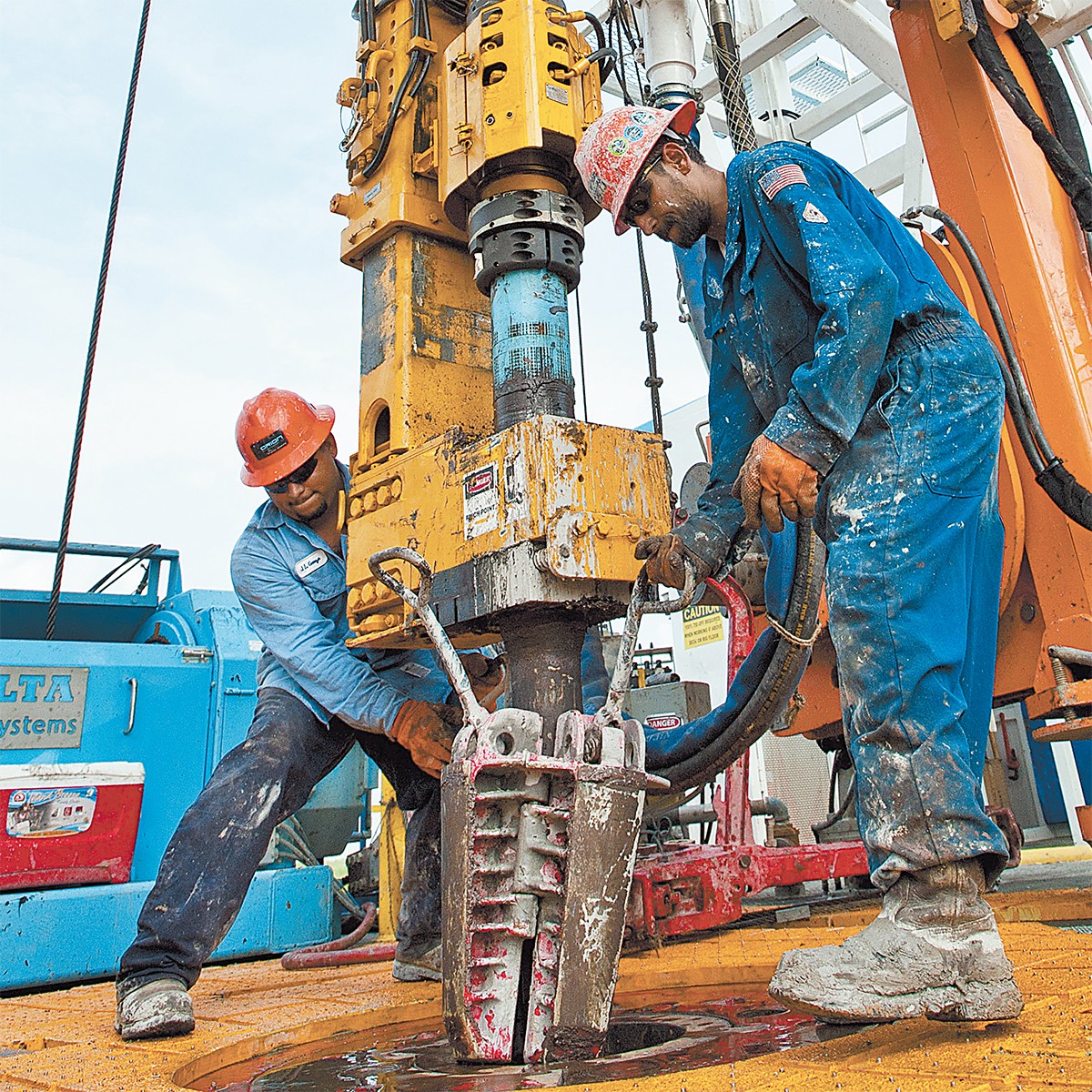
Thanks to this ‘Shale Revolution,’ the U.S. became the world’s number one oil producer, surpassing Saudi Arabia and Russia. No longer needing to rely on Middle Eastern oil, the U.S. began to withdraw from its role as ’the world’s police,’ leading to paradoxical results that shook the existing order.
The second wave was more fundamental. In 1988, NASA scientist James Hansen declared before Congress, “Global warming has begun now.” His warnings, long ignored, manifested as severe droughts, floods, and melting glaciers. The bill for the disasters brought on by the oil age had arrived.

The Paris Climate Agreement in 2015 marked a historic turning point where humanity officially agreed to ‘de-oil.’ Tesla’s electric cars began to dominate the roads, and wind turbines and solar panels started to replace oil fields. ‘Zero Barrel’ was no longer a distant dream but an unavoidable reality. The era of oil faced its most fundamental threat at its most glorious moment.
Chapter 6: The Vacuum of Power - The Twilight of Old Gods and New Battlefields
The counterattacks from land and sky shook the very altar that worshiped the black god known as oil. As the god lost power, a massive vacuum emerged in the order he ruled. The world now stands between the twilight of old gods and the dawn of a new chaos where new gods have yet to appear.
Saudi Arabia’s de facto ruler, Crown Prince Mohammed bin Salman, is among the first to read the wave of ‘Zero Barrel’ and prepare for the end of the oil era. However, the process is not smooth. Meanwhile, challengers like Russia and China have begun to directly target the heart of the Petrodollar system, which has been a fortress for 50 years. Attempts to settle oil payments in yuan continue.
Amid these changes, America’s focus has shifted from the Middle East to the Indo-Pacific region to counter China. The battlefield itself is changing. While wars in the 20th century were fought over Middle Eastern oil fields, the new battlefields of the 21st century are places like these:
- South America’s ‘Lithium Triangle’: An invisible battlefield between the U.S. and China for lithium, the key to electric vehicle batteries.
- Taiwan’s semiconductor factories: TSMC, which produces 90% of the world’s cutting-edge semiconductors, has become the most dangerous powder keg where the hegemony of future industries is at stake.
- Undersea data cables: The underwater cables connecting the global internet are the hidden veins of the digital age. Cutting them would paralyze modern civilization.
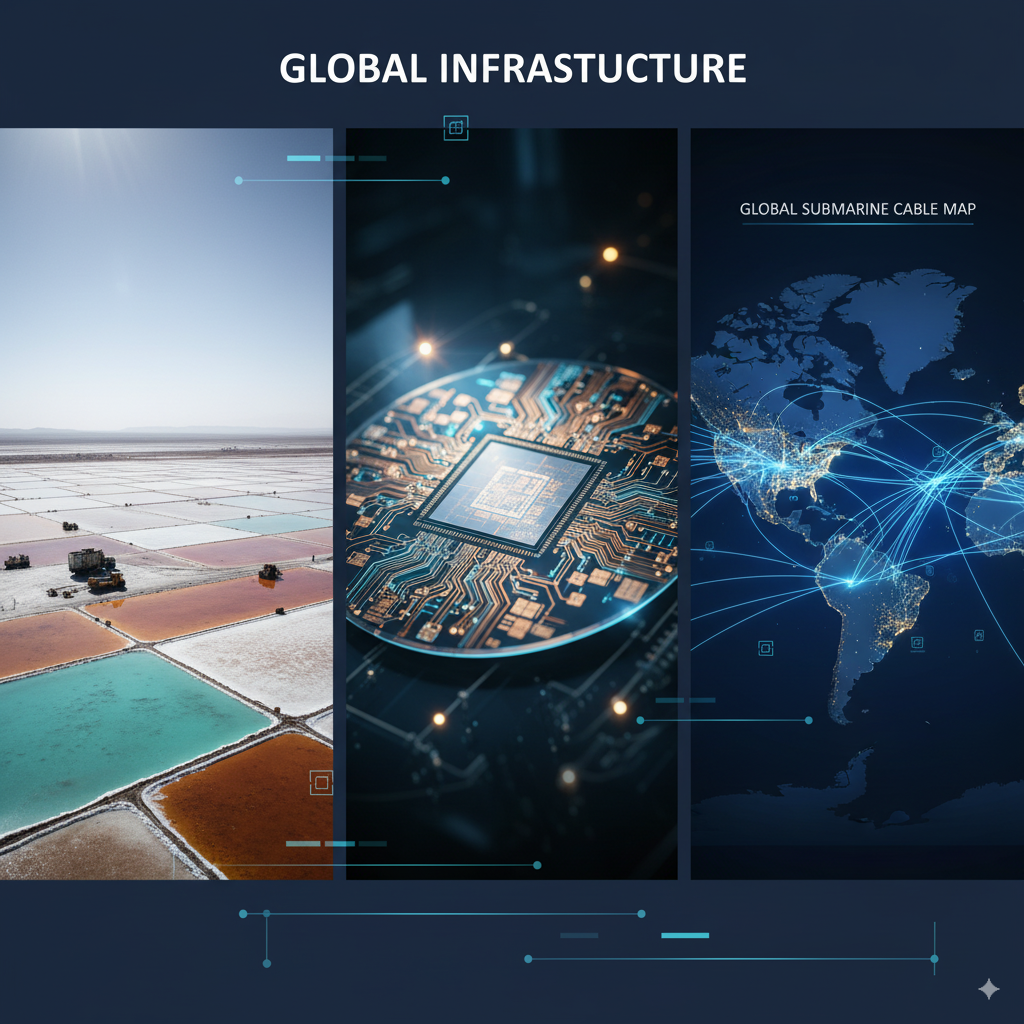
The departure of the old gods quietly but profoundly shakes the ground, opening the curtain to a new era governed by entirely different rules.
Chapter 7: The Empire of Technology and Blood Minerals - The Prelude to a New War
The end of the oil era is not a peaceful retirement. A new war has already begun to seize the throne left vacant by the fallen old god.
The wars of the 21st century are not about conquering territory with tanks but about conquering the invisible territory of ’technological standards.’ China’s efforts to dominate the global electric vehicle and battery market are not merely about selling more cars. They aim to seize the ‘operating system (OS)’ of future mobility, turning everyone into a colony of technology. This is the reality of ’technological imperialism.’
However, this invisible empire also needs physical ‘blood’ to sustain itself. The new blood of the empire is the critical minerals known as ‘white oil.’ These include lithium, nickel, and cobalt, which are essential for electric vehicle batteries.
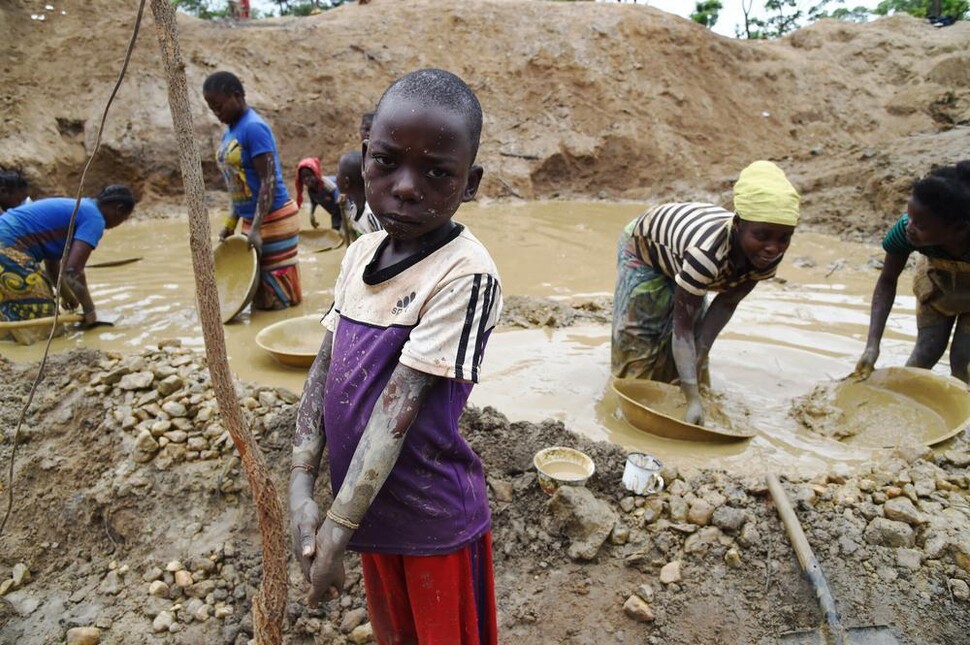
At the heart of this tragedy lies the Democratic Republic of the Congo in Africa, which produces 70% of the world’s cobalt. While engineers in California design a ‘clean future,’ children in Congo dig for ‘blood minerals’ with their bare hands to earn $1 a day in collapsing dirt pits. Over 80% of this brutal supply chain is controlled by China.
Realizing the crisis too late, the U.S. and the West are desperately resisting, shouting for ‘supply chain restructuring.’ Ultimately, the essence of the new war is this: Who will control the brain of ’technological standards’ and the heart of ‘critical minerals’? The end of the oil era has not brought us a utopia but rather a new era of war that may be more cunning, complex, and brutal.
At the End of the Black Myth, What Will We Choose?
We are now witnessing the funeral of the black god, oil, which has dominated humanity for 150 years. It has bestowed blessings of abundance and speed, but the price has been the tears and sacrifices of others.
‘Zero Barrel’ is an unavoidable future. However, the path will not be smooth. The wars of the coming era will be ‘quiet wars’ over technology and supply chains.
In this era of great transition, our choices will determine the future. Will we repeat the era where a specific country monopolizes new energy and wields hegemony, as in the past? Or will we create a sustainable and fair system together in the face of a common crisis for humanity?
Think again about your morning. Each small action you take, like using a bamboo toothbrush instead of a plastic one or opting for public transport instead of a combustion engine car, can be a vote that determines the direction of this great transition.
The last page of the black myth of oil is still blank. It is up to all of us living in this era to write that ending.