
A Small Lighthouse That Protects Your Night
Late at night, on the way home, dragging a tired body at the end of the day. Even as the city’s dazzling lights begin to sleep, a familiar light awaits us. Under that sign, blending blue and green, someone fills their hungry stomach with a hearty lunch box, while another quenches their thirst from the day with a refreshing drink.
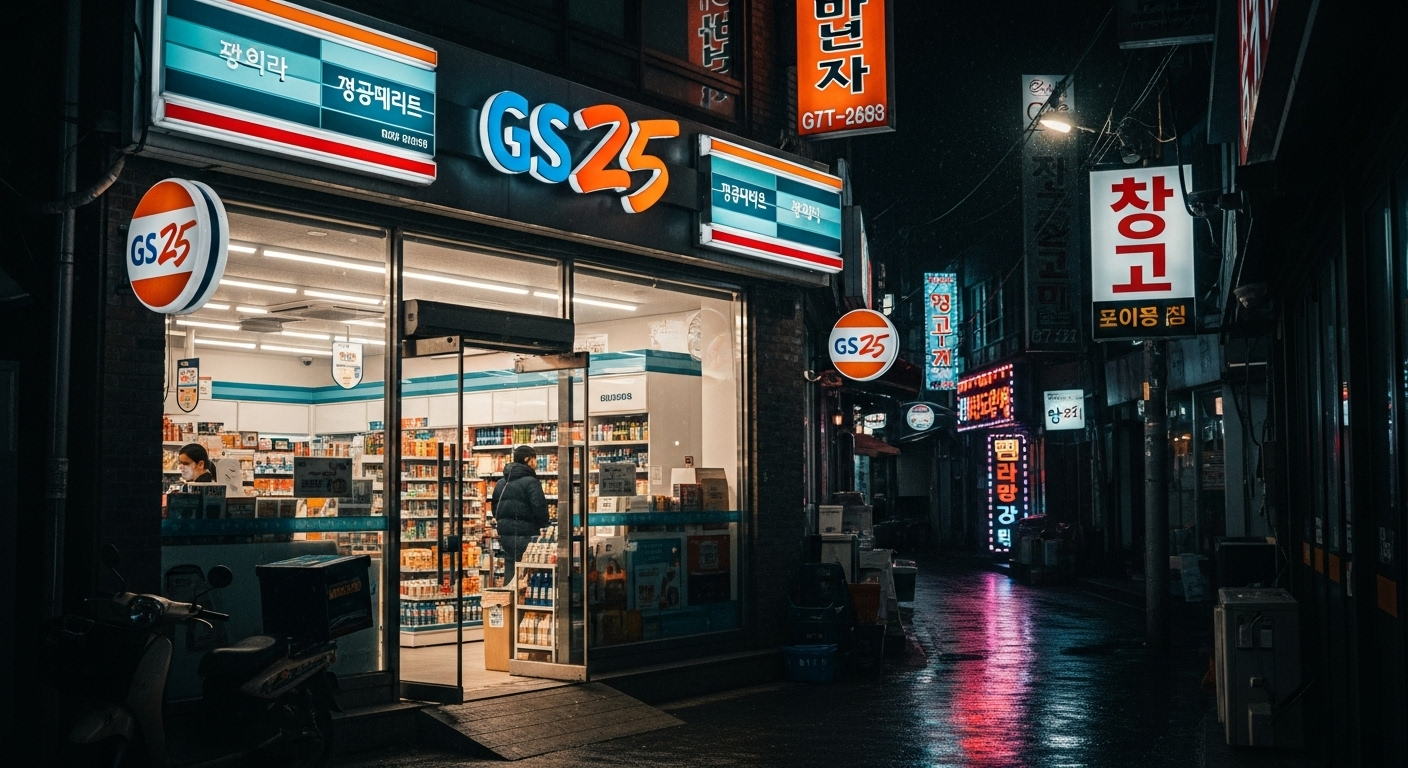
This place is not just a store. Sometimes it becomes a restaurant that fills our hungry bellies, sometimes a general store where we can get what we need at any time, and sometimes a small post office and bank where we can send packages and pay bills. It is a small ecosystem that spreads like capillaries in the closest part of our lives, and that is GS25.
But did you know that this seemingly ordinary alley light is actually the forefront of a massive distribution empire with a 50-year history? Let’s embark on an exciting time travel from a small company that made wires to the heart of GS Retail, which dreams of being a ’lifestyle platform’ responsible for all aspects of customer life.
Timeline of GS Retail’s 50-Year Transformation
| Year/Period | Major Milestones and Events |
|---|---|
| 1971-1989 Foundation Era |
1974: Opened the first ‘Lucky Supermarket’, stepping into the distribution industry. |
| 1990-2004 Convenience Store Revolution and Growth |
1990: Opened the first domestic convenience store ‘LG25’. 2002: Merged LG Distribution, Supercenter, and Department Store to grow in size. |
| 2005-2014 Opening of the GS Era and Innovation |
2005: Transitioned from LG to GS, reborn as ‘GS Retail’. 2010: Launched ‘Kim Hye-ja Lunch Box’, creating the new term ‘Hyejarobda’. 2011: Introduced the world’s first prize storage app ‘My Refrigerator’. |
| 2015-2020 Diversification and Challenges |
2015: Acquired Parnas Hotel to seek new growth engines. 2018: Rebranded H&B store ‘Watsons’ to ‘Lalavla’. 2019: Revamped ‘GS Supermarket’ to ‘GS THE FRESH’. |
| 2021-Present Towards an Omnichannel Empire |
2021: Merged with GS Home Shopping, launching as an integrated online-offline giant. 2021: Invested in delivery app ‘Yogiyo’, entering the quick commerce war. 2023: Opened the door to a digital empire with the integrated membership ‘Our Neighborhood GS’. |
Chapter 1: The Alliance of Two Families Becomes the Root of the Empire (1971-2005)
From Wire Factory to Grocery Store
The first page of GS Retail surprisingly begins not with the convenience stores or supermarkets we know, but with a factory dealing with electricity. In 1971, a company named ‘Geumseong Electric’ would later dominate the alley economy of South Korea, a fact no one could have imagined. However, a special DNA that reads the flow of the times seems to have been stirring even back then.
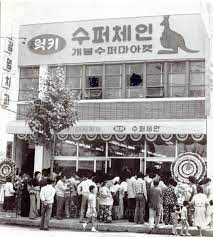
In 1974, the company opened the first ‘Lucky Supermarket’, stepping into the new world of distribution. In an era when carrying a market basket and bargaining was the norm, the emergence of supermarkets with standardized products and neat displays was a signal marking the beginning of a new consumer era.
A 57-Year Promise: Trust Named ‘Inhwa’
To truly understand the history of GS Retail, one must first learn about the very special founding story of the LG Group that became its root. It is the myth of two families, the Gu family and the Heo family, who built a massive enterprise together for 57 years without sharing blood. The secret to breaking the common belief that ‘partnerships lead to failure’ is simply ‘Inhwa (人和)’, or harmony and trust between people.
While the Gu family took care of the ‘outside work’ by drawing the big picture of the business, the Heo family meticulously managed the finances and operations. This spirit of ‘Inhwa’, where they trusted each other and divided roles, later became an important cultural asset for GS Retail, which values ‘Sangsaeng (相生)’ or mutual growth as its top priority in partnerships with numerous franchisees.
The Most ‘Beautiful Farewell’ in the World
The partnership of the two families, which seemed eternal, faced a significant change with the advent of the third-generation management era. However, instead of fighting over management rights like other conglomerates, they chose the most ‘beautiful farewell’ in the world. It was a wonderful agreement to focus on their respective strengths (LG in electronics and chemicals, GS in energy and distribution) and grow into global companies.
In 2005, LG Distribution finally embarked on an independent journey with the new name ‘GS Retail’. This farewell was not an end but a great first step toward building its own empire as a distribution expert.
Chapter 2: The Birth of a Legend, National Convenience Store GS25 (1990-Present)
The First Convenience Store Made by Our Hands
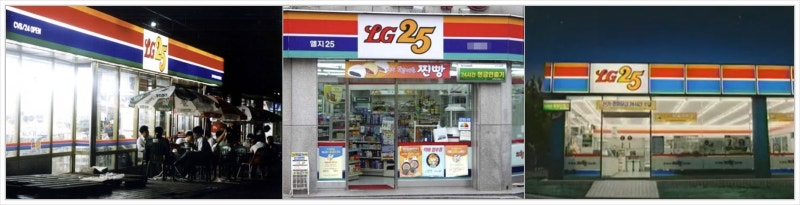
In 1990, a strange sign called ‘LG25’ appeared in a neighborhood in Seoul. This was the moment when the first domestic convenience store was born, created with pure Korean technology and capital, not borrowed from foreign brands. This pride became a solid foundation for developing products and services that perfectly matched Korean tastes and lifestyles.
Eternal Rivals: GS25 vs CU
The history of convenience stores in South Korea can be described as the rivalry between GS25 and CU (formerly Family Mart). The fierce competition between these two giants has been a driving force in growing the convenience store industry in South Korea and spawning numerous innovations. While CU aggressively expanded its number of stores focusing on ‘quantitative growth’, GS25 countered with a strategy of ‘qualitative growth’, solidifying the foundation of each store.
| Year | Category | GS25 (GS Retail) | CU (BGF Retail) |
|---|---|---|---|
| 2019 | Number of Stores | 13,918 | 13,877 |
| Revenue | 6.8566 trillion KRW | 5.9436 trillion KRW | |
| 2023 | Number of Stores | 17,390 | 17,762 |
| Revenue | 8.2457 trillion KRW | 8.1948 trillion KRW |
As seen in the table, while the number of stores fluctuates, GS25 consistently leads in revenue (efficiency per store).
Chapter 3: Three Innovations That Changed the Rules of the Market
What is the secret that allowed GS25 to maintain its throne amid fierce competition? It is the continuous creation of ‘game changers’ that changed the market landscape and captured customers’ hearts.
First: The ‘Hyejarobda’ Syndrome: Creating a Culture with Lunch Boxes
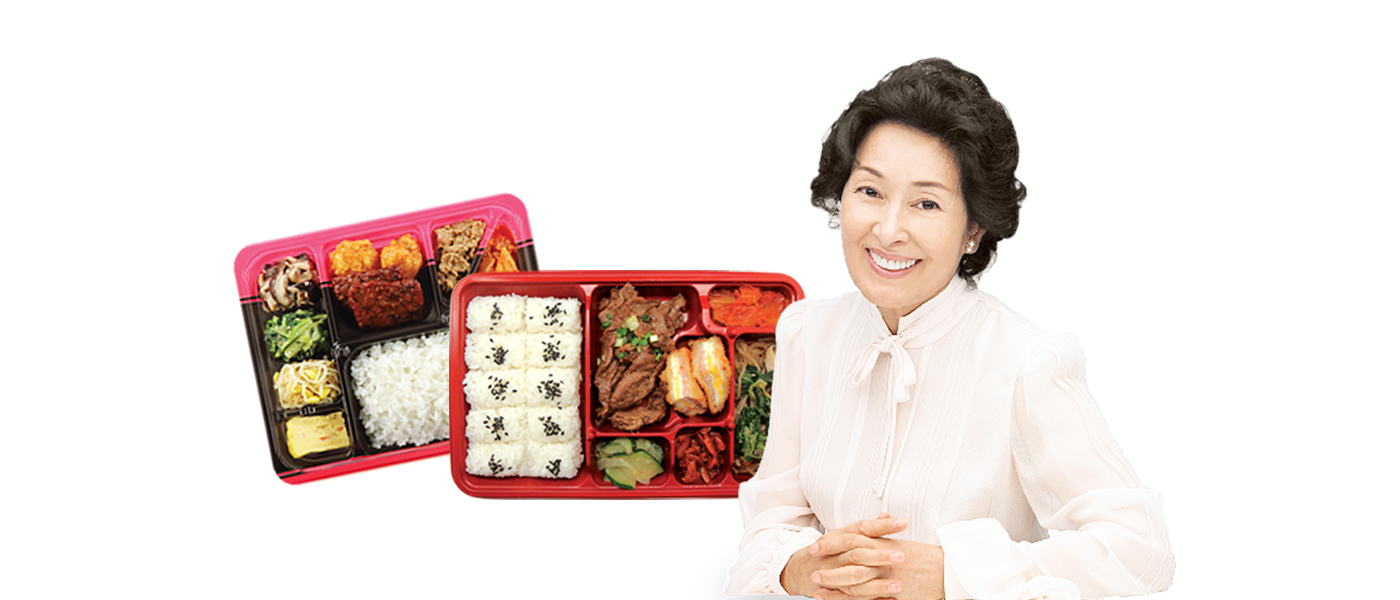
In 2010, GS25 focused on the warm image of actress Kim Hye-ja, known as the ‘National Mom’. The ‘Kim Hye-ja Lunch Box’, born with the concept of ‘a generous and heartfelt mom’s meal’, became a tremendous success. The popularity of this lunch box even led to the creation of the new term, “Wow, this is really Hyejarobda!” The fact that a company’s product became part of our language remains a marketing myth that is hard to find precedents for.
Second: ‘My Refrigerator’: Magic in Your Pocket
Have you ever taken advantage of a ‘1+1’ promotion? In the past, there was the inconvenience of having to awkwardly carry a gift you didn’t need right away. GS Retail noticed this small inconvenience. In 2011, the ‘My Refrigerator’ app was born, allowing customers to ‘store’ gifts in the app and retrieve them from anywhere in the country whenever they wanted. This magical service that transcends online and offline became the key to GS Retail’s future.
Third: The Art of Collaboration: Turning Convenience Stores into Playgrounds
As the MZ generation emerged as major consumers, GS25 began transforming convenience stores from mere places to sell goods into ‘cultural spaces that sell experiences’. Collaborative products with popular games (MapleStory) and global OTTs (Netflix) stimulated fans’ desire to collect, turning convenience stores into new playgrounds.
Chapter 4: Building the Kingdom, Its Light and Shadow (2005-Present)
Memories of Victory: The Glamorous Revival of Supermarkets
Not satisfied with the success of convenience stores, GS Retail dreamed of a larger empire. In 2019, they transformed the outdated image of ‘GS Supermarket’ into ‘GS THE FRESH’ and embarked on a major transformation. The secret to success was utilizing stores nationwide as ‘urban logistics centers’ for delivering online orders. Thanks to this, GS THE FRESH made a glamorous revival as the number one supermarket in South Korea.
Lessons from Failure: The Lonely Exit of ‘Lalavla’
Of course, not every challenge was successful. The H&B store ‘Lalavla’, launched ambitiously in 2018, remains a painful record of failure. It failed to differentiate itself from the strong competitor ‘Olive Young’ and could not win the hearts of consumers, ultimately having to close its business in 2022. This failure left a costly lesson that even large corporations cannot survive without a clear identity.
A Huge Bet on the Future
GS Retail did not despair over failure but drew a bigger picture. In 2021, the offline giant GS Retail merged with the online powerhouse GS Home Shopping. In the same year, they made a significant investment in the delivery app ‘Yogiyo’, officially entering the quick commerce war against Coupang and Baedal Minjok. All of this was a grand strategy to build a true ‘omnichannel empire’ that breaks down the barriers between online and offline.
Chapter 5: The Future of Convenience Stores, Crossing Digital Borders (Present and Future)
Completion of the O4O Empire: ‘Our Neighborhood GS’
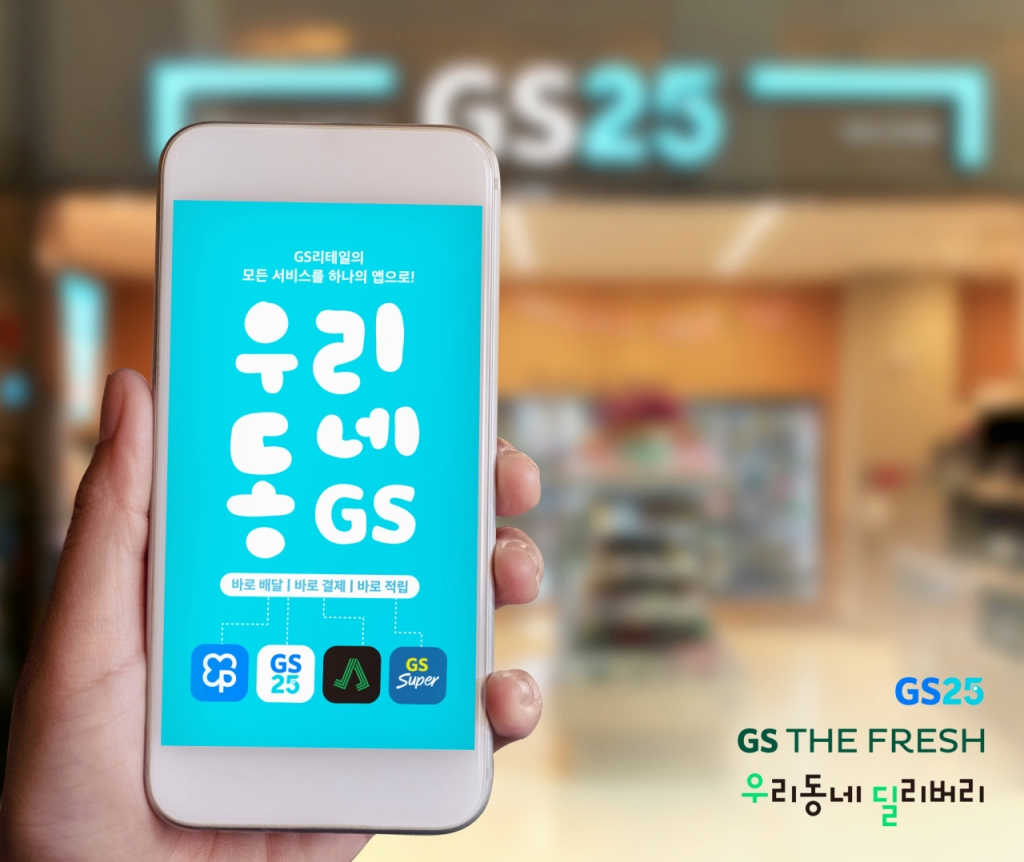
The future that GS Retail envisions, built on 50 years of history, can be summarized in one app: ‘Our Neighborhood GS’. All services, from convenience stores, supermarkets, quick commerce, to easy payments, are integrated into this app. When customers order through the app, over 18,000 stores nationwide instantly become logistics centers, delivering right to their doorstep. This is GS Retail’s most powerful future weapon.
Beyond Profit to Mutual Growth
The future of GS Retail is not just about making money. The founding spirit of ‘Inhwa’ extends to ‘Sangsaeng’ with franchisees, providing support for medical expenses, legal consultations, and becoming a solid pillar. Additionally, through ESG management like operating ‘Tomorrow Store’ to help the socially vulnerable, they dream of a warm empire that grows together with society.
Back Again, Under the Light of the Alley
Now, let’s return to the GS25 convenience store at 11 PM, the beginning of our story. This space no longer appears ordinary.
The ‘Hyejarobda’ lunch boxes on the shelves seem to symbolize a culture that defined an era, and the sight of customers scanning QR codes with their smartphones overlaps with the history of digital innovation that began with ‘My Refrigerator’. Amid the busy movements of delivery workers in helmets, the intensity of the quick commerce war for the future can be felt.
That blue and green sign is a legacy left by 57 years of beautiful companionship, a testament to survival that has risen above numerous successes and failures, and the flag of an empire that continuously transforms itself beside us. The 50-year history of GS Retail is not a past locked in a museum. It is a living story that is being rewritten every day in the neighborhood alleys where you stand, in the ordinary lives of millions.