
A few days ago, I found a bottle of grape juice in the fridge that was slightly past its expiration date. Not wanting to waste it, I left it at room temperature for a few more days, only to notice the cap had slightly bulged. For a moment, I thought, “Couldn’t this turn into alcohol?” After looking it up, I found it actually could. If you leave a sealed sugary drink at room temperature for a long time, wild yeast from the air can get in and trigger natural fermentation. While I wouldn’t recommend it for hygiene reasons, it made me curious: what exactly is the yeast doing to turn sugar into alcohol? And does adding any kind of sugar result in alcohol?
Converting Sugar to Alcohol is Simply How Yeast Breathes
To start with the conclusion, fermentation isn’t some grand chemical magic trick from the yeast’s perspective—it’s just “breathing without oxygen.” While humans use oxygen to burn glucose for energy, yeast, when placed in an oxygen-deprived environment, cannot fully burn glucose and breaks it down only partially. The byproducts of this are ethanol and carbon dioxide. Ethanol fermentation is a metabolic process used by anaerobic organisms like yeast when oxygen is scarce; for every mole of glucose broken down, two moles of ethanol and two moles of carbon dioxide are produced.
This is important because it means fermentation isn’t something the yeast does with the “intention” of making alcohol. To the yeast, ethanol is just a metabolic waste product. It’s a common misconception that yeast thrives in ethanol; as a single-celled organism, yeast has no way to survive in the alcohol it creates. Ethanol is highly toxic to yeast, and all the yeast introduced during the brewing process eventually dies. The dead yeast is later filtered out as lees. It’s ironic, in a way: the very action they take to survive is what ultimately leads to their demise.
The gas produced during fermentation is the source of those bubbles. For every molecule of glucose, two molecules of ethanol and two molecules of carbon dioxide are released, with the latter creating the fizz. When the bubbles stop, it means the alcohol concentration has reached a level where the yeast can no longer grow, or the yeast has run out of glucose. Those bubbles rising to the top of the fermentation vessel were actually proof that the yeast was working hard to breathe.
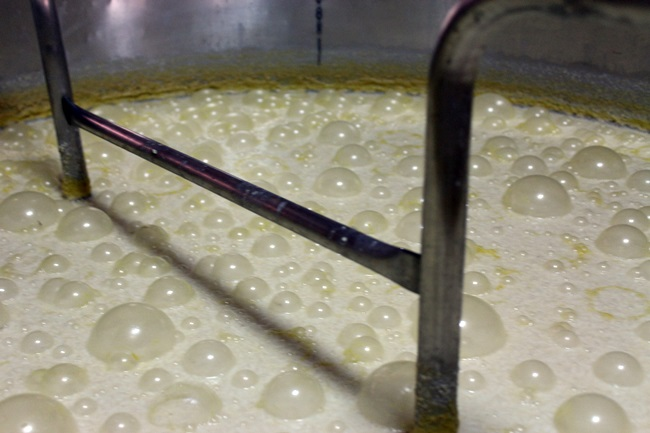
Why Are There Limits to Raw Materials? — It All Starts with Sugar
This naturally leads to the question, “Does that mean any material can become alcohol if fermented?” The answer is half-yes, half-no. Yeast can only consume sugar. The problem is that some materials contain sugar, while others contain starch instead of sugar.
Fruits and honey are already in a sugary state, so fermentation begins as soon as yeast is added. Wine is made by fermenting the natural sugars in grapes, while cider and perry are made from the natural sugars in apples and pears, respectively. Mead (honey wine) is also made by fermenting the natural sugars found in honey. If you have the material, the yeast does the rest.
Cereal grains are the problem. Grains like rice or barley contain starch, not sugar, so yeast cannot process them directly. Since grains contain starch—a chain of sugars—rather than simple sugars, immediate fermentation is impossible. That’s why grain-based alcohol always requires an extra step. Beer, whiskey, and vodka are made by using amylase in malt to convert the grain’s starch into sugar before the yeast can ferment it. In traditional Korean liquor, nuruk (fermentation starter) mold plays this role.
So, while there is a “limit to raw materials,” it’s really just a limit on “whether or not sugar can be produced.” As long as it can be converted into sugar, almost any carbohydrate on Earth can be a candidate. Milk is no exception—airag (fermented mare’s milk) is a classic example of fermenting lactose.
Why Does Grape Juice Turn into Wine Without Added Yeast?
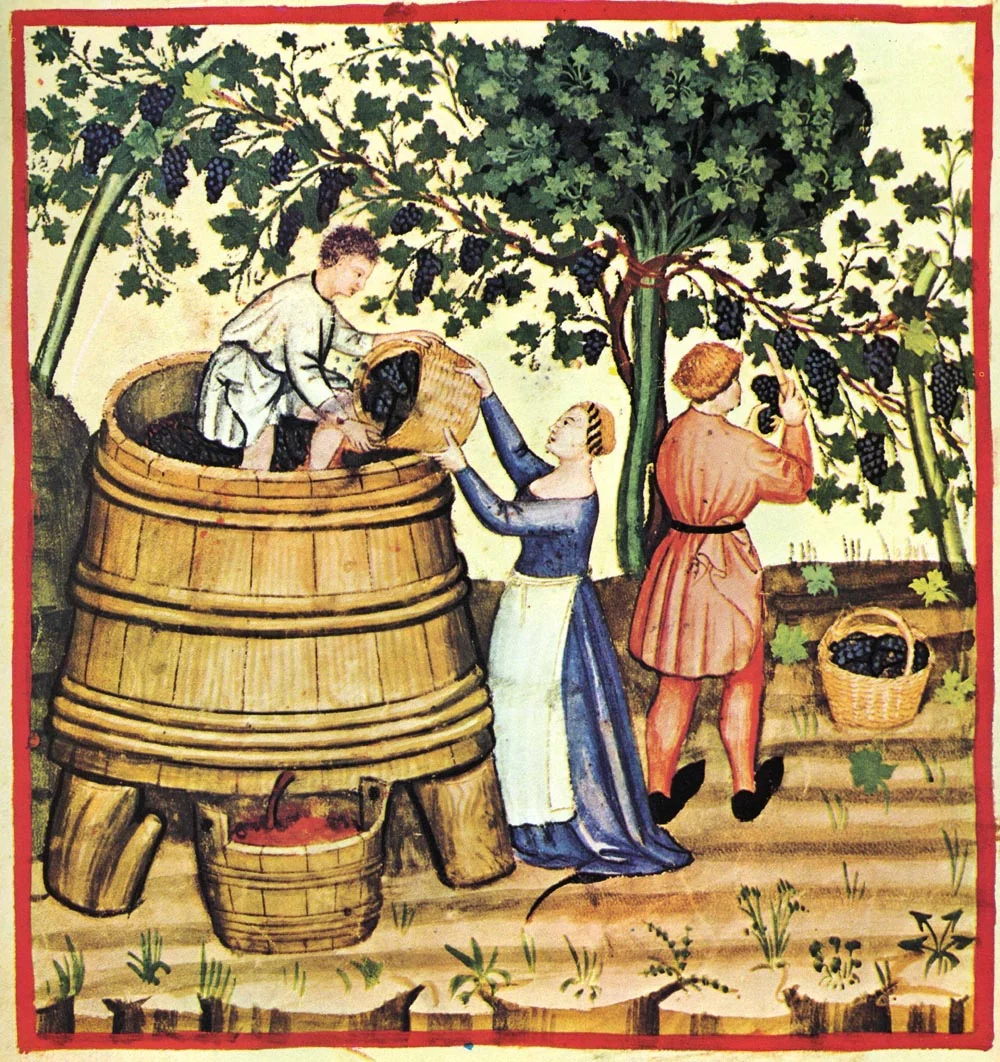
Another interesting question: how did ancient people make wine without knowing about yeast? The answer is surprisingly simple: yeast naturally lives on the skin of grapes. Because wild yeast is abundant on grape skins, simply crushing ripe grapes and letting them sit allows natural fermentation to occur using the grape’s own sugars. This is how wine originated; there was no need to add yeast separately. The same applies to raisins, which also carry yeast on their surface, a principle used in making natural fermented bread. Until about 100 years ago, people used this natural fermentation process to make bread.
What’s fascinating is the research tracing the roots of lager yeast. A 2011 study found that lager yeast shares 99% of its genome with wild yeast collected in Patagonia, South America. The theory is that this wild yeast, which had the ability to ferment in cold regions, migrated to Europe, met existing ale yeast, and evolved into the lager yeast we have today. In other words, even the yeast in the beer we drink today is a strain that was accidentally discovered and domesticated in the wild. Long before humans understood the phenomenon of fermentation, yeast was already doing this in nature, and humans simply noticed that the result tasted good and kept repeating the process.
One might wonder what distinguishes fermentation from spoilage. From a microorganism’s perspective, they are the same type of metabolic activity, so there is little chemical difference. The practical distinction is simple: if it benefits humans, it’s fermentation; if it’s useless or harmful, it’s spoilage. Seeing that the difference is as thin as a sheet of paper, it occurs to me that alcohol might just be “microbial activity that happened to benefit humans by chance.” Perhaps the first alcohol was not an invention, but a discovery.
Can You Really Make Alcohol from Milk? — The Versatility of Materials Shown by Airag
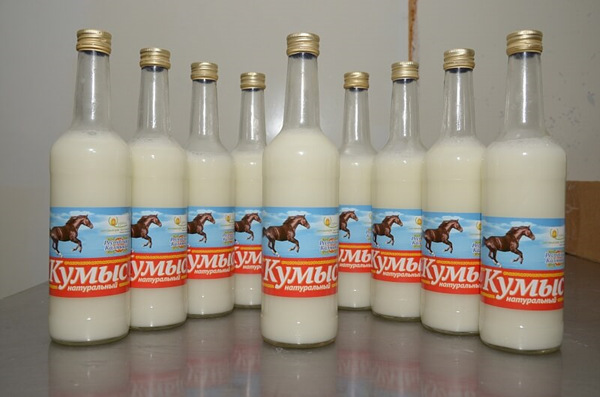
Mongolia’s airag (fermented mare’s milk) is a perfect example. Airag is made not only from mare’s milk but also from the milk of yaks and cows, and even camels in the Gobi region. They use whatever lactose source is most common in their region—yak milk in the mountainous west, camel milk in the desert. The principle is the same regardless of the material: microorganisms break down the lactose in the milk, producing both alcohol and acid.
However, these drinks have a low alcohol content. Lactose fermentation is not as efficient as grain or fruit fermentation. Mongolian nomadic milk wine has an alcohol content of less than 3%, and it tastes sour. Distilling it changes the story; when airag is distilled, it creates arkhi, a spirit with about 38% ABV, often called “Mongolian vodka.” While there is a limit to the alcohol that can be achieved through fermentation, the next step—distillation—pushes past that limit.
In this regard, I found the “limits of temperature and time” more interesting than the “limits of materials.” It’s fascinating how the exact same materials and microorganisms can yield completely different results based solely on temperature.
Why Fermented Drinks Can’t Exceed 18% ABV — Yeast Dies from its Own Alcohol
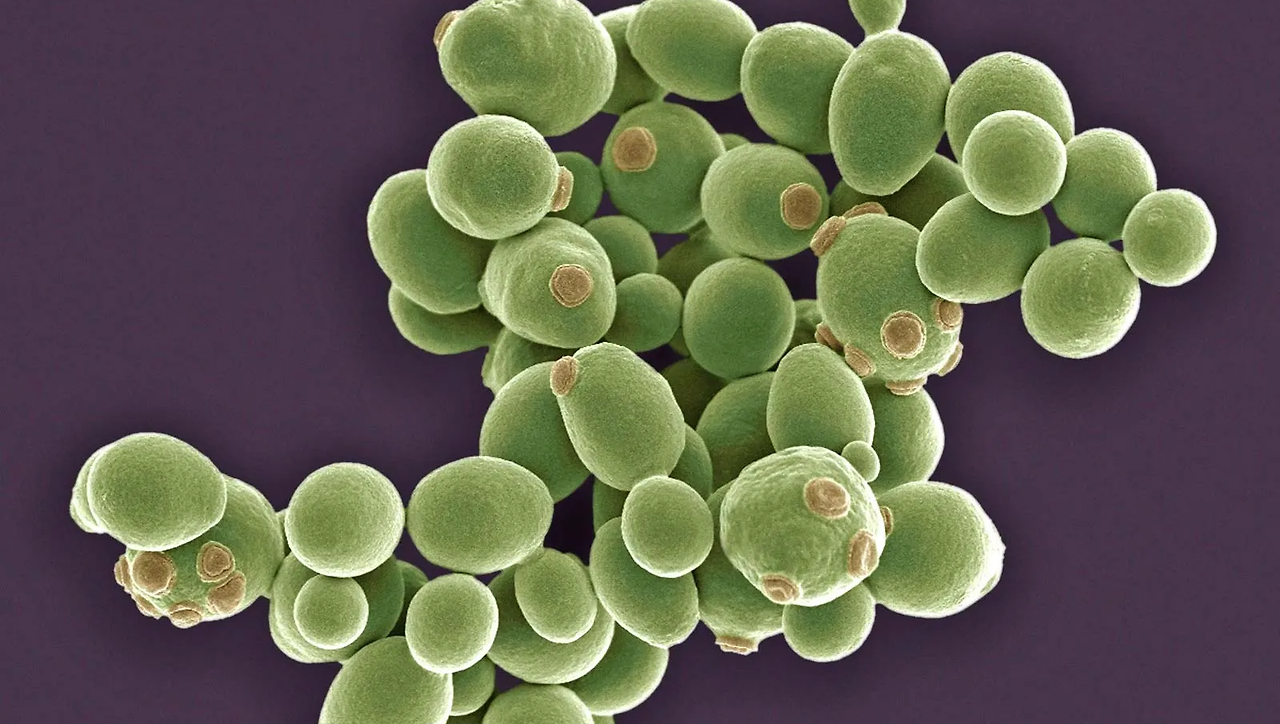
Returning to the initial question: why is there an alcohol limit for fermentation alone? Ironically, the answer lies with the yeast itself. The ethanol the yeast produces is toxic to it, so as the concentration rises, the yeast dies off.
Due to the toxicity of ethanol, yeast growth slows down as the alcohol content rises above 15%, and eventually, the yeast dies. For this reason, fermented beverages usually don’t exceed 18% ABV. While some commercial high-alcohol beers exceed 20%, once the alcohol content hits around 18%, most yeast cells perish. Even so, beers with 40% or even 60% ABV exist, but these are produced using concentration techniques other than heat distillation, a topic that remains a subject of debate among brewing enthusiasts, so I won’t delve deeper into that here.
Distilled spirits overcome this limit in a completely different way. If you can’t raise the ABV through fermentation, you simply physically extract the alcohol from the finished fermented drink. Since water boils at 100°C and ethanol at 78°C, heating the mixture causes the ethanol to vaporize first. Collecting and cooling this gas results in a drink with a higher alcohol content than the original. This is the principle behind whiskey, vodka, and brandy. It’s essentially bypassing the biological limits of yeast using chemistry and physics.
Fermentation temperature also plays a bigger role in the result than one might think. Fermenting slowly at low temperatures helps the yeast survive longer and improves the taste—this is particularly important for premium drinks like cheongju (refined rice wine). Premium cheongju is fermented at low temperatures (around 15°C) for a long period, which preserves volatile aromatic compounds, enhancing the flavor. Studies have shown that while higher temperatures speed up ethanol production, they decrease the maximum cell concentration and the final ethanol concentration. As the saying goes, “haste makes waste,” and this principle holds true here: making it quickly reduces both quantity and quality, while slow production increases both.
Is Fermentation Condition More Important Than Ingredients?
Having come this far, I’m leaning toward the idea that the “limit of materials” I was initially curious about wasn’t much of a limit at all. Whether it’s sugar, starch, or lactose, as long as there are carbohydrates for microorganisms to break down, it can theoretically become alcohol. The real variables seem to be temperature, time, and the specific microbial strain used.
Of course, I don’t say this with absolute certainty, and experts in fermentation chemistry or microbiology might view it from a different angle. However, I personally found it interesting that there was a relatively clear answer to why fermented drinks can’t exceed 18%. It’s a somewhat sad but humorous reality that the yeast simply gets drunk on its own waste and dies.
I ended up throwing away that grape juice without drinking it. My curiosity was satisfied, but hygiene is a separate matter.
References
- Wikipedia, Ethanol Fermentation
- Wikipedia, Fermentation
- Namuwiki, Fermentation
- Namuwiki, Airag
- Wikipedia, Airag (Mare's milk wine)
- Busan Ilbo, The Magic of Microorganisms - Yeast that Makes Alcohol
- University of Seoul Newspaper, How Much Do You Know About Alcohol?
- Brunch, How High Can Beer Alcohol Content Go?
- NRF Academic Paper, Ethanol Tolerance Conditions for Yeast in Alcohol Fermentation