
What makes some prices feel ‘fair’ while others feel ’exploitative’?
We delve into the intriguing dance between price and human psychology.
Have you ever felt a pang of regret buying a $6 bottle of water at the airport, or the disappointment of opening a puffed-up snack bag only to find 90% air? Price is not just a list of numbers. It touches our emotions, sometimes making us angry, and at other times giving us the satisfaction of having made a wise purchase in a complex psychological game.
The central question of this article is this: What makes some prices feel ‘fair’ while others feel ‘exploitative’? Why are we willing to pay $7.25 for a beer at a luxury resort, but feel that $4.10 is too much for the same beer from a shabby grocery store? This phenomenon shows that prices are not determined solely by objective value; the context and psychology behind them play a much more significant role.
This report digs deep into the human psychology hidden behind prices. First, we will explore the three fundamental laws of behavioral economics that govern our ‘strange calculator’ in our minds. Then, we will apply these laws to various real-world cases to analyze why some companies faced consumer outrage and tasted the bitter fruit of failure, while others successfully won consumers’ hearts. Through this journey, we will become wise observers who penetrate the fascinating dance between price and human psychology, no longer passive ‘hogang’.
Part 1: The Strange Calculator in Our Heads: Three Psychological Laws That Determine Price
When we look at the price tag of a product or service, our brains do not simply perform addition and subtraction. Instead, complex emotions and biases, such as ownership, fear of loss, and a desire for fairness, mix together in an irrational calculation. Understanding the three key psychological laws that drive this calculator is essential knowledge for all of us living in modern consumer society.
1.1 ‘My Thing’ is More Expensive: Endowment Effect
Have you ever thought, “I can’t possibly sell this for that price” when listing a cherished item on a second-hand trading app? Conversely, have you experienced disappointment when buyers offered ridiculously low prices? At the heart of this common conflict lies a powerful cognitive bias known as the ‘endowment effect’. The endowment effect refers to the psychological tendency to assign a much higher value to an item simply because it is owned, compared to its objective value.

The classic mug experiment conducted in 1990 by behavioral economics giants Daniel Kahneman, Jack Knetsch, and Richard Thaler clearly demonstrated this effect. The researchers divided college students into two groups: one group was given a mug with the school logo for free and asked how much they would be willing to sell it for. The other group was not given a mug and was asked how much they would be willing to pay for it. According to traditional economic theory, the values assigned by both groups should be similar. However, the results were shocking. The median price demanded by the students who owned the mug (sellers) was about $7, while the median price offered by the students who did not own the mug (buyers) was only about $3. Sellers demanded more than double what buyers thought the mug was worth. The stark difference between the willingness to accept (WTA) and willingness to pay (WTP) is strong evidence of the endowment effect.
So why does this irrational phenomenon occur? The fundamental cause can be found in the core concept of ‘loss aversion’ from the prospect theory proposed by Kahneman and Amos Tversky. Loss aversion refers to the tendency for people to feel the pain of a loss psychologically about 2 to 2.5 times greater than the pleasure derived from an equivalent gain. This means that the sadness of losing $20 is more than twice as great as the joy of finding $20. From this perspective, for the seller who owns the mug, ‘selling the mug’ is perceived as a ’loss’ of their possession. In contrast, for the buyer, ‘buying the mug’ is perceived as a ‘gain’ of a new item. Since the pain of loss is much greater than the joy of gain, sellers tend to demand a much higher price to offset that pain.
Moreover, the endowment effect is not limited to legal ownership. Psychological ownership can trigger this effect as well. For example, test-driving a car, using a free trial of software, or bringing several frames home from an optical shop (as in the case of Warby Parker) creates a sense of ‘quasi-ownership’. Once something starts to feel like ‘mine’, an emotional connection forms between the item and ourselves, making it more painful to part with it. Thus, the endowment effect illustrates how deeply our economic decisions are connected to our self-identity. The items we own become a part of us, and selling them creates emotional friction akin to tearing away a small piece of ourselves. This is a human aspect that traditional economics’ assumption of ‘rational humans’ cannot explain.
1.2 The Feeling of ‘Gain’ is More Important than ‘Break Even’: Transactional Utility
Let’s revisit the ‘beach beer’ experiment mentioned earlier. Why are we willing to pay more for a beer from a luxury resort, even though it is the same beer, on the same beach, and we are just as thirsty? The key to this riddle lies in the concept of ‘transactional utility’ proposed by 2017 Nobel laureate Richard Thaler. According to Thaler, the overall satisfaction we feel when purchasing an item is divided into two components. One is the pure value obtained from consuming the item itself, known as ‘acquisition utility’. The other is the subjective satisfaction regarding how good of a ‘deal’ the transaction was, known as ’transactional utility’.
In the beach beer case, ‘acquisition utility’ is the same in both cases: the enjoyment of drinking a cold beer. However, a dramatic difference arises in ’transactional utility’. We have something called a ‘reference price’ in our minds. Through experience, we form expectations about how much a particular item should cost in specific situations. Paying $7 for a beer at a luxury resort bar is expensive but falls within the 'expected' range, so the transactional utility is not significantly harmed. However, paying $7 for a beer from a shabby local store violates our reference price severely, leading to enormous ‘negative transactional utility’, making us feel that we have been ‘overcharged’. This unpleasant feeling can be so strong that it can even overwhelm our desire to drink the beer (acquisition utility) and lead us to abandon the purchase altogether.
The principle of transactional utility can be found in various aspects of our daily lives. The thrill of discovering an unexpected 20% discount coupon is a prime example of positive transactional utility. Conversely, while one might drive 20 minutes to save $10 on a $35 radio, they would not make the same drive to save $10 on a $640 TV. This can be explained by transactional utility: the absolute discount amount is the same at $10, but the nearly 30% discount rate on the radio provides much greater positive transactional utility.
Companies actively leverage this psychology of transactional utility in their marketing. The reason furniture and clothing stores hold ‘sales’ year-round is precisely this. Consumers see the high reference price and feel a significant gain when comparing it to the discounted price, resulting in high positive transactional utility that opens their wallets. This clearly shows that consumers are not just buying products; they are buying a ‘smart deal’. Ultimately, our subjective perception of the fairness of the transaction has a significant impact on our purchasing decisions, as much as, or even more than, the objective value of the product.
1.3 Fairness Comes Before Profit: Limiting Profit-Seeking by Fairness
A snowstorm has hit the market. As demand for snow shovels skyrockets, a hardware store owner raises the price of a shovel, which he usually sells for $15, to $20. According to basic economic principles, this is a natural phenomenon dictated by the law of supply and demand. But do you think the hardware store owner’s actions are ‘fair’?
Daniel Kahneman, Jack Knetsch, and Richard Thaler posed such questions to people through telephone surveys and found very interesting results. The majority of people judged the act of raising prices in response to increased demand as ‘unfair’. In contrast, if the price of the shovel was raised by the wholesaler, increasing the hardware store owner’s cost from $15 to $20, and the retail price was raised from $20 to $25 to reflect that cost increase, that action was accepted as ‘fair’.
This study reveals the existence of a powerful invisible rule that governs the market: ‘fairness’. The researchers explain this with the concept of the ‘principle of dual entitlement’. According to this principle, consumers and companies have rights granted to them within social norms. Consumers have the right to enjoy the conditions of the existing ‘reference transaction’ (e.g., the usual price). At the same time, companies have the right to maintain their existing ‘reference profit’.
What this principle means is clear.
- Permissible Actions: When a company faces a threat to its ‘reference profit’ due to external factors (e.g., rising costs), it is considered fair to raise prices to protect that profit, as it is perceived as a matter related to the company’s right to survive.
- Impermissible Actions: However, if a company raises its profits simply to gain more, even at the expense of infringing on the consumer’s ‘reference transaction’, it is deemed unfair. Particularly, taking advantage of a situation of skyrocketing demand is seen as exploiting the consumer’s desperation.
This ‘constraint of fairness’ explains why popular concert tickets are sold at exorbitant prices in the black market, yet the organizers maintain the original price, and why consumers must wait months to buy popular new car models, even though car companies do not significantly raise prices. Despite the potential for enormous short-term profits, many companies fear the long-term reputational damage and customer attrition that comes with being labeled ‘unfair’.
Ultimately, the market is not a space that operates solely on cold formulas. It is a human space where the powerful social norm of ‘fairness’ operates. Understanding this invisible social contract is crucial for a company’s survival and suggests that the ‘reason’ for a price increase may be far more important than the ’extent’ of the price increase.
Part 2: Companies That Faced Consumer Outrage: Falling into the Trap of ‘Unfairness’
The three laws of behavioral economics—endowment effect, transactional utility, and fairness—form the basis of the relationship between companies and consumers. When companies ignore or exploit these laws, they may gain short-term profits but will ultimately lose consumer trust and pay a heavy price in the long run. Now, we will vividly examine the lessons learned from companies that fell into this trap of ‘unfairness’ and faced fierce consumer outrage.
2.1 Greed is Punished: The Martin Shkreli Daraprim Incident and the COVID-19 Mask Crisis
In matters concerning human life and health, the principle of ‘fairness’ becomes more important than ever. Exploiting the desperation of vulnerable patients for profit transcends simple business and becomes a target of social condemnation. The Daraprim incident that rocked the U.S. in 2015 and the COVID-19 mask crisis that swept the globe in 2020 starkly illustrate the consequences of violating this principle.
In 2015, Martin Shkreli, a former hedge fund manager, acquired the U.S. sales rights to Daraprim, a 62-year-old drug essential for treating toxoplasmosis, particularly for immunocompromised individuals like AIDS and cancer patients. Immediately after acquiring the rights, Shkreli raised the price of Daraprim from ~~$13.50~~ to **$750**, an increase of over 5,000% overnight. This led to some patients’ annual treatment costs soaring into the hundreds of thousands of dollars.
This decision triggered immediate social outrage. The medical community, including the Infectious Diseases Society of America, condemned it as “an unjustifiable action against medically vulnerable patients,” and the media labeled him ’the most hated man in America’. Shkreli likened himself to a “modern-day Robin Hood”, claiming he would use the profits from price gouging to fund research and development for rare disease treatments. However, his justification failed to persuade the public. Daraprim was an old drug with decades of proven effectiveness, and there was no urgent need for new drug development. The public viewed his claims as a thin excuse to mask his greed, and he ultimately was convicted on other financial fraud charges and imprisoned. While the price increase of Daraprim may have been legal, it was recorded as an act that completely disregarded the social norm of fairness.
A similar outrage erupted in South Korea five years later. In early 2020, as the COVID-19 pandemic spread, some online retailers began to skyrocket mask prices as demand surged. It became common for a box of masks that had previously sold for 39,800 won to be listed at 130,000 won. One retailer even sold masks received from his father for 300 won at 4,500 won, making a 15-fold profit. Consumers erupted in anger, saying, “They are profiting off the health of the nation,” and complaints related to health and hygiene products received by the Korea Consumer Agency surged by 1,153.7% in January 2020 compared to the previous month. On January 29 alone, consultations regarding mask price gouging saw a dramatic increase.
As the situation worsened, the government intervened by implementing a notice prohibiting hoarding of masks and hand sanitizers and introducing a public mask distribution system. The commonality between the Daraprim incident and the mask crisis is clear. In both cases, sellers exploited the situation of ‘surging demand’ to severely infringe upon consumers’ ‘reference transactions’ while pursuing massive profits. Their justification narratives (new drug development, supply uncertainty) failed to resonate with the public and were ultimately labeled as ‘greed’. This serves as powerful evidence of how strongly public perception of fairness acts as a constraint and how ignoring it can lead to social outrage and even government regulation.
2.2 The Deceptive Trick of ‘Shrinkflation’: The Haitai Gohyang Dumpling and Snack Raft Story
When directly raising prices meets consumer resistance, companies often resort to more cunning methods. ‘Shrinkflation’, which reduces the product’s capacity while keeping the price tag the same, is one such trick. A portmanteau of ‘shrink’ and ‘inflation’, this term is perceived as a ‘trick’ aimed at achieving the effect of a price increase without consumers noticing. This is a deceptive act that attacks the consumer’s ‘reference transaction’ from the side rather than head-on.
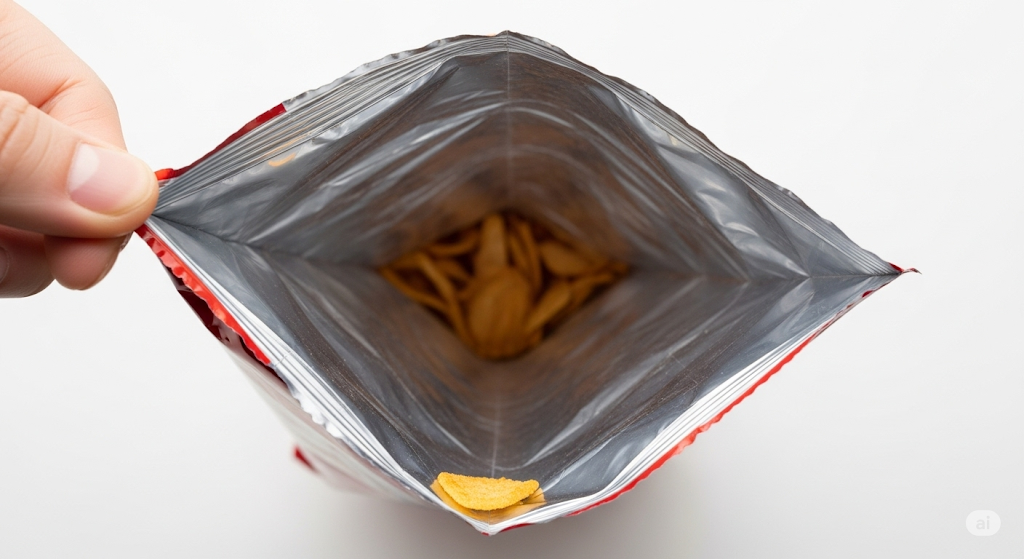
In 2023, the Korea Consumer Agency and the Fair Trade Commission confirmed through a survey that shrinkflation occurred in many domestic products. One representative case was Haitai Confectionery’s ‘Gohyang Dumpling’. Haitai reduced the weight of ‘Gohyang Kimchi Dumplings’ from 450g to 378g, a reduction of 16%, and ‘Gohyang Dumplings’ from 415g to 378g, an 8.9% reduction. Additionally, shrinkage was confirmed in 37 popular products, including CJ CheilJedang’s Vienna sausages, Seoul Milk’s cheddar cheese, and OB Beer’s Cass canned beer. Haitai explained, “We maintained a higher weight compared to competitors but adjusted to match competitors’ levels due to the burden of raw material costs,” but consumers perceived this as passing the burden of price increases onto them.
Consumer dissatisfaction with these ‘invisible price increases’ has been accumulating for a long time. The controversy over excessive packaging in the snack industry, known as the ‘nitrogen snack’ issue, is a prime example. One of the most creative and satisfying forms of resistance to this problem occurred in September 2014, when three college students taped together over 150 bags of domestic snacks to create a raft and successfully crossed the Han River in just 30 minutes. This performance was designed to satirize the reality that the contents of domestic snacks, which are “half nitrogen, half snacks”, are insignificant, yet the nitrogen in the packaging can carry a person. Citizens walking along the Han River cheered for this ‘snack raft’, and the incident became widely known through the media, significantly raising social awareness of the excessive packaging issue.
Shrinkflation and excessive packaging provoke particularly strong dissatisfaction among consumers due to their ‘deceptiveness’. Unlike honestly stating, “We are raising prices due to rising costs”, these methods appear to be attempts to deceive consumers to gain profits. This fundamentally undermines the trust relationship between companies and consumers. The reason the ‘snack raft’ performance received such a strong response is that it dramatized the invisible ’tricks’ companies tried to hide into a visible form that everyone could see. This was a symbolic event showing that consumers are no longer passive victims but can creatively confront corporate unfairness.
2.3 Hurting Loyal Customers: NC Dinos’ ‘Market Price Policy’ and Uber’s ‘Surge Pricing’
Technological advancements have gifted companies with powerful tools to understand consumer demand in real-time and adjust prices dynamically, known as ‘dynamic pricing’. However, this powerful tool can be a double-edged sword. When used without transparent and fair logic, it can become the worst weapon, leaving deep wounds in the hearts of loyal customers and creating feelings of betrayal towards the brand. The ‘market price policy’ of the professional baseball team NC Dinos and Uber’s ‘surge pricing’ are representative failure cases.
In 2022, the NC Dinos became the first team in the KBO League to implement dynamic pricing. The team promoted a system that fluctuated ticket prices in real-time based on various variables such as the opposing team, rankings, and weather. However, fan reactions were cold. Fans mocked the team with the nickname ‘Market Price Dinos’, likening the constantly changing ticket prices to those of a fish market. The biggest problem was that the criteria for pricing were kept completely secret, a ‘black box’ to fans. They had no idea why today’s ticket price was different from yesterday’s or what it would be tomorrow. Even during the week of 2022, the price of outfield seats skyrocketed from 8,000 won to 57,500 won, exacerbating the burden on fans. This structure meant that the more loyal a fan was, the more likely they were to pay higher prices, leading to feelings of betrayal as their loyalty became a target for exploitation.
This aligns perfectly with the criticisms faced by Uber, which has become synonymous with dynamic pricing worldwide. Uber’s system automatically raises fares when demand exceeds supply (e.g., during rush hour, bad weather, or after major concerts). Economically, this is described as an efficient mechanism to encourage more drivers (supply) onto the streets to balance supply and demand. However, from the consumer’s perspective, this is perceived as ‘price gouging’ at the most desperate moments. The uncertainty of how much prices will rise and the opacity of the fare determination process disempower consumers, making it feel like a despicable tactic to “cash in on difficult situations”. Research from George Washington University even revealed that Uber and Lyft’s pricing algorithms tend to charge higher fares in non-white and low-income areas of Chicago, raising concerns about the fairness of the algorithms.
The key failure of both the NC Dinos and Uber cases lies in neglecting both ‘outcome fairness’ and ‘procedural fairness’. Consumers care deeply about not only the final price but also whether the ‘process’ by which that price is determined is transparent, predictable, and fair. An unpredictable black box algorithm robs consumers of a sense of control, which is perceived as inherently unfair. In the age of artificial intelligence and big data, the excuse of ’the algorithm decided that’ no longer holds. Dynamic pricing that fails to ensure procedural fairness ultimately loses consumer trust and leaves lasting scars on the brand.
Part 3: Companies That Won Consumers’ Hearts: Selling ‘Value’ and ‘Trust’
Not all pricing policies provoke consumer outrage. Companies that deeply understand the principles of behavioral economics and wisely apply them in communication with customers gain consumer trust and build strong brand equity through the tool of price. They are not just selling products; they are offering ‘value’ and selling ‘trust’. Now, we will explore the secrets of success through the examples of Netflix, which successfully implemented price increases, Disney, which fairly executed dynamic pricing, IKEA, which transformed customer inconvenience into value, and Simmons, which built trust in a crisis.
3.1 The Standard of Price Increases: How Did Netflix Raise Subscription Fees?
Increasing the price of a subscription service can lead to customer attrition, making it a very risky decision. However, Netflix has managed to minimize consumer backlash while regularly raising subscription fees and achieving sustained growth. The secret lies in how they announce price increases. Instead of simply notifying customers that ’the price is going up’, Netflix excels at building a compelling ‘value-based narrative’ explaining why the price needs to increase.
Netflix’s strategy consists of several specific tactics:
- Clearly Connect to Value: Whenever Netflix announces a price increase, it connects the reason to its core value of ‘high-quality original content’. The message is, “Thanks to your willingness to pay more, we can continue to create great works like ‘Stranger Things’ and ‘The Crown’”. This reconfigures the price increase as a ‘joint investment’ for better service rather than a ’loss’ for consumers. This approach aligns perfectly with the public’s psychology that considers price increases justified when framed as ‘cost increases’.
- Choose Strategic Timing: Netflix tends to announce price increases not when the company is in crisis but rather at the most successful times, such as right after subscriber numbers have surged and a massive hit like ‘Squid Game’ has been released. This instills the perception that the price increase is a natural process following successful growth, rather than a financial pressure. It helps maintain a positive narrative that the brand continues to evolve.
- Provide Transparency and Choice: Netflix does not abruptly notify customers of price increases; instead, it gives them ample time to prepare. More importantly, it offers customers choices. By providing various tiers of pricing such as Basic, Standard, and Premium, price-sensitive customers can switch to a lower tier instead of completely canceling the service. Recently, Netflix even introduced a cheaper ad-supported tier, demonstrating flexibility by attracting price-sensitive consumers and diversifying revenue streams.
In conclusion, Netflix transforms the potentially negative event of price increases into an opportunity to reaffirm its brand promise (to continuously provide new and exciting content). They are not merely raising prices; they are successfully managing psychological resistance to price increases by constantly proving and communicating the ‘value’ that customers are willing to pay for.
3.2 Is ‘Fair’ Dynamic Pricing Possible?: Disneyland’s Transparent Pricing Strategy
The earlier cases of NC Dinos and Uber showed how easily dynamic pricing can provoke consumer dissatisfaction. So, is ‘fair’ dynamic pricing impossible? The case of the world-renowned theme park Disneyland answers that question with a resounding no. Disney also employs a policy of fluctuating prices based on demand, but its approach fundamentally differs from that of NC Dinos or Uber. The secret to Disney’s success lies in restoring ‘control’ to consumers through ‘transparency’ and ‘predictability’.
Disney’s pricing strategy is the opposite of NC Dinos’ ‘black box’. Disney sets high prices during busy weekends or holiday seasons and low prices during relatively quiet weekdays. Importantly, all this pricing information is transparently published in advance for the entire year. For example, Disneyland categorizes tickets by demand into ‘Tier 0’ through ‘Tier 6’, allowing customers to clearly see which tier each date falls into and what the prices are.
This system has remarkable psychological effects on consumers.
- First, it provides predictability. Customers can know the exact ticket prices months or even a year in advance, aligning with their vacation plans. They no longer need to worry about how prices might change on the day of their visit.
- Second, it grants control. Customers are no longer passive victims of price fluctuations. If they want to save money, they can intentionally choose to visit on cheaper ‘Tier 1’ or ‘Tier 2’ dates. This gives them the perception that the pricing system is not something imposed on them but a tool they can ‘utilize’.
- Third, it ensures clear justification. Disney’s differential pricing policy has an intuitive and logical basis: ‘busier days are more expensive’. This is perceived not merely as an attempt to maximize profits but as a reasonable effort to manage park congestion and maintain the quality of visitor experience.
Table 1: Unfair Dynamic Pricing vs. Fair Dynamic Pricing
| Feature | Unfair Model (Uber/NC Dinos) | Fair Model (Disney) |
|---|---|---|
| Transparency | Low; ‘black box’ algorithm | High; pre-published tiers and calendar |
| Predictability | Low; price changes without notice | High; can plan months in advance |
| Consumer Control | Low; feels like a victim of price hikes | High; can control costs |
| Justification for Pricing | Profit-seeking exploiting desperate demand | Managing park congestion and capacity |
| Consumer Response | Anger, feeling overcharged | Acceptance, strategic planning |
Disney’s case proves that dynamic pricing itself is not inherently bad. The key lies in ‘how’ it is executed. When designed around procedural fairness—transparency, predictability, and consumer choice—dynamic pricing can be accepted as a reasonable business practice beneficial to both companies and consumers. Disney has transformed a potentially negative tool into a positive one by empowering consumers with control.
3.3 Turning Customers’ ‘Time’ into Money: IKEA’s ‘Time Currency’ Campaign
Customer pain points are a challenge for every business. Most companies strive to reduce or eliminate these inconveniences. However, the Swedish furniture giant IKEA took it a step further, demonstrating remarkable creativity by transforming customer inconvenience into a new ‘value’. This was exemplified in their ‘Buy With Your Time’ campaign in Dubai.
IKEA stores typically require large spaces, often located on the outskirts of urban areas. This means customers must invest considerable time and effort to visit the store. IKEA Dubai recognized this ‘long travel time’ as a clear inconvenience for customers. Instead of solving the problem, they decided to reward it.
The campaign was simple yet ingenious. Customers only needed to show their Google Maps timeline on their smartphones at the checkout. The cashier would then check the travel time it took for the customer to reach the IKEA store and convert that time into ‘time currency’ that could be used like cash, based on Dubai’s average hourly wage. Customers could use this ’earned’ time to purchase furniture or receive discounts on their purchases.
The psychological effect of this campaign was immense. It is a brilliant application of the theory of ‘transactional utility’.
- First, the campaign completely reconfigured the negative experience of ’long driving’ into a positive experience of ‘earning money’. Travel time became an investment that yielded rewards rather than a wasted cost. This created enormous ‘positive transactional utility’ throughout the shopping journey.
- Second, it conveyed a powerful message that IKEA acknowledges and values customers’ efforts and time. This was seen as an act of deep empathy and respect for customers, leading to explosive increases in brand loyalty and positive word-of-mouth.
IKEA did not relocate its stores or lower product prices. They merely shifted the perspective on the ‘cost’ of customers coming to the store into a ‘benefit’. This kind of creative thinking, based on a deep and empathetic understanding of the customer journey, can become the most powerful weapon to capture customers’ hearts, transcending the limitations of traditional marketing.
3.4 ‘Pain Sharing’ Shining in Crisis: Simmons Bed’s Price Freeze Declaration
In an economic crisis where everyone is tightening their belts due to inflation, the true value of a company is tested. While most companies raise prices citing rising raw material and labor costs, those that choose ‘pain sharing’ with consumers gain deep trust. The price freeze declaration by the South Korean bed brand Simmons is a prime example of effectively utilizing the principle of ‘fairness’ in a crisis.
In 2022 and 2023, as high inflation persisted, many companies, including the top two in the furniture industry, Hanssem and Hyundai Livart, raised product prices. However, Simmons took the opposite approach, declaring that it would freeze prices for two consecutive years. Simmons CEO Sang-Oh Ahn stated, “The more difficult it gets, the more important it is to go together; being loved by consumers for a long time is more important,” clearly stating the reason for the price freeze.
This decision created a powerful narrative of ‘pain sharing’ that went beyond mere price maintenance.
- First, Simmons firmly established itself as a ‘good company’ in consumers’ minds. The company’s efforts to alleviate the burden on consumers facing economic difficulties were perceived as a signal that it values long-term relationships with consumers over short-term profits. This led to strong trust and loyalty towards the brand.
- Second, this ‘pain sharing’ message secured authenticity internally as well. Simmons declared a state of emergency management alongside the price freeze, voluntarily reducing executive salaries by 20% while raising employee salaries, demonstrating care for internal members even in a crisis. This proved that ‘pain sharing’ is not just a marketing slogan but a management philosophy practiced by the entire company.
Simmons’ case shows that the principle of ‘fairness’ can be utilized not as a defensive constraint but as an active competitive advantage strategy. The more unstable the economy, the more sensitive consumers become to the fairness of prices. At such times, showing that a company bears the burden of rising costs instead of passing it on to consumers exerts a power stronger than any marketing. Simmons gained the most precious asset of all: ‘consumer trust’, which cannot be quantified in monetary terms, by sacrificing short-term profits.
Conclusion: Price is Not Just a Number, But a ‘Relationship’
Through this long journey, we have explored the complex and fascinating world of human psychology hidden behind price tags. From Martin Shkreli’s greedy price hikes to Simmons Bed’s altruistic price freeze, various cases point to one clear fact: price is not just a number but the most direct and powerful means of communication that defines the ‘relationship’ between companies and consumers.
The failures of Martin Shkreli, COVID-19 mask price gougers, companies that employed ’tricks’ like shrinkflation, and the NC Dinos, who lost fan loyalty due to their market price policy, were not merely economic miscalculations. They were acts that unilaterally violated the social contract of ‘fairness’ that consumers hold in their hearts and destroyed the foundation of trust in relationships. They disrespected consumers’ ‘reference transactions’ (violating fairness), failed to provide transparency in the transaction process (violating procedural fairness), and even exploited consumers’ inconveniences and desperation as opportunities for profit. The result was social condemnation and outrage, and sometimes harsh consequences in the form of government regulation.
In contrast, the successes of Netflix, Disney, IKEA, and Simmons provide the opposite lesson. These companies adhered to the principles of transparency, value-based narratives, and empathy in the process of determining and communicating prices. Netflix reconfigured price increases as a ‘joint investment for better content’, Disney made dynamic pricing a tool consumers could ‘utilize’ through transparent information disclosure, IKEA transformed the ‘cost’ of customer inconvenience into a ‘benefit’, and Simmons chose ‘pain sharing’ in a crisis, gaining deep trust. At the core of all these success stories is an attitude that respects consumers not merely as targets for profit generation but as partners with whom to build long-term relationships.
Ultimately, the prices set by companies reflect their values. When prices feel fair, consumers willingly open their wallets and become loyal supporters of that brand. However, the moment those prices feel unfair and exploitative, that relationship collapses irreparably.
Now, when you encounter price tags at the grocery store, online shopping mall, or baseball stadium, listen to what stories those numbers are telling you. When you feel the unpleasantness of being overcharged or the thrill of a good deal, you are no longer a passive consumer. You have become a wiser observer who penetrates the meaning of this exciting dance between price and human psychology.