
1. The Huge Misconception Hidden in the Obvious
“Is there any other nation that consumes as many vegetables as Koreans?”
Let’s picture our dining table. Along with the staple napa cabbage kimchi and diced radish, there are also spinach side dishes, seasoned bean sprouts, and fragrant perilla leaf pickles. We have always lived with vegetables, wrapping them in lettuce, adding them to soups, and mixing them with rice. In fact, South Korea is a ‘vegetable powerhouse’ that consistently ranks among the top OECD countries in vegetable consumption.
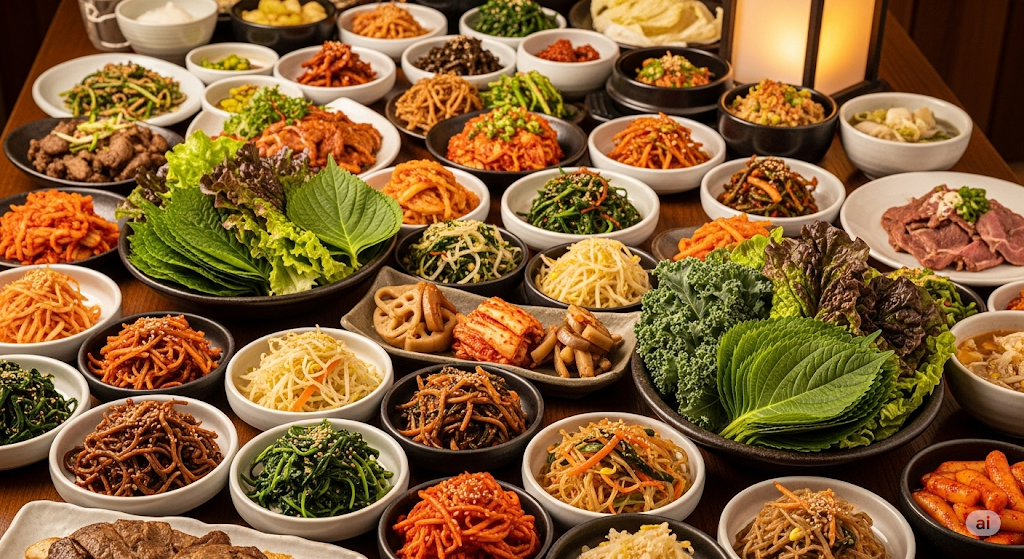
In the early 2000s, everyone thought, “In Korea, vegetables are so common that it’s hard to create a new market with them.” However, hy (then Korea Yakult) discovered a clever ‘gap’ hidden within this obviousness: the imbalance between ‘intake’ and ‘consumption method’.
We thought we were eating a lot of vegetables, but a significant portion was in the form of salted ‘kimchi’, and busy modern individuals found it nearly impossible to consume a variety of fresh vegetables daily. People were living in the ‘illusion’ that they were eating plenty of vegetables.
2. The New Weapon of the Yakult Lady: Daily Vegetable
Having dominated the fermented milk market in South Korea with Yakult, hy was looking for new growth drivers. They boldly decided to enter the vegetable market, which others deemed a ‘red ocean’. Their question was simple.
“Are people really eating ’enough and a variety’ of vegetables?”
The research results from hy were a resounding ’no’. The World Health Organization (WHO) recommends a daily vegetable intake of 350g. However, it was challenging for busy office workers, picky children, and even health-conscious housewives to consistently meet this standard.
Thus, in 2005, an innovative product that would change the market landscape was born: ‘Daily Vegetable’.
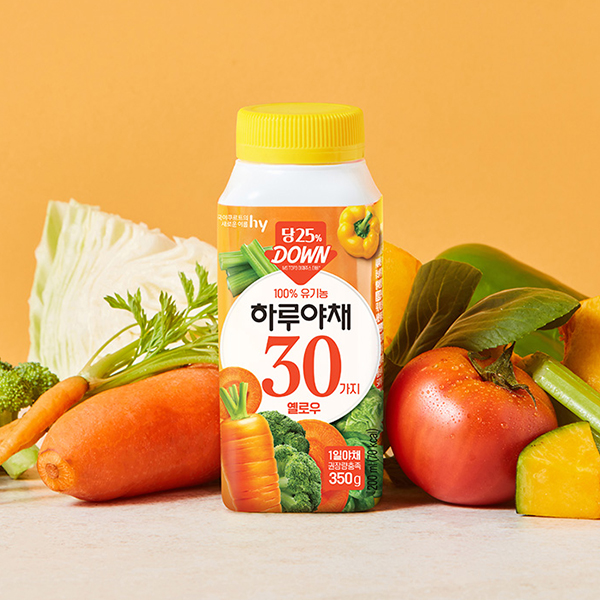
The success strategy of ‘Daily Vegetable’ was remarkably clear.
- Clear Concept: “This one bottle conveniently provides the daily vegetable recommendation of 350g!” No complicated explanations were needed. Everyone knew they should eat vegetables for health, but consumers were often confused about how much and how to eat them. This provided a clear answer.
- Trust in Quality: The principle of using only 100% organic vegetables captured the hearts of health-conscious consumers.
- Strong Distribution Network: The ‘Yakult Lady’ (now Fresh Manager) who delivers fresh health products every morning to desks and apartment doors was more powerful than any delivery system. This system played a crucial role in quickly establishing Daily Vegetable in the market.
The result was a tremendous success. Daily Vegetable became an absolute leader in the domestic vegetable juice market as soon as it was launched, breaking the stereotype that ‘vegetables must be chewed’ and creating a new market for ‘conveniently drinking health’.
3. The Power of Reverse Thinking that Changed the World
The success myth of hy’s Daily Vegetable teaches us an important lesson. Within the common sense of the market that everyone believes to be ’true’, there may be the biggest business opportunities hidden. By not getting caught up in the fact that we are the number one vegetable-consuming nation, hy accurately identified the ‘inconveniences’ and ‘deficiencies’ of the people, creating a lasting success story in the South Korean food market through reverse thinking.
Side Story: How Much Daily Vegetable Should We Really Eat?
“350g of Daily Vegetables”, Not Sure How Much That Is?
We often hear that we need to eat a lot of vegetables, but it’s hard to answer the question, ‘So how much exactly?’ How much is the ‘350g’ that Daily Vegetable uses as a standard?
WHO and South Korea’s Standards
- World Health Organization (WHO): Recommends consuming at least 400g of fruits and vegetables daily, commonly known as the ‘Five a Day’ campaign.
- Korean Nutrition Society: Considering Korean eating habits, they recommend adults consume more than 500g of vegetables (raw, equivalent to 7 servings) and 200g of fruits (equivalent to 2 pieces) daily. Cooked vegetables like seasoned greens count as one serving (70g), while raw vegetables count as two servings (140g).
Visualizing Daily Vegetable Recommendations
It’s still hard to grasp just by reading. Let’s estimate the amount using foods we easily encounter in our daily lives:
- 1 cucumber (about 200g)
- 2 medium-sized tomatoes (about 300g)
- 1/2 head of lettuce (about 200g)
- 1 serving of seasoned spinach (about 70g)
- 1 bell pepper (about 150~200g)
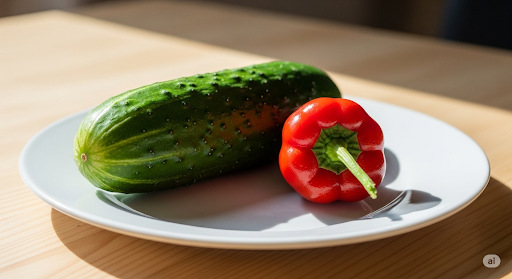
From this perspective, it becomes clear that consistently eating enough vegetables daily is not as easy as it seems. Importantly, it’s not just about quantity but also about ‘variety’. To obtain the various vitamins, minerals, and phytochemicals our bodies need, we should eat a colorful array of vegetables in red, yellow, green, and purple.
How about adding a colorful vegetable salad to your dinner table tonight?